
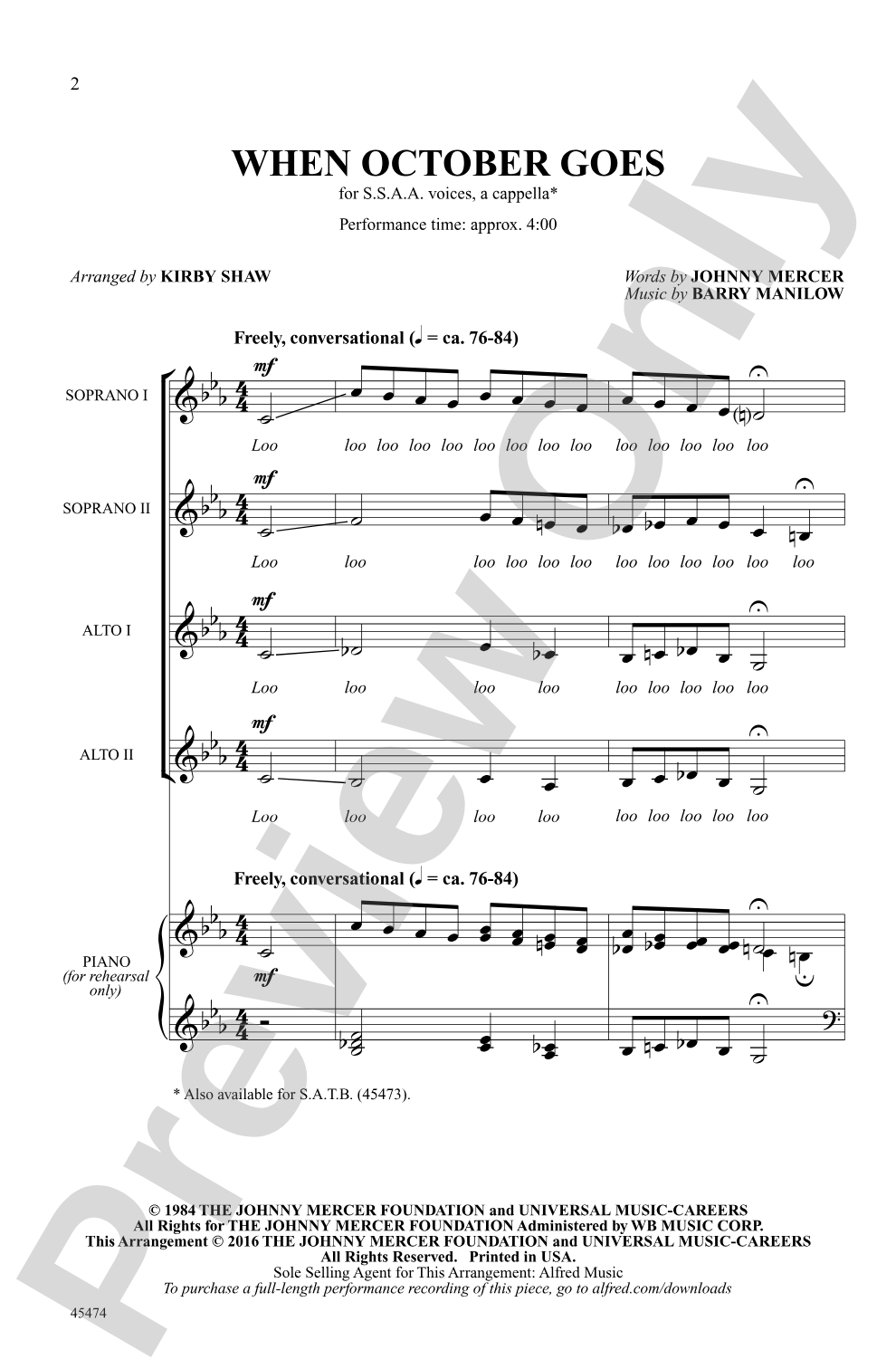
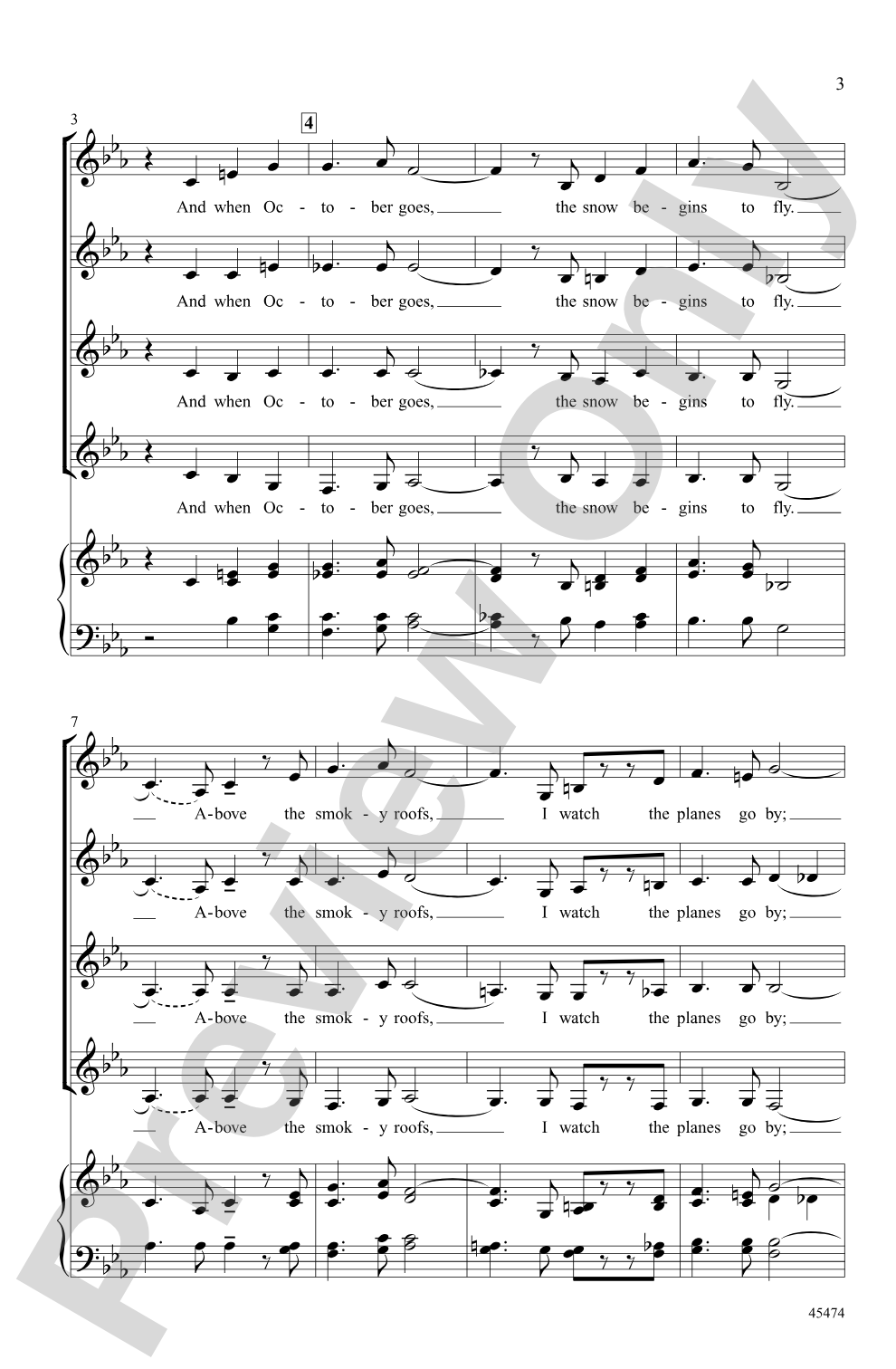

When October Goes: SSAA, a cappella Choral Octavo
Words by Johnny Mercer, music by Barry Manilow / arr. Kirby Shaw
Item: 00-PO-0003713
$2.00
Minimum order quantity: 20 copies
One moment…
Description
"It doesn't matter much how old I grow, I hate to see October go." Unfinished Johnny Mercer lyrics (saved by Mercer's widow) combined with a melody from Barry Manilow resulted in one of 1985's most popular songs. With warm choral harmonies and impeccable voice leading, this is Kirby Shaw at his best!


When October Goes: SSAA, a cappella Choral Octavo isn't in MakeMusic Cloud just yet...but it could be. Let us know you'd like to see it, and you'll help shape what comes next. In the meantime, start a free trial and dive into thousands of interactive titles your students can play along with today.
Request This Title
Tell us you want it.
Start Your Free Trial
Explore everything that's ready to play right now.
Sample Audio
1
Audio File
--:--
0:00
0:00
Sample Video
No sample videos found.
Additional Details
Series:
Alfred Pop Choral Series
Publisher:
Alfred Music
Page Count:
12
SKU:
00-PO-0003713
More about this title
About the Composer: Barry Manilow
Barry Manilow emerged as one of pop music's most distinctive voices in the 1970s and 1980s, bringing orchestral sensibility and emotional directness to the popular song tradition. His gift for melody and his deep respect for the American songbook shaped a body of work that has endured across generations. "When October Goes" exemplifies his ability to honor a lyricist's intent (in this case, completing Johnny Mercer's unfinished meditation) while crafting music that feels both intimate and expansive.
Manilow's compositions have become staples in choral and vocal jazz education because they reward singers with singable lines, sophisticated harmony, and emotional authenticity. His music respects the voice while asking singers to stretch their musicality.
Why we love this
Kirby Shaw's arrangement captures the tenderness of this song without sacrificing harmonic depth. The voice leading sits naturally on the treble voices, allowing singers to focus on phrasing and blend rather than fighting awkward tessitura. This is the kind of a cappella writing that makes even non-auditioned singers sound polished.
What to expect
The song exudes quiet melancholy and acceptance, with the bittersweet realization that time passes and seasons change. Harmonically, it feels warm and grounded, never precious or overly sentimental. The a cappella texture amplifies the intimacy, making it feel like a shared moment rather than a performance.
Who it's for
SSAA choirs seeking genuine pop repertoire that sounds substantial without requiring instrumental support. High school and college treble choirs will find this accessible yet artistically rewarding, and experienced high school groups looking for a concert closer will appreciate the emotional maturity of Mercer's text paired with Manilow's melody.
How to get the most out of it
- Treat each phrase as a lyrical gesture rather than a mechanical exercise. The text carries the weight of nostalgia and reflection, so encourage singers to imagine they're singing directly to someone rather than projecting to an audience.
- Balance the soprano lines gently; they carry the main melody but shouldn't dominate the texture. Let the alto and second soprano voices breathe and shape the harmony underneath.
- Take time with the final cadence. This moment is the emotional payoff of the song, and rushing it wastes the opportunity to let the beauty of the voicing settle on the listener's ear.
- Work on breath placement with your ensemble so that phrase breaks align. In a cappella writing, a staggered breath can blur the harmonic intention, so coordinate your releases and attacks in advance.
How to use it
This works beautifully as an emotional anchor in a pop-focused concert, especially effective when programmed alongside more contemporary material. It also suits fall or end-of-year concerts where the text's seasonal reflection becomes thematically resonant. The 12-page score makes it manageable for mixed-ability choirs without requiring weeks of rehearsal.
Skills your students will build
- Sustaining tone quality and intonation without instrumental reference
- Blending treble voices while maintaining clarity of independent lines
- Interpreting American popular song with emotional authenticity
- Managing phrase shape and rubato in an a cappella context
- Executing clean, aligned ensemble attacks and releases