
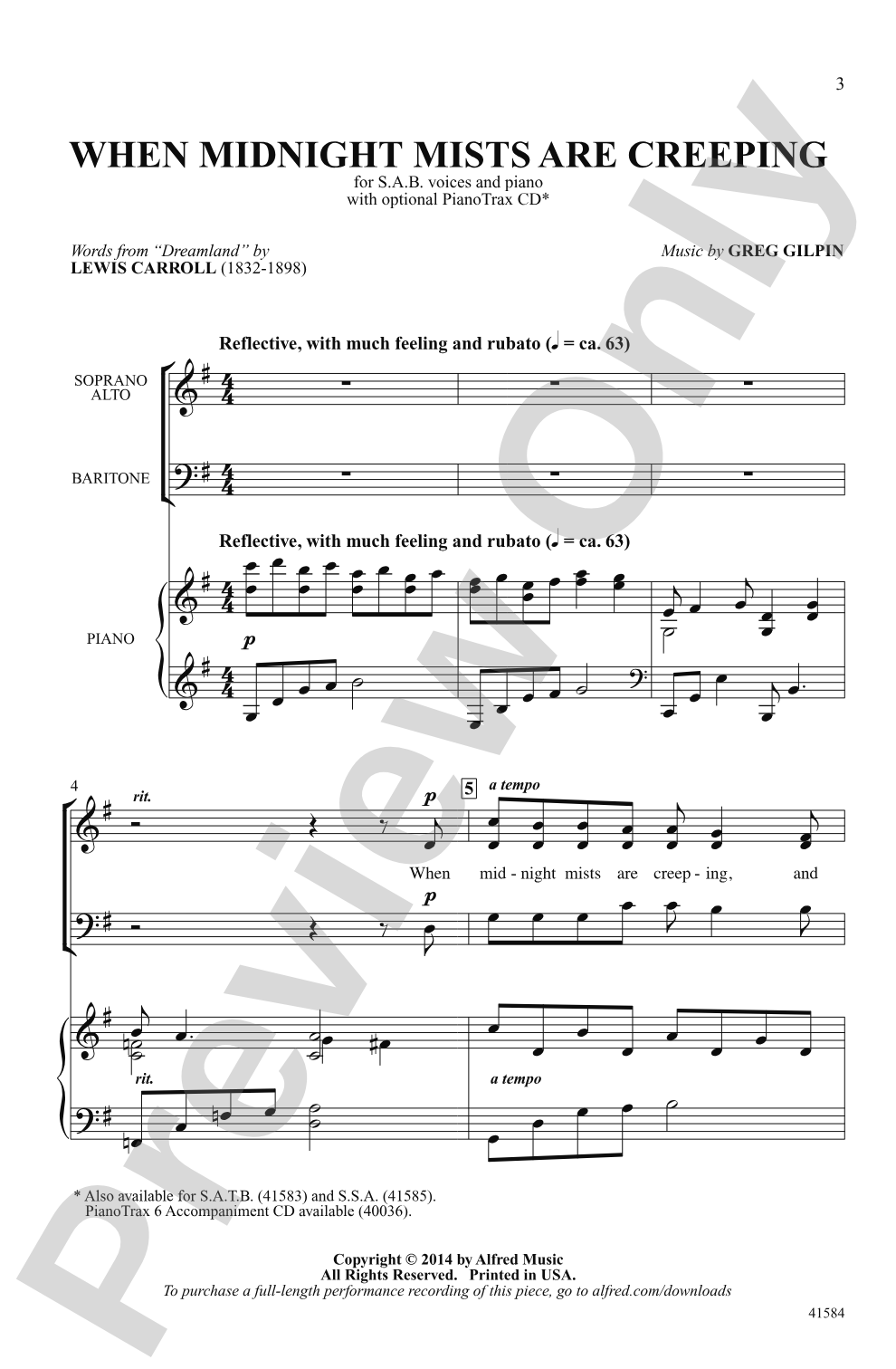
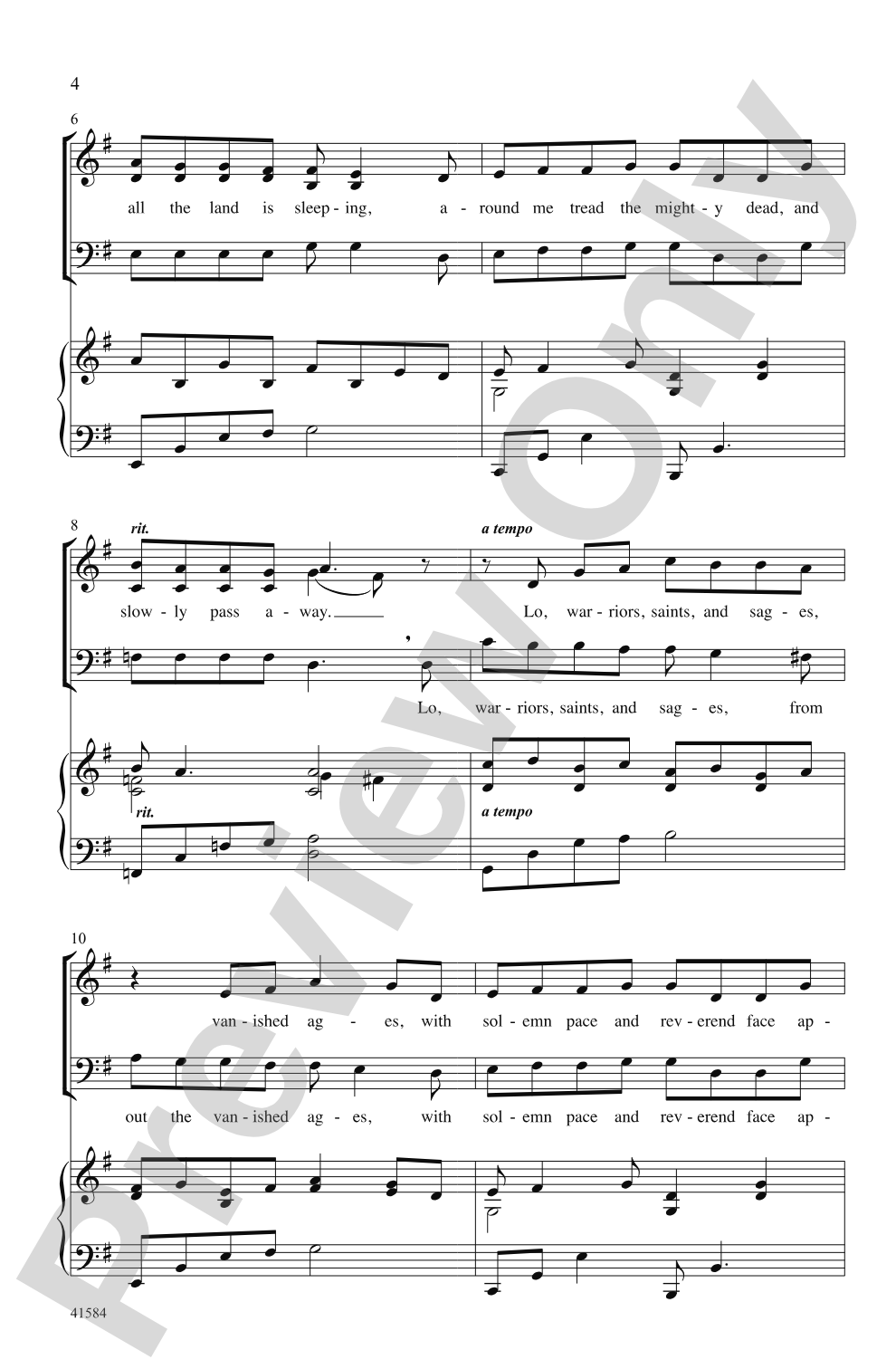

When Midnight Mists Are Creeping: SAB Choral Octavo
Words from "Dreamland" by Lewis Carroll, music by Greg Gilpin
Item: 00-PO-0001809
$1.85
Minimum order quantity: 20 copies
Pickup currently not available
Related Items
When Midnight Mists Are Creeping: PianoTrax Digital Download |
$9.99
|
View | |
When Midnight Mists Are Creeping: SATB Choral Octavo |
$1.85
|
View | |
When Midnight Mists Are Creeping: SSA Choral Octavo |
$1.85
|
View | |
When Midnight Mists Are Creeping: SATB Choral Octavo |
$1.85
|
View | |
When Midnight Mists Are Creeping: SAB Choral Octavo |
$1.85
|
View |
Description
This evocative text setting makes it easy for developing concert choirs to impress. Modest vocal ranges, logical voice leading, and manageable phrase lengths allow musicality to be the focus of rehearsal and the hallmark of performance.


When Midnight Mists Are Creeping: SAB Choral Octavo isn't in MakeMusic Cloud just yet...but it could be. Let us know you'd like to see it, and you'll help shape what comes next. In the meantime, start a free trial and dive into thousands of interactive titles your students can play along with today.
Request This Title
Tell us you want it.
Start Your Free Trial
Explore everything that's ready to play right now.
Sample Audio
1
Audio File
--:--
0:00
0:00
Sample Video
No sample videos found.
Additional Details
Series:
Alfred Choral Designs
Publisher:
Alfred Music
Page Count:
8
SKU:
00-PO-0001809
More about this title
About the Composer: Greg Gilpin

Greg Gilpin stands among America's most prolific and respected choral composers, with works performed at prestigious venues spanning from Carnegie Hall and Lincoln Center to the Sydney Opera House and Royal Festival Hall. An ASCAP award-winning composer and accomplished conductor, Gilpin has shaped the choral landscape through his role as Director of Educational Choral Publications for Shawnee Press, where he continues to develop meaningful repertoire for developing choirs.
Beyond the concert hall, Gilpin's creative energy extends into film scoring and the broader creative industries. His award-winning score for the short film "Rosie's Rescue" earned him Best Score recognition, and he has collaborated with accomplished opera singers to create new concert arrangements. A devoted member of ACDA, NAfME, and Phi Mu Alpha Sinfonia, Gilpin remains actively engaged in teaching, conducting, and composing.
Why we love this
Gilpin understands exactly what developing choirs need to succeed without oversimplifying the musical content. The modest ranges and logical voice leading free your singers to focus on the artistry of this atmospheric text rather than wrestling with technical demands, which means rehearsal time goes toward musicality and expression instead of mechanics.
What to expect
Atmospheric and contemplative, this setting captures the eerie quiet of midnight landscapes through careful attention to word painting and mood. The vocal lines move gracefully and deliberately, creating space for the singers to inhabit the poetry rather than fight the notes.
Who it's for
Developing concert choirs ready to tackle a sophisticated text with manageable technical demands. This piece works well for groups working toward contest or festival adjudication, or for choirs seeking repertoire that proves musicianship doesn't require extreme vocal ranges or complicated writing.
How to get the most out of it
- Shape the phrases by breathing deliberately at punctuation marks; allow slight ritards as mists settle and atmosphere deepens, then breathe fresh for each new image in the text.
- Balance the upper and middle voices carefully so no single line overwhelms; SAB voicing can blur if sopranos and altos aren't blended with intention.
- Explore dynamics beyond the printed markings by considering how each stanza's imagery shifts; let the text itself guide your interpretation rather than relying on written expressive devices alone.
- Mark your breaths in pencil early in rehearsal and hold singers accountable to those marks; consistency in phrasing becomes a hallmark of polish.
How to use it
Program this as a concert closer or as part of a thematic program exploring nature imagery and nighttime settings. Its modest length and poetic character make it an excellent choice for adjudicated festival performances where judges reward artistry and attention to text over flashy technical displays.
Skills your students will build
- Singing independent lines while maintaining blend within SAB voicing
- Shaping phrases through text emphasis and natural breath placement
- Interpreting literary imagery through vocal expression and dynamic nuance
- Sustaining atmospheric tone color across longer phrase structures