
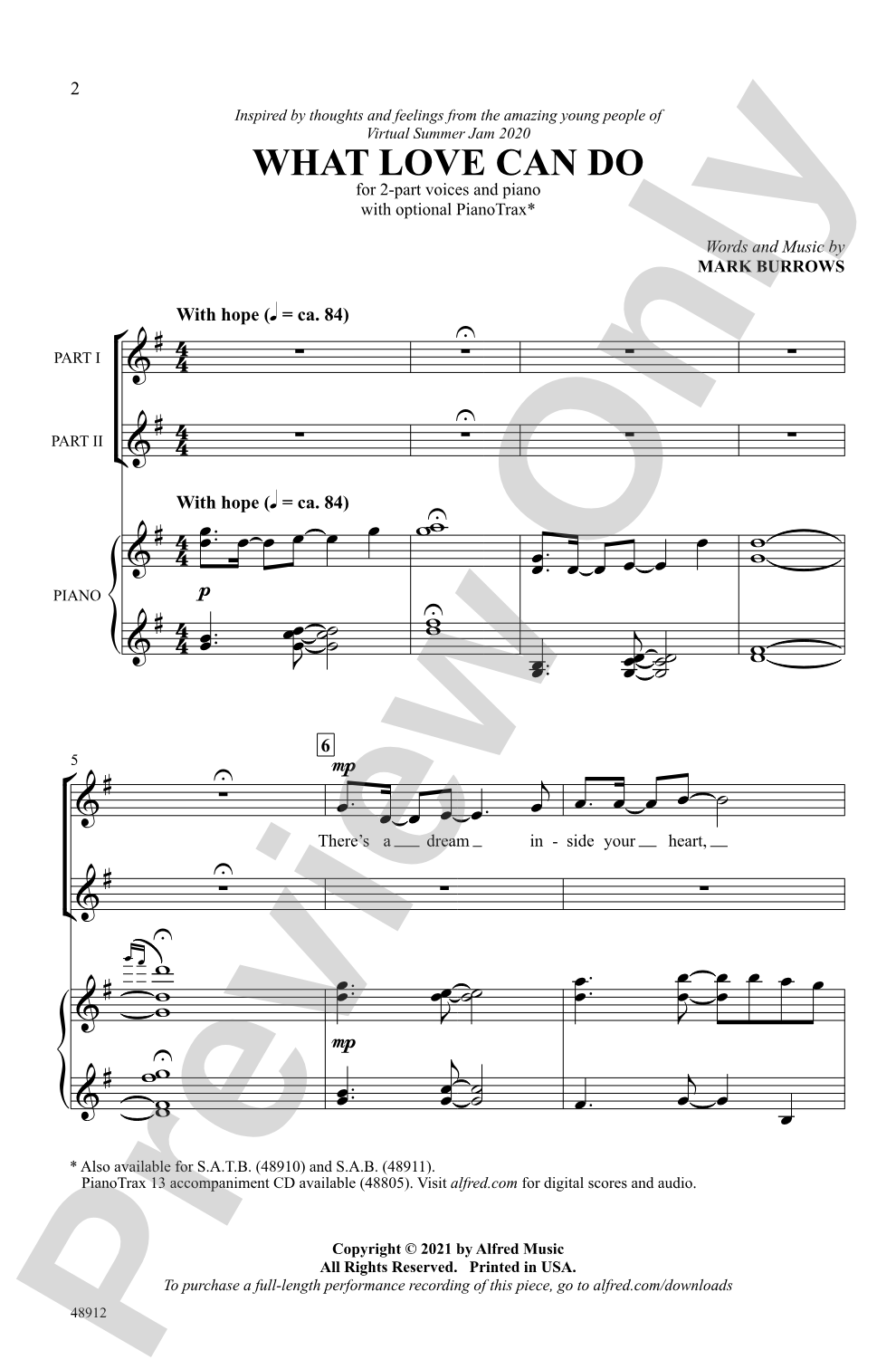
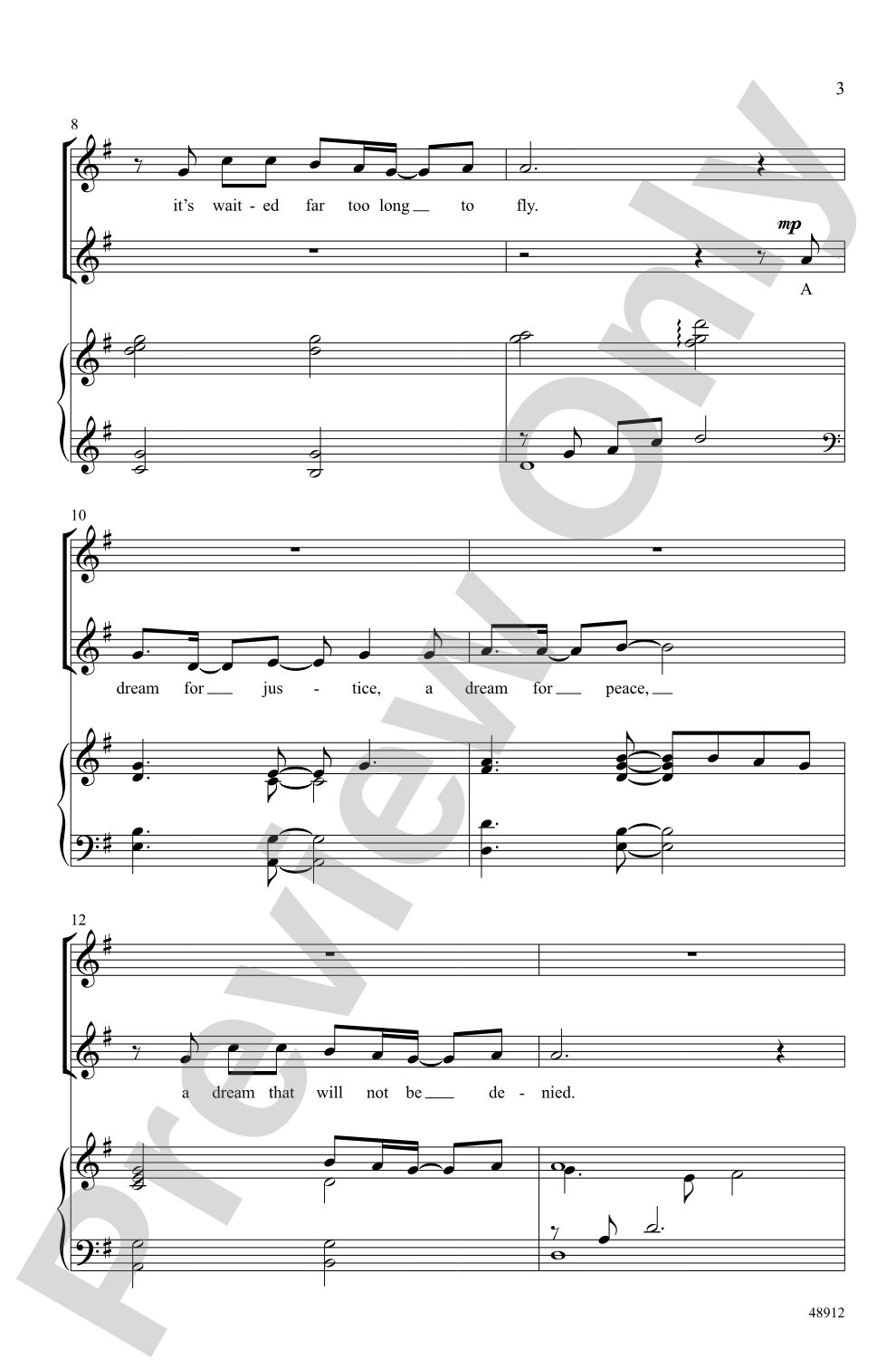
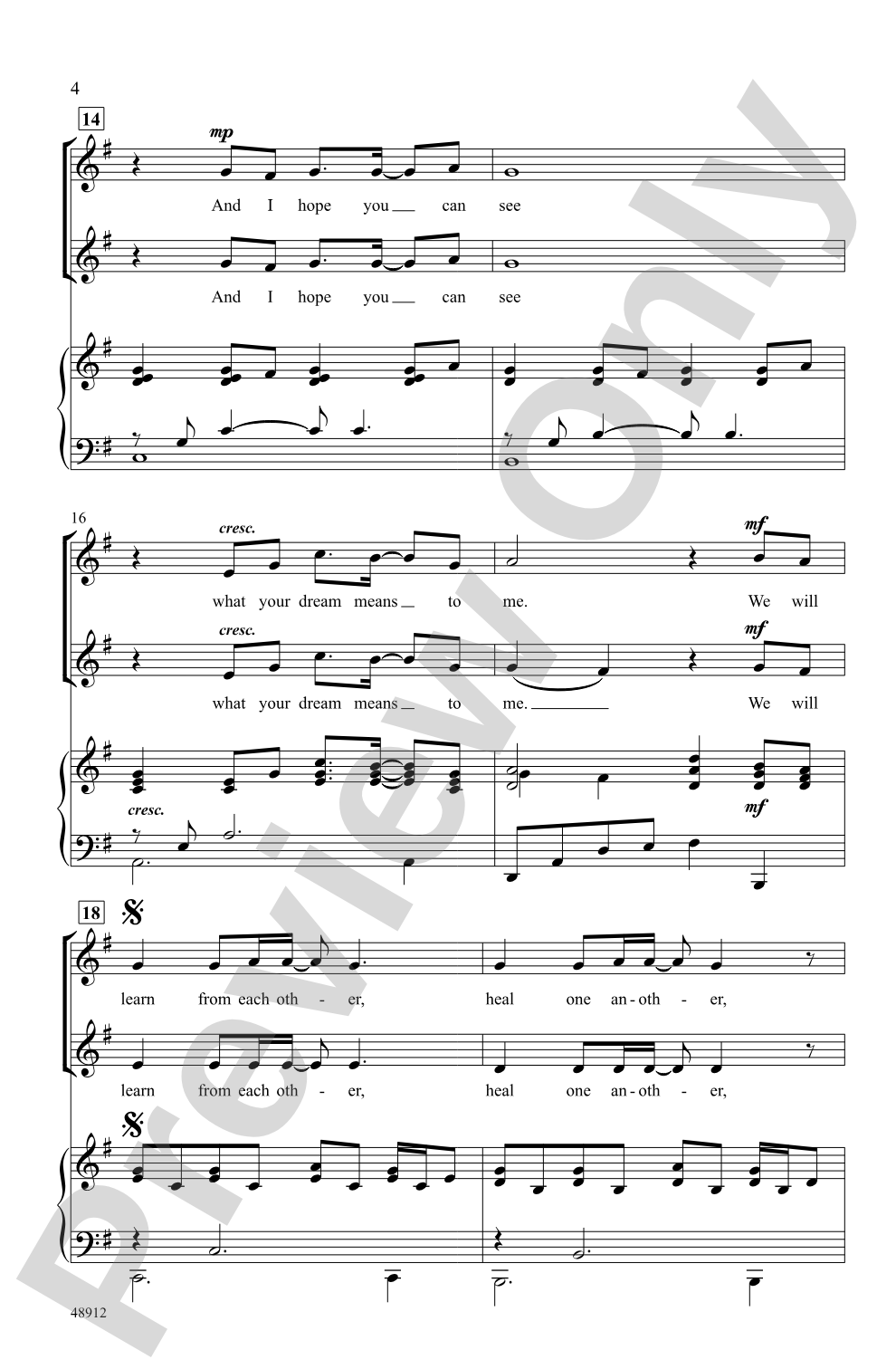

What Love Can Do: 2-Part Choral Octavo
Words and music by Mark Burrows
Item: 00-PO-0006694
$2.05
Minimum order quantity: 20 copies
Pickup currently not available
Related Items
What Love Can Do: PianoTrax Digital Audio Download |
$9.99
|
View | |
What Love Can Do: SATB Choral Octavo |
$2.05
|
View | |
What Love Can Do: SAB Choral Octavo |
$2.05
|
View | |
What Love Can Do: SATB Choral Octavo |
$2.05
|
View | |
What Love Can Do: SAB Choral Octavo |
$2.05
|
View | |
What Love Can Do: 2-Part Choral Octavo |
$2.05
|
View |
Description
"We will reach out, sing out, make a change. We will show the world what love can do!" These empowering lyrics were inspired by thoughts and feelings from amazing young people at a virtual conference held in 2020. Spread the important message with this stirring anthem of hope by stellar composer and youth mentor, Mark Burrows. Starts with a tiny mezzo-soprano seed and blossoms into a full bloom fortissimo. Along the way, intuitive pop rhythms, satisfying harmonies, an especially memorable bridge, a moment of a cappella, and even handclaps help to secure that full finale effect.


What Love Can Do: 2-Part Choral Octavo isn't in MakeMusic Cloud just yet...but it could be. Let us know you'd like to see it, and you'll help shape what comes next. In the meantime, start a free trial and dive into thousands of interactive titles your students can play along with today.
Request This Title
Tell us you want it.
Start Your Free Trial
Explore everything that's ready to play right now.
Sample Audio
1
Audio File
--:--
0:00
0:00
Sample Video
Additional Details
Series:
Alfred Choral Designs
Publisher:
Alfred Music
Page Count:
12
SKU:
00-PO-0006694
More about this title
About the Composer: Mark Burrows
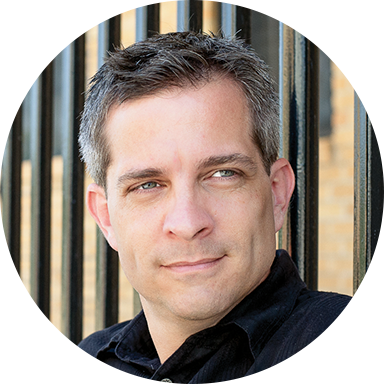
Mark Burrows composes for choirs of all ages and has earned recognition on state and festival lists across the country. His work balances accessibility with musical substance, and he fields multiple commissions annually from children's choirs, adult ensembles, and intergenerational festival groups. He holds degrees in music education from Southern Methodist University and conducting from Texas Christian University.
Beyond composition, Burrows serves as Director of Children's Ministries at FUMC in Fort Worth, Texas, where he shapes young musicians and singers directly. His dual commitment to creating meaningful music and mentoring the next generation informs every piece he writes. He lives in Fort Worth with his wife Nina and their daughters Emma and Grace.
Why we love this
The arc of this piece matches its message perfectly. Opening with a solo mezzo-soprano voice creates intimacy and immediacy, then the harmonies stack and swell until your singers are singing full-voiced and clapping in unison. It's anthemic without being manipulative, modern without sounding dated, and the bridge alone justifies programming it.
What to expect
Hope building from whisper to roar. The opening feels tender and almost fragile, then warmth and confidence accumulate through pop-influenced rhythms and close harmonies. By the end, your singers and audience are unified in something genuinely celebratory.
Who it's for
Middle school and high school choirs seeking contemporary repertoire with real meaning. Directors programming concerts that center youth voice and social-emotional themes will find this piece resonates with singers and audiences alike.
How to get the most out of it
- Start the opening mezzo-soprano line with genuine vulnerability. This isn't a belted entrance; let the solo voice establish the seed from which everything grows.
- Bring the handclap moment into rehearsals early. Lock the rhythmic precision there so it feels organic and powerful, not accidental.
- Shape the a cappella section with careful breath placement and balance. The lack of harmonic support exposes tuning, so drill that moment separately.
- Build the final fortissimo with dynamic intention across all preceding phrases. The payoff only lands if your singers understand they're climbing toward something.
How to use it
This works beautifully as the closing number on a concert centered on themes of unity, change, or youth empowerment. It also shines in festival settings where contemporary choral writing is valued, and its 12-page length makes it manageable without overshadowing an entire program.
Skills your students will build
- Dynamic contrast (mezzo-soprano solo to fortissimo full ensemble)
- Rhythmic precision in contemporary pop idioms
- Blend and balance in two-part writing with layered vocal entry
- A cappella tuning and intonation
- Physical ensemble awareness (handclaps, synchronized breathing)