

What a Wonderful World: SSAB, a cappella Choral Octavo
Words and Music by George David Weiss and Bob Thiele / arr. Andy Beck
Item: 00-PO-0006441

$2.10
Minimum order quantity: 20 copies
Pickup currently not available
Related Items
What a Wonderful World: SoundTrax Digital Audio Download |
$29.99
|
View | |
What a Wonderful World: SATB a cappella Choral Octavo |
$2.10
|
View | |
What a Wonderful World: 2-Part Choral Octavo |
$2.10
|
View | |
What a Wonderful World: SATB a cappella Choral Octavo |
$2.10
|
View | |
What a Wonderful World: SSAB, a cappella Choral Octavo |
$2.10
|
View | |
What a Wonderful World: 2-Part Choral Octavo |
$2.10
|
View | |
What a Wonderful World: Choral Octavo SoundTrax CD |
$29.99
|
View |
Description
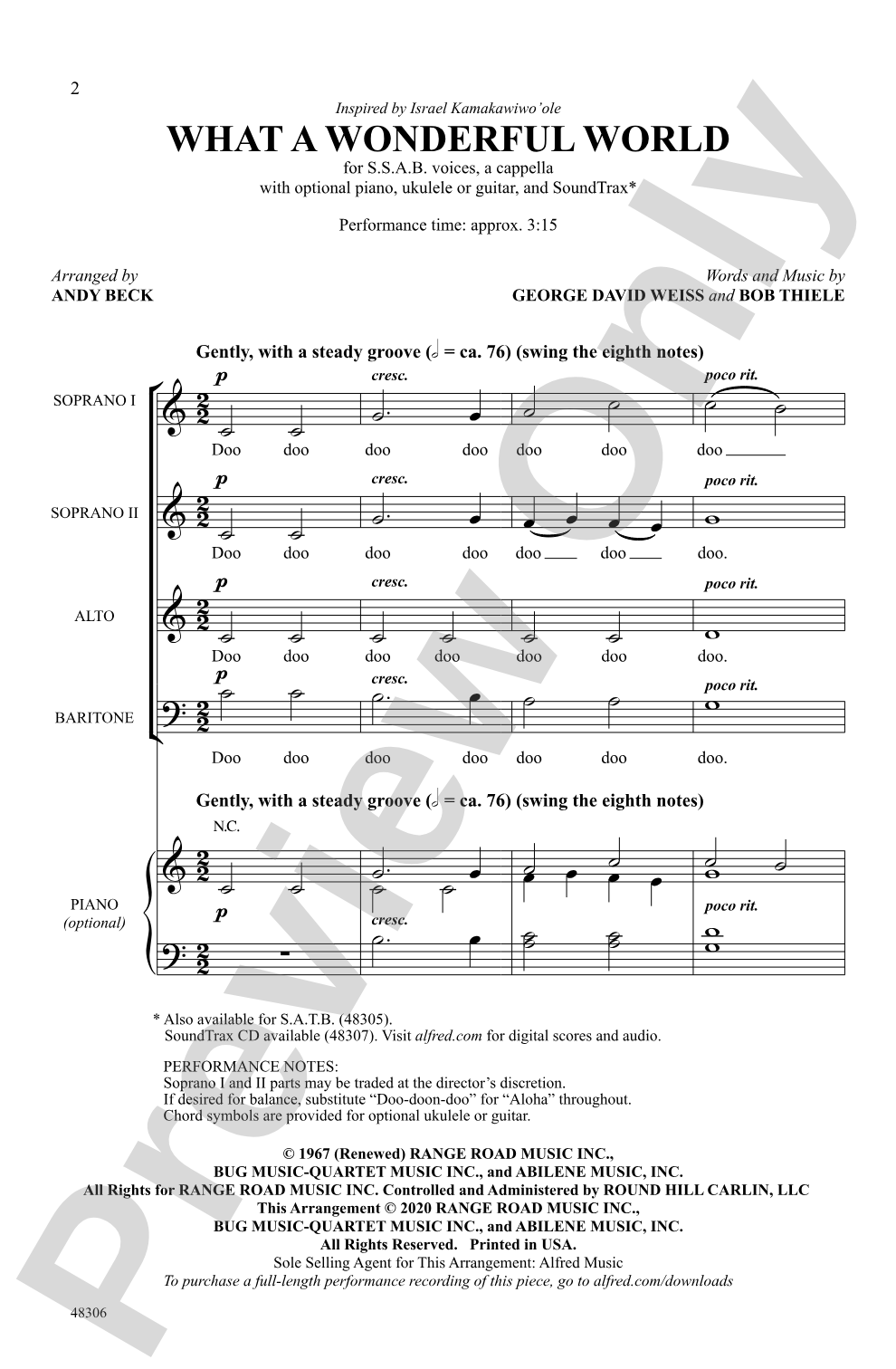
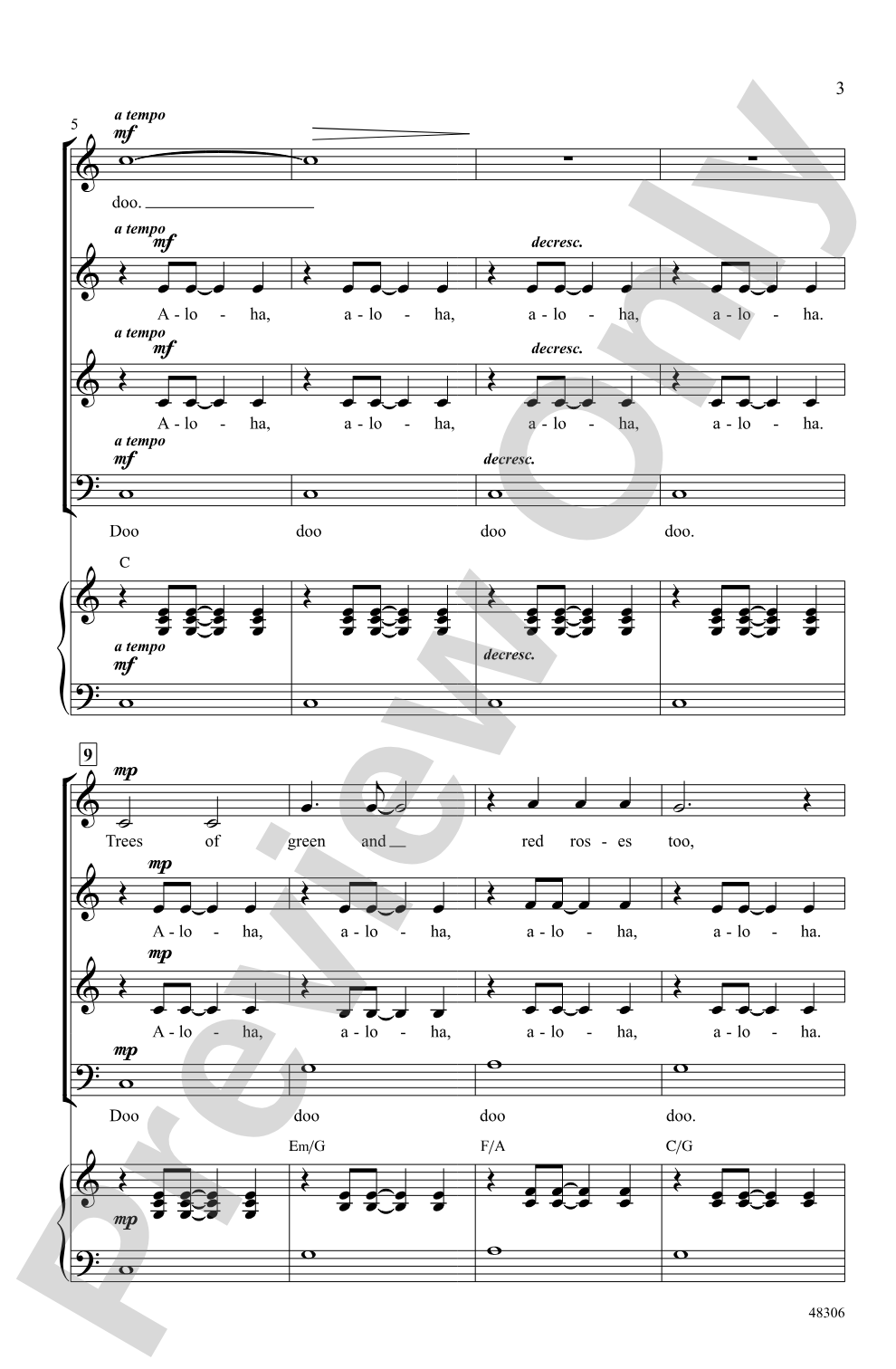
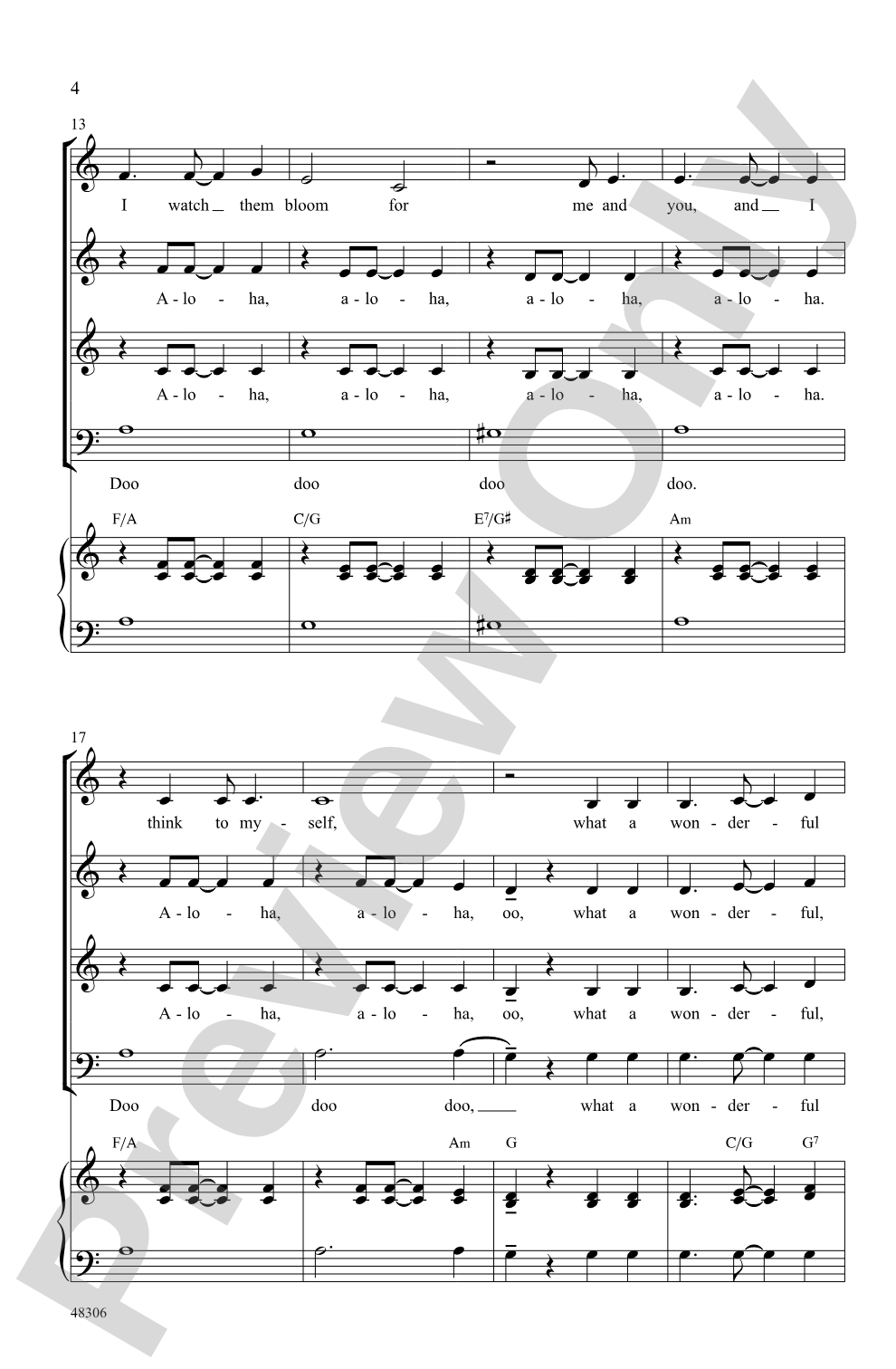
This inspired setting faithfully retains the Hawaiian character of Israel Kamakawiwo'ole's cover. Andy features the sopranos, then altos, on the classic melody, accompanied by rhythmic "aloha's" from other sections of the choir. This adaptable publication invites you to perform a cappella or with optional piano, ukulele, or guitar. A special arrangement that honors the depth of the original song, the spirit of "Brother Iz," and the beauty of the earth.


Don't just read it, hear it, play along with it, and watch your students grow with it. In MakeMusic Cloud, What a Wonderful World: SSAB, a cappella Choral Octavo comes alive with professional accompaniment, adjustable tempo, and built-in practice tools that turn solo practice into real progress.
Open in the Player
Jump straight in and assign it today.
Start Your Free Trial
Open this title and explore the full library in minutes.
Sample Audio
1
A Cappella
--:--
2
Full
--:--
3
With Ukulele
--:--
A Cappella
0:00
0:00
Sample Video
Additional Details
Series:
Alfred Pop Choral Series
Publisher:
Alfred Music
Page Count:
12
SKU:
00-PO-0006441
More about this title
About the Composer: George David Weiss
George David Weiss composed "What a Wonderful World" with co-writer Bob Thiele in 1967, creating one of the most recorded and performed songs in modern music history. The composition has transcended its original context to become a standard in jazz, pop, and educational settings, celebrated for its timeless melody and message of human connection and environmental appreciation.
Why we love this
Andy Beck's arrangement captures the warmth and groove of Israel Kamakawiwo'ole's legendary ukulele rendition while making it genuinely singable for mixed choirs. The rhythmic "aloha" accompaniment creates infectious momentum without requiring divisi complexity, and the flexibility to perform a cappella or with instruments means you can adapt it to your ensemble's strengths and your concert needs.
What to expect
Warm, communal, and grounded. The Hawaiian character anchors every phrase, while the rhythmic support from surrounding voices creates a sense of togetherness rather than solo spotlight. Singing this arrangement feels like gathering with friends to share something honest and life-affirming.
Who it's for
This octavo works for middle school through adult choirs seeking accessible, meaningful repertoire with contemporary appeal. The three-part mixed voicing and optional accompaniment make it flexible for programs with varying resources, while the song's universal message and iconic status engage singers of all backgrounds.
How to get the most out of it
- Establish the rhythmic feel of the "aloha's" early in rehearsal by having non-melody sections practice their part as a steady percussive layer, not as background vocals. This rhythmic anchor will ground the sopranos and altos when they carry the melody.
- Balance the melody with care: sopranos should sing with clarity and warmth on the opening, but never overshadow the altos when they take the same passage. This shared ownership of the tune honors the song's emphasis on unity.
- If adding optional accompaniment, start rehearsals a cappella to build independence and lock the harmonic relationships before layering instruments. The choir's ear will remain stronger throughout the piece.
- Shape the phrase endings with a gentle lift rather than a drop; this honors the reflective, hopeful character of the text and prevents the arrangement from feeling static.
How to use it
This is a natural choice for peace-themed concerts, graduations, or programs celebrating community and the environment. Its emotional centeredness makes it an excellent closing piece or a bridge between contrasting works; its accessibility means you can program it early in the season and watch it deepen over time.
Skills your students will build
- Balancing melody and rhythmic accompaniment in a cappella texture
- Sustaining a steady rhythmic ostinato while others carry melodic material
- Shaping phrase endings and dynamics to serve lyrical intent
- Adapting performance between a cappella and accompanied versions
- Singing with cultural sensitivity and emotional authenticity