

What a Wonderful World: SATB a cappella Choral Octavo
Words and Music by George David Weiss and Bob Thiele / arr. Andy Beck
Item: 00-PO-0006305

$2.10
Minimum order quantity: 20 copies
Pickup currently not available
Related Items
What a Wonderful World: SoundTrax Digital Audio Download |
$29.99
|
View | |
What a Wonderful World: SSAB, a cappella Choral Octavo |
$2.10
|
View | |
What a Wonderful World: 2-Part Choral Octavo |
$2.10
|
View | |
What a Wonderful World: SATB a cappella Choral Octavo |
$2.10
|
View | |
What a Wonderful World: SSAB, a cappella Choral Octavo |
$2.10
|
View | |
What a Wonderful World: 2-Part Choral Octavo |
$2.10
|
View | |
What a Wonderful World: Choral Octavo SoundTrax CD |
$29.99
|
View |
Description
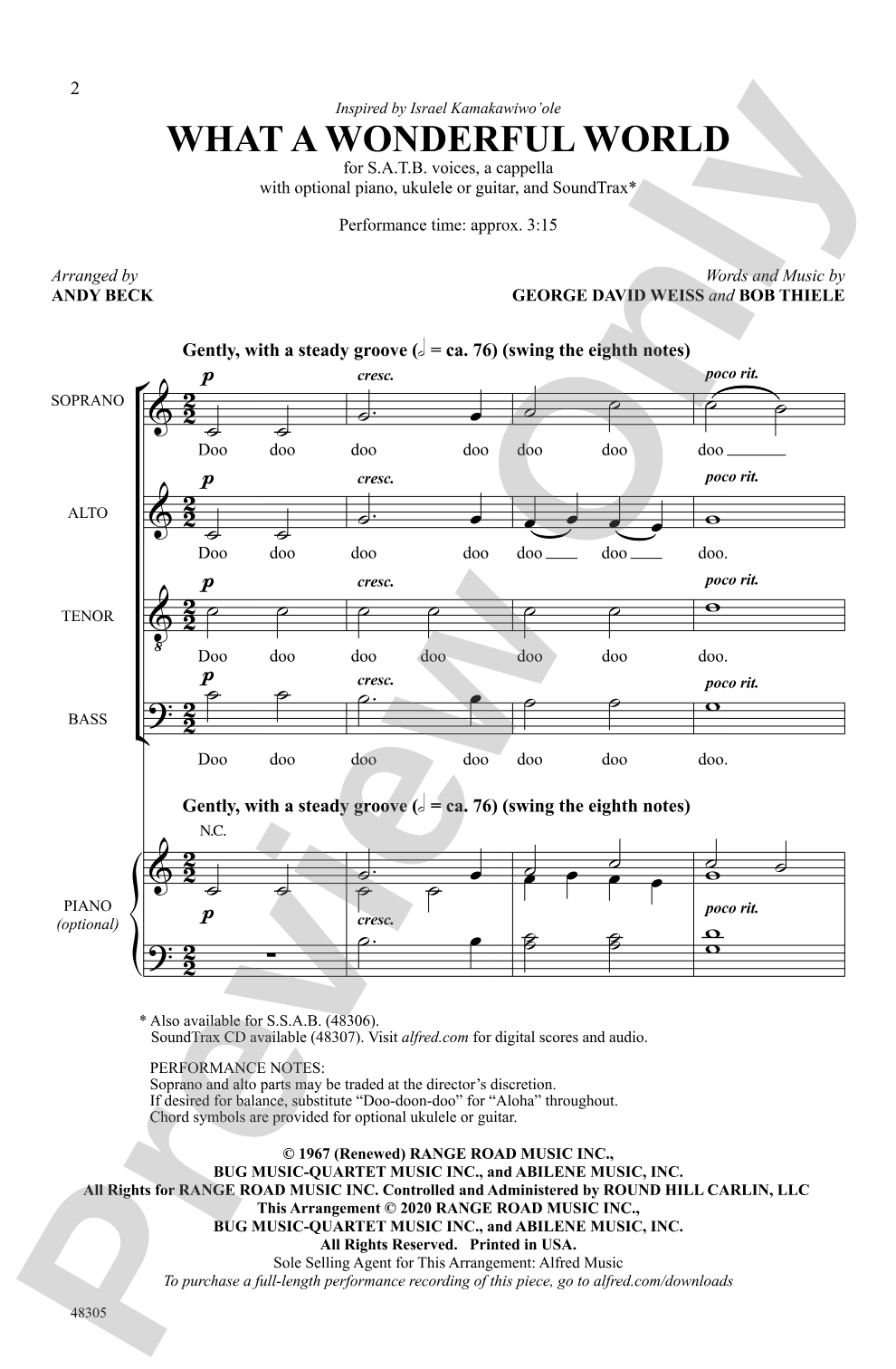
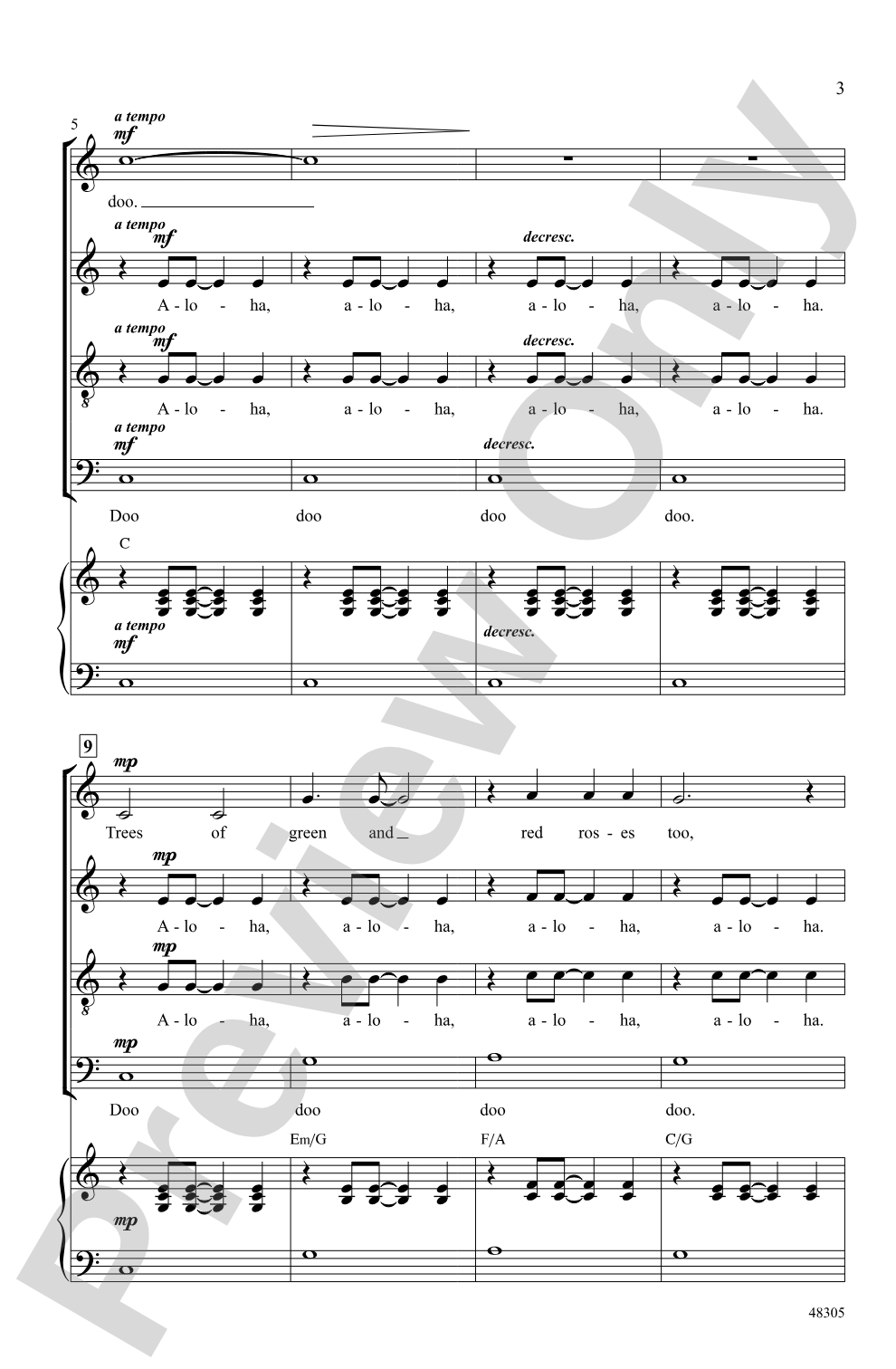
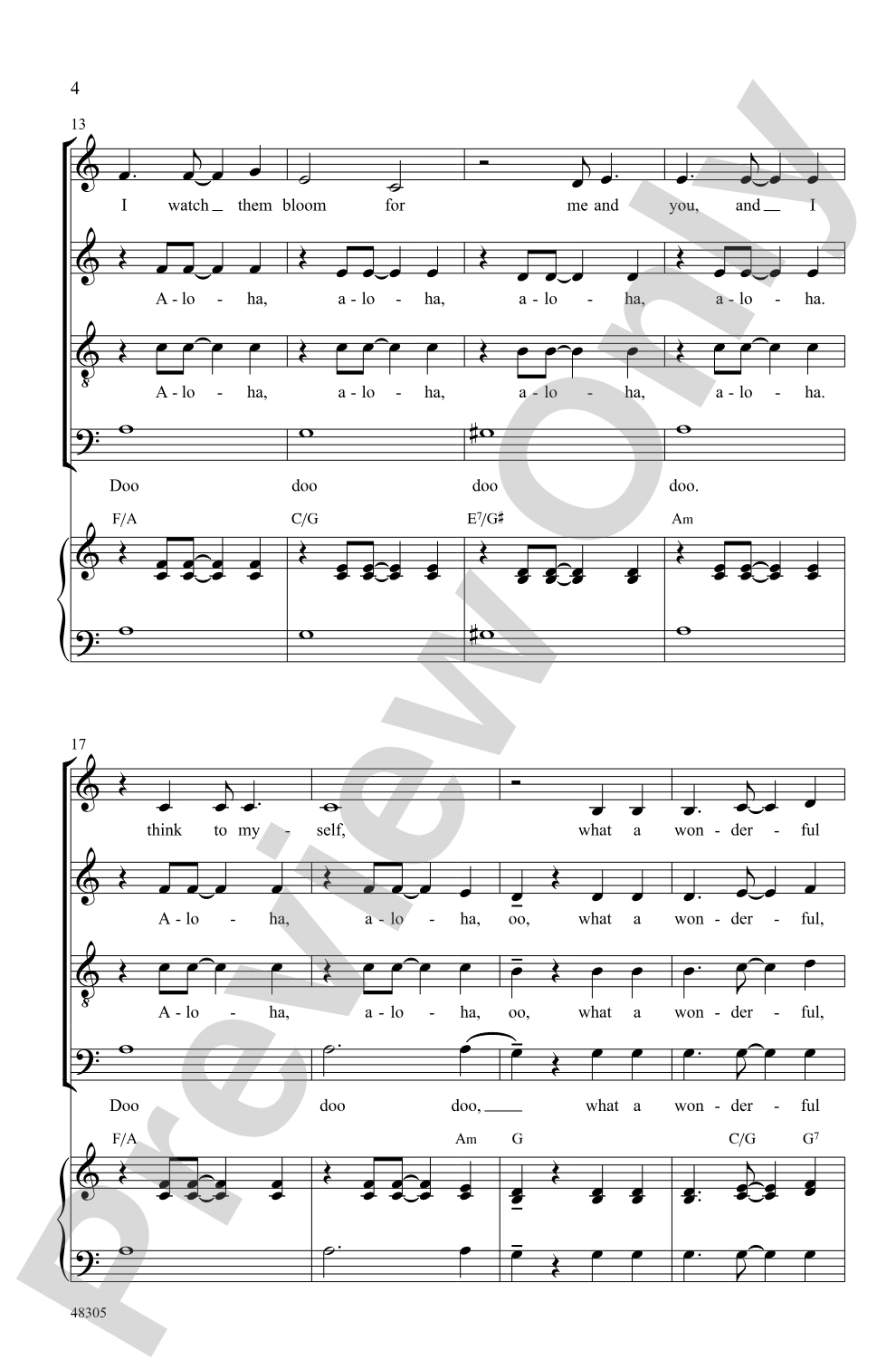
This inspired setting faithfully retains the Hawaiian character of Israel Kamakawiwo'ole's cover. Andy features the sopranos, then altos, on the classic melody, accompanied by rhythmic "aloha's" from other sections of the choir. This adaptable publication invites you to perform a cappella or with optional piano, ukulele, or guitar. A special arrangement that honors the depth of the original song, the spirit of "Brother Iz," and the beauty of the earth.


Don't just read it, hear it, play along with it, and watch your students grow with it. In MakeMusic Cloud, What a Wonderful World: SATB a cappella Choral Octavo comes alive with professional accompaniment, adjustable tempo, and built-in practice tools that turn solo practice into real progress.
Open in the Player
Jump straight in and assign it today.
Start Your Free Trial
Open this title and explore the full library in minutes.
Sample Audio
1
A Cappella
--:--
2
Full
--:--
3
With Ukulele
--:--
A Cappella
0:00
0:00
Sample Video
1 / 2
Additional Details
Series:
Alfred Pop Choral Series
Publisher:
Alfred Music
Page Count:
12
SKU:
00-PO-0006305
More about this title
About the Composer: George David Weiss
George David Weiss composed "What a Wonderful World" with Bob Thiele in 1967, creating one of the most enduring songs in American popular music. The song has been recorded by dozens of artists across multiple genres and remains a staple of music education repertoire for its universal message and accessible melody.
Why we love this
Andy Beck's arrangement captures the warmth and island character that Iz brought to this standard, using layered vocal textures and rhythmic chanting to build energy without relying on instrumental support. The flexibility to perform a cappella or with optional accompaniment makes it practical for ensembles at different resource levels, while the writing itself feels fresh and unhurried. This is the kind of piece that connects singers to why they love choral music in the first place.
What to expect
There's a gentle, expansive quality to this arrangement—the kind of warmth you feel when voices blend in close harmony over simple, meaningful text. The Hawaiian undertone, reinforced through rhythmic vocal elements, creates an intimate sense of place, while the unfolding melodic lines invite listeners into reflection rather than spectacle.
Who it's for
This octavo suits choirs at the high school through adult level who want a piece that speaks to contemporary life while honoring a musical legacy. It works equally well for ensembles focused on pop repertoire and for traditional choral programs looking to expand their concert offerings.
How to get the most out of it
- Establish the "aloha" chants as a rhythmic and tonal anchor; these syllables should feel conversational and grounded, not mechanical, to honor the Hawaiian influence.
- Balance the solo lines (sopranos, then altos) so they sit naturally above the supporting voices without requiring extra volume; this arrangement rewards clear diction over power.
- If using optional accompaniment, rehearse both versions so singers understand the harmonic framework independently before adding instrumental color.
- Pay attention to breath placement in longer phrases; mark strategic cut points that feel organic to the text and maintain the song's conversational, unhurried pace.
How to use it
Program this as a closing piece for concerts focused on peace, unity, or celebration; its message and musical sincerity make it an ideal opener or finale for graduation events. It also pairs beautifully with other pop arrangements or acoustic-forward repertoire, and its a cappella flexibility means you can feature it in smaller ensemble contexts or full choir performances.
Skills your students will build
- Maintaining harmonic independence while supporting a featured melody line
- Creating rhythmic precision and ensemble cohesion without instrumental reinforcement
- Interpreting cultural musical elements (Hawaiian vocal character and phrasing) authentically
- Balancing vocal blend with clear diction across longer sustained passages
- Reading and performing chord-driven arrangements that prioritize text expression over technical complexity