Wednesday Workout Cover Image

Wednesday Workout: String Orchestra Conductor Score & Parts

$45.00 USD
Sale price  $45.00 USD Regular price 
Skip to product information
Wednesday Workout Cover Image

Wednesday Workout: String Orchestra Conductor Score & Parts

By Loreta Fin

Grade: 1.5

Item: 76-30188

Need it now?

Buy Digital Version
$45.00
Shipped

One moment…

Description
For the past 15 years, Junior and Training Strings at Somerville House School rehearse on a Wednesday morning. Hence, the name. This piece features string crossing and block rhythms with nice harmonies. It is easy to play and the speed can be varied to suit the ability of the players.

Wednesday Workout: String Orchestra Conductor Score & Parts isn't in MakeMusic Cloud just yet...but it could be. Let us know you'd like to see it, and you'll help shape what comes next. In the meantime, start a free trial and dive into thousands of interactive titles your students can play along with today.

Sample Pages

Sample Audio
No sample audio found.
Sample Video
Additional Details
Series: Wilfin String Orchestra: Young String Ensemble Series
Publisher: Wilfin Music
Page Count: 124
UPC: 038081327433
SKU: 76-30188

More about this title

About the Composer: Loreta Fin
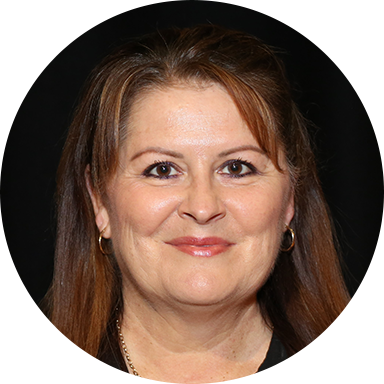
Loreta Fin

Loreta Fin AM studied viola and violin at the Sydney Conservatorium of Music and served as concertmaster of the Sydney Youth Orchestra before building a career as a performer and educator. Over 25 years as Principal Viola player with the Queensland Pops Orchestra, she has shared stages with internationally recognized soloists and ensembles while maintaining an active chamber music presence.

As Director of Strings at Somerville House School since 1993, Fin has become a cornerstone of Australian string education. She has presented research at two American National String Teachers' Conferences and multiple Australian National Music Conferences, served as State and National President of the Australian Strings Association, and was honored with a Queensland State Award for her contributions to string teaching in 2009. Her published catalog exceeds 100 works for string orchestra, and she currently serves as State Advisor for Strings with the Australian Music Examinations Board. In 2017, Fin conducted the Miri Music Project in Malaysia; she conducts the State and National Honours Ensembles Programs regularly and received the National Award for Services to Music and String Teaching in Australia.

Why we love this

This piece captures something directors rarely find at this level: genuine musical content paired with genuine flexibility. Fin knows young string players intimately, and it shows. The string crossings and block rhythms feel purposeful rather than arbitrary, the harmonies reward careful listening, and you can adjust the tempo to match your ensemble's actual comfort level without sacrificing musicality.

What to expect

Approachable and alive. The piece breathes with the confidence of a composer who has spent decades teaching young players; nothing feels forced or showboaty. The string crossings and rhythmic figures create momentum without complexity, and the harmonies give the ensemble something genuine to balance and blend.

Who it's for

Young string orchestras and training ensembles ready to move beyond unison melodies into parts writing with real harmonic interest. Works equally well for school orchestras meeting regularly, after-school string groups, or youth orchestra training sections.

How to get the most out of it

  • Map the string crossings in the first rehearsal so players see the fingering logic rather than treating them as obstacles. Fin's voicing makes physical sense once students understand the path.
  • Treat the block rhythms as an opportunity to lock ensemble sound; mark a practice point where all strings enter a phrase together and find unified articulation there.
  • Adjust tempo flexibly during the first run-through to identify where players naturally find the groove, then establish a rehearsal tempo that feels stable for that passage.
  • Balance the harmonies by listening for the inner voices; at this level, young players often bury viola and cello lines, but Fin's voice writing deserves clarity.

How to use it

Pair this with a longer work in a concert to showcase your ensemble's growing independence and harmonic awareness. It works equally well as a substantial opening number or as a palate-cleansing piece between a soloists' showcase and a major work, and its flexibility in tempo makes it a reliable choice when rehearsal time has been limited.

Skills your students will build

  • String crossing technique with musical purpose
  • Reading and executing block rhythms with ensemble precision
  • Balancing inner voice harmonies
  • Collaborative listening across four string parts
  • Tempo flexibility and expressive control within a compact form

You May Also Like