
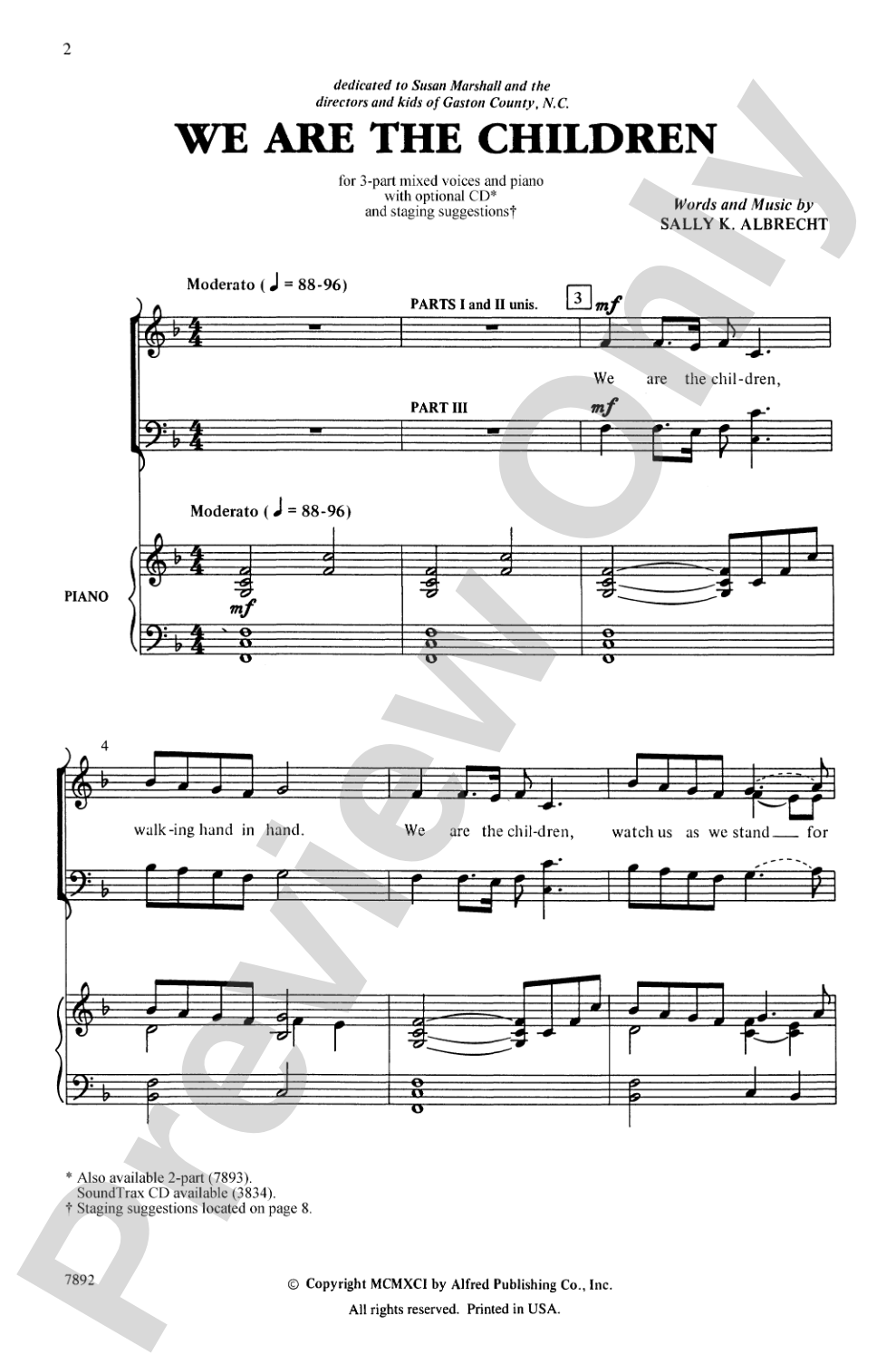
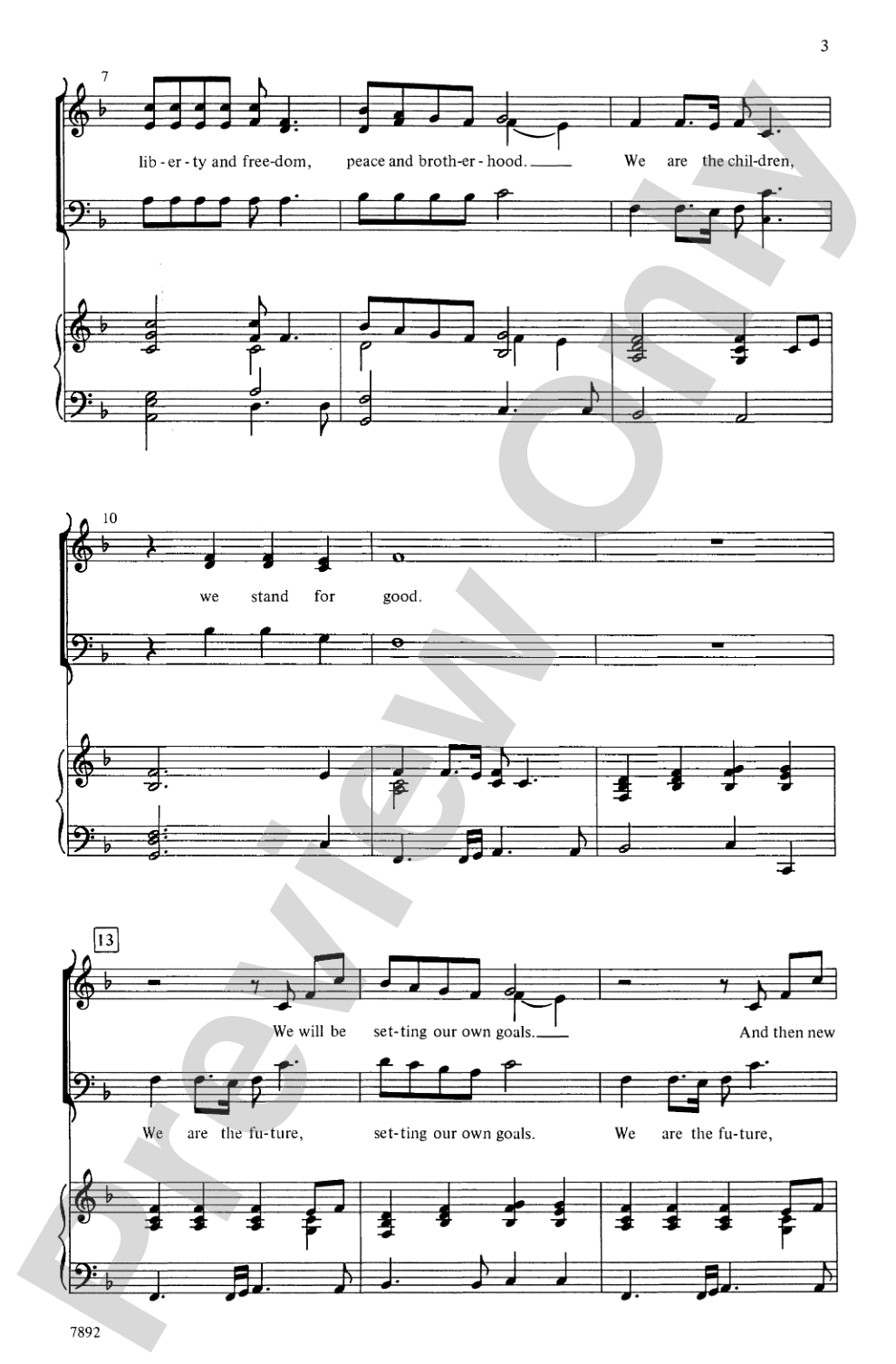

We Are the Children: 3-Part Mixed (with Opt. Staging) Choral Octavo
Music by Sally K. Albrecht
Item: 00-PO-0004620
$2.25
Minimum order quantity: 20 copies
Pickup currently not available
Description
A stirring work by Sally K. Albrecht. Easily performable, but so effective. The inspiring text ('We are the children, we stand for peace and brotherhood.') is both timely and moving. INCLUDED IN THE PUBLICATION ARE SALLY'S OWN SIMPLE STAGING SUGGESTIONS.


We Are the Children: 3-Part Mixed (with Opt. Staging) Choral Octavo isn't in MakeMusic Cloud just yet...but it could be. Let us know you'd like to see it, and you'll help shape what comes next. In the meantime, start a free trial and dive into thousands of interactive titles your students can play along with today.
Request This Title
Tell us you want it.
Start Your Free Trial
Explore everything that's ready to play right now.
Sample Audio
1
Audio File
--:--
0:00
0:00
Sample Video
No sample videos found.
Additional Details
Series:
Alfred Archive Edition: Alfred Choral Designs
Publisher:
Alfred Music
Page Count:
8
SKU:
00-PO-0004620
More about this title
About the Composer: Sally K. Albrecht
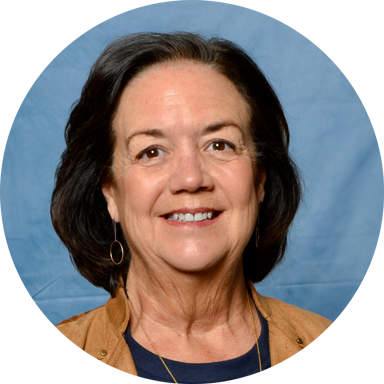
Sally K. Albrecht has shaped choral music education for over three decades, serving as Director of School Choral, Vocal, and Elementary Publications at major educational publishers including Alfred Music. Her catalog of more than 600 choral works and 75 musicals and songbooks reflects her deep understanding of what students can achieve and what teachers need in the rehearsal room. She has been recognized annually with ASCAP Special Music Awards since 1987 and has conducted honor choirs at prestigious venues including Lincoln Center, Carnegie Hall, and The Kennedy Center.
Albrecht's academic background spans music and theater, with degrees from Rollins College (B.A., 1976) and the University of Miami (M.A. in Drama, 1977; M.M. in Accompanying, 1979). She has taught in music departments at Oakland University, Jersey City State College, and Meredith College. In 2021, she received Distinguished Alumna Awards from both the University of Miami Frost School of Music and Rollins College, where she serves on the Board of Trustees. A native of Cleveland, Ohio, she lives in North Carolina with her husband, composer and arranger Jay Althouse.
Why we love this
Albrecht has a gift for writing text that lands with genuine impact, and this piece proves it. The message about peace and brotherhood emerges as something students actually believe in rather than something they perform, which transforms the entire rehearsal energy. The fact that staging suggestions are built right into the score means you can bring movement and visual focus into the piece without having to devise it yourself, making a full production feel achievable even with limited rehearsal time.
What to expect
Stirring and purposeful, yet approachable. The music lifts without being overwrought; the message feels timeless even in today's moment. There is a quiet strength in the writing that invites singers to be vulnerable and present rather than showy.
Who it's for
Directors leading mixed-voice choirs (SAB voicings) who want a piece that speaks to something beyond technique. This works beautifully in middle school, high school, and community choir settings where students are ready to engage with meaningful content. It is also an excellent choice for concerts and events centered on service, social responsibility, or unity.
How to get the most out of it
- Treat the text as the centerpiece. Allow your singers to understand and own the message before worrying about vocal blend; the conviction will carry the sound.
- The staging suggestions in the score are intentionally simple. Work through them as a choir first without worrying about polish, and let students see how physical presence amplifies the emotional message.
- If using the recorded accompaniment, have your singers listen to it in advance so they can hear the harmonic context before rehearsal. This helps SAB voicings lock together more quickly.
- Balance the three parts so that the text remains clear. With a peace and brotherhood piece, clarity of message matters as much as blend.
How to use it
Program this as a centerpiece for a concert focused on social responsibility, peace, or community values. It pairs well with spirituals or world music that share similar themes. The optional staging makes it equally effective as a powerful standalone piece during assemblies or special events where visual and musical impact matter.
Skills your students will build
- Singing with intention and emotional expression in a three-part texture
- Part independence while maintaining choral blend in SAB voicing
- Connecting physical staging to musical interpretation
- Performing text-driven music where meaning drives the performance