
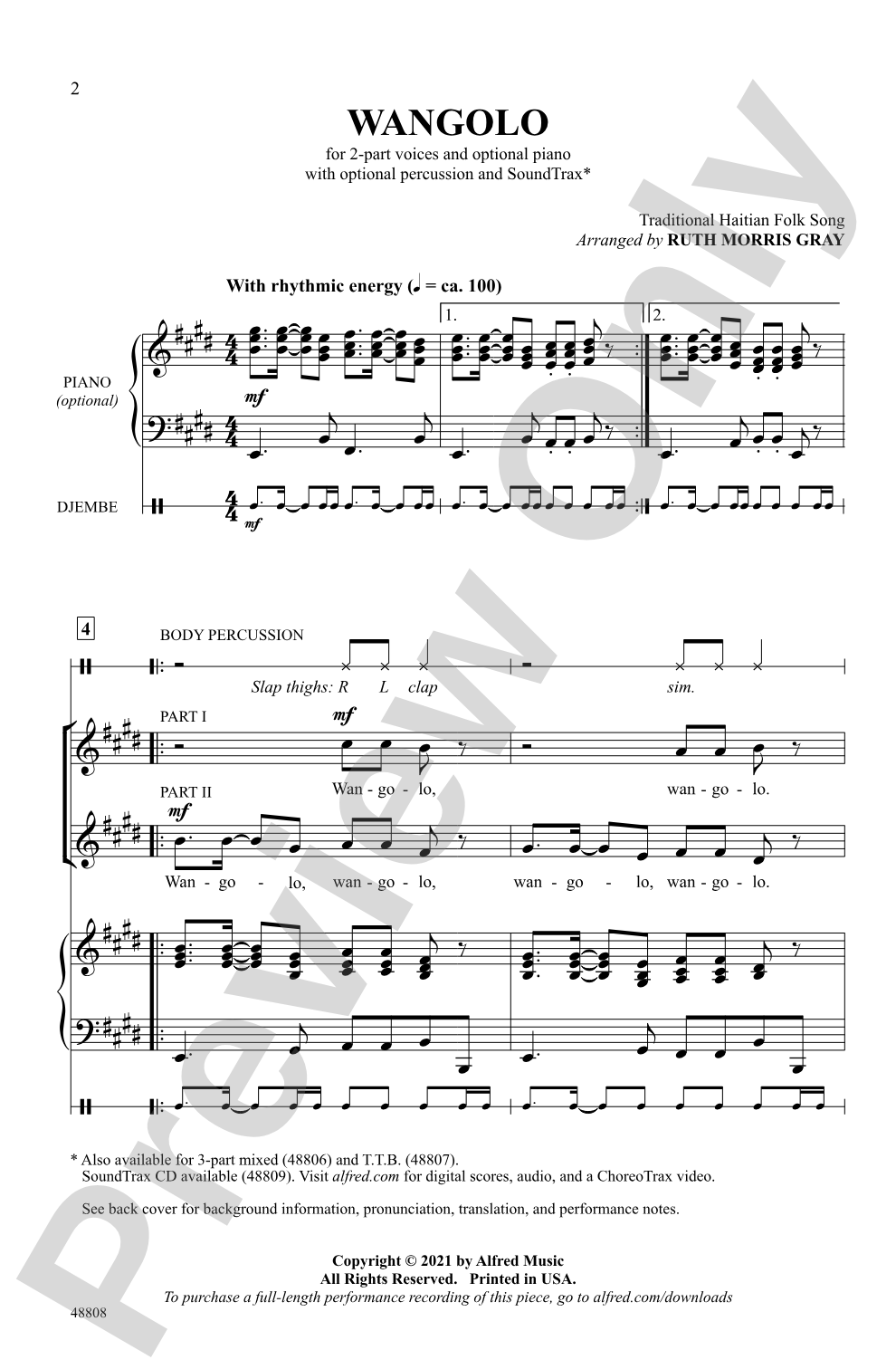

Wangolo: 2-Part, opt. a cappella Choral Octavo
Traditional Haitian Folk Song / arr. Ruth Morris Gray
Item: 00-PO-0006618
$2.05
Minimum order quantity: 20 copies
Pickup currently not available
Related Items
Wangolo: 3-Part Mixed, opt. a cappella Choral Octavo |
$2.05
|
View | |
Wangolo: TTB, opt. a cappella Choral Octavo |
$2.05
|
View | |
Wangolo: 3-Part Mixed, opt. a cappella Choral Octavo |
$2.05
|
View | |
Wangolo: TTB, opt. a cappella Choral Octavo |
$2.05
|
View | |
Wangolo: 2-Part, opt. a cappella Choral Octavo |
$2.05
|
View | |
Wangolo: Choral SoundTrax CD |
$29.99
|
View |
Description
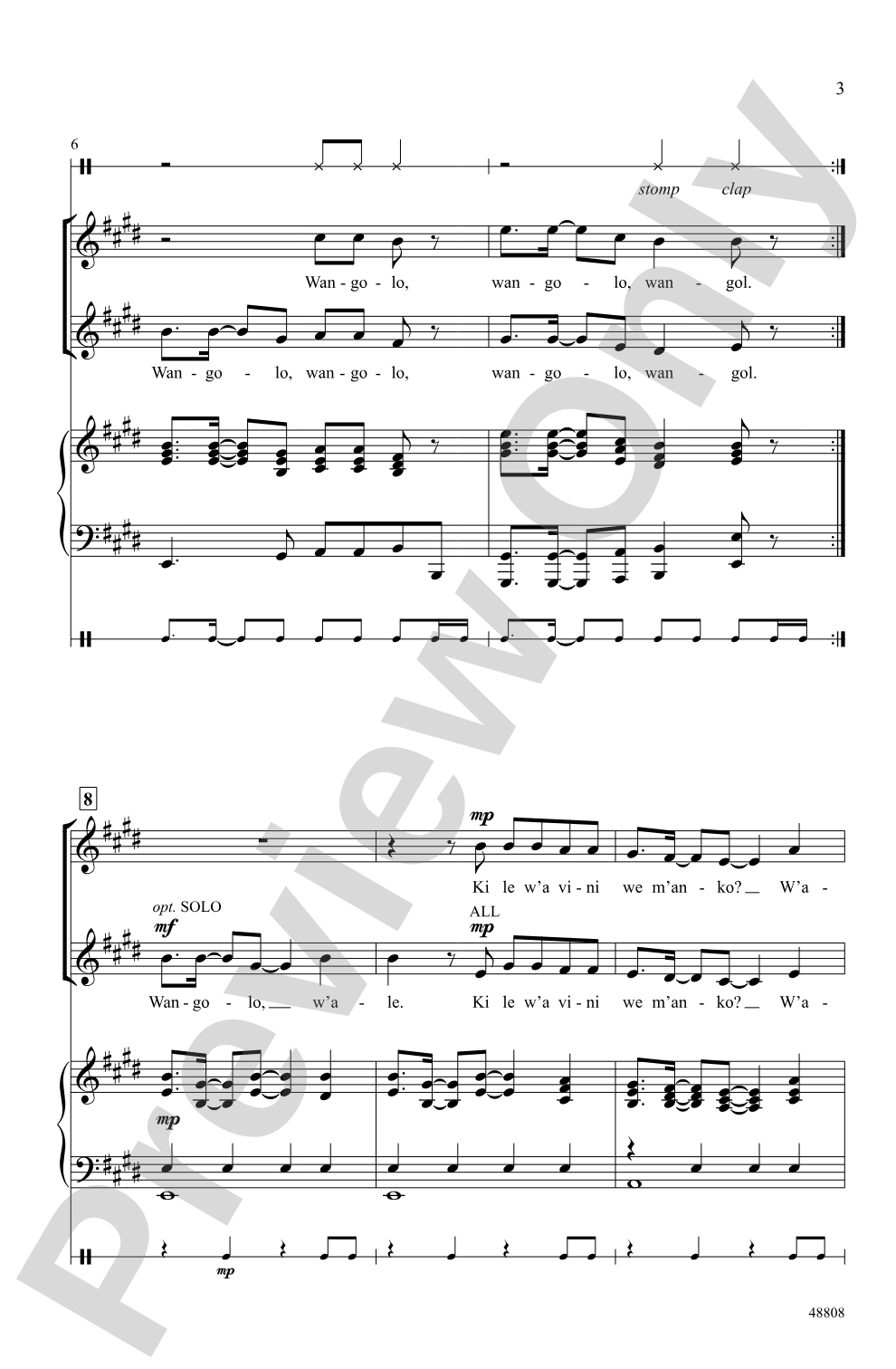
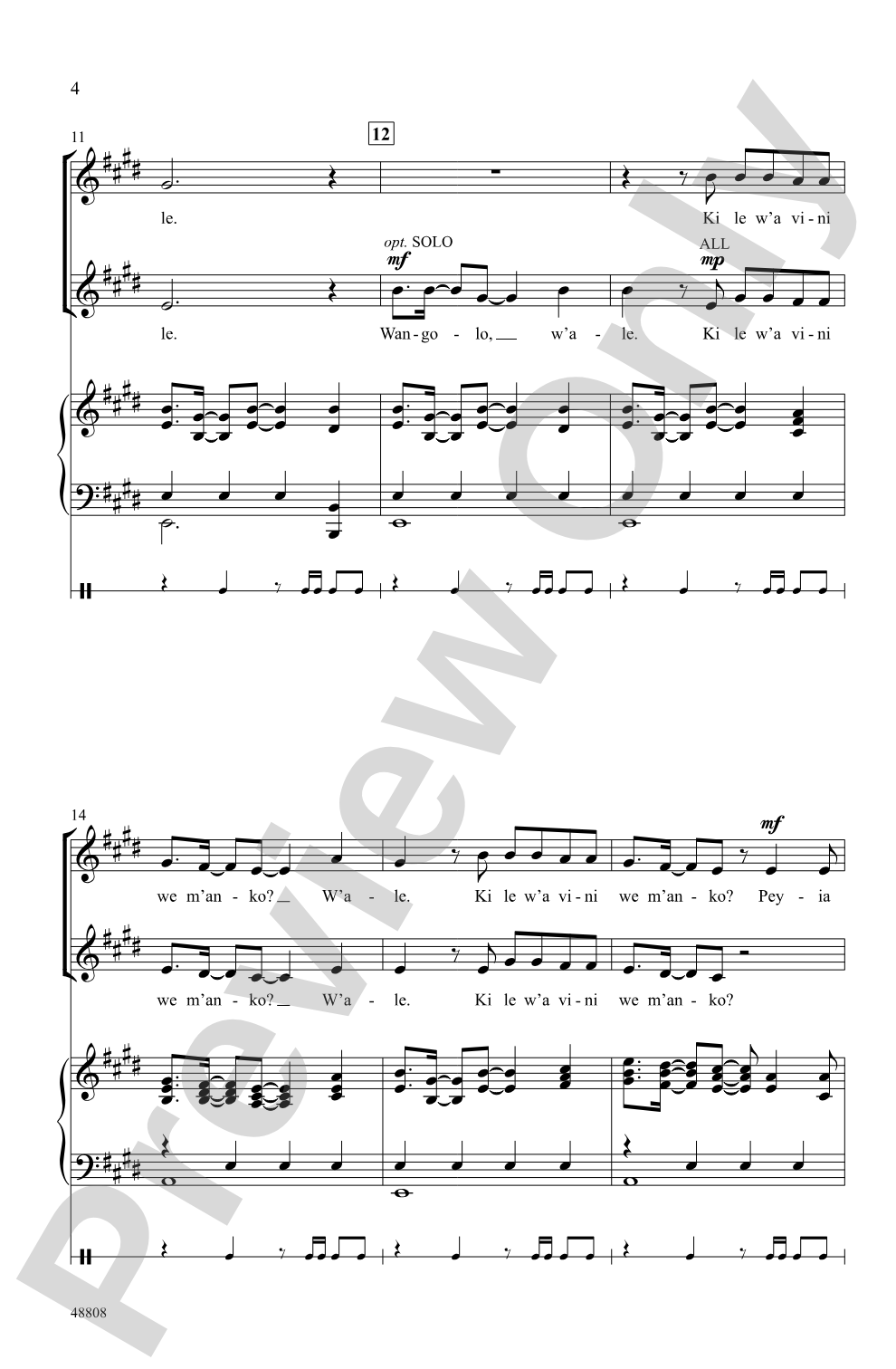
Some history: this song comes from Haiti, but actually refers to the first King of Angola, Ngolo Kiluanje, who was revered as a great king. The Creole word for "king" ("wa") plus the king's name ("Ngolo") became "Wangolo." It's an authentic folk song recalling the peace and prosperity the Angolan people enjoyed before colonization. This rhythmic rendition, which may be performed without piano if desired, includes optional body percussion, suggested parts for djembe and other instruments, optional solos in the call and response section, plus a final descant that tops off the triadic parallel harmonies. Check out the free online ChoreoTrax video for some creative riser choreography.


Wangolo: 2-Part, opt. a cappella Choral Octavo isn't in MakeMusic Cloud just yet...but it could be. Let us know you'd like to see it, and you'll help shape what comes next. In the meantime, start a free trial and dive into thousands of interactive titles your students can play along with today.
Request This Title
Tell us you want it.
Start Your Free Trial
Explore everything that's ready to play right now.
Sample Audio
1
Audio File
--:--
0:00
0:00
Sample Video
1 / 2
Additional Details
Series:
Alfred Choral Designs
Publisher:
Alfred Music
Page Count:
12
SKU:
00-PO-0006618
More about this title
About the Arranger: Ruth Morris Gray
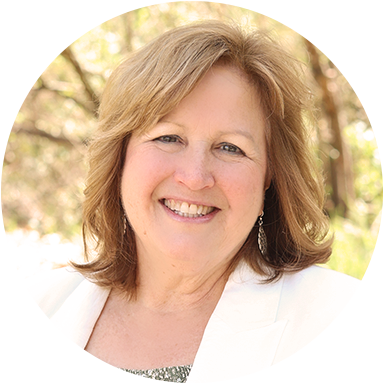
Ruth Morris Gray brings deep roots in both composition and choral direction to her work at Rosemead High School, where she has led the choral program since 2004. Her training spans piano performance and composition at Biola University, with graduate study in music composition at UC Santa Barbara, giving her the foundation to write idiomatically for young voices. With over 100 published choral works to her name, she has become a trusted voice in contemporary choral repertoire for schools.
Beyond the classroom and rehearsal hall, Gray remains an active performer and advocate for culturally grounded music. Her arrangements honor world traditions while making them accessible and engaging for student ensembles, a commitment reflected in works like Wangolo that pair musical authenticity with practical teachability.
Why we love this
Gray's arrangement transforms a Haitian folk tradition into something that feels both historically grounded and immediately alive in your rehearsal. The optional body percussion, djembe parts, and choreography suggestions turn a two-part piece into a full sensory experience without requiring instrumental resources you may not have. The flexibility to perform a cappella means you can build this into a concert without scrambling for accompaniment, while the descant and call-and-response sections give your singers real musical ownership.
What to expect
Wangolo pulses with a kinetic energy that feels grounded and celebratory at once. The two-part harmonies sit comfortably while the rhythmic drive keeps things vital, and the addition of body percussion or djembe transforms it from a quiet ballad into something with presence and joy. There's an authentic dignity to the piece that honors its Angolan roots while the arrangement itself invites your singers to participate with their whole bodies and minds.
Who it's for
This piece works for middle and high school choirs of any size, from smaller programs building their repertoire to larger ensembles looking to add multicultural literature that connects to world history and contemporary social themes. Singers benefit from the rhythmic clarity and call-and-response structure, while directors gain a flexible vehicle for concert programming that doesn't depend on accompaniment or complex staging resources.
How to get the most out of it
- Layer the body percussion gradually across rehearsals rather than introducing everything at once. Start with the core two-part singing, add hand claps in a second week, then integrate djembe and other suggested percussion once the vocal lines sit securely.
- Use the free ChoreoTrax video as a starting point, not a blueprint. Your students will engage more deeply if they help adapt or create the movement vocabulary to fit your space and bodies.
- Treat the solo sections in the call and response as opportunities for confident singers to step forward, not as assignments. This builds ensemble culture and lets you gauge who's ready for leadership roles.
- Balance the descant so it sits on top without overwhelming the harmonic foundation. A cappella singing exposes every voice, so make sure your descant soloist or section has vocal stamina and secure pitch.
How to use it
Program this in a concert celebrating world music or cultures, where it can stand alongside African American spirituals or other diaspora traditions to tell a fuller musical story. The optional movement and percussion make it a natural fit for a spring concert that wants energy and visual interest without requiring elaborate staging or technical support.
Skills your students will build
- Rhythmic precision and independence in call-and-response structures
- Singing two-part harmony with secure intonation in a pentatonic/triadic framework
- Coordinating body percussion, instrumental parts, and vocals simultaneously
- Interpreting historical and cultural context in music performance
- Solo performance confidence through optional solo sections
- Reading and executing parallel harmony, including descant voicing