
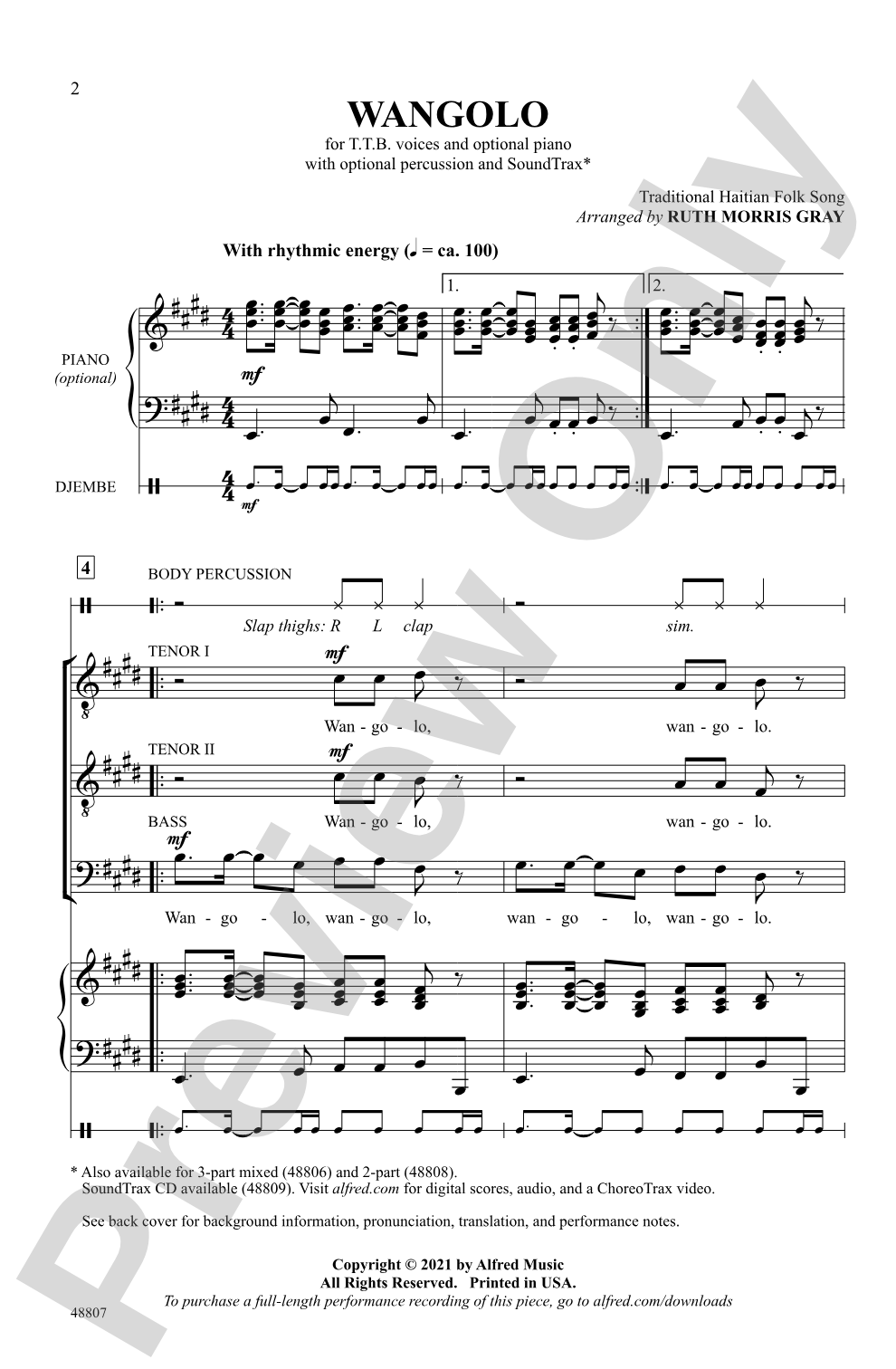
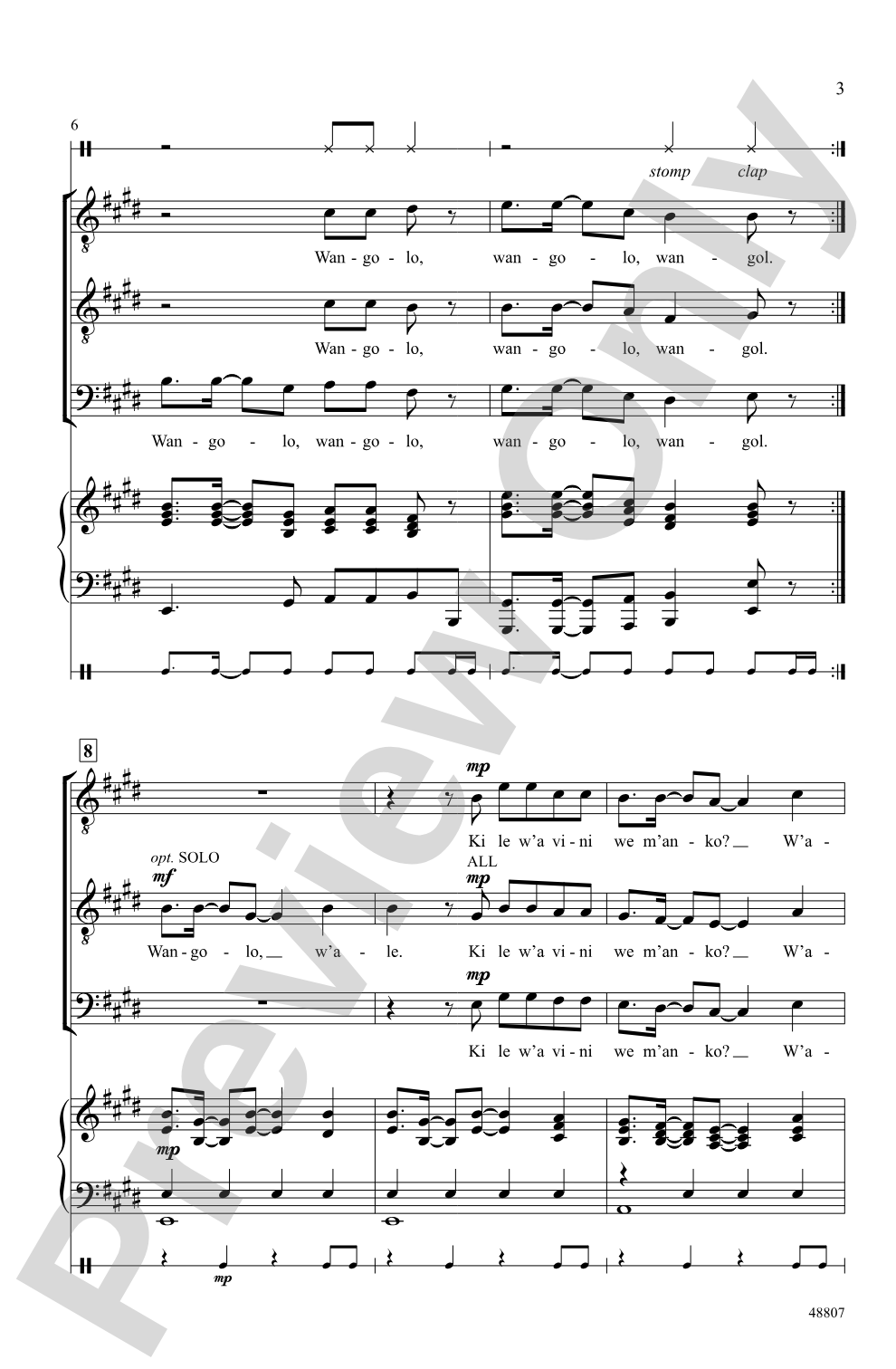
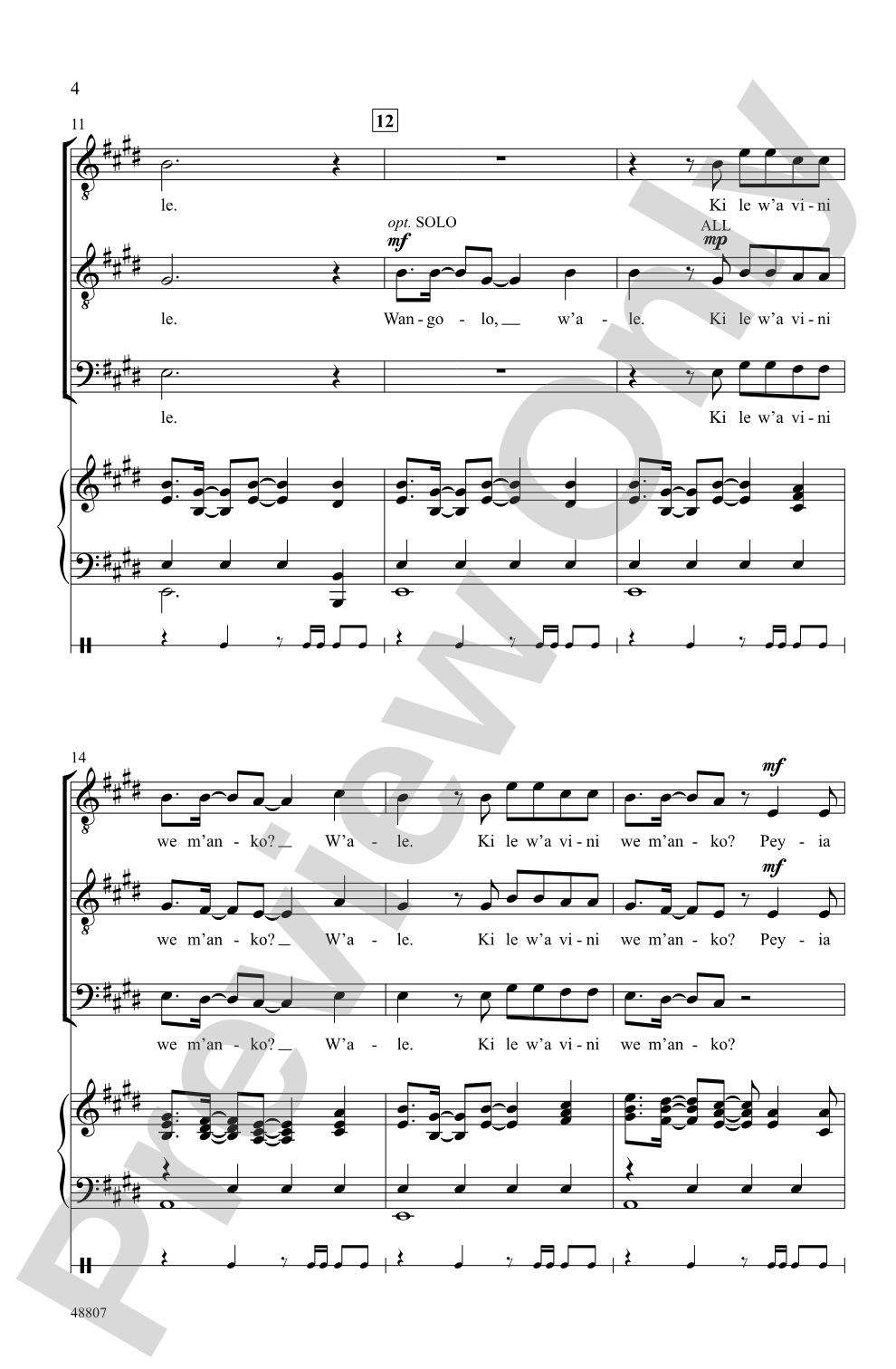

Wangolo: TTB, opt. a cappella Choral Octavo
Traditional Haitian Folk Song / arr. Ruth Morris Gray
Item: 00-PO-0006617
$2.05
Minimum order quantity: 10 copies
Please note: Under U.S. copyright law, you must purchase the exact number of copies needed for your ensemble. Printing, duplicating or sharing additional copies is strictly prohibited.
Pickup currently not available
Related Items
Wangolo: 3-Part Mixed, opt. a cappella Choral Octavo |
$2.05
|
View | |
Wangolo: 2-Part, opt. a cappella Choral Octavo |
$2.05
|
View | |
Wangolo: 3-Part Mixed, opt. a cappella Choral Octavo |
$2.05
|
View | |
Wangolo: TTB, opt. a cappella Choral Octavo |
$2.05
|
View | |
Wangolo: 2-Part, opt. a cappella Choral Octavo |
$2.05
|
View | |
Wangolo: Choral SoundTrax CD |
$29.99
|
View |
Description
Some history: this song comes from Haiti, but actually refers to the first King of Angola, Ngolo Kiluanje, who was revered as a great king. The Creole word for "king" ("wa") plus the king's name ("Ngolo") became "Wangolo." It's an authentic folk song recalling the peace and prosperity the Angolan people enjoyed before colonization. This rhythmic rendition, which may be performed without piano if desired, includes optional body percussion, suggested parts for djembe and other instruments, optional solos in the call and response section, plus a final descant that tops off the triadic parallel harmonies. Check out the free online ChoreoTrax video for some creative riser choreography.


Discover MakeMusic Cloud: thousands of interactive titles your students can play along with today.
Sample Audio
1
Audio File
--:--
0:00
0:00
Sample Video
1 / 2
Additional Details
Series:
Alfred Choral Designs
Publisher:
Alfred Music
Page Count:
12
SKU:
00-PO-0006617
More about this title
About the Arranger: Ruth Morris Gray
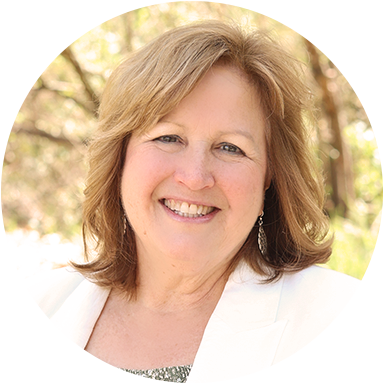
Ruth Morris Gray directs choirs at Rosemead High School in California, where she has taught since 2004. She holds a Bachelor of Music in Piano Performance and Composition from Biola University and earned her Master of Arts in Music Composition from UC Santa Barbara.
With over 100 published choral compositions to her name, Gray brings both compositional depth and classroom experience to her arrangements. She completed her California Single Subject Music Credential at Cal State Northridge and remains active as a composer, teacher, director, and performer.
Why we love this
Gray's arrangement honors the historical weight of this Haitian folk song while making it genuinely fun to perform. The optional body percussion and djembe parts, combined with the suggested call-and-response solos and final descant, give your singers real ownership of the arrangement rather than simply reading notes on a page. The flexibility to perform a cappella or with piano means you can build this into almost any concert context without accompaniment logistics getting in the way.
What to expect
Wangolo carries the rhythmic confidence and communal spirit of a folk song that traveled across continents and generations. The arrangement pulses with kinetic energy, grounded in repeating figures that feel both ancient and immediate, while the descant adds a layer of shimmer that lifts the whole piece upward. Performing it brings a sense of celebration rooted in memory.
Who it's for
Any treble-range choir or mixed ensemble willing to honor a piece with cultural roots. TTB voicing works for boys' choirs, male vocal ensembles, upper sections of mixed choirs, or groups with stronger higher voices. The optional choreography and movement elements make this especially rewarding for choirs comfortable with staging and performance beyond standing in formation.
How to get the most out of it
- Assign the call-and-response solos strategically to singers who can own the rhythmic character of the folk tradition; this is not about perfectly blended lines but individual voices that shine.
- Layer the body percussion in rehearsal gradually rather than all at once; start with one person clapping while others sing, then build the texture so the ensemble locks together without overshadowing the vocal line.
- If using the recorded accompaniment, run a playback rehearsal separate from your regular section rehearsals to ensure singers are hearing the groove and can sync with the rhythm section.
- The parallel triadic harmonies in the descant will sit cleanly if you establish the harmonic foundation solidly in the TTB sections first; trust those lower voices to carry the harmonic weight.
How to use it
This works beautifully as an opener or closer on a concert that celebrates world music or multicultural voices. Its rhythmic propulsion and optional staging make it a natural fit for concert series that blend traditional repertoire with contemporary movement and percussion. The 12-page length keeps rehearsal demands reasonable while delivering strong impact, making it ideal for festival programming or spring concerts where energy and engagement matter as much as technical difficulty.
Skills your students will build
- Call-and-response singing with rhythmic precision
- Parallel harmony singing in triadic structures
- Rhythmic independence while maintaining ensemble cohesion
- Integration of body percussion and unpitched instruments with vocal lines
- Historical literacy around folk music from the African diaspora
- Confidence performing with optional solos and descant layering