

Walk a Mile in My Shoes: SSAA a cappella Choral Octavo
Words and music by Greg Gilpin
Item: 00-PO-0007518
$2.30
Minimum order quantity: 20 copies
Pickup currently not available
Description
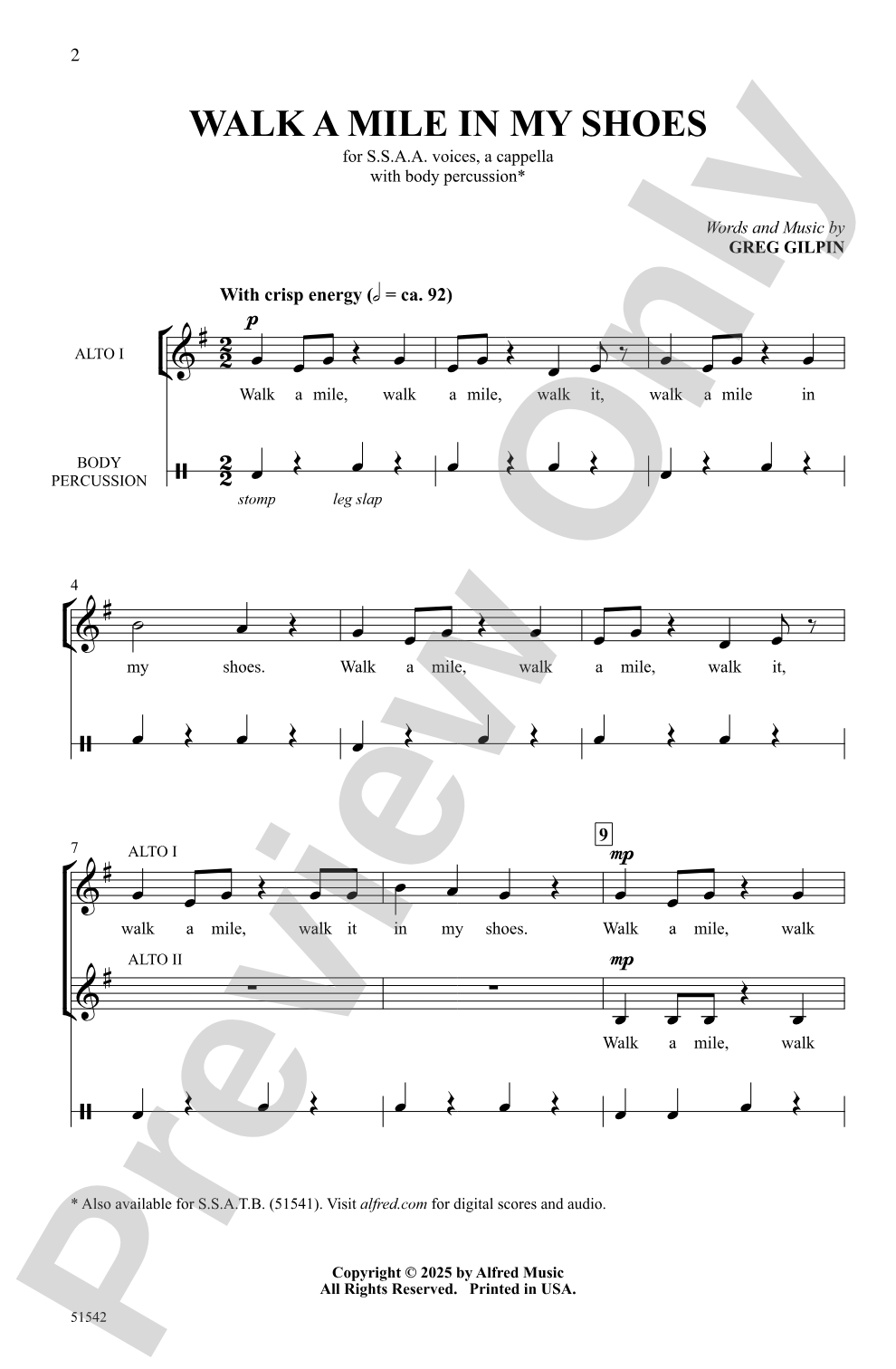
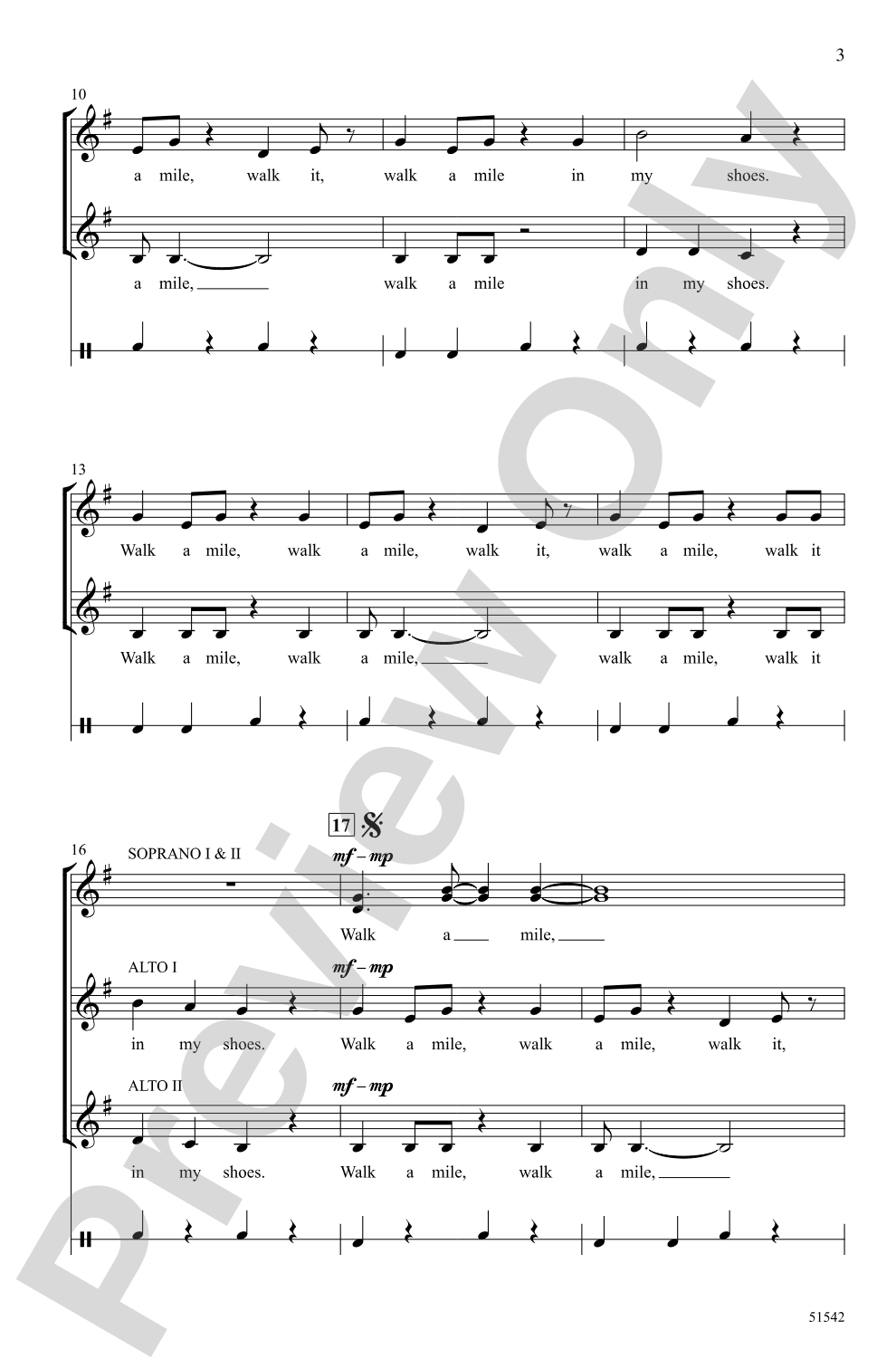
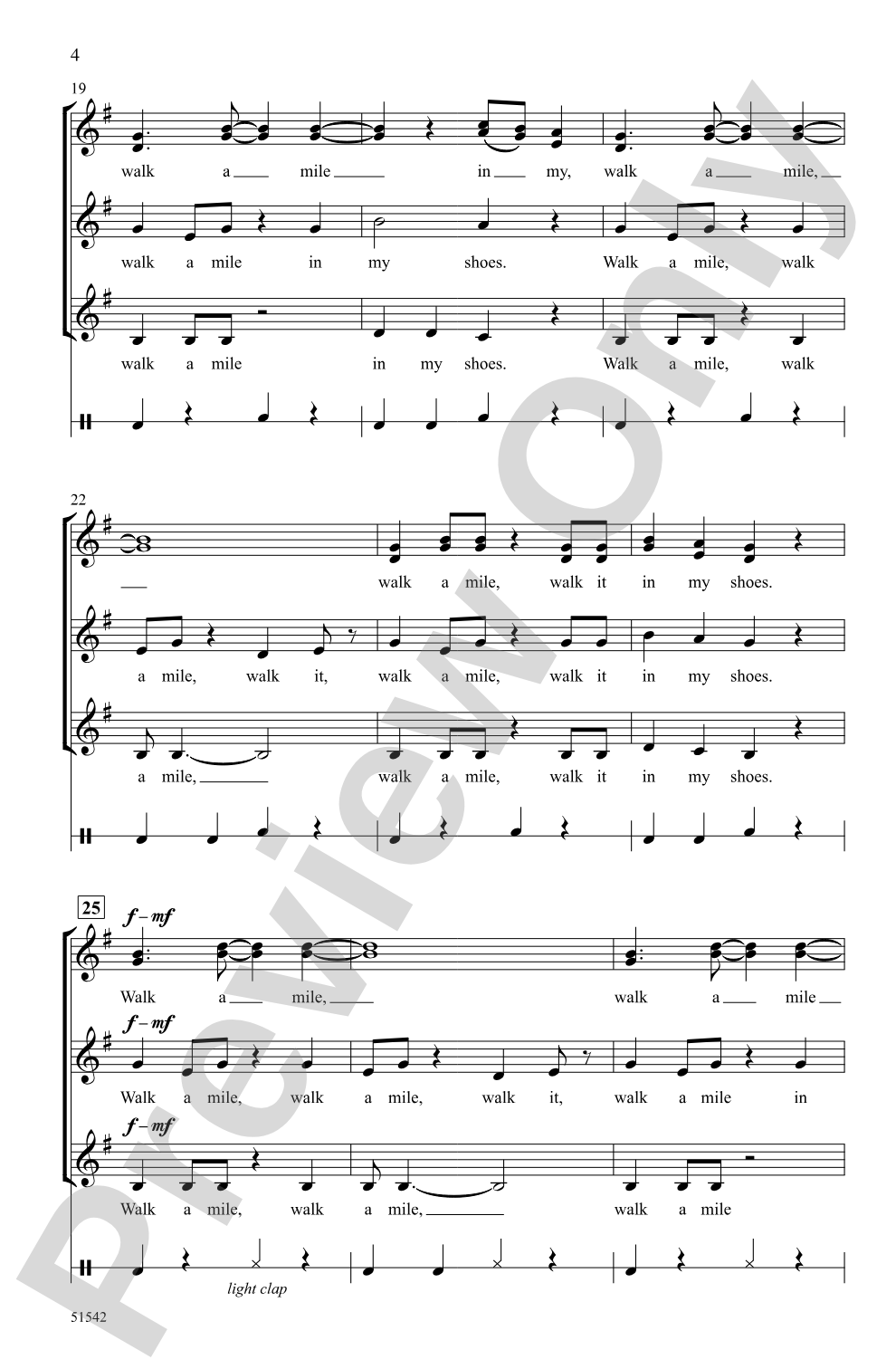
Inspired by a well-known adage, this rhythmic a cappella original includes compelling body percussion throughout. Before the upper part adds their essential line, lower voices lay down a solid groove, and additional singers stack a second layer. This is outstanding repertoire, guaranteed to be a singer favorite year after year!


Walk a Mile in My Shoes: SSAA a cappella Choral Octavo isn't in MakeMusic Cloud just yet...but it could be. Let us know you'd like to see it, and you'll help shape what comes next. In the meantime, start a free trial and dive into thousands of interactive titles your students can play along with today.
Request This Title
Tell us you want it.
Start Your Free Trial
Explore everything that's ready to play right now.
Sample Audio
1
Audio File
--:--
0:00
0:00
Sample Video
Additional Details
Series:
Alfred Choral Designs
Publisher:
Alfred Music
Page Count:
12
SKU:
00-PO-0007518
More about this title
About the Composer: Greg Gilpin

Greg Gilpin holds significant standing in American choral music as both a composer and conductor. His works have been performed at landmark venues including Carnegie Hall, Lincoln Center, the Sydney Opera House, and Royal Festival Hall, and he serves as Director of Educational Choral Publications for Shawnee Press. His contributions to choral literature have earned him ASCAP recognition, and he maintains active involvement with ACDA, NAfME, and Phi Mu Alpha Sinfonia.
Beyond the concert hall, Gilpin has pursued concurrent work as a recording industry musician and producer, and in 2020 expanded his professional scope by becoming a certified financial coach and professional organizer through his company Maestro Organizing. His creative reach extends to film scoring, including the award-winning short "Rosie's Rescue," and collaborative arrangements with acclaimed vocalists. He continues to balance teaching, composing, and conducting as live performance returns to full momentum.
Why we love this
Body percussion transforms this piece from a standard a cappella work into something your singers will actually want to perform repeatedly. The layered vocal architecture that Gilpin builds—starting with lower voices anchoring a rhythmic groove, then adding soprano lines overhead—gives every voice part real responsibility and rewards ensemble cohesion in a way that feels immediately gratifying rather than labored.
What to expect
Walking into this piece is like stepping into a conversation where the rhythm already has momentum. The lower voices establish a hypnotic, contemporary groove that feels instantly musical and alive, and when the sopranos arrive with their melody, it lands like the final piece of a puzzle that was always meant to fit together. The body percussion keeps everything grounded and human—no backing track needed.
Who it's for
This piece works for intermediate to advanced treble choirs (grades 6 and up) who have experience with layered vocal textures and can manage body percussion while singing. It's equally at home in a competitive festival setting or a concert program where you want a moment that feels fresh and energetic without sacrificing musical integrity.
How to get the most out of it
- Lock the rhythmic foundation by having the lower voices feel their body percussion patterns as a physical pulse, not just a sound effect. The groove only lands when they own the groove.
- Layer the soprano entry deliberately. Rather than bringing them in at full volume, let them emerge gradually so the texture builds and the upper line reads clearly against the established rhythm.
- Experiment with the dynamic range of the body percussion itself. Not every measure needs the same intensity; varying the weight and articulation of claps and percussion will maintain listener interest across the piece.
- Mark breath points clearly in rehearsal and honor them consistently. With no instrumental break, your singers need permission to breathe together without losing the rhythmic pulse.
How to use it
Program this as an anchor moment when you need to shift energy or mood during a concert. It works beautifully in the second half of a mixed program to break up ballads and traditional material, or use it as a set closer for a treble choir concert to send audiences out energized. The contemporary sound and rhythmic clarity also make it a natural fit for festival competition or showcase performances.
Skills your students will build
- Reading layered vocal lines with independent rhythmic movement
- Coordinating body percussion with singing across multiple vocal parts
- Building and maintaining a steady rhythmic groove as an ensemble foundation
- Balancing texture and blend when entering a pre-established sonic landscape
- Ensemble precision in passages where multiple layers occur simultaneously