
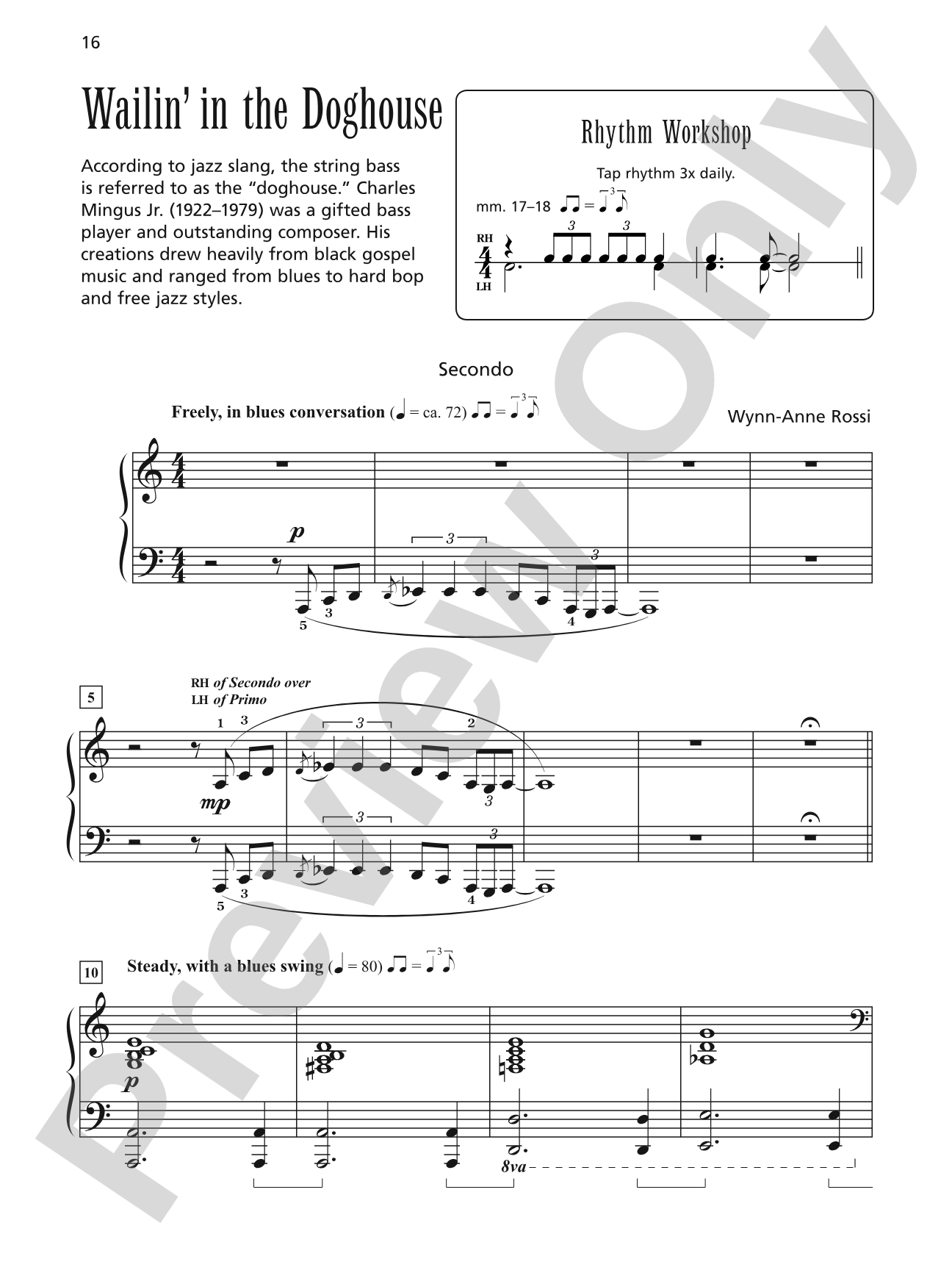
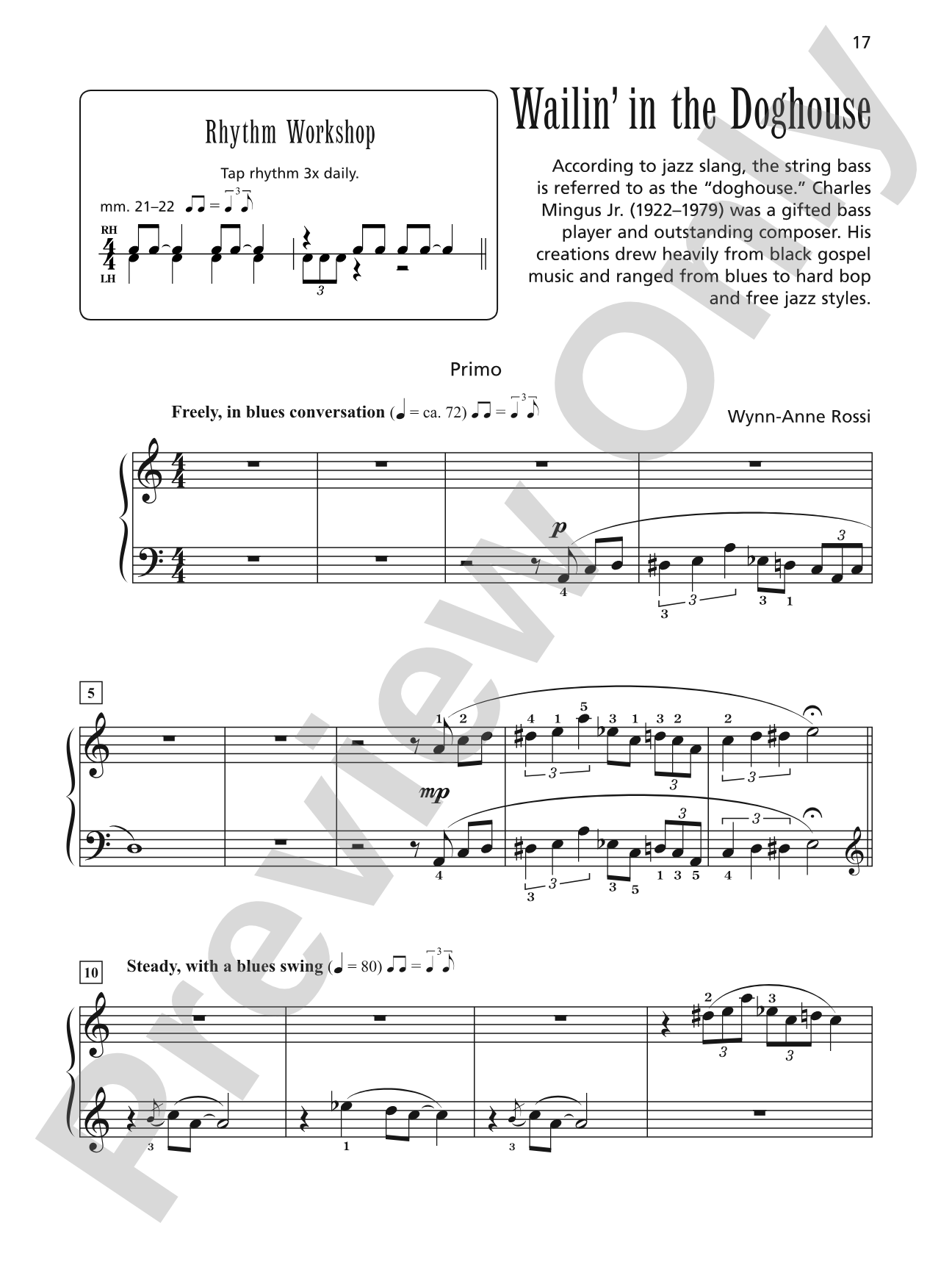

Wailin' in the Doghouse - Piano Duet (1 Piano, 4 Hands): Piano Duet (1 Piano, 4 Hands)
5 Intermediate to Late Intermediate Piano Duets That Celebrate American Jazz
By Wynn-Anne Rossi
Level: Intermediate / Late Intermediate
Item: 00-PS-0017603
$5.99
Pickup currently not available
Related Items
Mobster Birthday in Stride - Piano Duet (1 Piano, 4 Hands): Piano Duet (1 Piano, 4 Hands) |
$4.99
|
View | |
Riptide - Piano Duet (1 Piano, 4 Hands): Piano Duet (1 Piano, 4 Hands) |
$5.99
|
View | |
Trailblazer - Piano Duet (1 Piano, 4 Hands): Piano Duet (1 Piano, 4 Hands) |
$5.99
|
View | |
Waltzing Impressions - Piano Duet (1 Piano, 4 Hands): Piano Duet (1 Piano, 4 Hands) |
$7.99
|
View | |
Jazzin' Americana for Two, Book 3: Piano Duet (1 Piano, 4 Hands) Book |
$7.99
|
View |
Description
Wynn-Anne Rossi's Jazzin' Americana for Two series is a journey through the jazz genre, honoring the history, the diverse styles, and the fabulous musicians who made this music great. Students will become familiar with the names of famous musicians such as Fats Waller, Melba Liston, and Bill Evans while learning different jazz styles, from blues and bebop to boogie and rock. Each duet (for one piano, four hands) is enhanced with interesting facts that will awaken curiosity and enhance the musical experience. Titles: Mobster Birthday in Stride * Riptide * Trailblazer * Wailin' in the Doghouse * Waltzing Impressions. A Federation Festivals 2024-2028 selection.


Discover MakeMusic Cloud: thousands of interactive titles your students can play along with today.
Sample Audio
No sample audio found.
Sample Video
Additional Details
Series:
Jazzin' Americana
Publisher:
Alfred Music
Page Count:
28
SKU:
00-PS-0017603
More about this title
About the Composer: Wynn-Anne Rossi
Wynn-Anne Rossi has built a reputation as a composer who understands what intermediate students need: music that challenges them musically while keeping them engaged through repertoire they actually want to play. Her work spans multiple genres and skill levels, but she's particularly known for creating jazz arrangements and original compositions that demystify the style for young musicians.
Rossi's Jazzin' Americana series reflects her pedagogical philosophy: jazz history isn't abstract. By pairing each duet with historical context about the musicians and styles that shaped the genre, she transforms sheet music into a doorway for discovery. Teachers consistently turn to her work when they want students to develop real jazz literacy, not just technical facility.
Why we love this
This collection turns the four-hands format into something genuinely musical rather than just convenient. Rather than relegating one player to accompaniment duties, Rossi writes both parts with individual voice and character, which means neither student checks out mentally. The historical annotations embedded in the score do real work too, they spark conversations about why these jazz styles matter, which deepens how students listen and play.
What to expect
There's a conversational quality to these duets, the two parts trade ideas, sometimes mirroring each other, sometimes responding. The harmonic language sits comfortably in jazz territory without demanding reharmonization or upper extensions that would overwhelm students at this level. Playing these pieces feels like sitting in on a conversation between two musicians who genuinely respect each other's voice.
Who it's for
This is built for intermediate to late intermediate pianists who are ready to develop real jazz vocabulary but don't yet have the harmonic sophistication for lead sheet reading or improvisation. It works equally well for a student partnership preparing a recital duet or for classroom use in a music history or jazz appreciation unit.
How to get the most out of it
- Balance the two parts carefully during rehearsal. Mark who has the melody in each section, and rotate whose part students learn first so neither player becomes locked into a subsidiary role.
- Record yourselves early and listen back together. Duet playing relies on mutual listening in ways solo performance doesn't, and students need to hear what they sound like as a unit to make good adjustments.
- Lean into the jazz idiom by experimenting with swing feel and rubato before locking everything into metronomic precision. Ask students what they notice about how the style changes when they loosen the rhythmic grid slightly.
- Use the contextual notes about each featured musician as a springboard. Have students listen to recordings of Fats Waller or Bill Evans playing the styles they're about to perform. That listening informs phrasing and groove naturally.
How to use it
Consider pairing selections from this series with a concert theme about American music or jazz history. The duet format makes it ideal for students to perform while you teach the audience about the styles and musicians featured in each piece. You could also use individual duets as demonstration material in a jazz or 20th-century music unit, where students perform while classmates follow along with the historical notes.
Skills your students will build
- Reading and performing in swing and jazz idioms (stride, blues, bebop, boogie)
- Rhythmic independence and coordination as a duet partner
- Recognizing and interpreting jazz articulation and phrasing conventions
- Understanding jazz history through direct connection to repertoire and featured composers/performers
- Balancing melody and accompaniment roles within a collaborative musical framework