
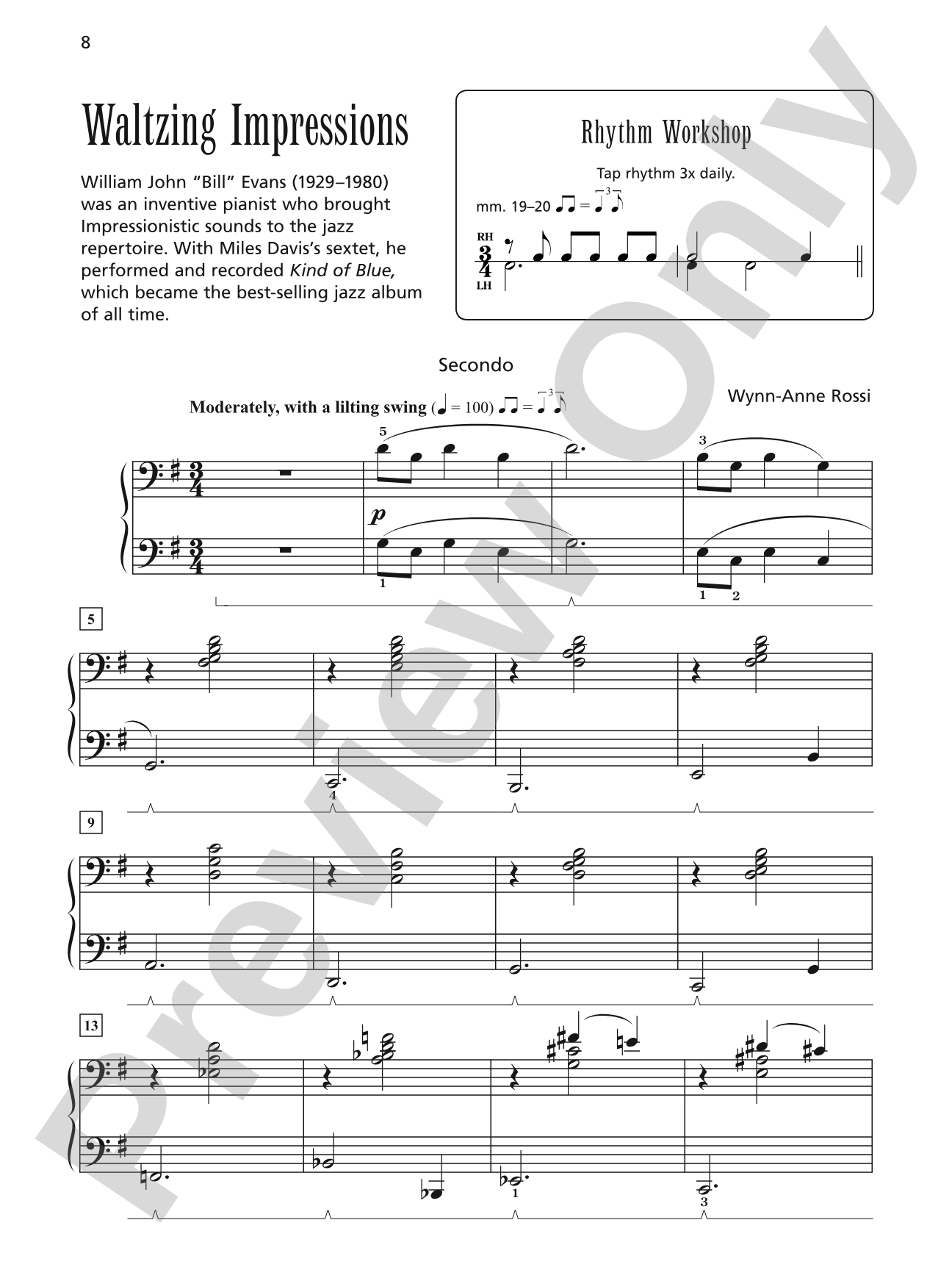

Waltzing Impressions - Piano Duet (1 Piano, 4 Hands): Piano Duet (1 Piano, 4 Hands)
5 Intermediate to Late Intermediate Piano Duets That Celebrate American Jazz
By Wynn-Anne Rossi
Level: Intermediate / Late Intermediate
Item: 00-PS-0017604
$7.99
Pickup currently not available
Related Items
Mobster Birthday in Stride - Piano Duet (1 Piano, 4 Hands): Piano Duet (1 Piano, 4 Hands) |
$4.99
|
View | |
Riptide - Piano Duet (1 Piano, 4 Hands): Piano Duet (1 Piano, 4 Hands) |
$5.99
|
View | |
Trailblazer - Piano Duet (1 Piano, 4 Hands): Piano Duet (1 Piano, 4 Hands) |
$5.99
|
View | |
Wailin' in the Doghouse - Piano Duet (1 Piano, 4 Hands): Piano Duet (1 Piano, 4 Hands) |
$5.99
|
View | |
Jazzin' Americana for Two, Book 3: Piano Duet (1 Piano, 4 Hands) Book |
$7.99
|
View |
Description
Wynn-Anne Rossi's Jazzin' Americana for Two series is a journey through the jazz genre, honoring the history, the diverse styles, and the fabulous musicians who made this music great. Students will become familiar with the names of famous musicians such as Fats Waller, Melba Liston, and Bill Evans while learning different jazz styles, from blues and bebop to boogie and rock. Each duet (for one piano, four hands) is enhanced with interesting facts that will awaken curiosity and enhance the musical experience. Titles: Mobster Birthday in Stride * Riptide * Trailblazer * Wailin' in the Doghouse * Waltzing Impressions. A Federation Festivals 2024-2028 selection.


Discover MakeMusic Cloud: thousands of interactive titles your students can play along with today.
Sample Audio
No sample audio found.
Sample Video
Additional Details
Series:
Jazzin' Americana
Publisher:
Alfred Music
Page Count:
28
SKU:
00-PS-0017604
More about this title
About the Composer: Wynn-Anne Rossi
Wynn-Anne Rossi has built a reputation for making jazz accessible and engaging to young musicians without sacrificing musical substance. Her pedagogical approach emphasizes the historical context and personalities behind the music, transforming note-reading into cultural discovery.
Rossi's compositions for student musicians consistently appear on festival selections and state competition lists, reflecting her deep understanding of what intermediate players need: manageable technical demands paired with authentic jazz vocabulary and genuine musical interest.
Why we love this
Each duet in this series tells a story, naming the legends whose innovations shaped jazz while giving students the real experience of playing in those styles. The four-hands format creates natural ensemble responsibility without requiring a second pianist, making it ideal for studio work or small-group settings. Rossi's writing captures the personality of each jazz tradition, stride piano's rhythmic propulsion, bebop's melodic complexity, boogie's infectious groove, while keeping the technical demands honest for intermediate players.
What to expect
Lively, approachable, and rooted in real jazz tradition. The music swings and grooves without sounding artificial, inviting students into a conversation across jazz styles while maintaining the energy and optimism that made this music essential.
Who it's for
Intermediate to late intermediate pianists ready for jazz idioms and looking for duet repertoire that doesn't feel like an exercise. This works equally well for studio students preparing for festival or ensemble classes exploring American music history through performance.
How to get the most out of it
- Study the historical notes before rehearsal so students understand not just what they're playing, but why it matters. Knowing about Fats Waller's innovation or Melba Liston's arranging legacy changes how students approach their parts.
- Pay close attention to the rhythmic relationship between primo and secondo in the stride and boogie pieces; the accompanying part's groove carries the entire feel, and even small timing shifts will flatten the energy.
- Treat the blues numbers as conversation, not accompaniment. Both hands should listen actively to how their line interacts with the other player's melody.
How to use it
Program individual movements in a jazz concert or modern American music recital to break up larger solo repertoire while celebrating the duet format. These pieces also anchor a unit on jazz history where students perform what they're learning about in the classroom.
Skills your students will build
- Reading and executing swing rhythms and syncopation
- Understanding jazz comping and accompanying roles within an ensemble
- Interpreting stride piano left-hand patterns
- Coordinating rhythmic and harmonic independence between two players at one keyboard
- Recognizing and performing distinct jazz styles (blues, bebop, boogie, rock) within a single collection