

Until We Sing Again: 2-Part Choral Octavo
By Greg Gilpin
Item: 00-PO-0000128
$2.25
Minimum order quantity: 20 copies
Pickup currently not available
Related Items
Until We Sing Again: SoundTrax Digital Audio Download |
$22.95
|
View | |
Until We Sing Again: SATB Choral Octavo |
$2.25
|
View | |
Until We Sing Again: SAB Choral Octavo |
$1.75
|
View | |
Until We Sing Again: SATB Choral Octavo |
$2.25
|
View | |
Until We Sing Again: SAB Choral Octavo |
$1.75
|
View | |
Until We Sing Again: 2-Part Choral Octavo |
$2.25
|
View | |
Until We Sing Again: Choral Octavo SoundTrax CD |
$22.95
|
View |
Description
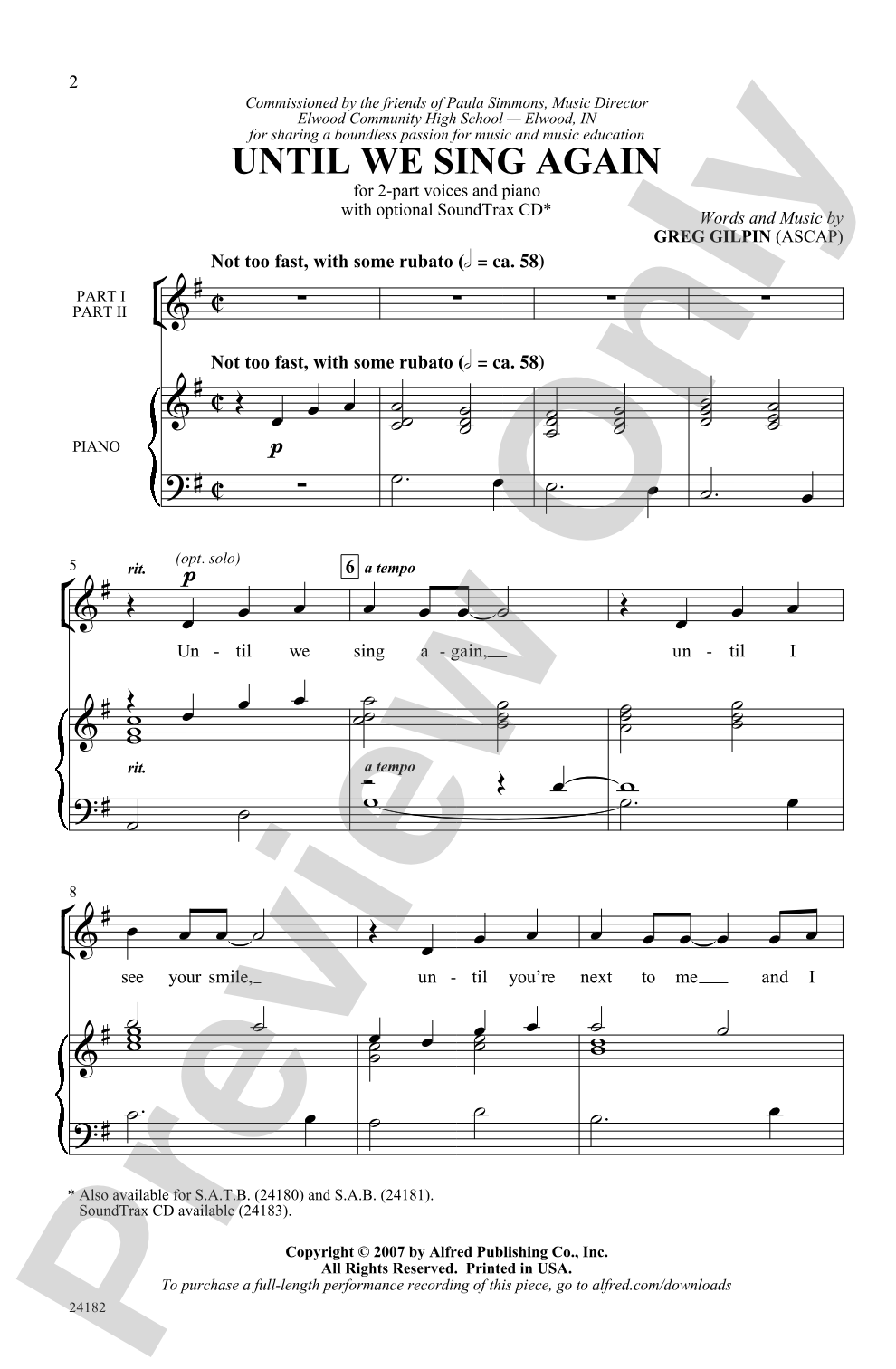
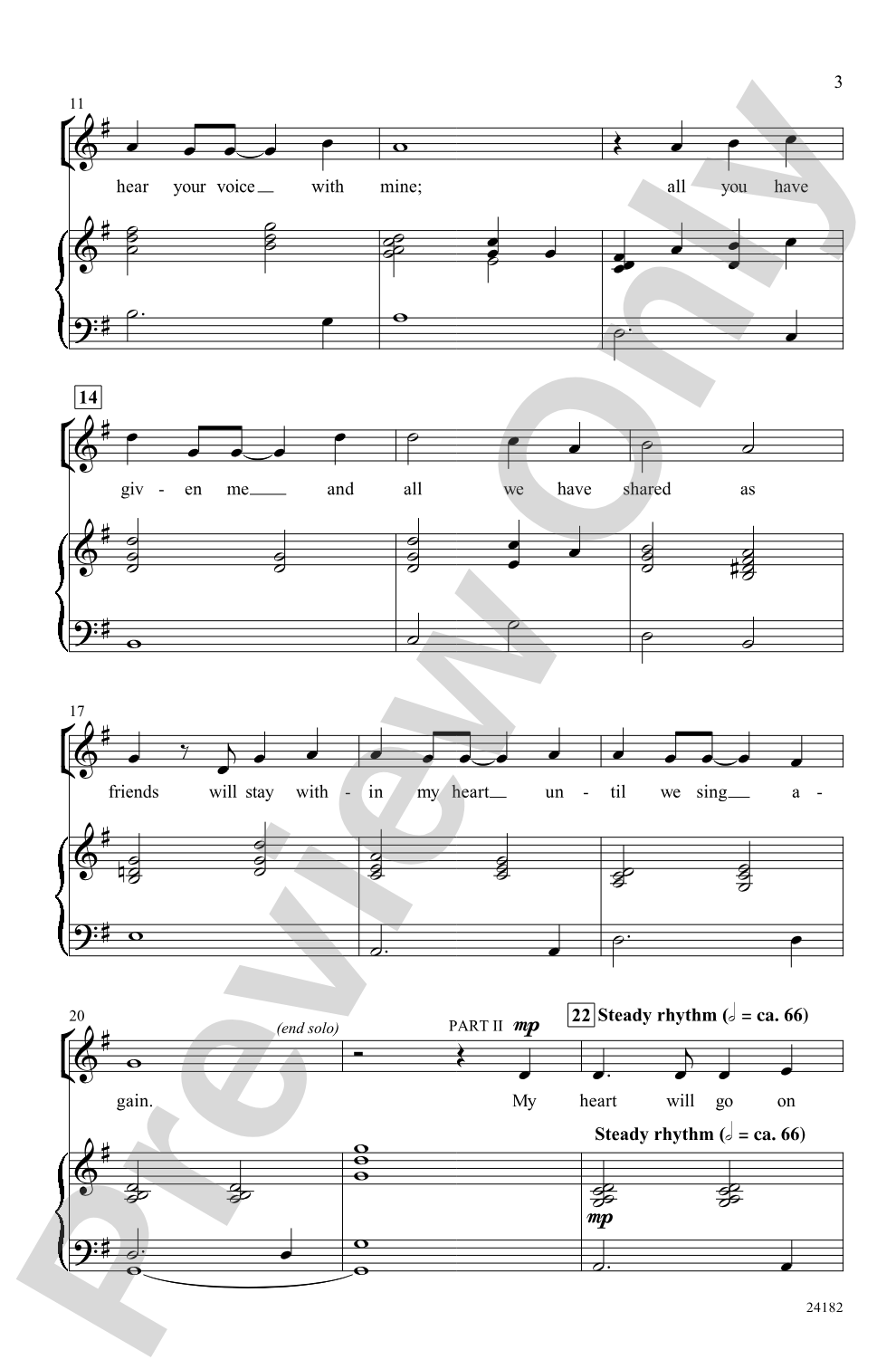
This heartfelt choral ballad is a touching conclusion for concert programs, moving-up ceremonies, and graduation events. Greg Gilpin's contemporary style and choral sensibilities are evident from the sentimental opening solo to the climactic modulation into the final pop chorus. Make this your choir's signature piece.


Until We Sing Again: 2-Part Choral Octavo isn't in MakeMusic Cloud just yet...but it could be. Let us know you'd like to see it, and you'll help shape what comes next. In the meantime, start a free trial and dive into thousands of interactive titles your students can play along with today.
Request This Title
Tell us you want it.
Start Your Free Trial
Explore everything that's ready to play right now.
Sample Audio
1
Audio File
--:--
0:00
0:00
Sample Video
No sample videos found.
Additional Details
Series:
Alfred Archive Edition: Alfred Choral Designs
Publisher:
Alfred Music
Page Count:
12
SKU:
00-PO-0000128
More about this title
About the Composer: Greg Gilpin

Greg Gilpin holds one of the most visible positions in American choral music as Director of Educational Choral Publications for Shawnee Press. An ASCAP award-winning composer and arranger, he has conducted major choral ensembles at Carnegie Hall, Lincoln Center, the Sydney Opera House, and Royal Festival Hall, establishing himself as a leader both on the podium and in the publishing world.
Beyond composition, Gilpin's career has taken distinctive turns. He scored the award-winning short film "Rosie's Rescue" in 2021 and created a world premiere arrangement of "What Child is This?" with opera singer Angela Brown and the Indianapolis Symphonic Choir. His professional organizing work has earned him appearances on Fox, NBC, and the television series "Hoarders." He holds active membership in ACDA, NAfME, SAG-AFTRA, and is a Life Loyal Member of Phi Mu Alpha Sinfonia.
Why we love this
Gilpin crafts a genuine emotional arc here, moving from an intimate solo opening to a pop-inflected final chorus that feels earned rather than imposed. The contemporary harmonic language never sacrifices clarity for a 2-part arrangement, making it accessible for middle school through adult choirs while maintaining musical sophistication. It's the rare graduation piece that doesn't rely on sentimentality alone to connect with an audience.
What to expect
The opening carries an intimate, reflective quality that gradually builds into something more celebratory and forward-looking. By the final chorus, the arrangement captures a contemporary pop sensibility that feels genuine to how young people actually experience and express emotion, creating a bridge between classical choral tradition and modern musical language.
Who it's for
This piece serves choirs at the middle school level through adult ensembles performing at moving-up ceremonies, graduations, and concert closings. Its 2-part voicing makes it ideal for developing choirs while remaining musically substantive enough for experienced singers seeking meaningful material for milestone events.
How to get the most out of it
- Shape the opening solo with careful dynamic control; it sets the emotional foundation for everything that follows, so resist the urge to push too soon.
- Approach the modulation into the final chorus as a structural turning point, not just a pitch change. Let the choir feel the shift in energy and style.
- Use the recorded accompaniment as a rehearsal tool early on to lock the contemporary rhythmic language, then build independence from it as performance approaches.
- Balance clarity in the 2-part writing by ensuring lower voices are never buried; the arrangement depends on both lines being distinctly heard.
How to use it
This is an ideal closing number for spring concert programs, particularly those celebrating transitions or endings. Its emotional resonance makes it especially appropriate for end-of-year performances, though its contemporary style also pairs well with a mixed repertoire program where you want to anchor the final moments with something both heartfelt and stylistically current.
Skills your students will build
- Navigating modulation and harmonic movement in contemporary harmonic language
- Singing with stylistic flexibility across classical and pop-influenced idioms
- Executing rhythmic precision in syncopated, contemporary rhythmic patterns
- Balancing two independent vocal lines while maintaining textural clarity
- Interpreting expressive phrasing in both lyrical and rhythmically driven sections