

Until We Sing Again: SATB Choral Octavo
By Greg Gilpin
Item: 00-PO-0000126
$2.25
Minimum order quantity: 20 copies
Pickup currently not available
Related Items
Until We Sing Again: SoundTrax Digital Audio Download |
$22.95
|
View | |
Until We Sing Again: SAB Choral Octavo |
$1.75
|
View | |
Until We Sing Again: 2-Part Choral Octavo |
$2.25
|
View | |
Until We Sing Again: SATB Choral Octavo |
$2.25
|
View | |
Until We Sing Again: SAB Choral Octavo |
$1.75
|
View | |
Until We Sing Again: 2-Part Choral Octavo |
$2.25
|
View | |
Until We Sing Again: Choral Octavo SoundTrax CD |
$22.95
|
View |
Description
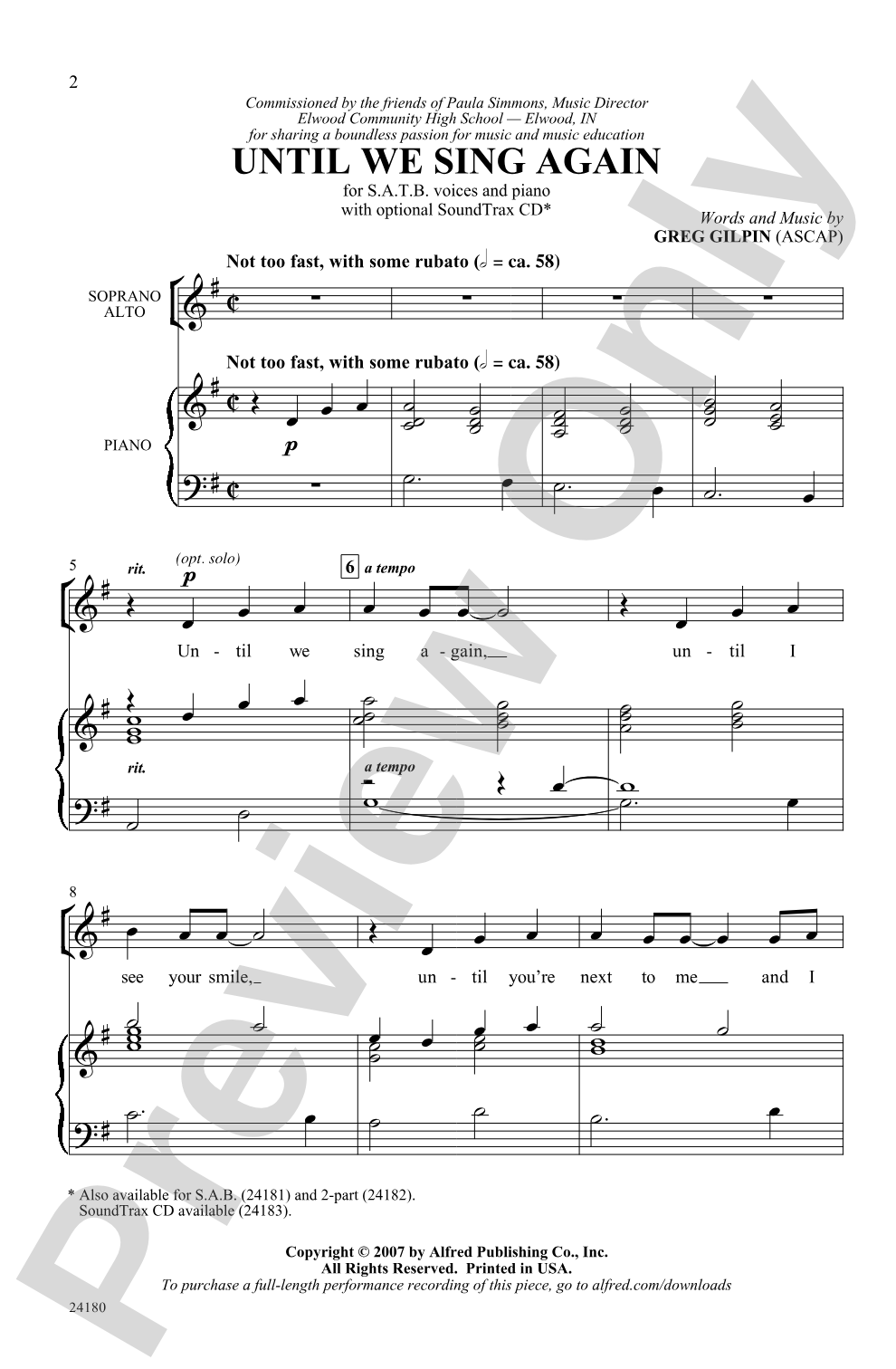
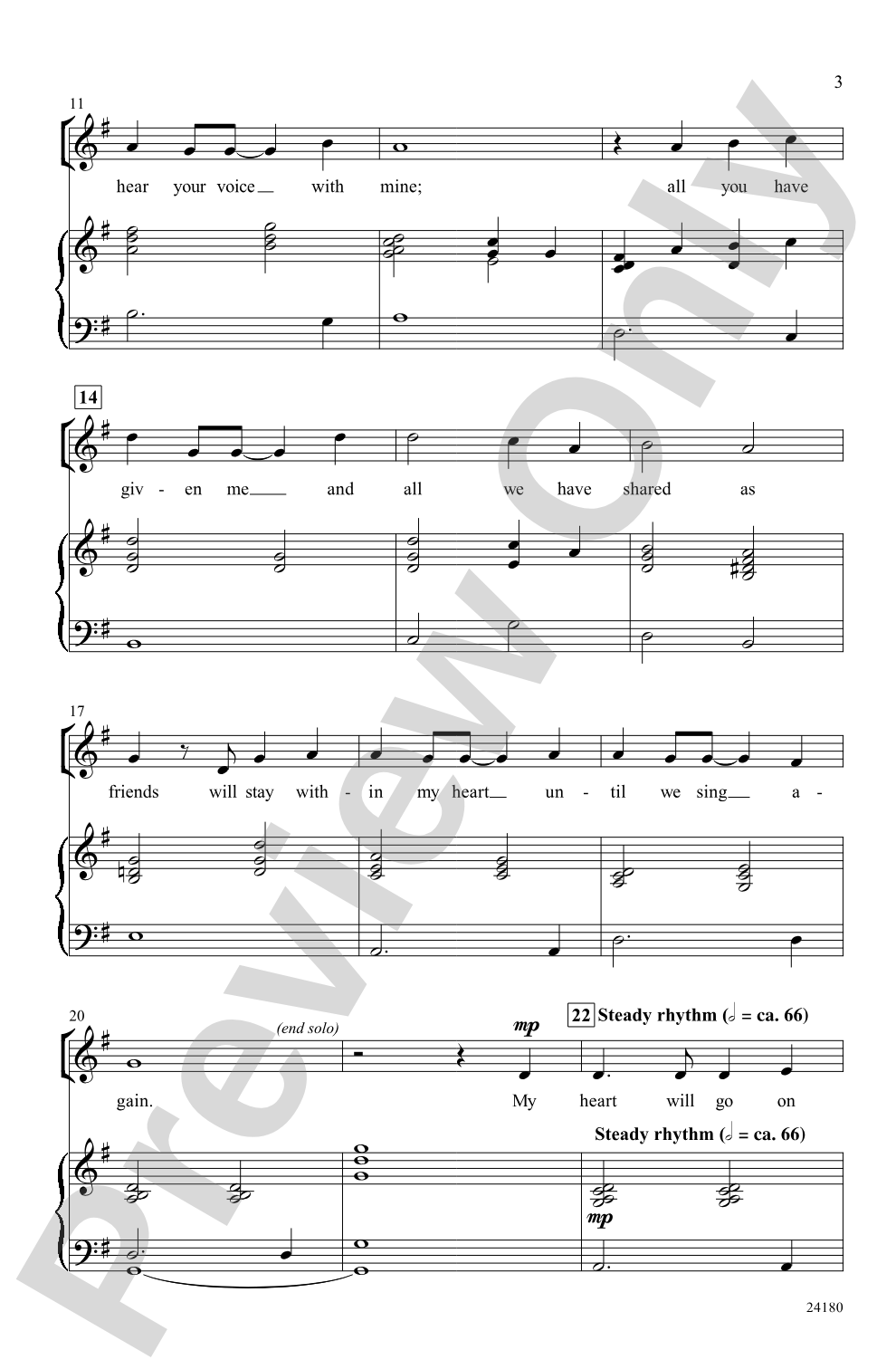
This heartfelt choral ballad is a touching conclusion for concert programs, moving-up ceremonies, and graduation events. Greg Gilpin's contemporary style and choral sensibilities are evident from the sentimental opening solo to the climactic modulation into the final pop chorus. Make this your choir's signature piece.


Until We Sing Again: SATB Choral Octavo isn't in MakeMusic Cloud just yet...but it could be. Let us know you'd like to see it, and you'll help shape what comes next. In the meantime, start a free trial and dive into thousands of interactive titles your students can play along with today.
Request This Title
Tell us you want it.
Start Your Free Trial
Explore everything that's ready to play right now.
Sample Audio
1
Audio File
--:--
0:00
0:00
Sample Video
No sample videos found.
Additional Details
Series:
Alfred Choral Designs
Publisher:
Alfred Music
Page Count:
12
SKU:
00-PO-0000126
More about this title
About the Composer: Greg Gilpin

Greg Gilpin is an ASCAP-award-winning composer and arranger whose choral works are performed across the country. He has conducted at premiere venues including Carnegie Hall, Lincoln Center, and Ryman Auditorium, and has led international performances at the Sydney Opera House, Royal Festival Hall in London, and Harpa Concert Hall in Reykjavik. As Director of Educational Choral Publications for Shawnee Press, Gilpin shapes the choral repertoire available to singers at every level.
Beyond music, Gilpin is a producer and recording musician who has expanded his career into professional organizing and financial coaching. In 2021, he composed the score for the award-winning short film "Rosie's Rescue" and collaborated with opera singer Angela Brown on a new arrangement of "What Child is This?" premiered with the Indianapolis Symphonic Choir. A member of ACDA, NAfME, SAG-AFTRA, and a Life Loyal Member of Phi Mu Alpha Sinfonia, Gilpin brings both artistic depth and entrepreneurial energy to every project.
Why we love this
Gilpin crafts this ballad with real emotional architecture, moving from intimate vulnerability in the opening solo through a powerful key change that lifts the ensemble into a pop-influenced final chorus. The piece feels like a natural conclusion to a concert or ceremony without relying on bombast; it earns its moment. Directors will appreciate how the contemporary harmonic language and accessible vocal writing let singers focus on storytelling rather than technical survival.
What to expect
The piece unfolds as a conversation between vulnerability and strength. It begins quietly introspective, almost like a soloist sharing a personal truth with the audience, then gradually invites the full ensemble into that confidence. When the modulation arrives, the music lifts into something more celebratory and forward-looking, leaving listeners with both reflection and hope.
Who it's for
This piece belongs in any SATB choir preparing for a concert finale, moving-up ceremony, or graduation service. It works equally well for advanced high school choirs and college ensembles, as long as singers can navigate contemporary harmonic language and connect emotionally to a sentimental text.
How to get the most out of it
- Shape the opening solo with generous rubato and vocal intimacy; this moment sets the emotional foundation for everything that follows.
- Balance the ensemble sound through the build to the modulation so the key change registers as a genuine shift in energy rather than a sudden jolt.
- Lean into the pop sensibility of the final chorus with a rhythmic clarity and lighter articulation that contrasts with the ballad's opening warmth.
- Use the recorded accompaniment to establish the harmonic color and emotional pacing, especially helpful for rehearsals where the piece's contemporary style may feel unfamiliar to your singers.
How to use it
Position this as your closer for any concert celebrating transition, whether graduation, end of year, or a farewell performance. The emotional arc allows audiences to sit with gratitude before leaving the hall. It also makes an effective piece to bookend a program alongside your opening work, creating a meaningful narrative arc across the entire concert.
Skills your students will build
- Singing sustained legit phrasing through contemporary harmonic progressions
- Executing a modulation (key change) and maintaining vocal security through the shift
- Blending ensemble sound while honoring the pop-influenced rhythmic style of the final section
- Connecting emotional storytelling in a sentimental text to vocal production and phrasing choices