

Two Renaissance Chorals (Adoramus Te / Ave Maria): TBB, a cappella Choral Octavo
Arr. Russell Robinson
Item: 00-PO-0003046
$2.25
Minimum order quantity: 20 copies
Pickup currently not available
Related Items
Two Renaissance Chorals (Adoramus Te / Ave Maria): SSA, a cappella Choral Octavo |
$2.25
|
View | |
Two Renaissance Chorals (Adoramus Te / Ave Maria): 3-Part Mixed, a cappella Choral Octavo |
$2.25
|
View | |
Two Renaissance Chorals (Adoramus Te / Ave Maria): SATB, a cappella Choral Octavo |
$1.65
|
View | |
Two Renaissance Chorals (Adoramus Te / Ave Maria): SSA, a cappella Choral Octavo |
$2.25
|
View | |
Two Renaissance Chorals (Adoramus Te / Ave Maria): TBB, a cappella Choral Octavo |
$2.25
|
View | |
Two Renaissance Chorals (Adoramus Te / Ave Maria): 3-Part Mixed, a cappella Choral Octavo |
$2.25
|
View |
Description
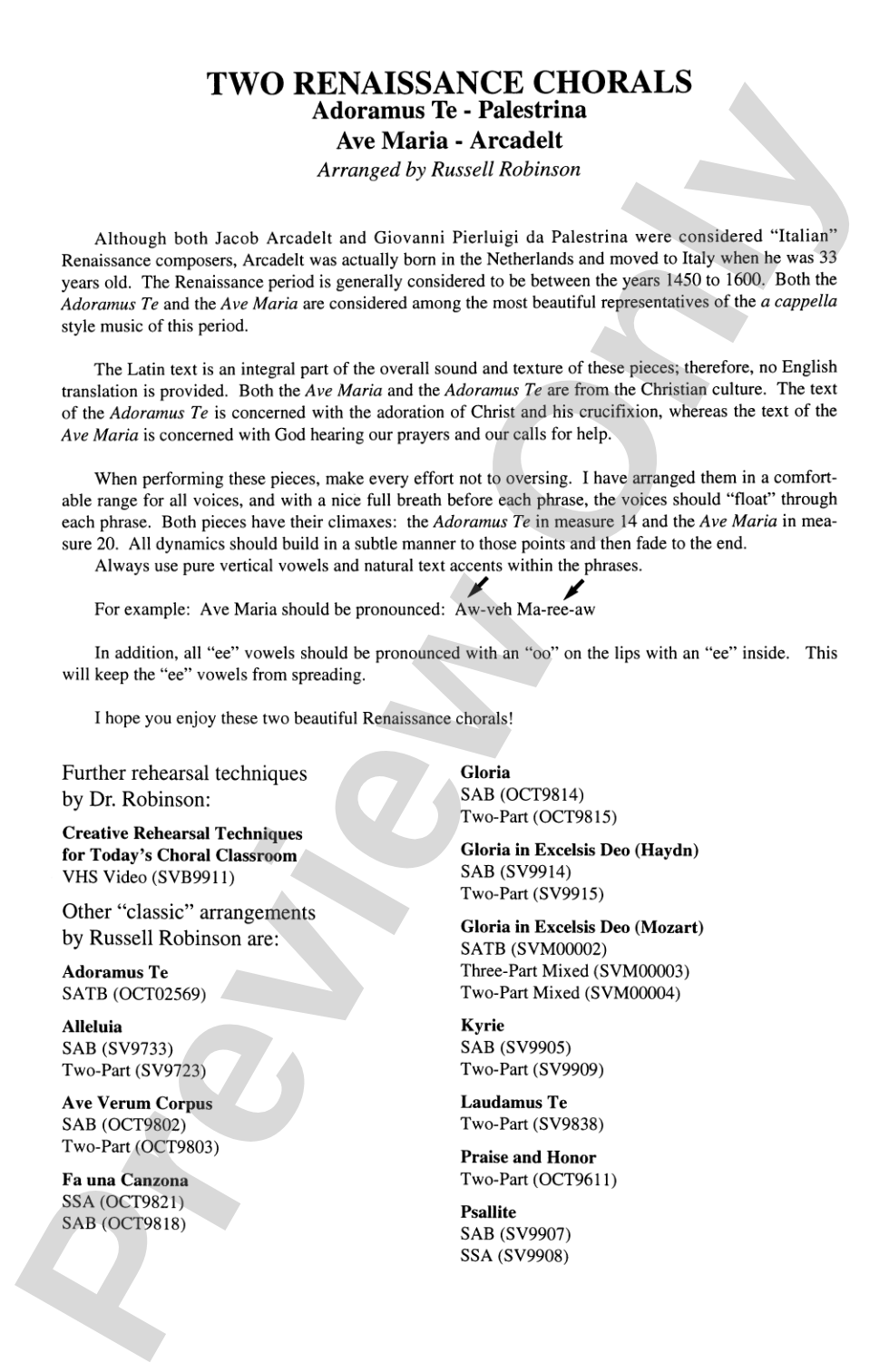
Two choral classics from the Renaissance period - "Adoramus Te" (Palestrina) and "Ave Maria" (Arcadelt) - are now available in this easy SATB edition. They were previously released in men's, women's, and three-part mixed voicings. An exceptional addition to any concert!


Two Renaissance Chorals (Adoramus Te / Ave Maria): TBB, a cappella Choral Octavo isn't in MakeMusic Cloud just yet...but it could be. Let us know you'd like to see it, and you'll help shape what comes next. In the meantime, start a free trial and dive into thousands of interactive titles your students can play along with today.
Request This Title
Tell us you want it.
Start Your Free Trial
Explore everything that's ready to play right now.
Sample Audio
No sample audio found.
Sample Video
No sample videos found.
Additional Details
Series:
Alfred Archive Edition: Belwin Festival Series
Publisher:
Alfred Music
Page Count:
8
SKU:
00-PO-0003046
More about this title
Why we love this
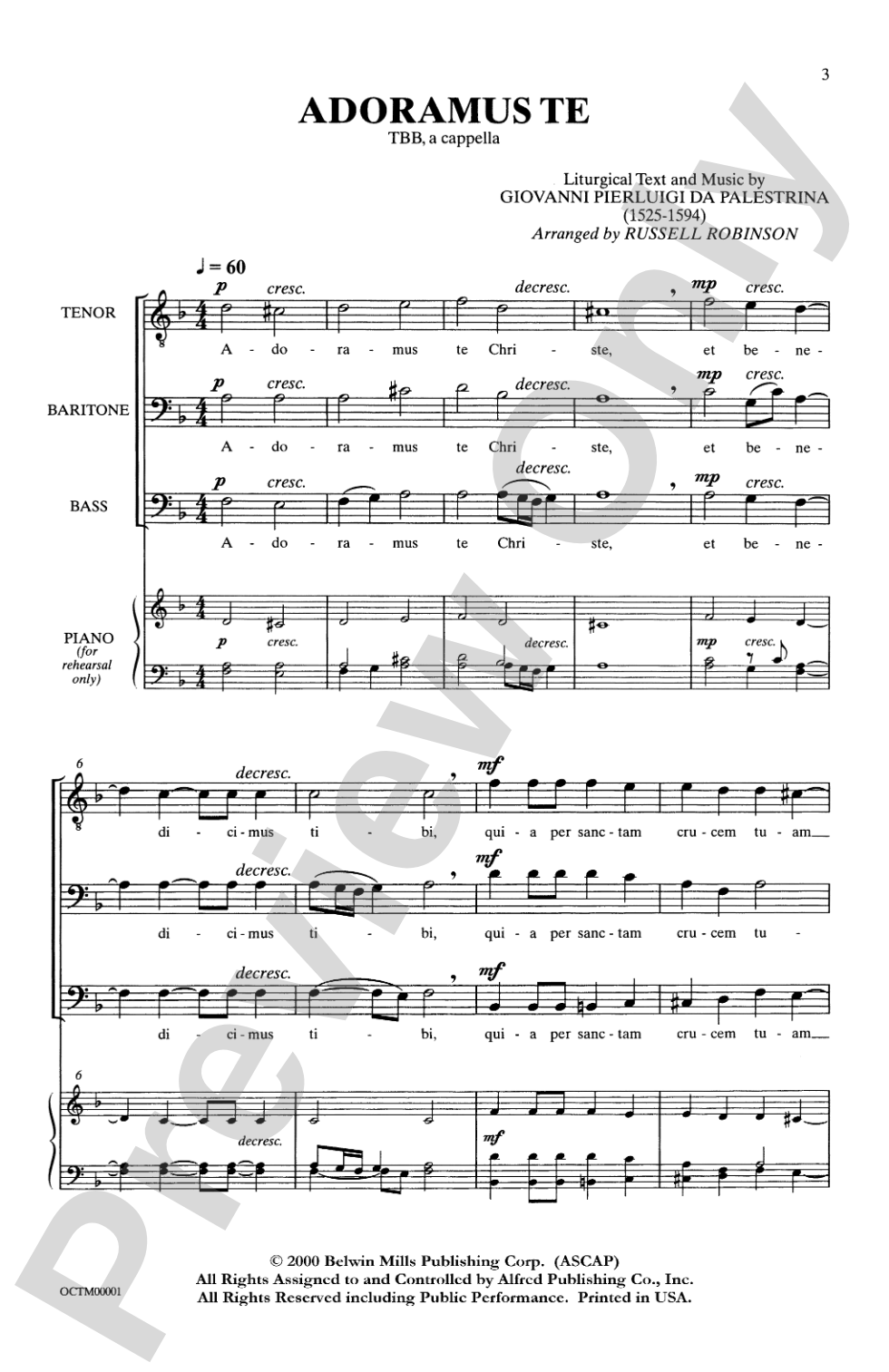
Robinson's TBB voicing opens these Renaissance masterworks to men's ensembles and upper-voice groups that might otherwise overlook them. The arrangements maintain the harmonic integrity of the originals while sitting comfortably for three-part voices, making these sacred standards genuinely accessible rather than compromised.
What to expect
Timeless devotion rendered in pure voices. These two pieces create a hushed, reverent atmosphere that depends entirely on the singers' control and breath management. The simplicity of the voicing paradoxically demands deeper musicianship to sustain the emotional weight without instrumental support.
Who it's for
Men's choirs, all-male ensembles, and upper-voice groups seeking substantial Renaissance repertoire that doesn't require four-part resources. This edition serves singers who want to program authentic sacred music without the complexity of full SATB voicings.
How to get the most out of it
- Shape each phrase with attention to text underlay, letting the words guide your dynamic contour and breath placement across longer lines.
- Balance the upper two parts carefully; the tenor line often carries the melodic interest, so resist oversinging the baritone foundation.
- Work the vowel consistency across all three parts before tackling blend, especially in the sustained passages that define these pieces.
- Record yourself in rehearsal to check intonation in the unaccompanied sections; without instrumental reference, tuning drifts upward over longer pieces.
How to use it
Program both pieces together as a connected liturgical moment, or separate them within a larger sacred or classical concert to provide contrasting points of rest. This works especially well on programs pairing Renaissance works with contemporary choral writing, offering audiences a tonal anchor.
Skills your students will build
- Sustaining intonation in unaccompanied singing
- Balancing three independent parts without harmonic doubling
- Shaping Renaissance text-driven phrasing
- Reading open score contexts common to sacred choral literature
- Managing breath control across longer phrase lines