

Two Renaissance Chorals (Adoramus Te / Ave Maria): SSA, a cappella Choral Octavo
Arr. Russell Robinson
Item: 00-PO-0002707
$2.25
Minimum order quantity: 20 copies
Pickup currently not available
Related Items
Two Renaissance Chorals (Adoramus Te / Ave Maria): TBB, a cappella Choral Octavo |
$2.25
|
View | |
Two Renaissance Chorals (Adoramus Te / Ave Maria): 3-Part Mixed, a cappella Choral Octavo |
$2.25
|
View | |
Two Renaissance Chorals (Adoramus Te / Ave Maria): SATB, a cappella Choral Octavo |
$1.65
|
View | |
Two Renaissance Chorals (Adoramus Te / Ave Maria): SSA, a cappella Choral Octavo |
$2.25
|
View | |
Two Renaissance Chorals (Adoramus Te / Ave Maria): TBB, a cappella Choral Octavo |
$2.25
|
View | |
Two Renaissance Chorals (Adoramus Te / Ave Maria): 3-Part Mixed, a cappella Choral Octavo |
$2.25
|
View |
Description
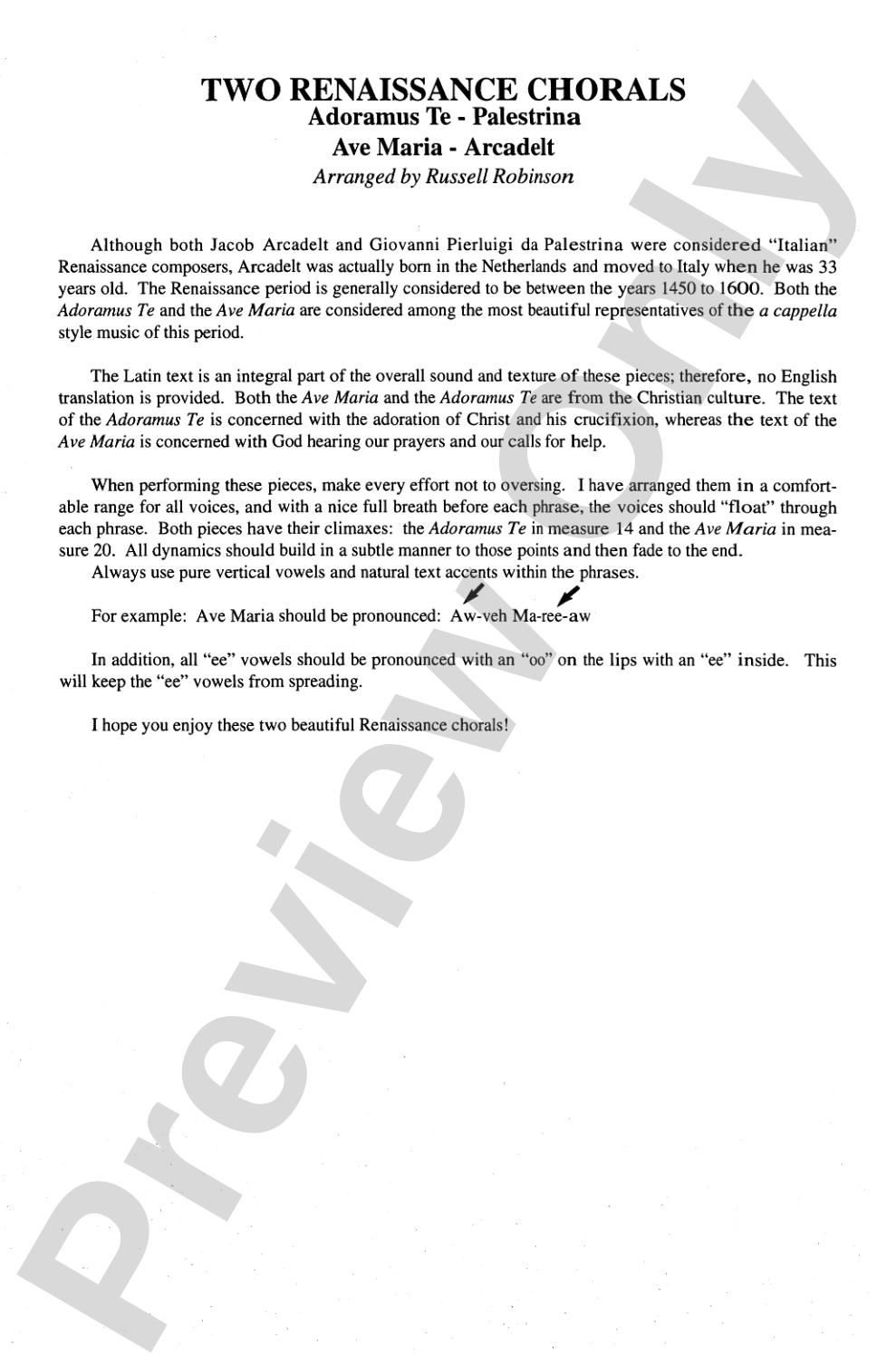
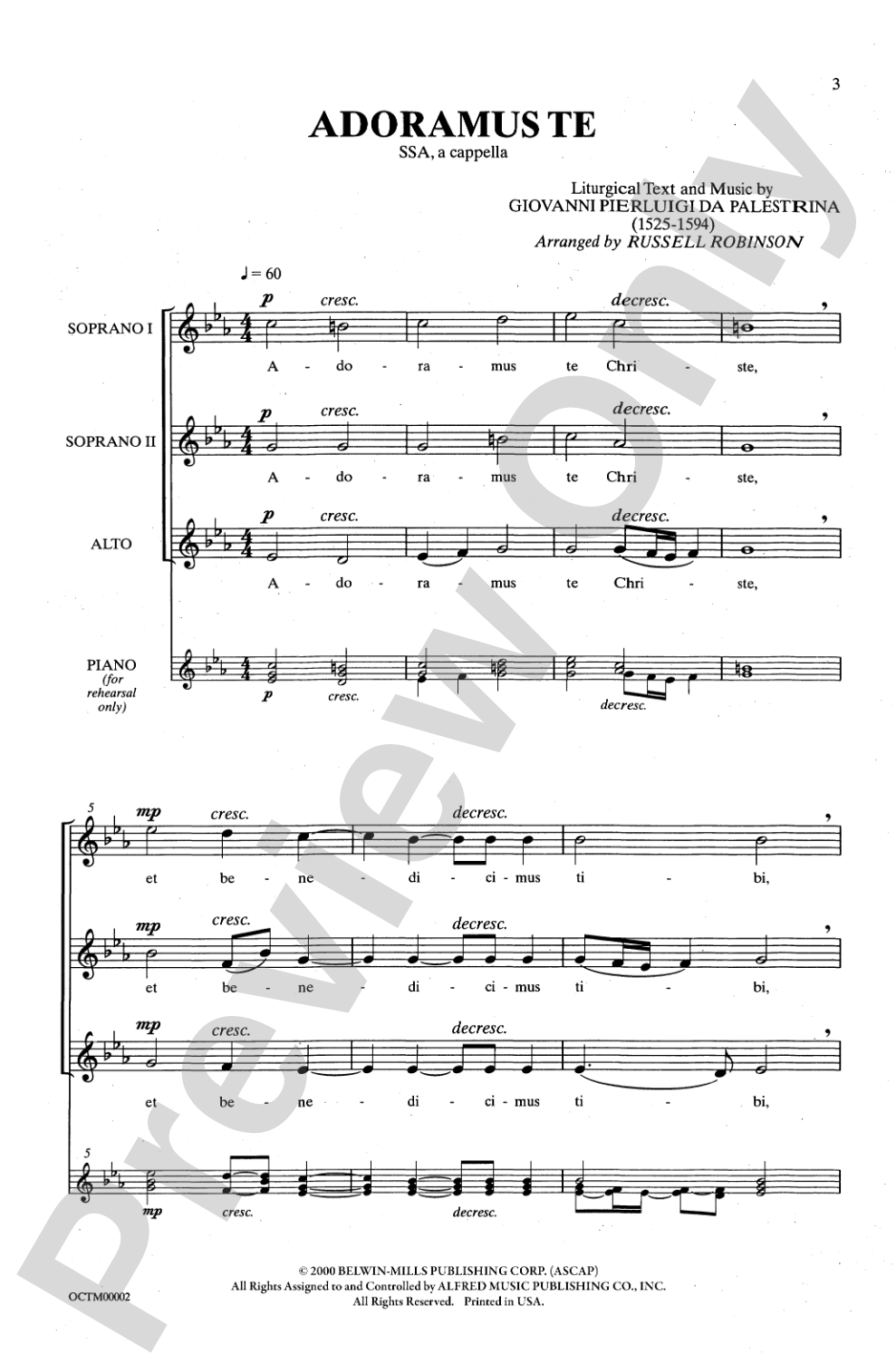
Two choral classics from the Renaissance period - "Adoramus Te" (Palestrina) and "Ave Maria" (Arcadelt) - are now available in this easy SATB edition. They were previously released in men's, women's, and three-part mixed voicings. An exceptional addition to any concert!


Two Renaissance Chorals (Adoramus Te / Ave Maria): SSA, a cappella Choral Octavo isn't in MakeMusic Cloud just yet...but it could be. Let us know you'd like to see it, and you'll help shape what comes next. In the meantime, start a free trial and dive into thousands of interactive titles your students can play along with today.
Request This Title
Tell us you want it.
Start Your Free Trial
Explore everything that's ready to play right now.
Sample Audio
No sample audio found.
Sample Video
No sample videos found.
Additional Details
Series:
Alfred Archive Edition: Belwin Festival Series
Publisher:
Alfred Music
Page Count:
8
SKU:
00-PO-0002707
More about this title
Why we love this
Robinson's SSA voicing strips away nothing essential from these masterworks. The arrangement honors the Renaissance idiom while making these pieces genuinely accessible to treble choirs, which often struggle to find sacred repertoire that sounds substantial without requiring soloists or divisi sections.
What to expect
These are moments of quiet devotion rendered in luminous harmony. The Palestrina speaks with humble reverence; the Arcadelt offers tenderness without sentimentality. Singing them feels less like performing and more like participating in something centuries old and still urgent.
Who it's for
Treble choirs at the intermediate level who want to perform authentic Renaissance sacred music without wrestling with complex notation or extensive divisi writing. Directors looking for strong contest or festival repertoire that builds musicianship while sounding elegant will find both pieces rewarding.
How to get the most out of it
- Treat the homophonic sections with clarity and shape; resist the urge to rush through them. Let each phrase breathe with purpose.
- Balance your soprano and alto lines carefully. The second soprano often carries inner harmony that can disappear if not attended to during rehearsal.
- Work intonation in unaccompanied passages by selecting one part to sing alone, then layer the others in. Renaissance harmony rewards precision.
- Keep the emotional temperature consistent across both pieces despite their different moods. The transition from reverent supplication to Marian devotion should feel intentional, not abrupt.
How to use it
Program both pieces together as a paired set within a concert that explores sacred traditions, or separate them across different events if your season calls for a single strong contest entry. Each works beautifully as a warm-up to more demanding Renaissance repertoire or as a closing gesture that leaves audiences in genuine quiet.
Skills your students will build
- Pure vowel matching across three parts
- Intonation in a cappella settings without harmonic reference
- Phrasing in homophonic Renaissance texture
- Sustaining line clarity without instrumental support
- Confidence in Renaissance harmonic language and voice leading