
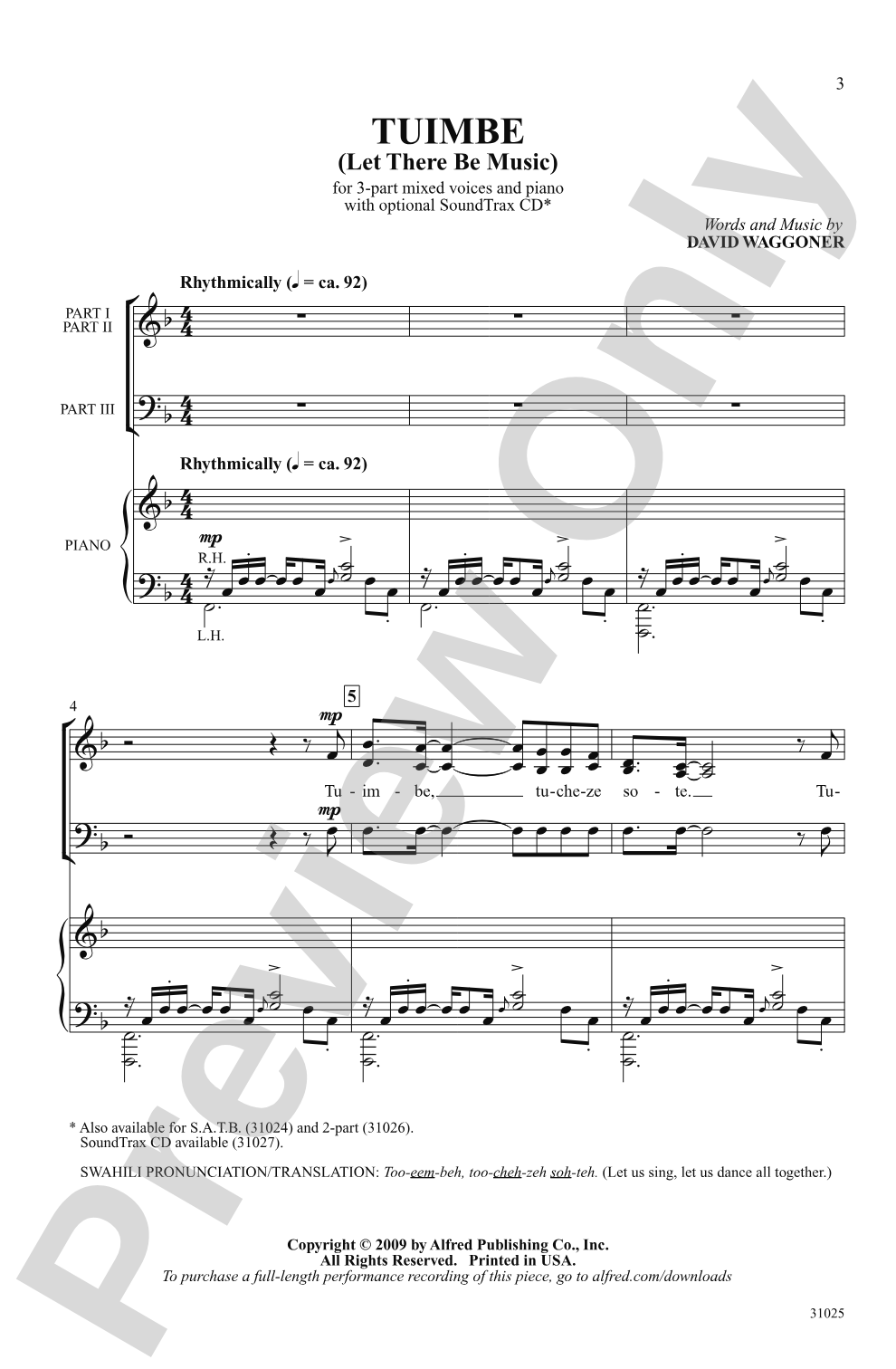

Tuimbe (Let There Be Music): 3-Part Choral Octavo
Words and music by David Waggoner
Item: 00-PO-0000758
$2.05
Minimum order quantity: 20 copies
Pickup currently not available
Related Items
Tuimbe (Let There Be Music): SoundTrax Digital Audio Download |
$27.99
|
View | |
Tuimbe (Let There Be Music): SATB Choral Octavo |
$2.05
|
View | |
Tuimbe (Let There Be Music): 2-Part Choral Octavo |
$2.05
|
View | |
Tuimbe (Let There Be Music): SATB Choral Octavo |
$2.05
|
View | |
Tuimbe (Let There Be Music): 3-Part Choral Octavo |
$2.05
|
View | |
Tuimbe (Let There Be Music): 2-Part Choral Octavo |
$2.05
|
View | |
Tuimbe (Let There Be Music): Choral Octavo SoundTrax CD |
$27.99
|
View |
Description
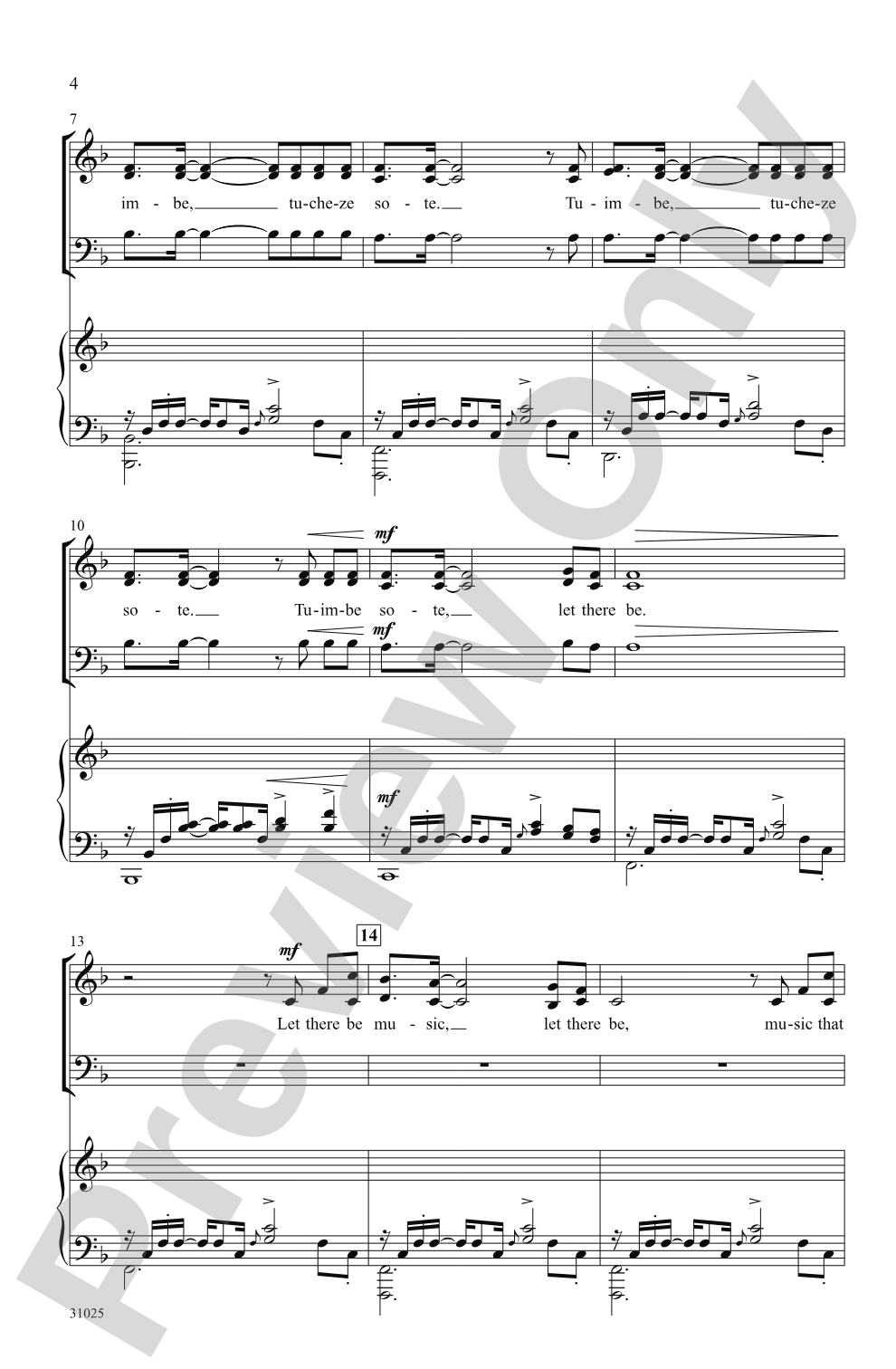
This African-style original is a tribute to the music all around us. "Let there be music . . . music that lives inside of me . . . let music ring from sea to sea" is proclaimed and layered over a rhythmic Swahili-text chant, creating a buoyant, textured feature for all choirs.


Tuimbe (Let There Be Music): 3-Part Choral Octavo isn't in MakeMusic Cloud just yet...but it could be. Let us know you'd like to see it, and you'll help shape what comes next. In the meantime, start a free trial and dive into thousands of interactive titles your students can play along with today.
Request This Title
Tell us you want it.
Start Your Free Trial
Explore everything that's ready to play right now.
Sample Audio
1
Audio File
--:--
0:00
0:00
Sample Video
No sample videos found.
Additional Details
Series:
Alfred Choral Designs
Publisher:
Alfred Music
Page Count:
12
SKU:
00-PO-0000758
More about this title
About the Composer: David Waggoner

David Waggoner brings classroom experience and liturgical leadership together in his compositional work. He holds degrees from the University of Michigan School of Music and Eastern Michigan University, where he studied music education and advanced composition. As an elementary music teacher in Woodhaven, Michigan, and Director of Music at First United Methodist Church in Wyandotte, he writes regularly for choirs, handbells, and various instruments.
Waggoner's compositions reflect both his work with young musicians and his commitment to making music accessible and joyful. His output spans multiple genres and ensembles, grounded in the belief that music enriches every community it touches.
Why we love this
Waggoner captures genuine celebration here. The layering of English melody over a Swahili rhythmic chant creates textural interest without overwhelming singers at the 3-part level, and the African-influenced harmonic movement keeps the piece sounding fresh rather than didactic. It's the kind of accessible multicultural feature that actually excites singers to learn something new.
What to expect
Open, energetic, and celebratory. The piece radiates warmth through its African-inspired rhythms and the interplay between lyrical English text and the grounded Swahili chant. There's a sense of both grounding and uplift, as if music itself is being affirmed and shared outward.
Who it's for
This works beautifully for middle school, high school, and community choirs comfortable with rhythmic independence and simple three-part voicing. It's especially valuable if you want to program multicultural repertoire that doesn't require soloists or unusual technical demands.
How to get the most out of it
- Establish the rhythmic foundation of the Swahili chant section before adding the English text; have one part sing the chant alone while others listen and internalize the pulse.
- Balance the layered sections carefully so the chant remains rhythmically clear when the melody enters; the chant is the heartbeat, not a background layer.
- Pronounce the Swahili text with confidence and clear diction; if your singers have no experience with the language, a rehearsal focused on authentic pronunciation will pay dividends in performance energy.
- Let the buoyant character breathe; resist the urge to rush. The piece's joy comes from rhythmic precision and textural clarity, not speed.
How to use it
Consider this for a concert celebrating world music, cultural diversity, or simply the universal language of music itself. It pairs well with other world music selections or can stand alone as a spirited closing number that leaves audiences smiling. The 12-page length and moderate difficulty make it realistic for spring concerts or community-focused performances.
Skills your students will build
- Rhythmic independence while singing layered parts
- Clear diction in both English and Swahili text
- Blend and balance across three parts with different melodic material
- Understanding of call-and-response and ostinato techniques
- Confidence singing multicultural repertoire with authentic character