

Tue, Tue: 2-Part Choral Octavo
Ghanaian Folk Song / arr. Ruth Morris Gray
Item: 00-PO-0005520

$2.05
Minimum order quantity: 20 copies
Pickup currently not available
Related Items
Tue, Tue: SoundTrax Digital Audio Download |
$27.99
|
View | |
Tue, Tue: SAB Choral Octavo |
$2.05
|
View | |
Tue, Tue: SSA Choral Octavo |
$2.05
|
View | |
Tue, Tue: TBB Choral Octavo |
$1.90
|
View | |
Tue, Tue: SAB Choral Octavo |
$2.05
|
View | |
Tue, Tue: SSA Choral Octavo |
$2.05
|
View | |
Tue, Tue: TBB Choral Octavo |
$1.90
|
View | |
Tue, Tue: 2-Part Choral Octavo |
$2.05
|
View | |
Tue, Tue: Choral Octavo SoundTrax CD |
$27.99
|
View |
Description
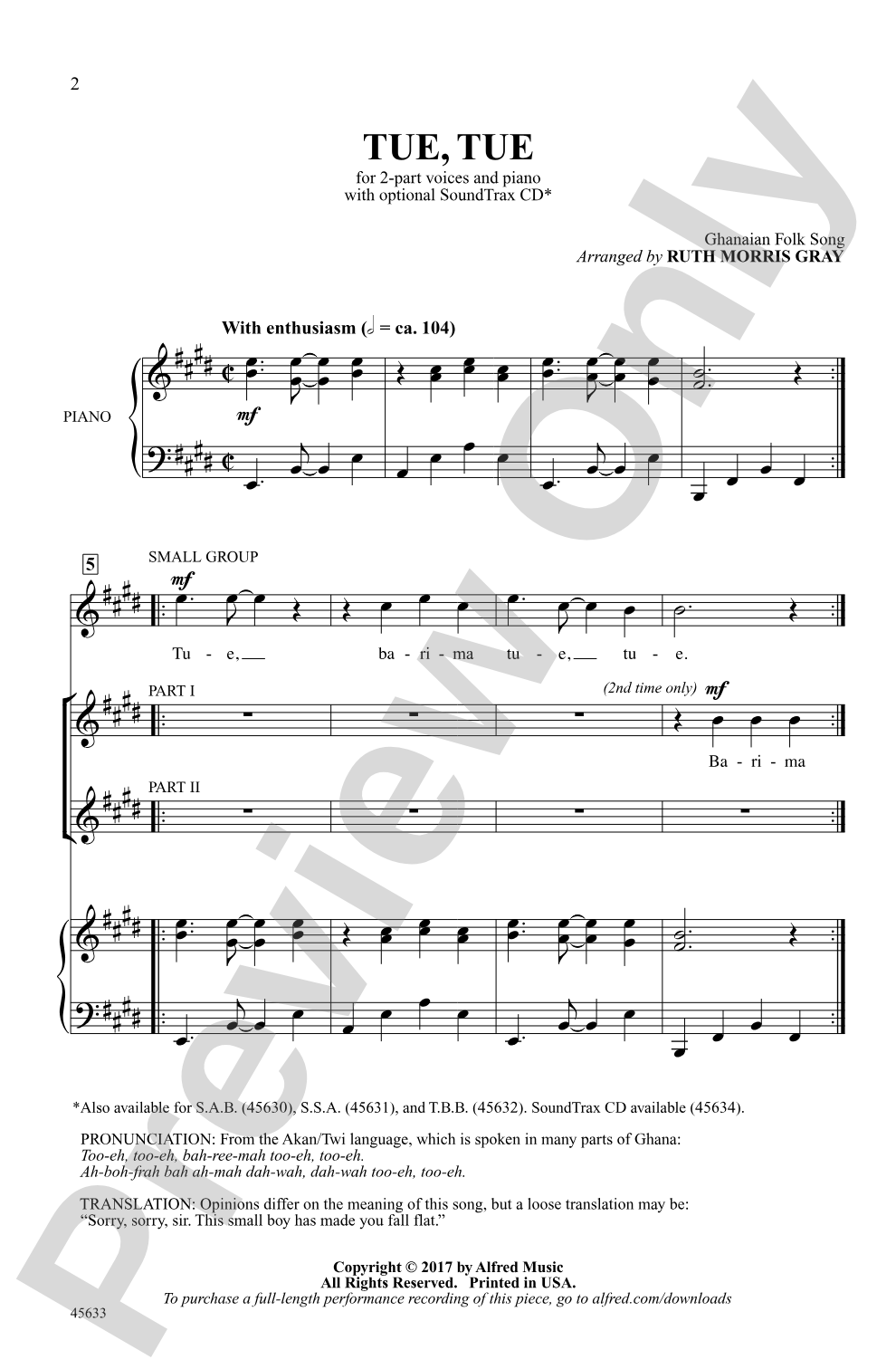
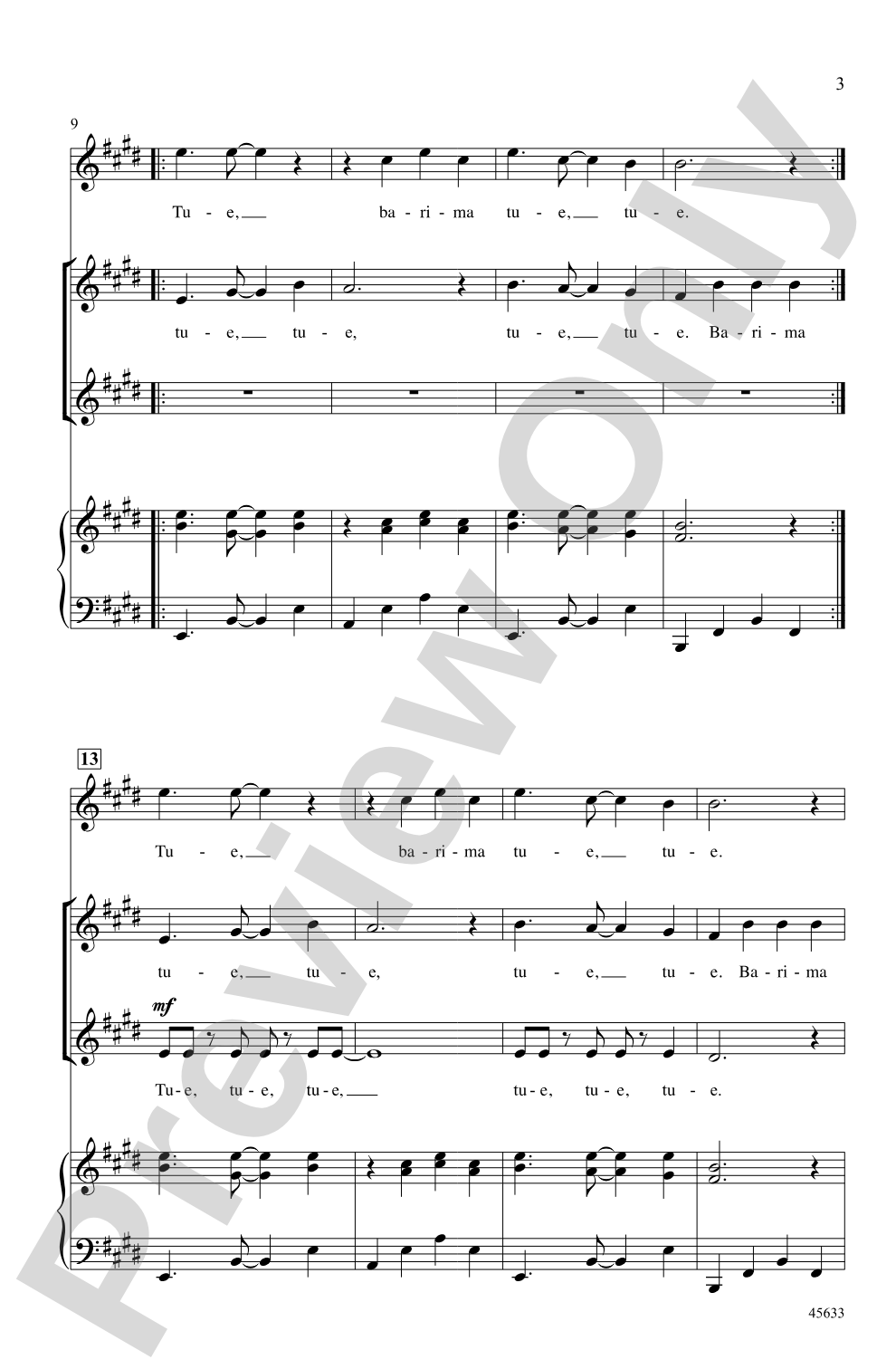
Sung ostinatos join one by one in the opening of this rhythmic arrangement of the authentic Ghanaian folk song. Unison lines, block triads, and a reset of the dynamics in the choral bridge are a blast. Repeated sections make for quick learning and easy memorization. Choreography available on the When We Sing! DVD.


Don't just read it, hear it, play along with it, and watch your students grow with it. In MakeMusic Cloud, Tue, Tue: 2-Part Choral Octavo comes alive with professional accompaniment, adjustable tempo, and built-in practice tools that turn solo practice into real progress.
Open in the Player
Jump straight in and assign it today.
Start Your Free Trial
Open this title and explore the full library in minutes.
Sample Audio
1
Audio File
--:--
0:00
0:00
Sample Video
Additional Details
Series:
Alfred Choral Designs
Publisher:
Alfred Music
Page Count:
12
SKU:
00-PO-0005520
More about this title
About the Arranger: Ruth Morris Gray

Ruth Morris Gray has served as Director of Choirs at Rosemead High School in Rosemead, California since 2004, where she also teaches piano. She holds a Bachelor of Music in Piano Performance and Composition from Biola University, a Master of Arts in Music Composition from the University of California, Santa Barbara, and a California Single Subject Music Credential from California State University, Northridge.
Gray has over 100 published choral compositions to her name. Beyond her work as composer and arranger, she remains actively engaged in teaching, directing, and performing. She is known for creating music that serves both educational and performance contexts.
Why we love this
Gray's arrangement respects the authenticity of the Ghanaian source material while making it immediately accessible to young singers. The staggered entry of ostinatos creates momentum and builds engagement naturally, and the unison passages give singers the confidence of singing together while block triads add textural variety without overwhelming a 2-part group.
What to expect
Infectious and alive. The overlapping ostinatos create a driving pulse from the first measure, with voices layering in gradually until the full picture emerges. The unison passages offer moments of clarity and unity, while the rhythmic interlocking keeps the piece from feeling static, even at moderate tempos.
Who it's for
This arrangement suits middle school through high school choirs, particularly those with developing singers or limited reading experience. The repeated sections and straightforward 2-part voicing make it ideal for groups building confidence with multicultural repertoire, and the rhythmic energy sustains engagement during festival season.
How to get the most out of it
- Teach the ostinatos as rhythmic spoken phrases first, then layer in the melodic pitch. Students will lock in faster and internalize the polyrhythmic layering.
- The reset of dynamics in the choral bridge works best when you conduct it deliberately. Mark those dynamic shifts clearly in rehearsal so singers recognize the structural shift.
- If choreography feels like too much to learn alongside the notes, start with simple movement in the opening ostinato section. The repetition makes patterned movement very learnable.
- Record a rehearsal with all parts sung, then play it back so singers hear how the layers interact. Many will hear their own line differently once they hear the full texture.
How to use it
This works exceptionally well in a festival or concert program where you want a high-energy moment that stands out from ballads or art songs. Pair it alongside other world music selections to build a thematic program block, or use it early in a concert to capture audience attention and set a celebratory tone.
Skills your students will build
- Singing layered ostinatos with rhythmic independence
- Navigating repeated sections for quick memorization
- Blending unison and triadic sonorities in 2-part texture
- Responding to dynamic resets and structural signposts
- Coordinating movement and singing simultaneously