

Tue, Tue: SSA Choral Octavo
Ghanaian Folk Song / arr. Ruth Morris Gray
Item: 00-PO-0005518

$2.05
Minimum order quantity: 20 copies
Pickup currently not available
Related Items
Tue, Tue: SoundTrax Digital Audio Download |
$27.99
|
View | |
Tue, Tue: SAB Choral Octavo |
$2.05
|
View | |
Tue, Tue: TBB Choral Octavo |
$1.90
|
View | |
Tue, Tue: 2-Part Choral Octavo |
$2.05
|
View | |
Tue, Tue: SAB Choral Octavo |
$2.05
|
View | |
Tue, Tue: SSA Choral Octavo |
$2.05
|
View | |
Tue, Tue: TBB Choral Octavo |
$1.90
|
View | |
Tue, Tue: 2-Part Choral Octavo |
$2.05
|
View | |
Tue, Tue: Choral Octavo SoundTrax CD |
$27.99
|
View |
Description
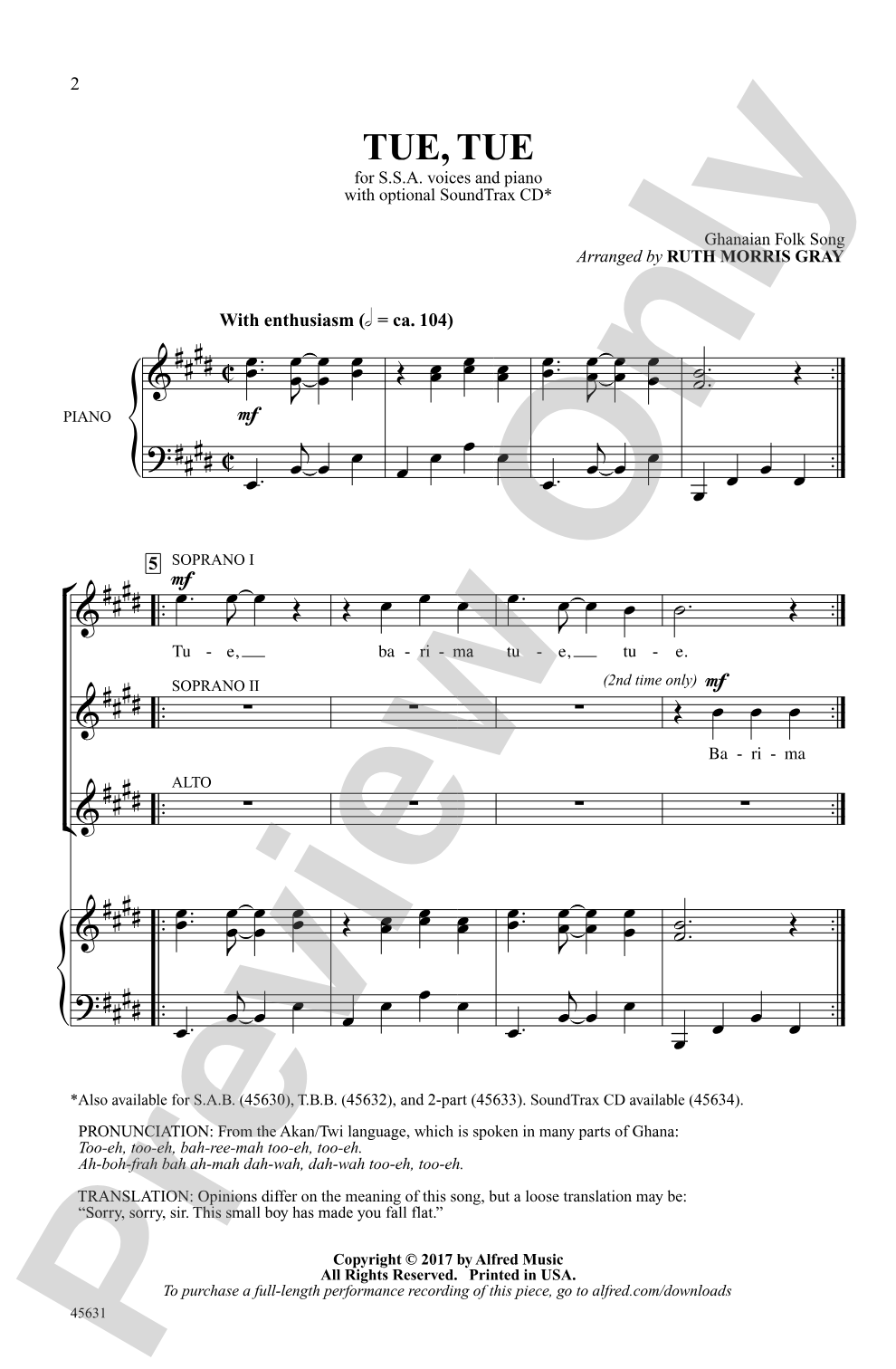
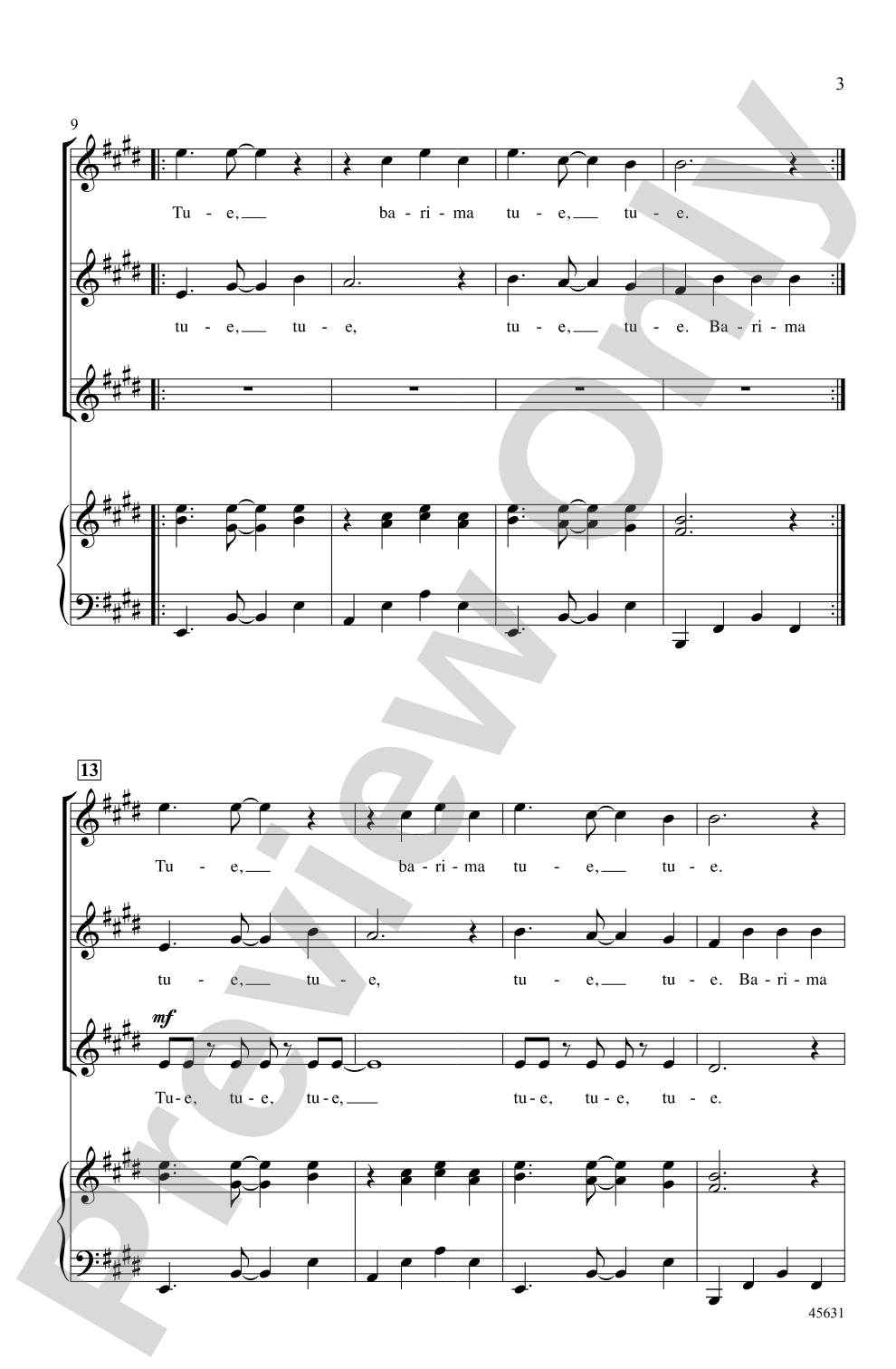
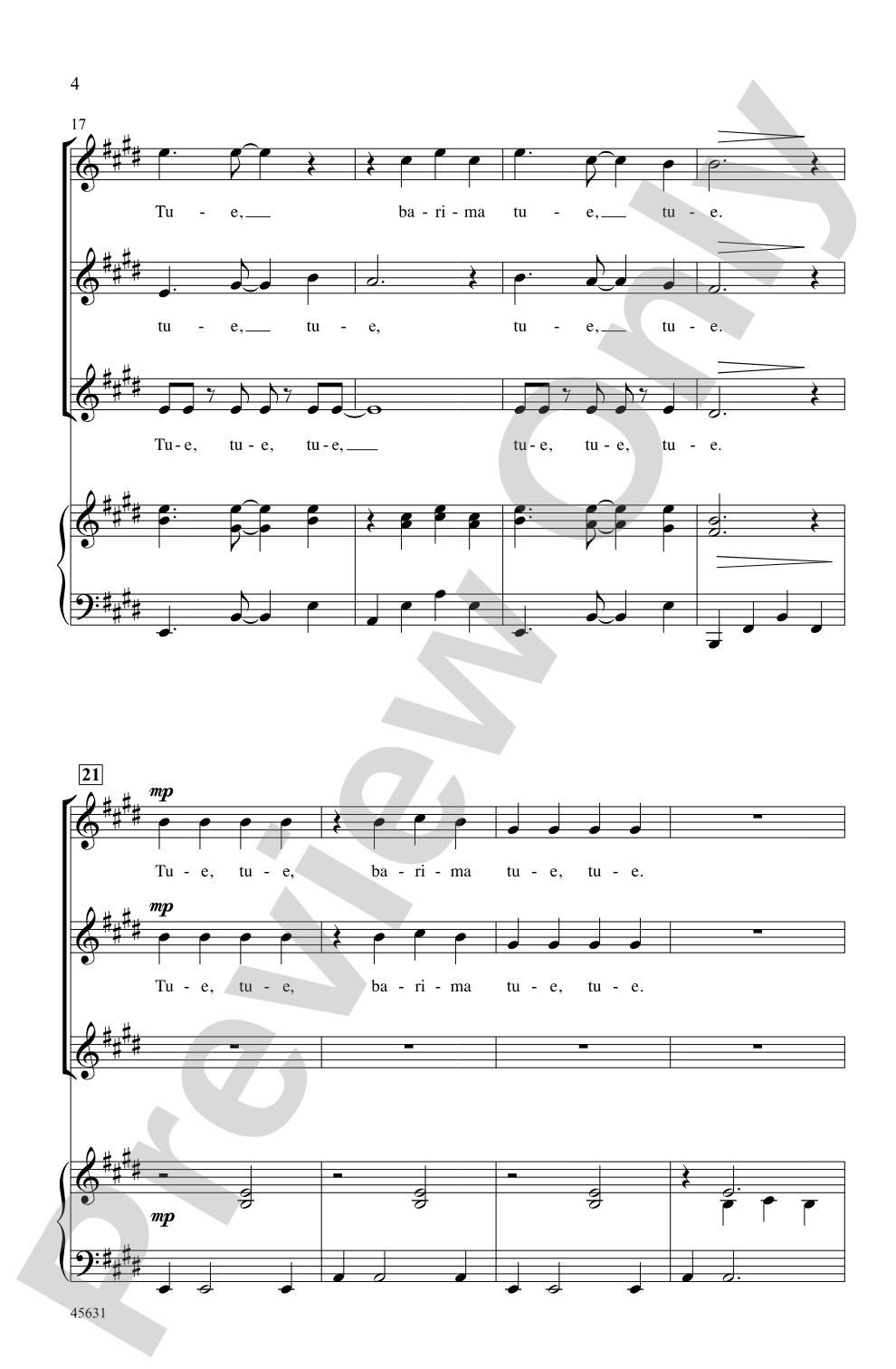
Sung ostinatos join one by one in the opening of this rhythmic arrangement of the authentic Ghanaian folk song. Unison lines, block triads, and a reset of the dynamics in the choral bridge are a blast. Repeated sections make for quick learning and easy memorization. Choreography available on the When We Sing! DVD.


Don't just read it, hear it, play along with it, and watch your students grow with it. In MakeMusic Cloud, Tue, Tue: SSA Choral Octavo comes alive with professional accompaniment, adjustable tempo, and built-in practice tools that turn solo practice into real progress.
Open in the Player
Jump straight in and assign it today.
Start Your Free Trial
Open this title and explore the full library in minutes.
Sample Audio
1
Audio File
--:--
0:00
0:00
Sample Video
No sample videos found.
Additional Details
Series:
Alfred Choral Designs
Publisher:
Alfred Music
Page Count:
12
SKU:
00-PO-0005518
More about this title
About the Arranger: Ruth Morris Gray

Ruth Morris Gray directs choirs at Rosemead High School in California, where she has shaped students' musical lives since 2004. Beyond the rehearsal room, she has composed and arranged over 100 choral works, drawing on a solid foundation in music theory and composition from Biola University and the University of California, Santa Barbara. Her California Single Subject Music Credential, earned at Cal State Northridge, complements decades of hands-on teaching and performing.
Gray's creative work reflects her deep engagement with world music, accessibility for young singers, and the joy of making music together. When she's not composing, teaching, or directing, you'll find her traveling, swimming, reading, or exploring California on an e-bike with her husband.
Why we love this
Gray's arrangement builds energy through an ingenious structural choice: layered ostinatos enter one at a time, creating genuine musical momentum without complexity. The unison sections and block triads give every voice a moment of clarity, while the dynamic reset in the bridge refreshes the texture just when singers need it. Quick learning and memorization mean your singers can focus on locking in the rhythmic drive and enjoying the multicultural content rather than wrestling with notation.
What to expect
The opening has the infectious, building energy of a drumming circle; voices overlap and interlock, creating a rich, rhythmic texture that feels both modern and rooted in tradition. The arrangement crackles with momentum through its repeated sections and playful block harmonies, giving singers a tangible sense of collective power.
Who it's for
SSA choirs at the middle school through early high school level will find this arrangement inviting and rewarding. The repeated sections and straightforward harmonic language support quick learning, while the authentic Ghanaian source material and rhythmic sophistication engage singers who are ready for something more than simple folk song arrangements.
How to get the most out of it
- Establish the ostinato foundation with precision before adding the next layer; each entrance should feel intentional, not accidental. A quick sectional on rhythm accuracy pays dividends.
- Shape the dynamic reset in the bridge as a genuine moment of contrast, pulling back the sound completely before rebuilding. This makes the return feel earned.
- If you're incorporating the choreography from the When We Sing! DVD, start blocking movement early so singers can internalize both the music and the staging without scrambling at rehearsal's end.
How to use it
This works beautifully as an opener on a concert or festival set, where its rhythmic vitality and engaging sound grab the audience immediately. It pairs well with other world music selections in a thematic concert block, or stands alone as a powerful representation of multicultural music education. The choreography option makes it particularly effective for festivals where movement is encouraged.
Skills your students will build
- Layering and blending multiple rhythmic lines simultaneously
- Reading and performing unison and triadic harmonic structures
- Maintaining rhythmic precision in repeated ostinato sections
- Responding to dynamic shifts and understanding their role in musical shape
- Connecting movement and choreography to vocal performance