

Tue, Tue: TBB Choral Octavo
Ghanaian Folk Song / arr. Ruth Morris Gray
Item: 00-PO-0005519

$1.90
Minimum order quantity: 20 copies
Pickup currently not available
Related Items
Tue, Tue: SoundTrax Digital Audio Download |
$27.99
|
View | |
Tue, Tue: SAB Choral Octavo |
$2.05
|
View | |
Tue, Tue: SSA Choral Octavo |
$2.05
|
View | |
Tue, Tue: 2-Part Choral Octavo |
$2.05
|
View | |
Tue, Tue: SAB Choral Octavo |
$2.05
|
View | |
Tue, Tue: SSA Choral Octavo |
$2.05
|
View | |
Tue, Tue: TBB Choral Octavo |
$1.90
|
View | |
Tue, Tue: 2-Part Choral Octavo |
$2.05
|
View | |
Tue, Tue: Choral Octavo SoundTrax CD |
$27.99
|
View |
Description
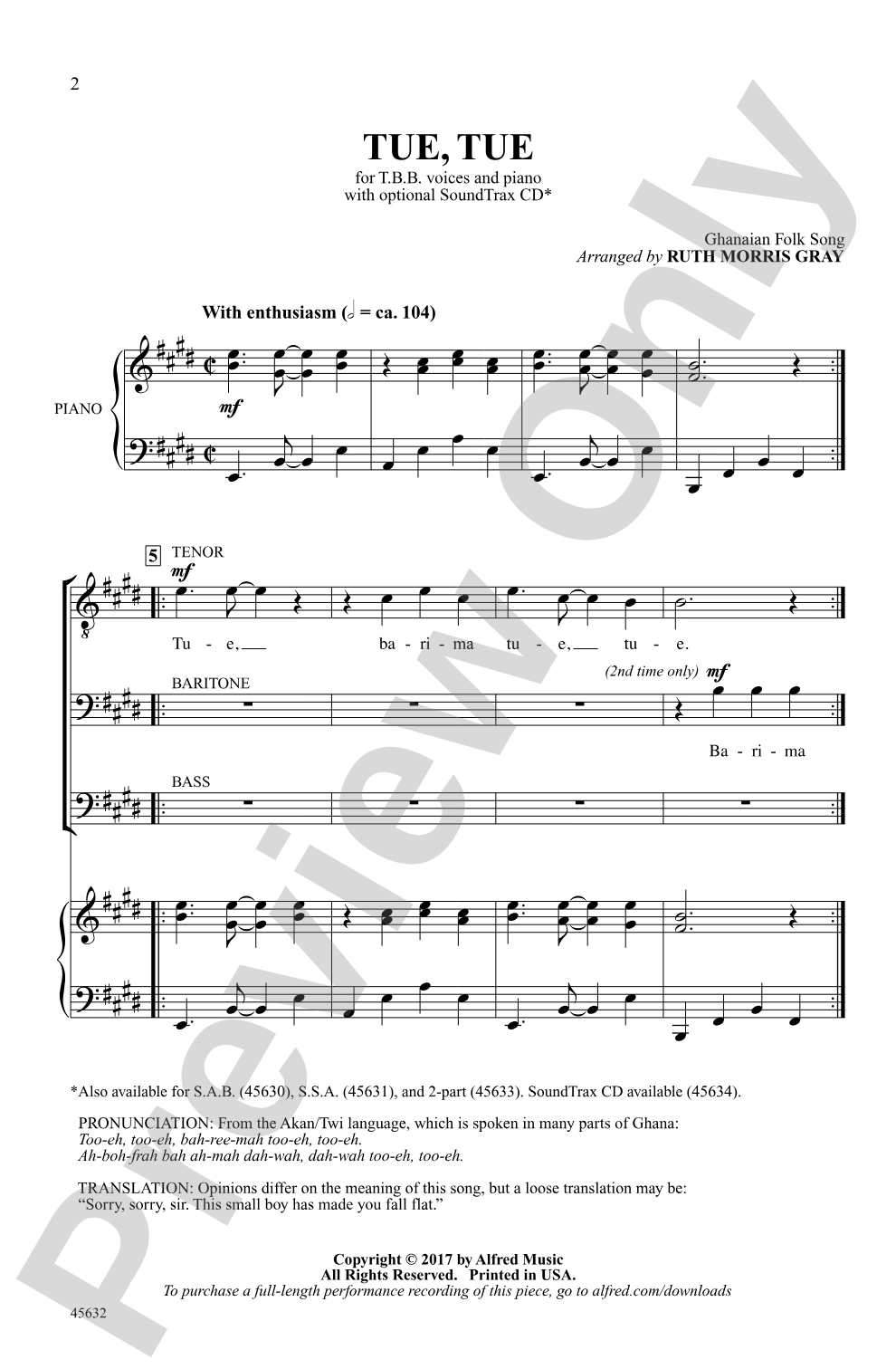
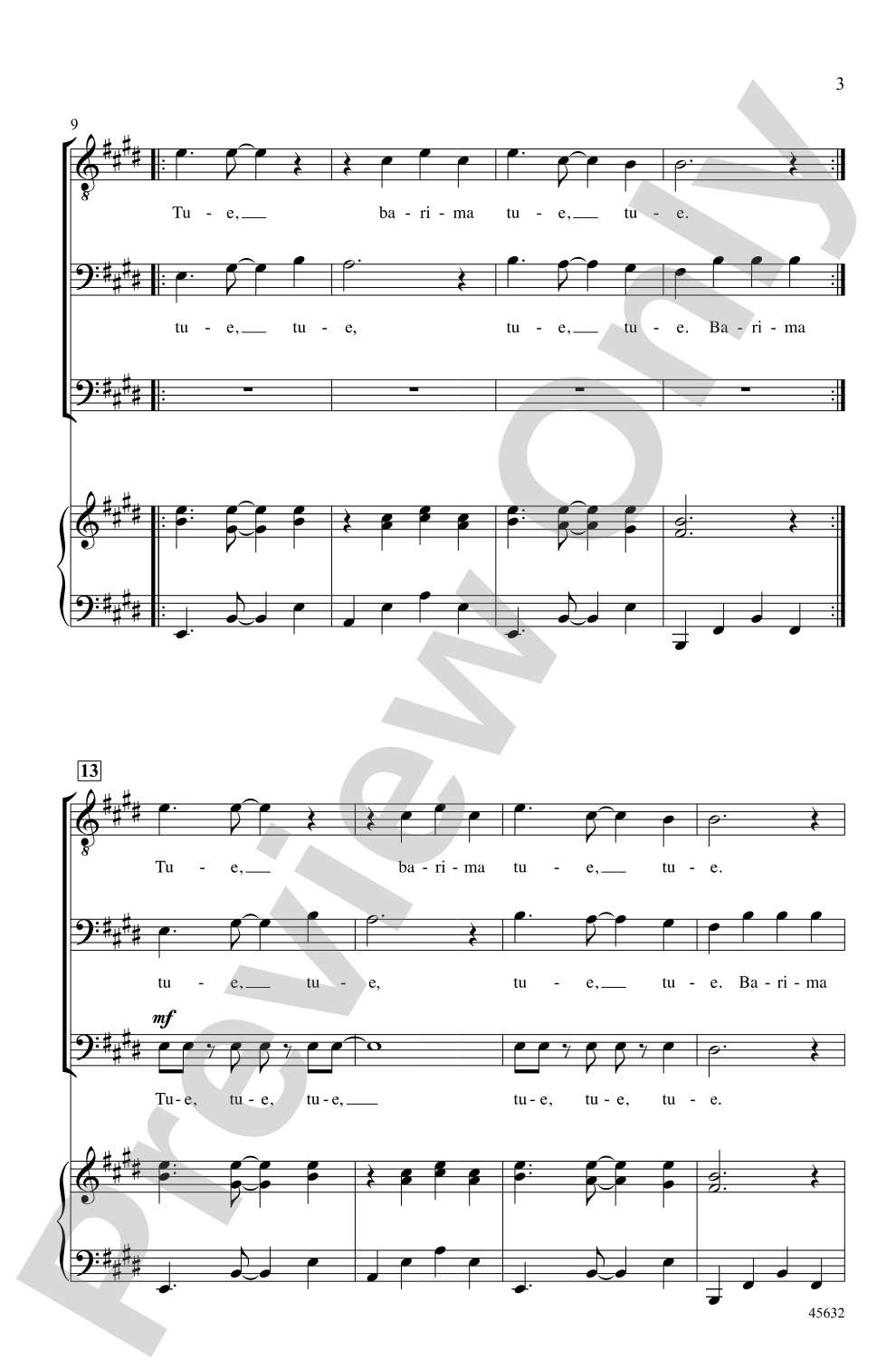
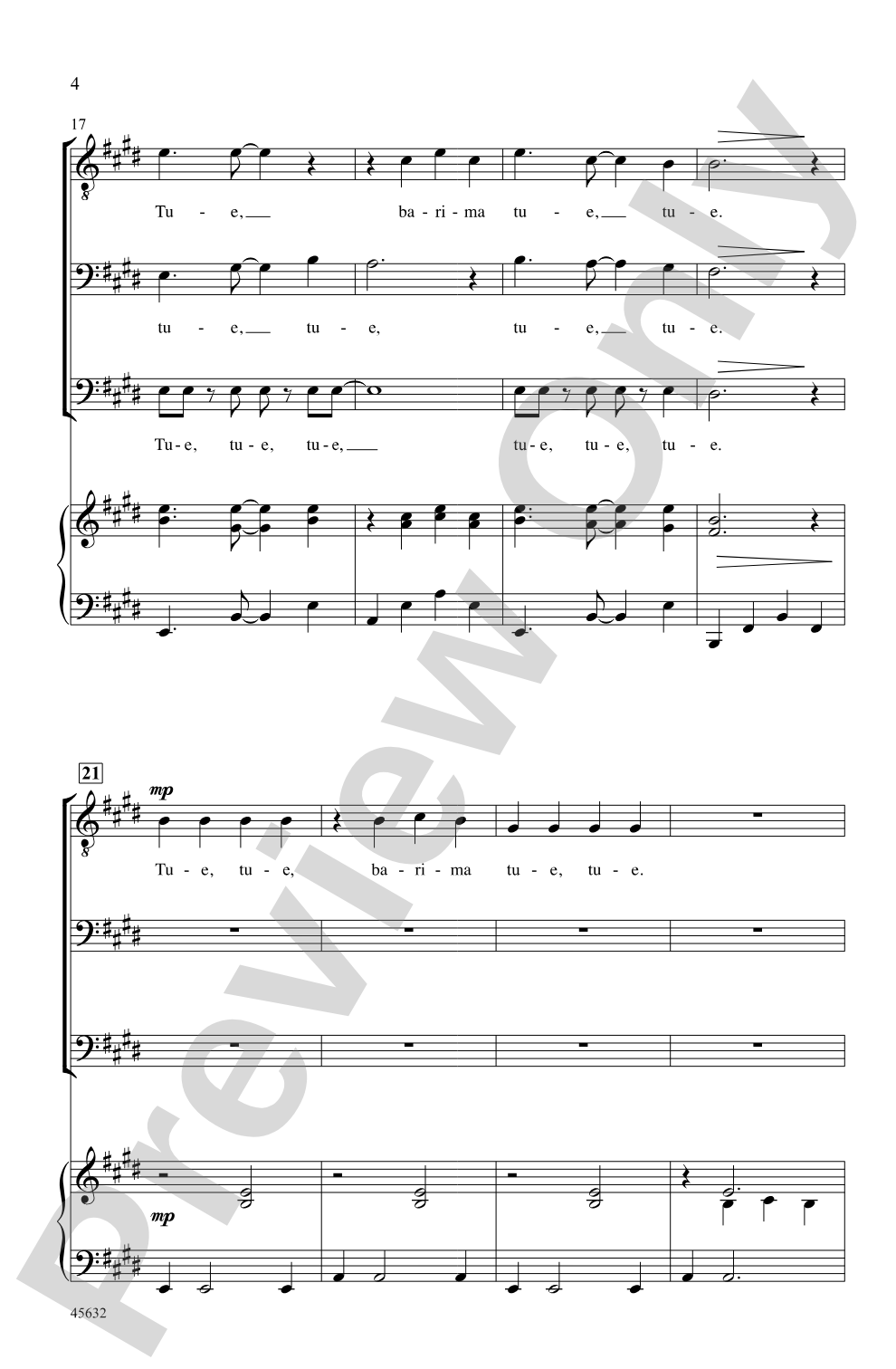
Sung ostinatos join one by one in the opening of this rhythmic arrangement of the authentic Ghanaian folk song. Unison lines, block triads, and a reset of the dynamics in the choral bridge are a blast. Repeated sections make for quick learning and easy memorization. Choreography available on the When We Sing! DVD.


Don't just read it, hear it, play along with it, and watch your students grow with it. In MakeMusic Cloud, Tue, Tue: TBB Choral Octavo comes alive with professional accompaniment, adjustable tempo, and built-in practice tools that turn solo practice into real progress.
Open in the Player
Jump straight in and assign it today.
Start Your Free Trial
Open this title and explore the full library in minutes.
Sample Audio
1
Audio File
--:--
0:00
0:00
Sample Video
No sample videos found.
Additional Details
Series:
Alfred Choral Designs
Publisher:
Alfred Music
Page Count:
12
SKU:
00-PO-0005519
More about this title
About the Arranger: Ruth Morris Gray

Ruth Morris Gray brings deep roots in both composition and choral direction. She earned her Bachelor of Music in Piano Performance and Composition from Biola University, then pursued graduate study in composition at UC Santa Barbara. She holds a California Single Subject Music Credential from Cal State Northridge.
Since 2004, Gray has directed choirs at Rosemead High School in California, where she also teaches piano. Her catalog includes over 100 published choral compositions, many of which draw on world music traditions and accessible yet engaging arranging techniques. Beyond the music room, she is an active performer and composer who values travel, reading, and time outdoors with her family.
Why we love this
Gray's arrangement builds momentum through a beautifully structured ostinato entrance that captures attention immediately. The mix of unison writing, block triads, and a dynamic reset in the bridge keeps singers engaged without requiring complex part management, making this an ideal selection for groups seeking authenticity without overcomplication.
What to expect
This Ghanaian folk song pulses with rhythmic vitality from the very first overlapping ostinatos. The arrangement feels contemporary yet grounded, balancing percussive drive with moments of harmonic openness that let the melody breathe.
Who it's for
Treble and tenor/bass choirs at the middle school and high school levels will find this arrangement both accessible and rewarding. The quick-learning repeated sections suit groups preparing for festivals or contests on a tight timeline, while the multicultural content enriches any program seeking repertoire beyond the standard canon.
How to get the most out of it
- Shape each ostinato entrance to create distinct layers; start the first voice softly and let each addition build natural energy rather than entering at uniform dynamics.
- Lock the rhythmic precision during the repeated sections by having singers internalize the pulse independently; this prevents the tendency to rush when material feels familiar.
- Use the choreography (available on the When We Sing! DVD) to reinforce ensemble cohesion and give singers a kinesthetic anchor for the folk song's narrative.
- Emphasize the dynamic reset in the choral bridge as a moment of ensemble renewal; treat it as a clean slate rather than a continuation of what came before.
How to use it
Program this as an energetic set-opener or a concert centerpiece when building a multicultural unit. The movement element and quick memorization make it especially valuable for spring concert or festival contexts where you need a piece that stands out visually and sonically without consuming weeks of rehearsal time.
Skills your students will build
- Layering independent rhythmic ostinatos while maintaining ensemble pulse
- Transitioning between unison, block triads, and ostinato textures
- Coordinating singing with staged movement and choreography
- Building dynamic contrast and phrase shaping across repeated sections
- Sight-reading mixed ensemble voicings (TB/TTB/TBB/TTBB flexibility)