

Tongo: 2-Part Choral Octavo
Polynesian Folk Song / arr. Greg Gilpin
Item: 00-PO-0003370

$2.05
Minimum order quantity: 10 copies
Please note: Under U.S. copyright law, you must purchase the exact number of copies needed for your ensemble. Printing, duplicating or sharing additional copies is strictly prohibited.
Pickup currently not available
Related Items
Tongo: SATB a cappella Choral Octavo |
$2.20
|
View | |
Tongo: SAB, a cappella Choral Octavo |
$2.20
|
View | |
Tongo: TB Choral Octavo |
$2.05
|
View | |
Tongo: SATB a cappella Choral Octavo |
$2.20
|
View | |
Tongo: SAB, a cappella Choral Octavo |
$2.20
|
View | |
Tongo: 2-Part Choral Octavo |
$2.50
|
View | |
Tongo: TB Choral Octavo |
$2.05
|
View |
Description
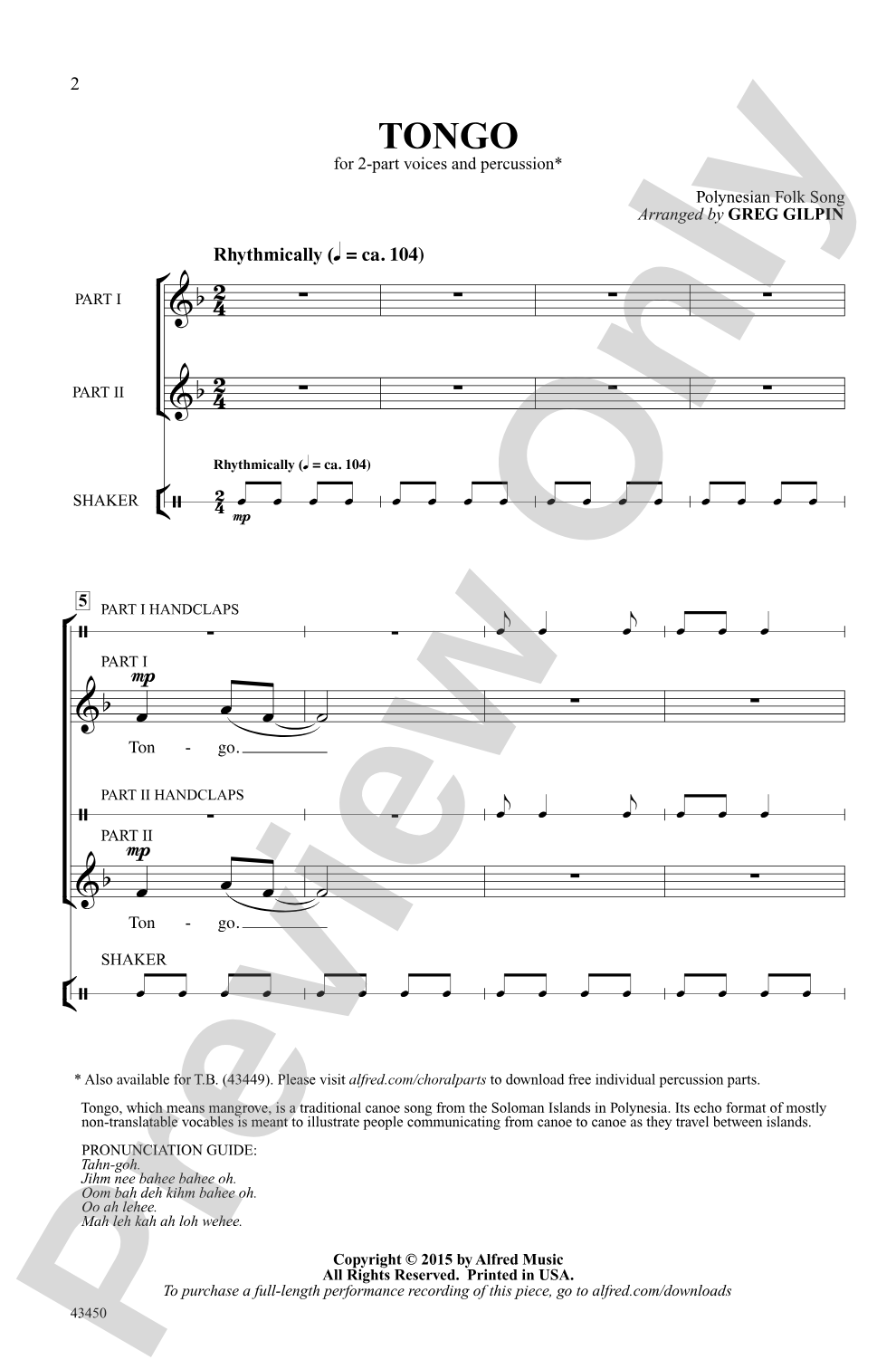
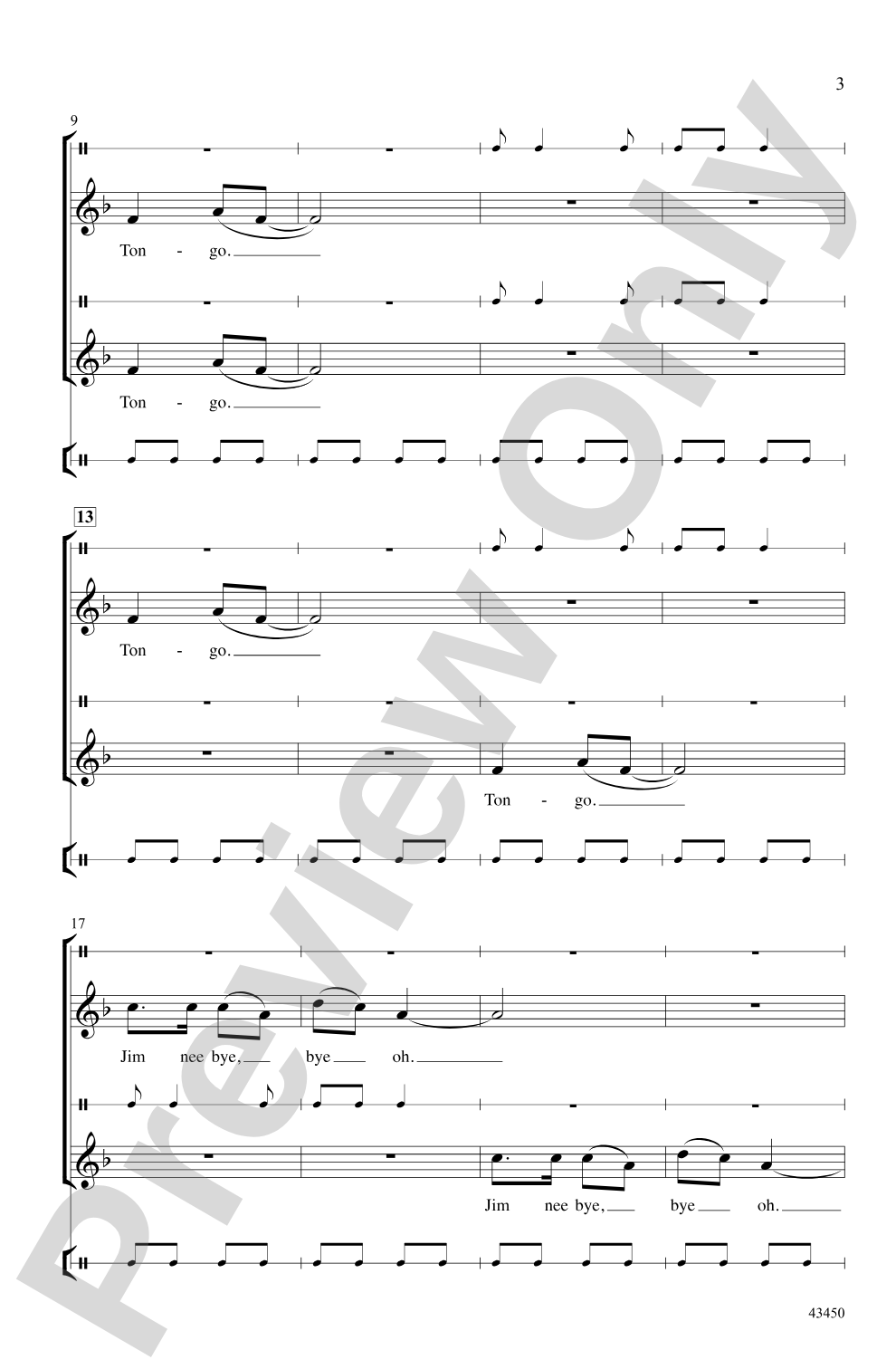
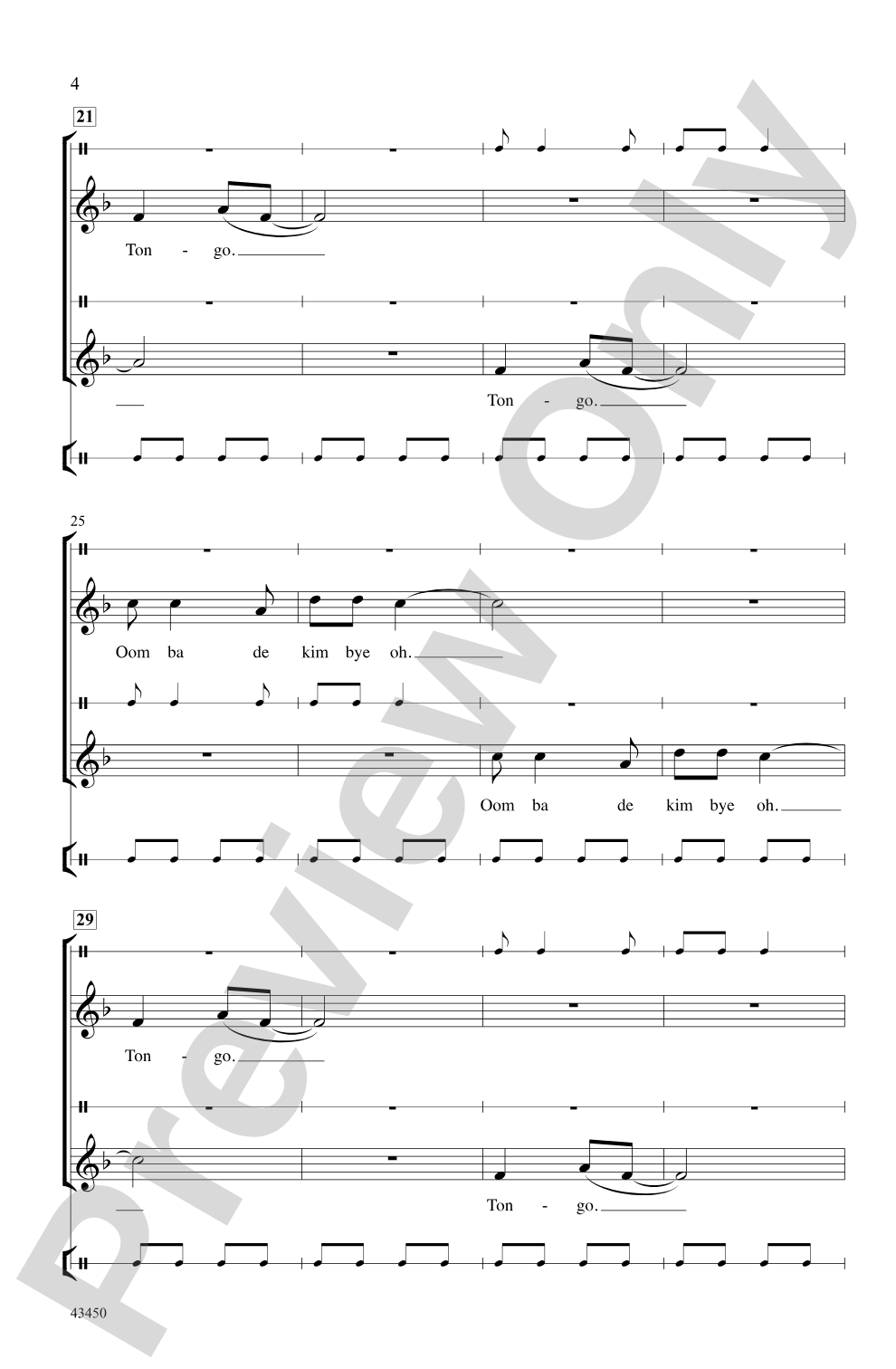
Here's a traditional canoe song from Polynesia that sounds quite impressive with a cappella voices, handclaps, and percussion instruments. The call-and-response format of Greg's well-designed arrangement suggests people communicating from canoe to canoe as they travel between islands.


Don't just read it, hear it, play along with it, and watch your students grow with it. In MakeMusic Cloud, Tongo: 2-Part Choral Octavo comes alive with professional accompaniment, adjustable tempo, and built-in practice tools that turn solo practice into real progress.
Open in the Player
Jump straight in and assign it today.
Start Your Free Trial
Open this title and explore the full library in minutes.
Sample Audio
1
Audio File
--:--
0:00
0:00
Sample Video
Additional Details
Series:
Alfred Choral Designs
Publisher:
Alfred Music
Page Count:
12
SKU:
00-PO-0003370
Instrumentation:
Percussion Instruments
More about this title
About the Arranger: Greg Gilpin
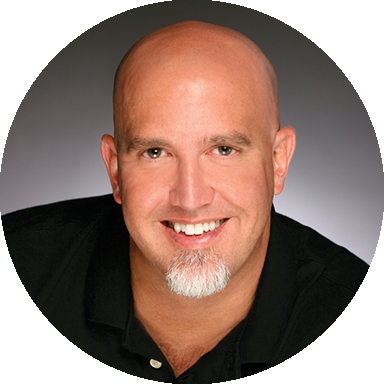
Greg Gilpin is an ASCAP award-winning composer and arranger whose work has been performed at prestigious venues including Carnegie Hall, Lincoln Center, Ryman Auditorium, Sydney Opera House, Royal Festival Hall, and Harpa Concert Hall. As Director of Educational Choral Publications for Shawnee Press, he shapes the landscape of accessible choral repertoire while maintaining an active conducting career across North America and internationally.
Beyond music, Gilpin has expanded into professional organizing and financial coaching, founding Maestro Organizing and appearing on network television programs including "Hoarders." He served as composer for the award-winning short film "Rosie's Rescue" and collaborated with opera singer Angela Brown on a new arrangement of "What Child is This?" premiered by the Indianapolis Symphonic Choir. He holds memberships in ACDA, NAfME, SAG-AFTRA, and is a Life Loyal Member of Phi Mu Alpha Sinfonia.
Why we love this
Gilpin captures the essence of call-and-response storytelling without overcomplicating the musical texture. The addition of handclaps and percussion transforms this into a fully immersive experience that requires minimal rehearsal time while delivering outsized impact at festivals and concerts. It's a piece that energizes students while honoring the cultural tradition at its heart.
What to expect
Tongo evokes the rhythm of paddling canoes and the spirited communication between seafaring communities. The call-and-response structure creates an immediate sense of dialogue and community, while handclaps and percussion ground the piece in lived tradition rather than concert-hall abstraction.
Who it's for
Developing treble choirs seeking engaging world music repertoire that connects cultural storytelling to practical musicianship. The 2-part voicing and a cappella format make it accessible for middle school through high school ensembles while remaining musically substantive.
How to get the most out of it
- Establish clear hand-clap patterns during early rehearsals so singers can internalize the rhythmic foundation before adding melodic layers.
- Allocate rehearsal time to experiment with percussion options. The arrangement accommodates various instruments, so let your ensemble explore what resonates with your available resources.
- Shape the call-and-response sections with dynamic contrast. Allow the calls to sit forward in the mix while responses can be slightly broader in tone to suggest spatial distance between canoes.
- Record a rehearsal run-through and listen back as an ensemble. Hearing the piece whole helps singers understand how their part contributes to the narrative arc.
How to use it
This piece shines in cultural studies concerts, multicultural festivals, or as an opener that sets an energetic, collaborative tone for your program. It pairs naturally with other world music selections or can stand alone as a compact, memorable statement that showcases your ensemble's rhythmic precision and cultural awareness.
Skills your students will build
- Call-and-response singing with attention to rhythmic entrances and harmonic balance
- Independent part-singing in 2-part voicing while maintaining text clarity
- Rhythmic integration of body percussion (handclaps) with vocal lines
- Understanding of cultural context and storytelling through music
- Ensemble cohesion and communication across a divided chorus