

Tongo: SAB, a cappella Choral Octavo
Polynesian Folk Song / arr. Greg Gilpin
Item: 00-PO-0005539

$2.20
Minimum order quantity: 20 copies
Pickup currently not available
Related Items
Tongo: SATB a cappella Choral Octavo |
$2.20
|
View | |
Tongo: 2-Part Choral Octavo |
$2.05
|
View | |
Tongo: TB Choral Octavo |
$2.05
|
View | |
Tongo: SATB a cappella Choral Octavo |
$2.20
|
View | |
Tongo: SAB, a cappella Choral Octavo |
$2.20
|
View | |
Tongo: 2-Part Choral Octavo |
$2.50
|
View | |
Tongo: TB Choral Octavo |
$2.05
|
View |
Description
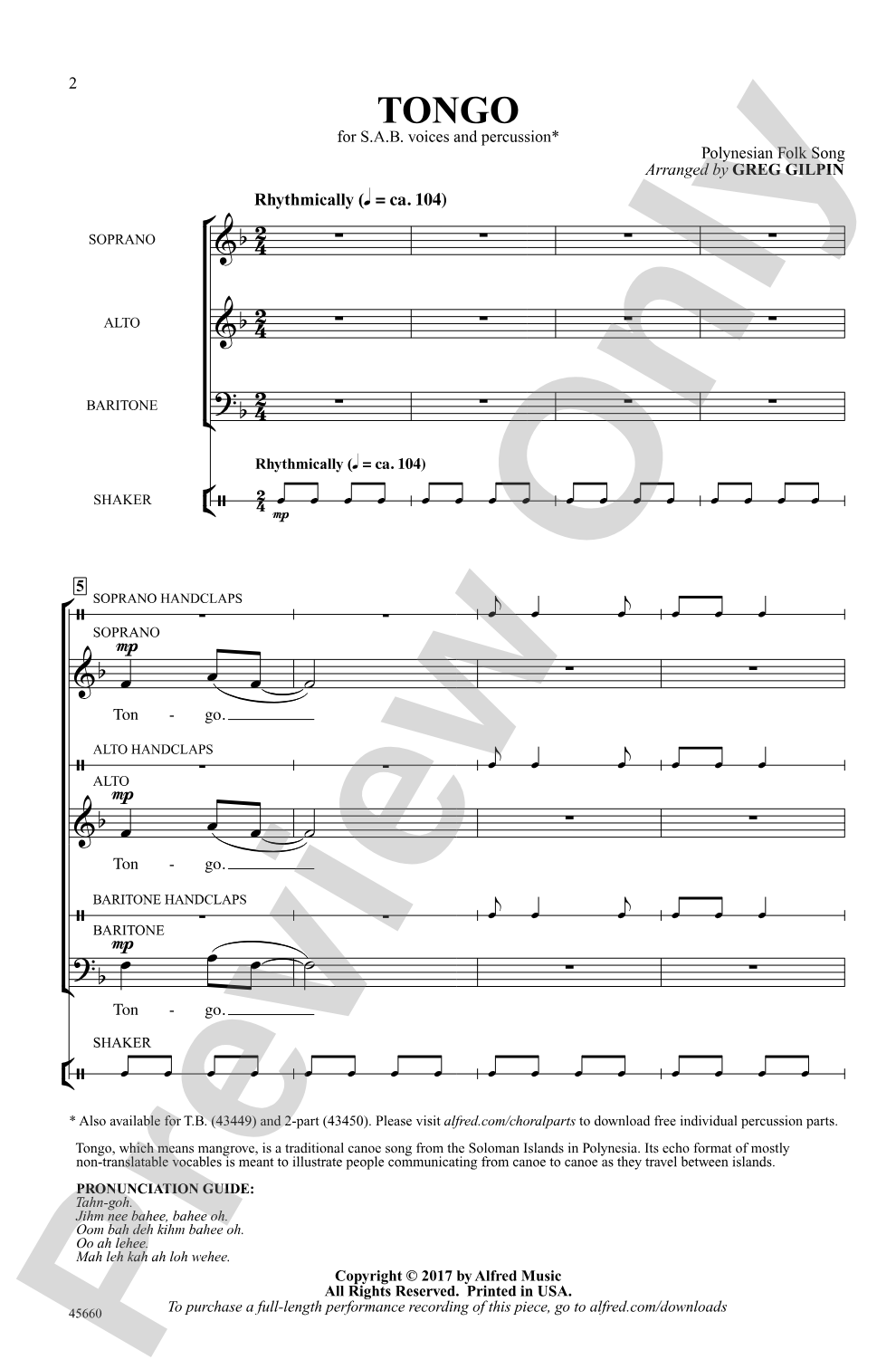
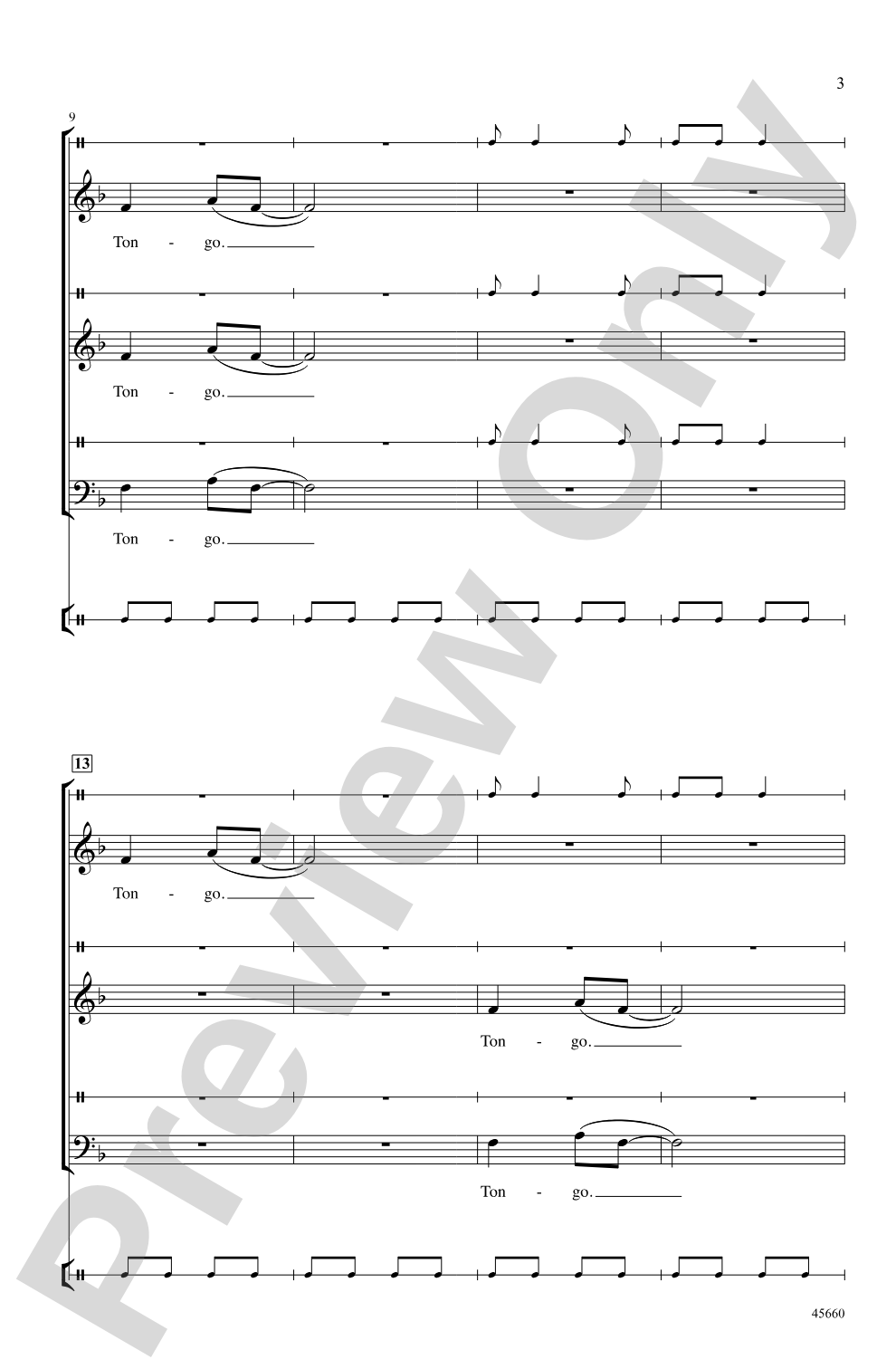
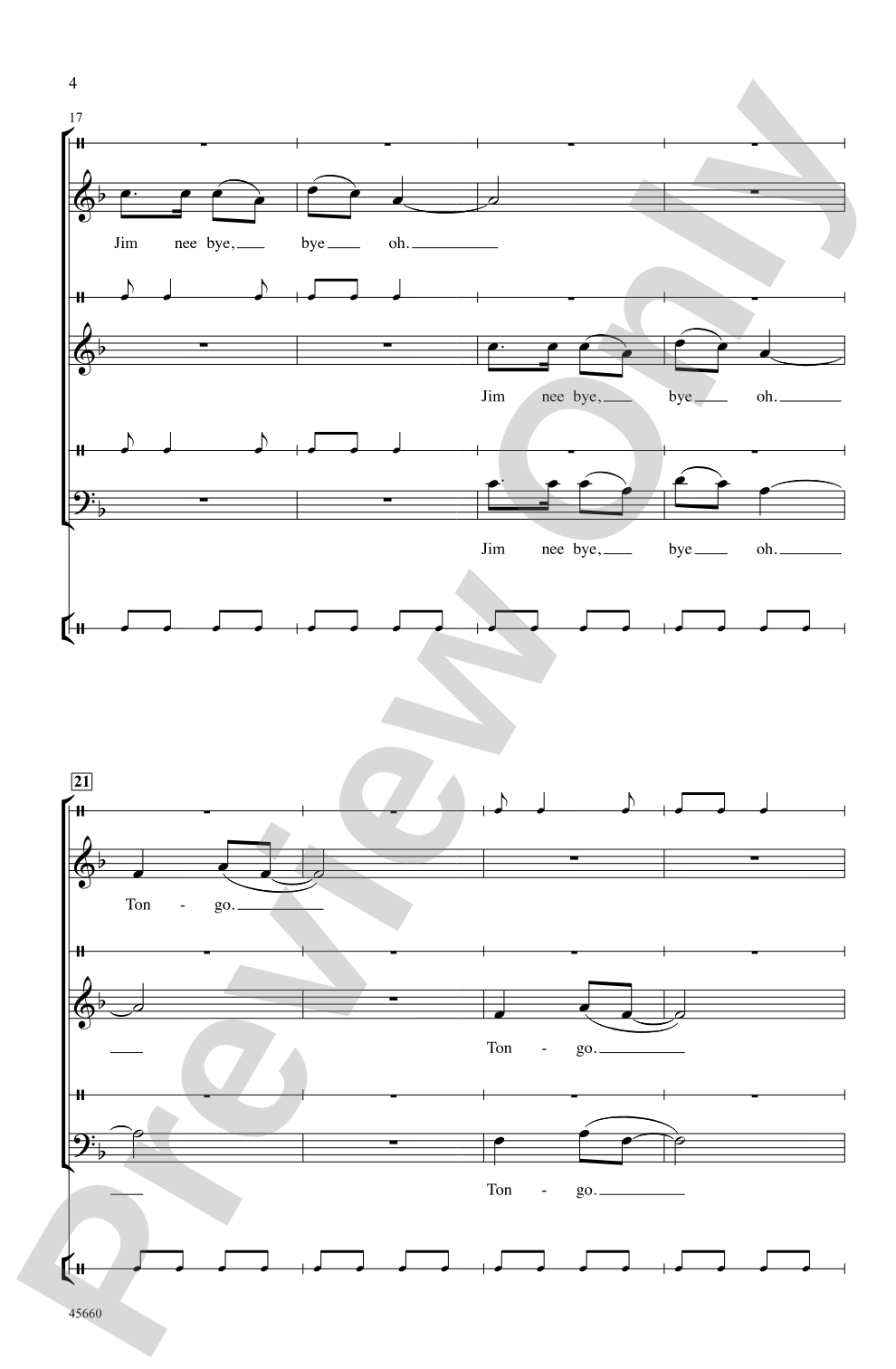
Here's a traditional canoe song from Polynesia that sounds quite impressive with a cappella voices, handclaps, and percussion instruments. The call-and-response format of Greg's well-designed arrangement suggests people communicating from canoe to canoe as they travel between islands.


Don't just read it, hear it, play along with it, and watch your students grow with it. In MakeMusic Cloud, Tongo: SAB, a cappella Choral Octavo comes alive with professional accompaniment, adjustable tempo, and built-in practice tools that turn solo practice into real progress.
Open in the Player
Jump straight in and assign it today.
Start Your Free Trial
Open this title and explore the full library in minutes.
Sample Audio
1
Audio File
--:--
0:00
0:00
Sample Video
Additional Details
Series:
Alfred Choral Designs
Publisher:
Alfred Music
Page Count:
16
SKU:
00-PO-0005539
Instrumentation:
Percussion Instruments
More about this title
About the Arranger: Greg Gilpin

Greg Gilpin brings both compositional sophistication and deep choral conducting experience to his arrangements. He has led performances at major venues across North America, Europe, and Australia, including Carnegie Hall, Lincoln Center, Sydney Opera House, and Royal Festival Hall. As Director of Educational Choral Publications for Shawnee Press, Gilpin shapes choral repertoire for schools and universities nationwide. His work has earned ASCAP recognition and extends beyond music into film scoring and other creative ventures.
Beyond his conducting podium and publishing role, Gilpin remains active as a composer and recording musician. He is a proud member of ACDA, NAfME, SAG-AFTRA, and holds Life Loyal membership in Phi Mu Alpha Sinfonia.
Why we love this
Gilpin's ear for world music shines in this arrangement. The call-and-response structure feels natural and dialogic rather than forced, and the addition of handclaps and percussion transforms a simple folk melody into something with genuine theatrical appeal. SAB voicing and a cappella writing keep the focus on blend and storytelling, making this accessible to developing choirs without sacrificing musical interest.
What to expect
Tongo captures the energy and camaraderie of seafaring people calling across open water. The melody has an infectious, almost hypnotic quality that pulls listeners into a rhythmic journey. Handclaps and percussion create texture without overwhelming the voices, building a sense of community and celebration.
Who it's for
SAB choirs at the middle school, high school, or community level who are ready to blend across three parts and engage with world music repertoire. This arrangement works well for groups comfortable with a cappella singing and interested in adding movement or simple percussion to their concerts.
How to get the most out of it
- Establish a steady, conversational pulse before adding handclaps. The rhythmic precision of the percussion instruments depends on a conductor and singers locked in together.
- Balance the call-and-response exchanges so the answering sections feel like genuine replies, not echoes. Each voice part should know whether it's leading or responding in any given measure.
- Encourage singers to visualize the canoe imagery. The quality of tone and phrasing will shift when singers inhabit the journey between islands rather than simply executing notes on a page.
- Use the optional percussion parts strategically. Rehearse the piece effectively a cappella first, then layer in handclaps and instruments only after the harmonic foundation is secure.
How to use it
Program this alongside other folk or world music pieces to create a thematic concert block, or use it as a high-energy opener or closer that engages the audience immediately. Its accessibility and visual appeal make it equally suitable for festival competition or a casual community concert where entertainment value matters as much as musical rigor.
Skills your students will build
- Singing call-and-response patterns with rhythmic precision
- Blending three-part harmony in an a cappella setting
- Interpreting non-English text and world music idioms
- Coordinating vocals with handclaps and percussion
- Understanding musical storytelling through cultural context