

Tongo: SATB a cappella Choral Octavo
Polynesian Folk Song / arr. Greg Gilpin
Item: 00-PO-0005911
$2.20
Minimum order quantity: 20 copies
Pickup currently not available
Related Items
Tongo: SAB, a cappella Choral Octavo |
$2.20
|
View | |
Tongo: 2-Part Choral Octavo |
$2.05
|
View | |
Tongo: TB Choral Octavo |
$2.05
|
View | |
Tongo: SATB a cappella Choral Octavo |
$2.20
|
View | |
Tongo: SAB, a cappella Choral Octavo |
$2.20
|
View | |
Tongo: 2-Part Choral Octavo |
$2.05
|
View | |
Tongo: TB Choral Octavo |
$2.05
|
View |
Description
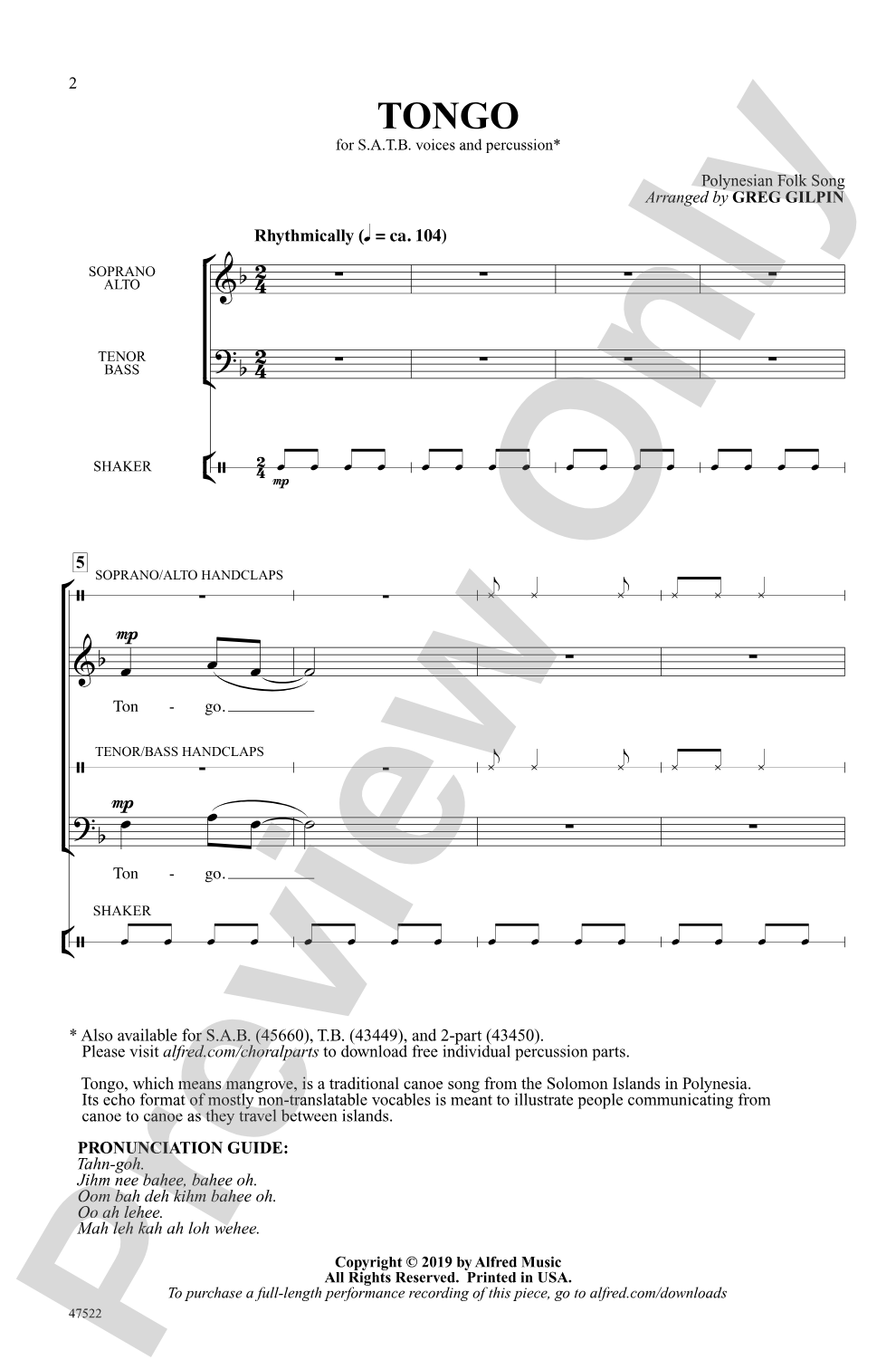
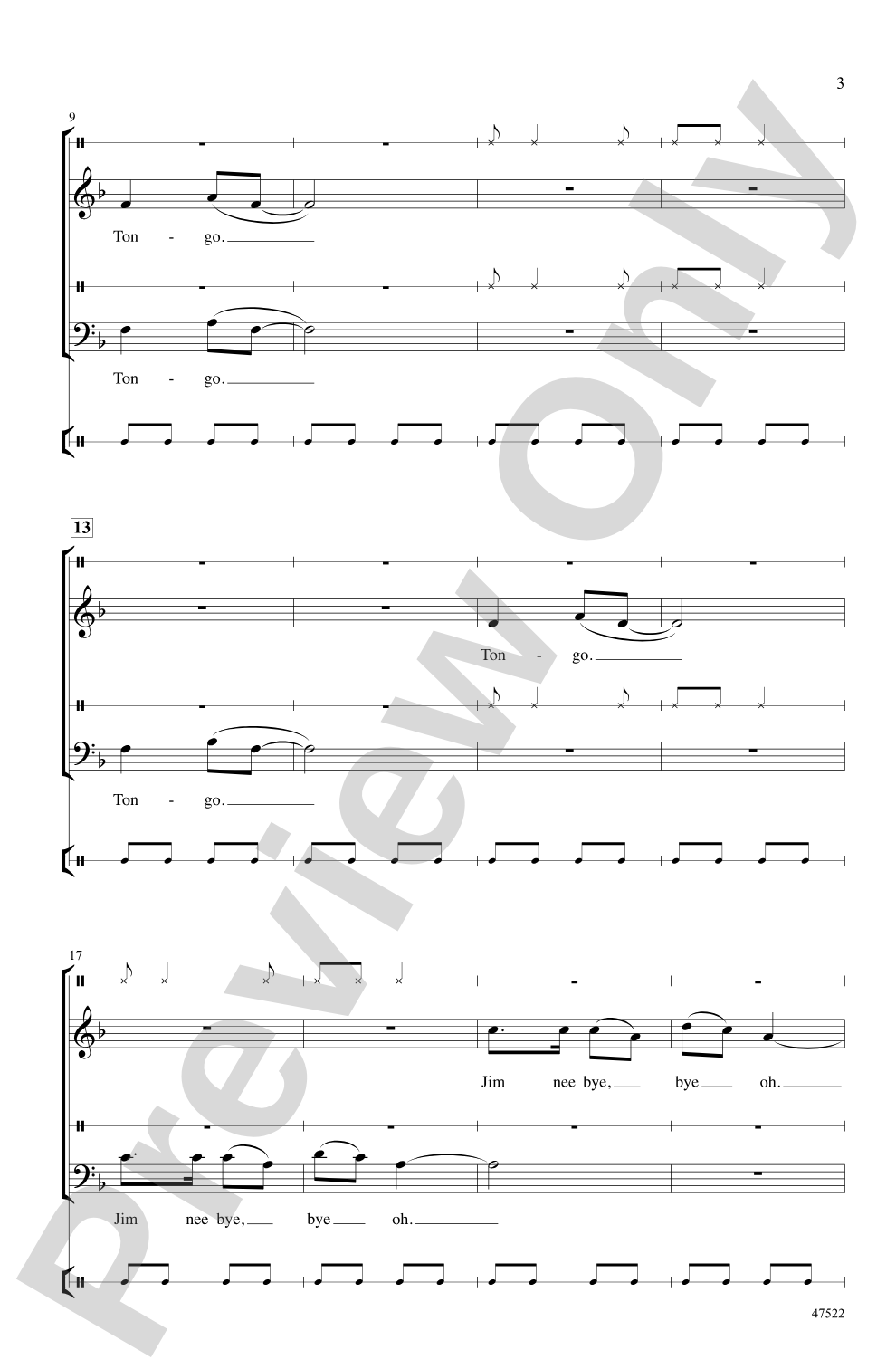
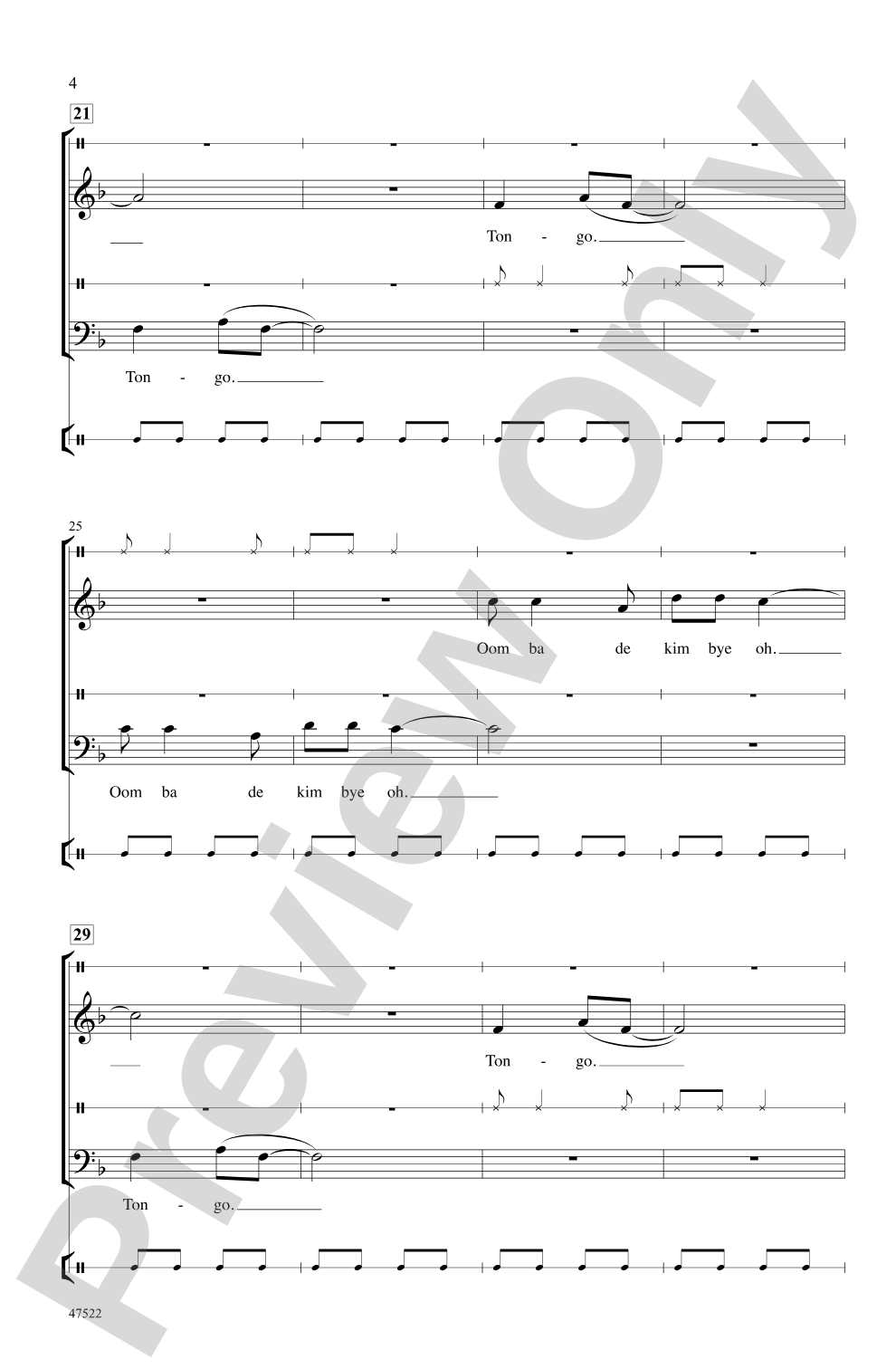
Here's a traditional canoe song from Polynesia that sounds quite impressive with a cappella voices, handclaps, and percussion instruments. The call-and-response format of Greg's well-designed arrangement suggests people communicating from canoe to canoe as they travel between islands.


Tongo: SATB a cappella Choral Octavo isn't in MakeMusic Cloud just yet...but it could be. Let us know you'd like to see it, and you'll help shape what comes next. In the meantime, start a free trial and dive into thousands of interactive titles your students can play along with today.
Request This Title
Tell us you want it.
Start Your Free Trial
Explore everything that's ready to play right now.
Sample Audio
1
Audio File
--:--
0:00
0:00
Sample Video
Additional Details
Series:
Alfred Choral Designs
Publisher:
Alfred Music
Page Count:
16
SKU:
00-PO-0005911
Instrumentation:
Percussion Instruments
More about this title
About the Arranger: Greg Gilpin

Greg Gilpin's work as a choral arranger and conductor has taken him to some of the world's most prestigious concert halls, from Carnegie Hall and Lincoln Center in New York to the Sydney Opera House and Royal Festival Hall in London. An ASCAP award-winning composer, he serves as Director of Educational Choral Publications for Shawnee Press and maintains active roles in professional organizations including ACDA and NAfME.
Beyond the concert stage, Gilpin has expanded his creative reach into film scoring and recording production, winning Best Score for the short film "Rosie's Rescue" in 2021. His arrangement of "What Child is This?" with opera singer Angela Brown and the Indianapolis Symphonic Choir represents his ongoing commitment to bringing fresh interpretations of beloved music to audiences.
Why we love this
Gilpin's arrangement captures the essence of call-and-response communication while remaining fully accessible to SATB choirs without needing instrumental accompaniment. The integration of handclaps and percussion transforms a traditional Polynesian canoe song into something vivid and engaging, making it equally at home in a festival setting or a concert showcasing world music.
What to expect
Tongo carries the warmth and immediacy of people calling across open water, with the call-and-response format creating natural energy and dialogue between sections. The combination of voices, hand percussion, and optional instruments builds a sense of movement and purpose, painting a vivid picture of island voyages and communal connection.
Who it's for
This piece works beautifully for developing singers in high school choirs, college and university ensembles, and community choirs looking to expand beyond European classical traditions. Directors seeking a concert piece that teaches authentic multicultural repertoire while remaining manageable for SATB singers will find this an excellent choice.
How to get the most out of it
- Establish a steady, unhurried pulse that evokes the rhythm of paddling. The song's effectiveness depends on singers feeling the journey rather than rushing through it.
- Layer in handclaps gradually during rehearsals. Start with the full choir clapping together, then introduce the staggered patterns as confidence grows.
- Balance the call-and-response sections so that the answering phrase feels like a genuine reply rather than an echo. This creates the illusion of voices traveling across water.
- If adding percussion instruments, keep them subtle and supportive. They should enhance the sense of motion without overwhelming the voices.
How to use it
Program this during a concert section devoted to world music or folk traditions, where its accessible charm and rhythmic drive create momentum. The piece also works well as a lighter moment between heavier classical works, and its a cappella format makes it flexible for smaller concert venues.
Skills your students will build
- Call-and-response singing and ensemble independence
- Rhythmic precision in non-standard meters or syncopated patterns
- Blend and balance in SATB voicing without instrumental support
- Integration of body percussion and ensemble coordination
- Cultural awareness and authentic interpretation of world music traditions