

Tongo: TB Choral Octavo
Polynesian Folk Song / arr. Greg Gilpin
Item: 00-PO-0003369
$2.05
Minimum order quantity: 20 copies
Pickup currently not available
Related Items
Tongo: SATB a cappella Choral Octavo |
$2.20
|
View | |
Tongo: SAB, a cappella Choral Octavo |
$2.20
|
View | |
Tongo: 2-Part Choral Octavo |
$2.05
|
View | |
Tongo: SATB a cappella Choral Octavo |
$2.20
|
View | |
Tongo: SAB, a cappella Choral Octavo |
$2.20
|
View | |
Tongo: 2-Part Choral Octavo |
$2.05
|
View | |
Tongo: TB Choral Octavo |
$2.05
|
View |
Description
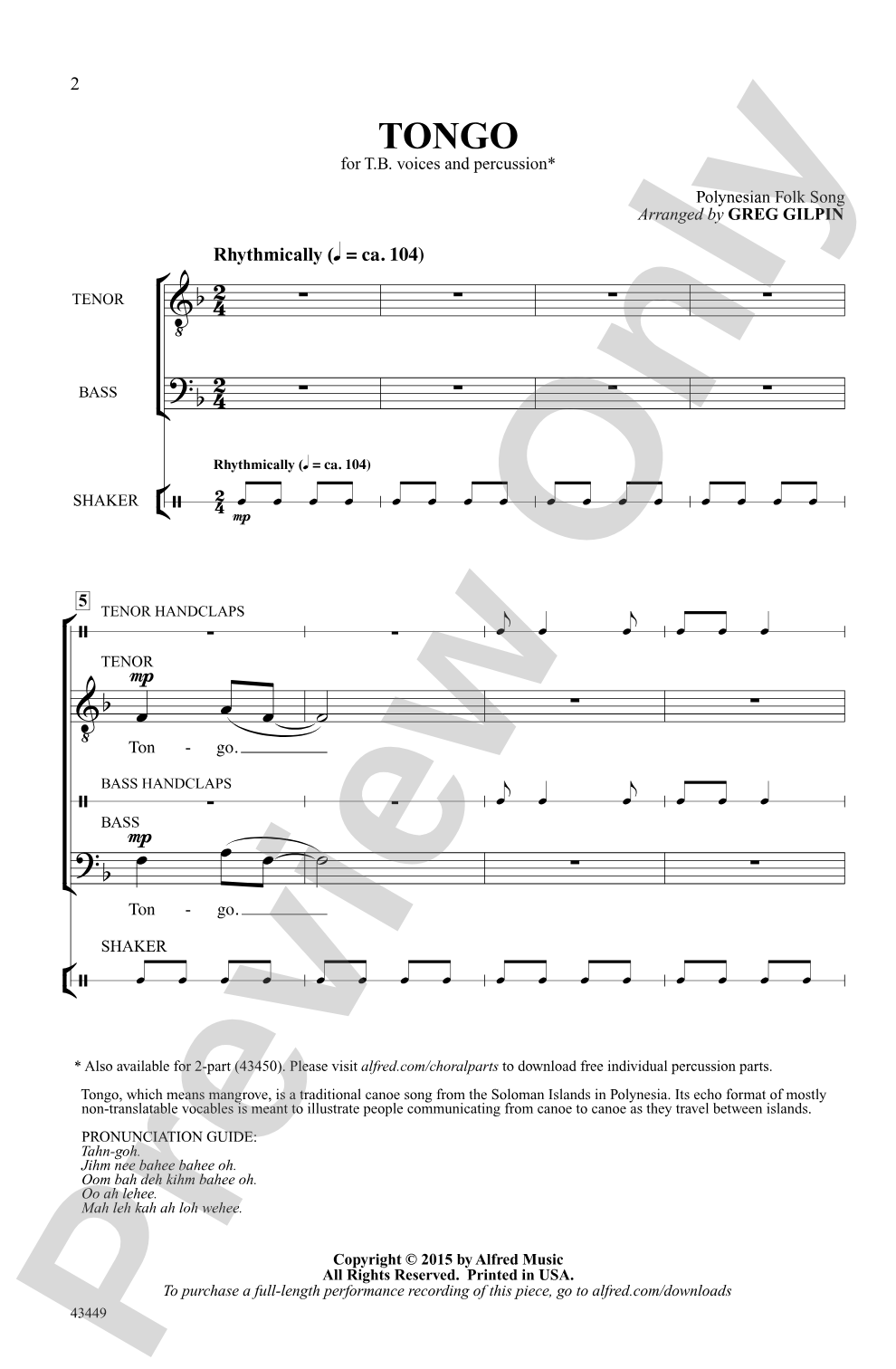
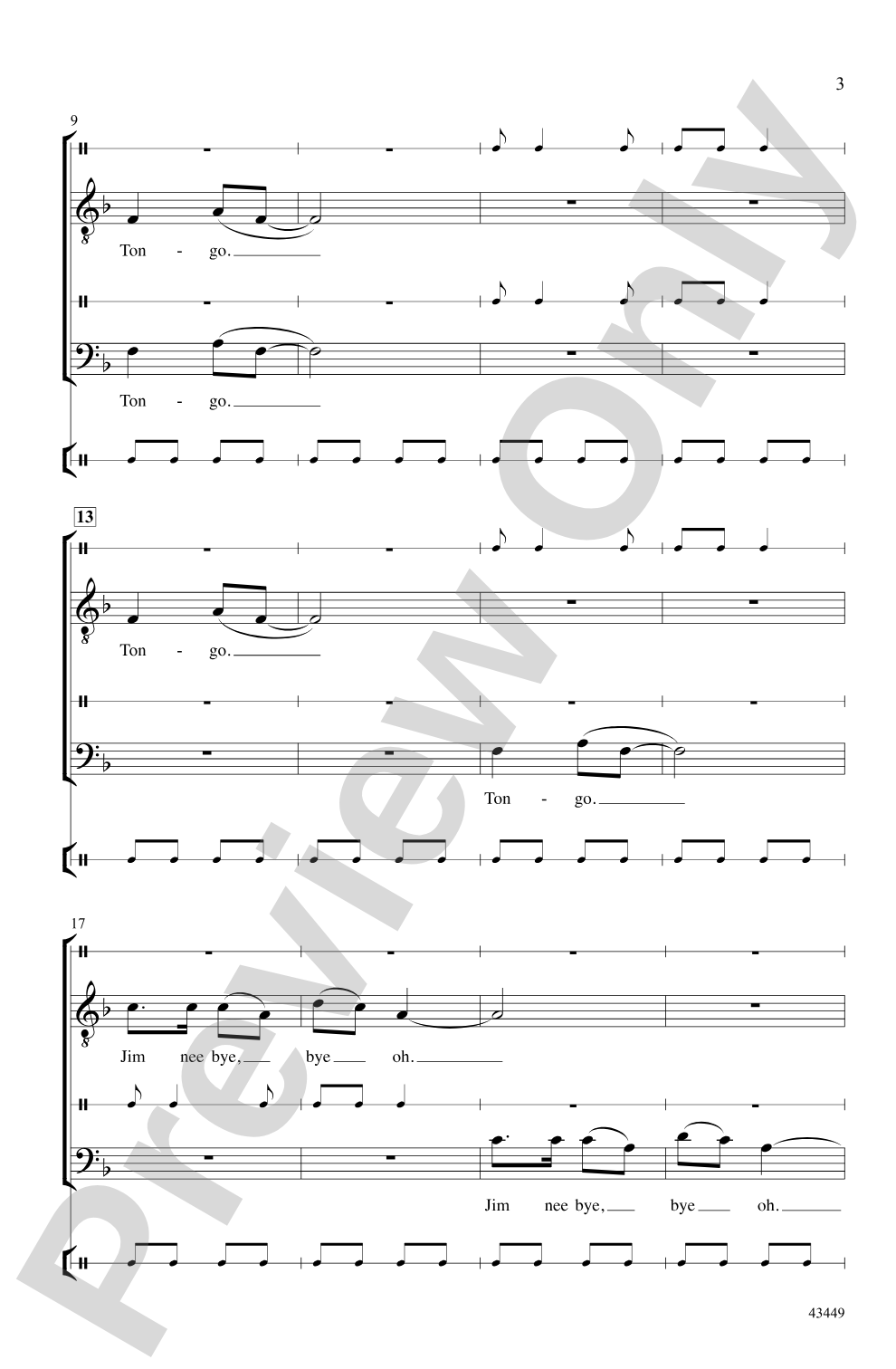
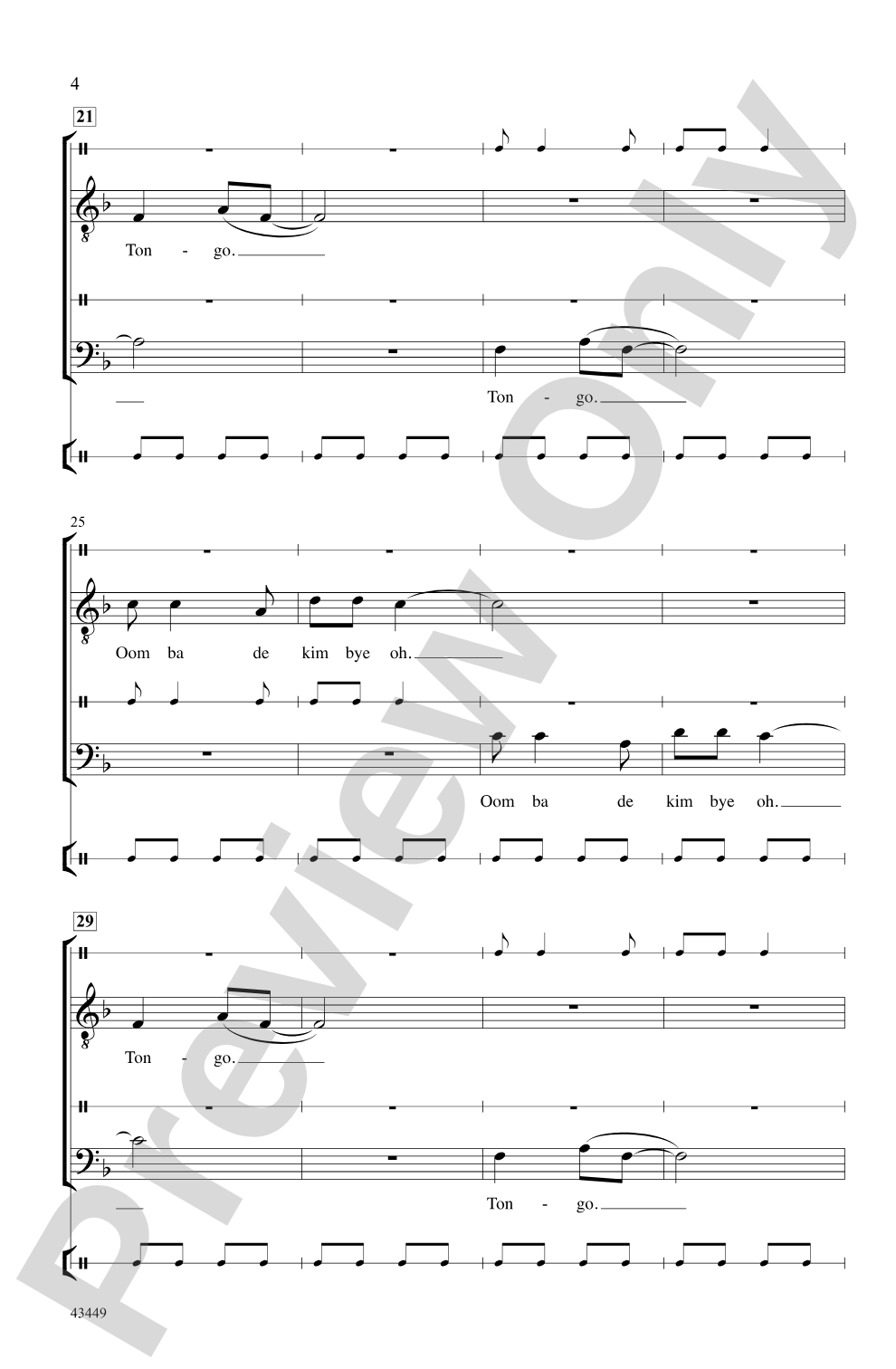
Here's a traditional canoe song from Polynesia that sounds quite impressive with a cappella voices, handclaps, and percussion instruments. The call-and-response format of Greg's well-designed arrangement suggests people communicating from canoe to canoe as they travel between islands.


Tongo: TB Choral Octavo isn't in MakeMusic Cloud just yet...but it could be. Let us know you'd like to see it, and you'll help shape what comes next. In the meantime, start a free trial and dive into thousands of interactive titles your students can play along with today.
Request This Title
Tell us you want it.
Start Your Free Trial
Explore everything that's ready to play right now.
Sample Audio
1
Audio File
--:--
0:00
0:00
Sample Video
No sample videos found.
Additional Details
Series:
Alfred Choral Designs
Publisher:
Alfred Music
Page Count:
12
SKU:
00-PO-0003369
Instrumentation:
Percussion Instruments
More about this title
About the Arranger: Greg Gilpin

Greg Gilpin is an ASCAP award-winning composer and arranger whose choral work has been heard in some of the world's most prestigious venues. His conducting career has taken him from Carnegie Hall and Lincoln Center to the Sydney Opera House, Royal Festival Hall, and beyond, establishing him as a significant voice in American choral music. As Director of Educational Choral Publications for Shawnee Press, Gilpin continues to shape the landscape of choral repertoire available to singers and directors nationwide.
Beyond the concert hall, Gilpin has expanded into film scoring, earning Best Score recognition for the award-winning short film "Rosie's Rescue" in 2021. He is an active member of ACDA, NAfME, SAG-AFTRA, and holds Life Loyal membership in Phi Mu Alpha Sinfonia. His recent work includes a world premiere arrangement of "What Child is This?" with soprano Angela Brown and the Indianapolis Symphonic Choir.
Why we love this
Gilpin's arrangement captures the spatial, communicative energy of the original Polynesian canoe song through clever call-and-response writing that feels both authentic and singable. The integration of handclaps and percussion with a cappella voices creates a piece that engages your entire ensemble in rhythmic precision and ensemble cohesion while remaining accessible across TB voicing options.
What to expect
Tongo radiates oceanic energy and communal warmth. The call-and-response structure creates an infectious rhythmic propulsion, while the integration of clapping and percussion evokes the sensation of paddlers signaling across open water, trading verses as they navigate between islands.
Who it's for
This arrangement works well for middle school through professional male and mixed choirs seeking repertoire that combines cultural authenticity with engaging performance appeal. TB voicing options make it particularly valuable for male ensemble directors looking for pieces that avoid traditional part-song territory.
How to get the most out of it
- Establish the handclap pattern as the rhythmic foundation before introducing vocal entries; this grounds the call-and-response sections and keeps performers locked together without harmonic support.
- Balance the percussion instruments to enhance rather than dominate the voices. Lighter mallets and restrained dynamics allow the choral texture to remain the focal point.
- Differentiate the call and response sections through dynamic contrast and tonal color. The canoe-to-canoe imagery works best when each phrase group sings with distinctive character and energy.
How to use it
Program this alongside other world music selections to build thematic programming around cultural connectivity and ocean narratives. Its festival-ready energy and a cappella flexibility make it an excellent choice for concert closers, community engagement performances, or competition programming where judges value both musical craft and cultural representation.
Skills your students will build
- Call-and-response coordination between voice sections
- Rhythmic precision in a cappella ensemble singing without harmonic anchors
- Integration of body percussion and vocal parts as a unified texture
- Stylistic authenticity in non-Western choral literature
- Dynamic shaping and tonal differentiation within repetitive melodic material