
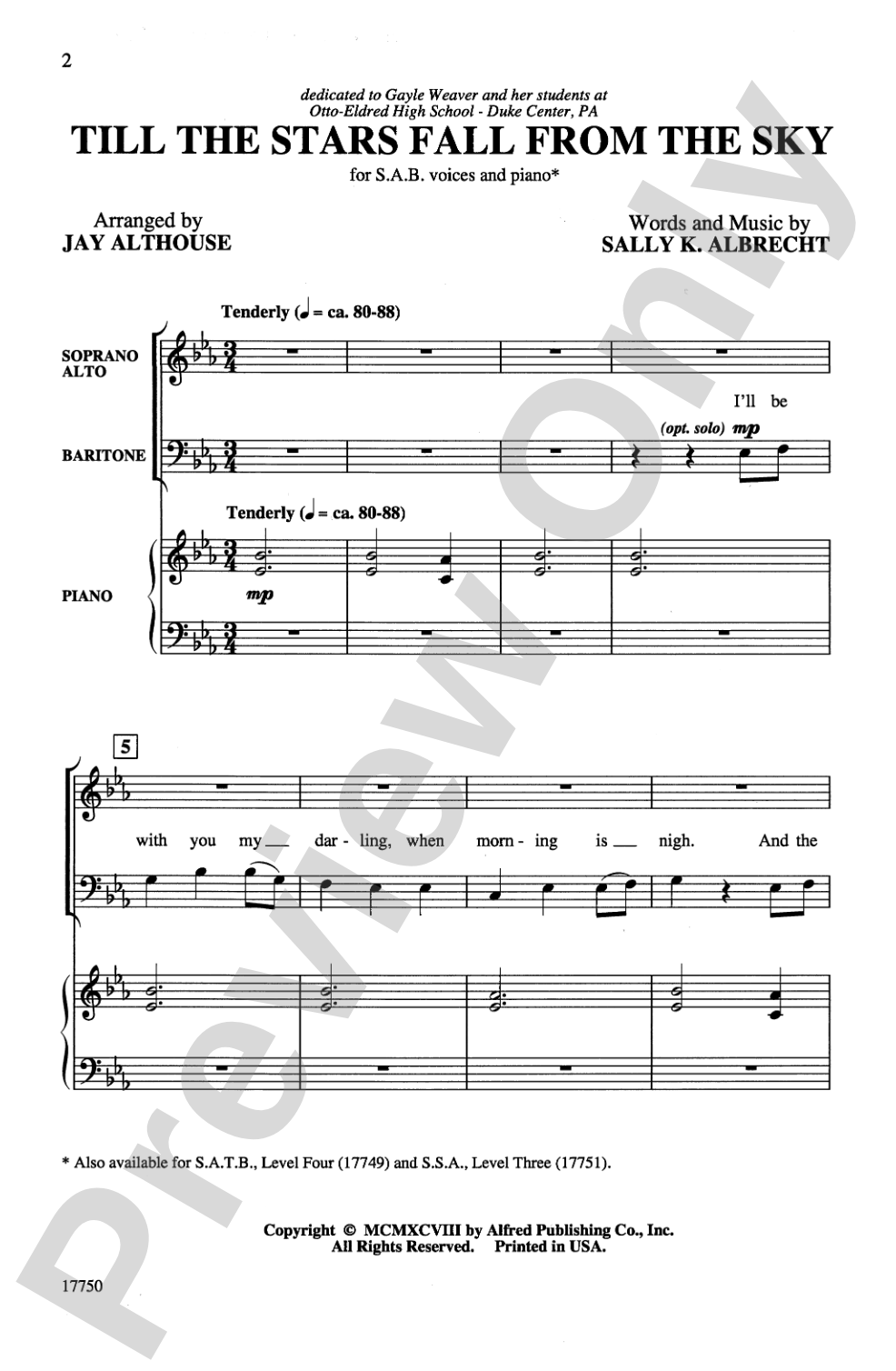
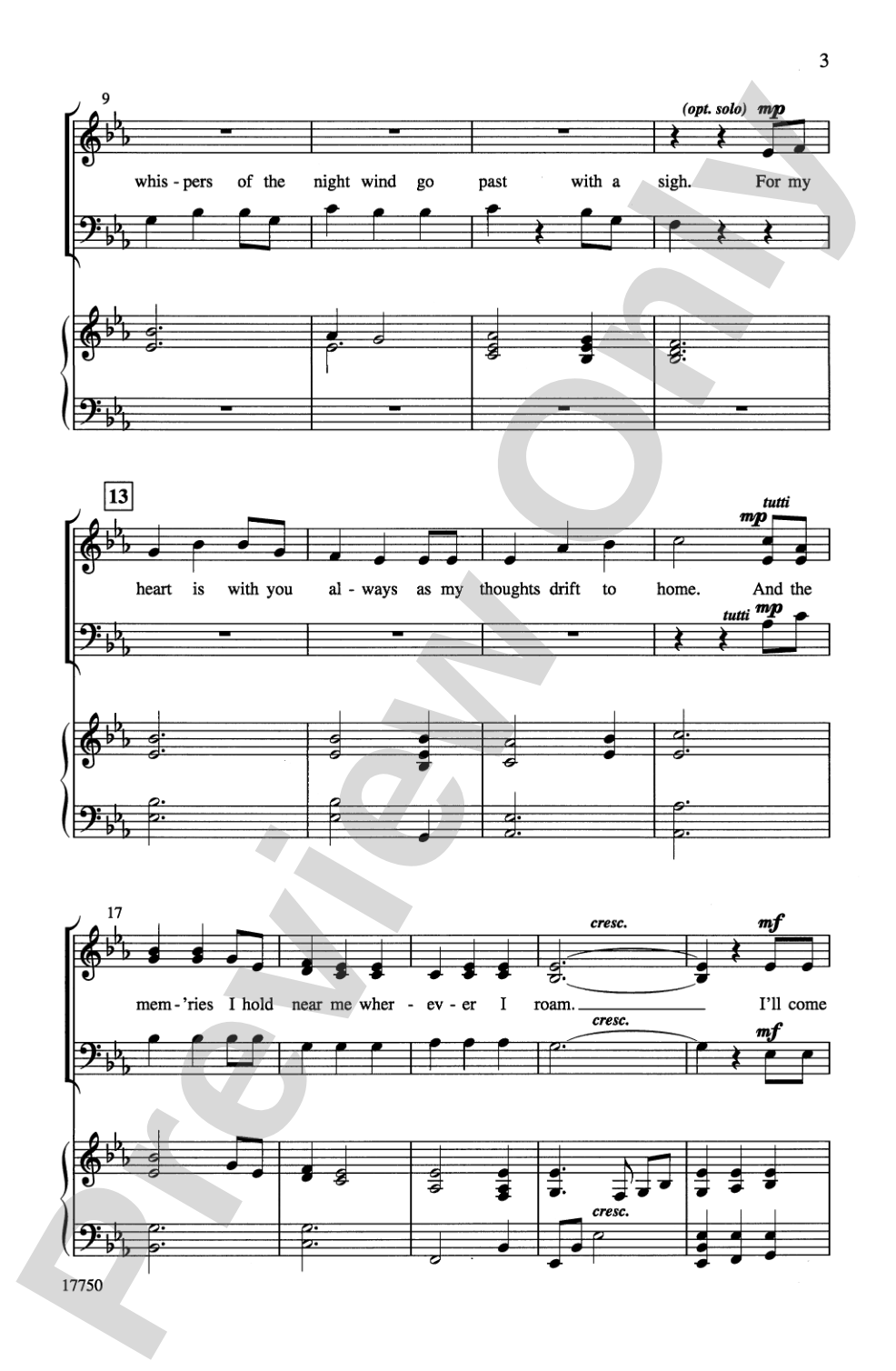

Till the Stars Fall from the Sky: SAB Choral Octavo
Music by Sally K. Albrecht and Jay Althouse
Item: 00-PO-0002862

$2.25
Minimum order quantity: 20 copies
Pickup currently not available
Related Items
Till the Stars Fall from the Sky: SATB Choral Octavo |
$2.25
|
View | |
Till the Stars Fall from the Sky: SSA Choral Octavo |
$2.25
|
View | |
Till the Stars Fall from the Sky: TTBB Choral Octavo |
$2.25
|
View | |
Till the Stars Fall from the Sky: SATB Choral Octavo |
$2.25
|
View | |
Till the Stars Fall from the Sky: SAB Choral Octavo |
$2.25
|
View | |
Till the Stars Fall from the Sky: SSA Choral Octavo |
$2.25
|
View | |
Till the Stars Fall from the Sky: TTBB Choral Octavo |
$2.25
|
View |
Description
Beautiful choral work in the style of an English folk song. Soaring melodies, gorgeous harmonies with much movement in the inner voices. Text is touching.


Don't just read it, hear it, play along with it, and watch your students grow with it. In MakeMusic Cloud, Till the Stars Fall from the Sky: SAB Choral Octavo comes alive with professional accompaniment, adjustable tempo, and built-in practice tools that turn solo practice into real progress.
Open in the Player
Jump straight in and assign it today.
Start Your Free Trial
Open this title and explore the full library in minutes.
Sample Audio
1
Audio File
--:--
0:00
0:00
Sample Video
No sample videos found.
Additional Details
Series:
Alfred Archive Edition: Alfred Choral Designs
Publisher:
Alfred Music
Page Count:
8
SKU:
00-PO-0002862
More about this title
About the Composer: Sally K. Albrecht
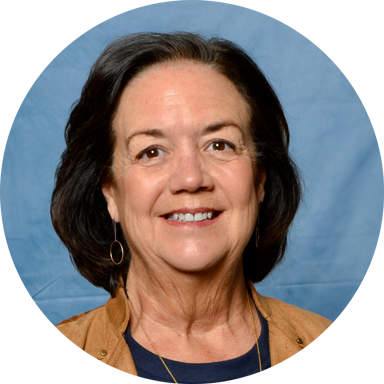
Sally K. Albrecht has shaped American choral music for over three decades, first as Director of School Choral, Vocal, and Elementary Publications at Alfred Music, then as a prolific composer and conductor in her own right. Since 1987, she has received the ASCAP Special Music Award annually, and her catalog now includes more than 600 choral publications alongside 75 larger works for stage. She has conducted honor choirs at Lincoln Center, Carnegie Hall, and The Kennedy Center, and her expertise in choral movement and accessible writing has made her one of the most-performed composers in school choirs nationwide.
Albrecht holds degrees from Rollins College (B.A. in Music and Theater, 1976) and the University of Miami Frost School of Music (M.A. in Drama, 1977; M.M. in Accompanying, 1979). She has taught at Oakland University, Jersey City State College, and Meredith College. A native of Cleveland, Ohio, she now lives in Wake Forest, North Carolina, with her husband, composer and arranger Jay Althouse. In 2021, she received the Distinguished Alumna Award from both the University of Miami and Rollins College, where she serves on the Board of Trustees.
Why we love this
Albrecht and Althouse craft a piece that feels instantly singable yet sophisticated, with inner voice movement that keeps all three parts engaged and interested. The folk song style creates immediate accessibility for younger or developing singers, while the touching text and soaring melodic writing give the piece genuine emotional weight for performance.
What to expect
Warm, unhurried, and reflective. The melodies soar with the generosity of a timeless folk tune while the harmonies create richness and gentle complexity beneath. There is a quality of longing and gentleness in the text and music that invites singers and listeners alike into an intimate, almost devotional space.
Who it's for
Intermediate to advanced mixed choirs with solid sight-reading skills and the vocal maturity to sustain lyrical lines. This octavo works well for choirs with adequate numbers in each voice part and the musicality to balance three-part texture.
How to get the most out of it
- Balance the inner voices carefully during rehearsals; the movement in alto and tenor parts should enhance rather than overshadow the soprano melody.
- Work for legit legato lines that honor the folk song character without sounding operatic or stiff.
- Allow the text to drive phrasing and dynamics; let moments of emotional resonance breathe naturally rather than maintaining a single expressive approach throughout.
- Record a sectional rehearsal or reference version early; singers benefit from hearing how all three parts weave together before locking into their own line.
How to use it
Program this alongside other contemporary folk-inspired work or pair it with traditional folk arrangements to create a thematic set. Its eight pages and accessible-yet-sophisticated style make it ideal for contest and festival programs, or as a moving closer to a concert that needs emotional resolution without drama.
Skills your students will build
- Balancing inner voice movement with a primary melody line
- Sustaining legato phrasing in a folk style without oversinging
- Reading three-part mixed voicing with confidence
- Connecting text to musical expression and phrasing decisions