
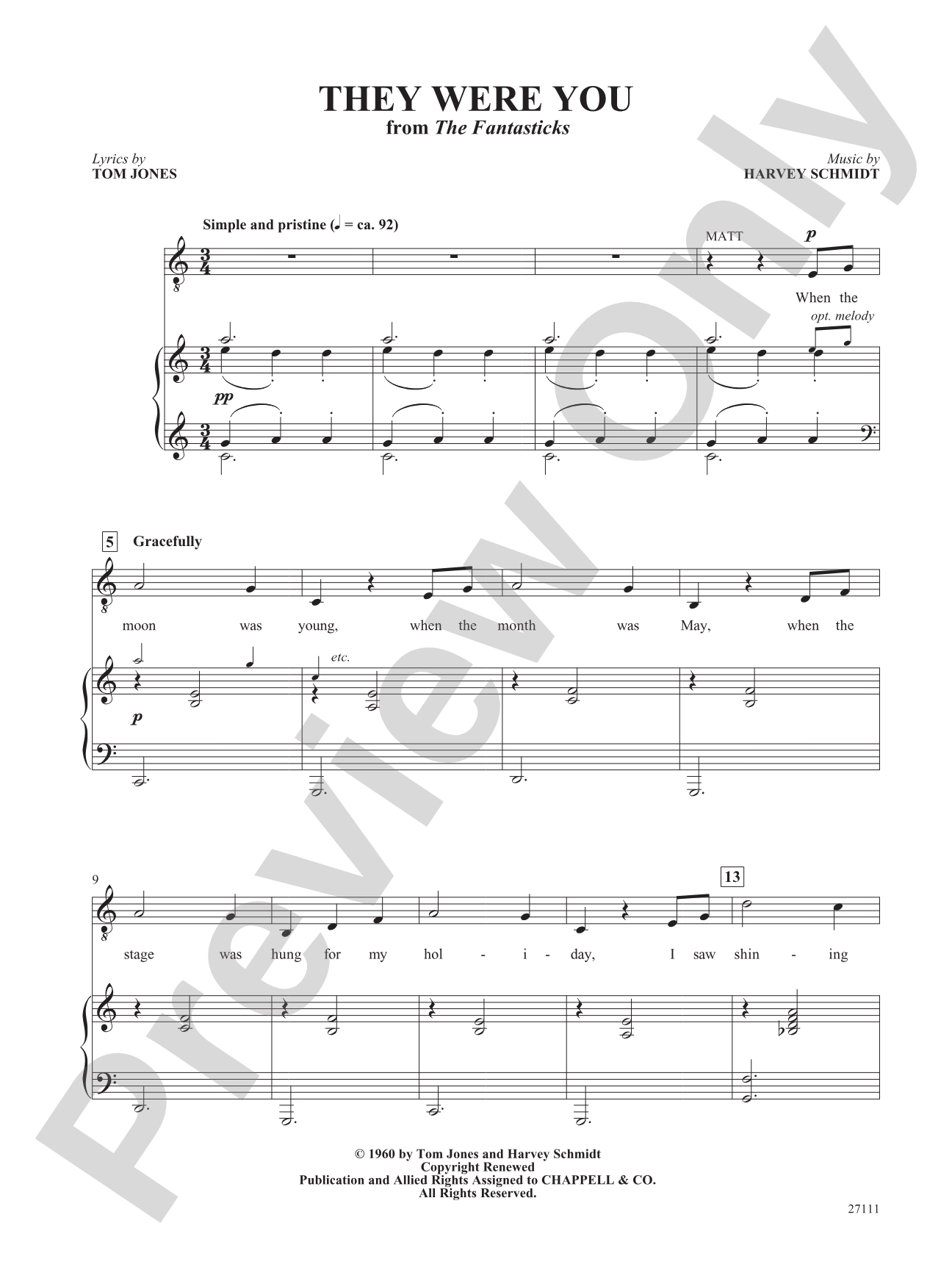

They Were You (From "the Fantasticks"): Piano/Vocal/Chords
10 Musical Theatre Duets
Compiled and ed. Andy Beck and Brian Fisher
Item: 00-PS-0010397
$4.99
One moment…
Related Items
If Momma Was Married (From "Gypsy"): Piano/Vocal/Chords |
$5.99
|
View | |
Love Song (From "Pippin"): Piano/Vocal/Chords |
$4.99
|
View | |
Alone in the Universe (From "Seussical the Musical"): Piano/Vocal/Chords |
$9.99
|
View | |
Forever Yours (From "Once on This Island"): Piano/Vocal/Chords |
$5.99
|
View | |
Lily's Eyes (From "the Secret Garden"): Piano/Vocal/Chords |
$5.99
|
View | |
Wheels of a Dream (From "Ragtime"): Piano/Vocal/Chords |
$5.99
|
View | |
Poor Little Pierette (From "the Boyfriend"): Piano/Vocal/Chords |
$5.99
|
View | |
Small Talk (From "the Pajama Game"): Piano/Vocal/Chords |
$5.99
|
View | |
Broadway for Two: Vocal Book & CD |
$26.99
|
View | |
Broadway for Two: Vocal Book |
$14.95
|
View | |
Broadway for Two: Vocal Acc. CD |
$16.99
|
View |
Description
Available for the first time in a collection, these 10 contemporary theatre duets include complete background notes about each composer, musical, song, and character featured. A valuable resource for directors planning a Broadway cabaret or review-style performance! Includes:
Any Combination: Alone in the Universe (Seussical: The Musical)
Male/Female: Forever Yours (Once on This Island) * Love Song (Pippin) * Small Talk (The Pajama Game) * They Were You (The Fantasticks) * Wheels of a Dream (Ragtime)
Male/Male: Lily's Eyes (The Secret Garden) * Pretty Women (Sweeney Todd)
Female/Female: If Momma Was Married * (Gypsy) * Poor Little Pierrette (The Boy Friend). A Federation Festivals 2020-2024 selection.


Any Combination: Alone in the Universe (Seussical: The Musical)
Male/Female: Forever Yours (Once on This Island) * Love Song (Pippin) * Small Talk (The Pajama Game) * They Were You (The Fantasticks) * Wheels of a Dream (Ragtime)
Male/Male: Lily's Eyes (The Secret Garden) * Pretty Women (Sweeney Todd)
Female/Female: If Momma Was Married * (Gypsy) * Poor Little Pierrette (The Boy Friend). A Federation Festivals 2020-2024 selection.
They Were You (From "the Fantasticks"): Piano/Vocal/Chords isn't in MakeMusic Cloud just yet...but it could be. Let us know you'd like to see it, and you'll help shape what comes next. In the meantime, start a free trial and dive into thousands of interactive titles your students can play along with today.
Request This Title
Tell us you want it.
Start Your Free Trial
Explore everything that's ready to play right now.
Sample Audio
1
Audio File
--:--
0:00
0:00
Sample Video
No sample videos found.
Additional Details
Series:
For Two Series
Publisher:
Alfred Music
Page Count:
88
SKU:
00-PS-0010397
More about this title
About the Composer: Harvey Schmidt
Harvey Schmidt composed The Fantasticks, one of the longest-running musicals in American theatre history, alongside lyricist Tom Jones. His gift for intimate, character-driven songwriting shaped a generation of musical theater composers who valued storytelling over spectacle. Schmidt's melodies balance accessibility with emotional depth, making his work a staple in both professional and educational theatre programs.
Why we love this
This collection solves the real challenge of finding duets that aren't overdone in competition and cabaret settings. Schmidt's work here, alongside selections from Ragtime, Pippin, and Sweeney Todd, gives you sophisticated material with built-in dramatic tension and character clarity. The 88-page resource includes composer notes and character context, so your students understand what they're singing about before they step on stage.
What to expect
These duets carry the warmth and narrative intimacy that defines contemporary musical theatre at its best. Whether navigating new love, tentative connection, or bittersweet memory, each song feels like eavesdropping on a genuine moment between two people.
Who it's for
Directors assembling a Broadway cabaret or review-style concert will find this collection invaluable; the variety of voice combinations and song styles means you can cast across your ensemble without forcing combinations. High school and community theatre singers looking to deepen their musical theater repertoire will appreciate material that challenges without overwhelming.
How to get the most out of it
- Listen to the recorded accompaniments first to absorb the harmonic language; these songs often hinge on unexpected chord movements that define the emotional arc.
- Identify the dramatic stakes for each character before blocking. In 'They Were You,' one singer is remembering while the other is discovering; that asymmetry should inform every phrase.
- Balance the two voices by rehearsing each part independently first, then layering them in sections rather than starting from the top every time.
- Pay attention to lyrical clarity in duets with overlapping lines; slight rubato and strategic breath placement prevent the text from becoming muddy.
How to use it
Feature one pairing per concert season as your closer or centerpiece number, allowing the audience to linger in the emotional world of the piece rather than rushing to the next comedy bit. Alternatively, string three or four together as a 'Duet Medley' act that showcases your ensemble's range and musicianship in a cohesive 12-minute segment.
Skills your students will build
- Sustaining independent melodic lines while listening to a harmonic partner
- Interpreting character subtext through phrasing and dynamic choice
- Navigating rubato and tempo flexibility in contemporary musical theatre idiom
- Blending vocal tone across gender combinations and voice types
- Reading piano/vocal scores with chord notation