
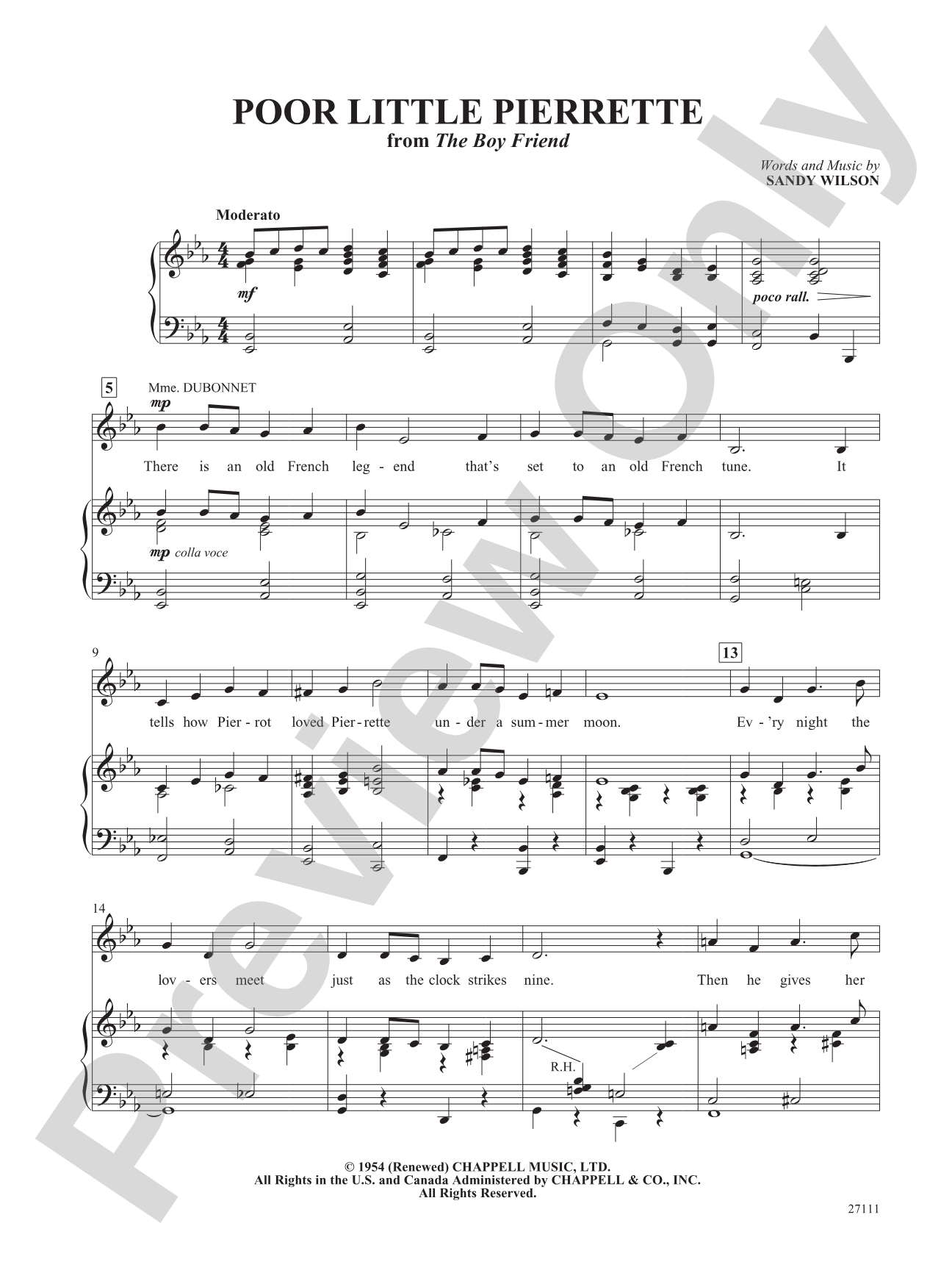
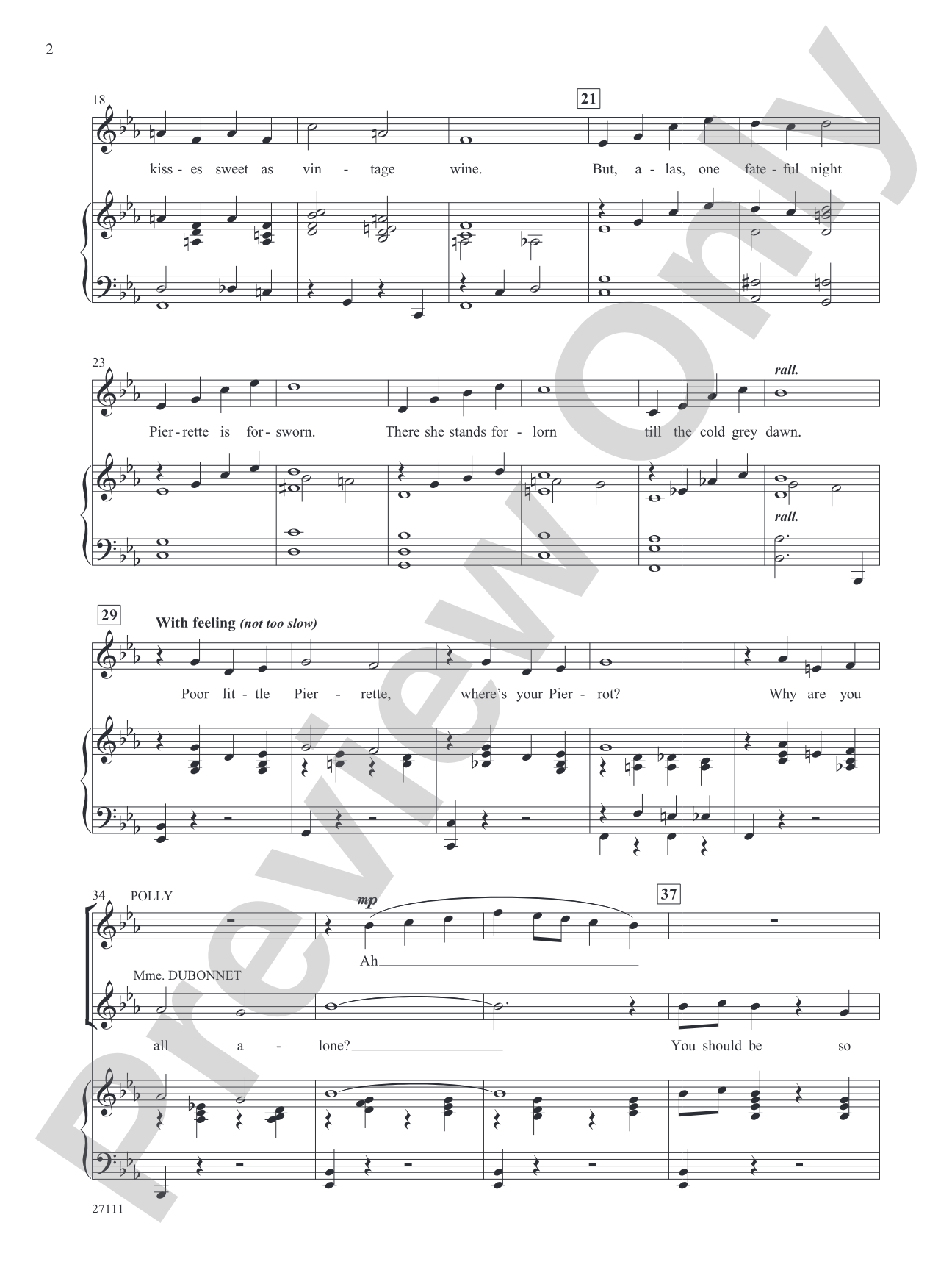

Poor Little Pierette (From "the Boyfriend"): Piano/Vocal/Chords
10 Musical Theatre Duets
Compiled and ed. Andy Beck and Brian Fisher
Item: 00-PS-0010480
$5.99
One moment…
Related Items
If Momma Was Married (From "Gypsy"): Piano/Vocal/Chords |
$5.99
|
View | |
They Were You (From "the Fantasticks"): Piano/Vocal/Chords |
$4.99
|
View | |
Love Song (From "Pippin"): Piano/Vocal/Chords |
$4.99
|
View | |
Alone in the Universe (From "Seussical the Musical"): Piano/Vocal/Chords |
$9.99
|
View | |
Forever Yours (From "Once on This Island"): Piano/Vocal/Chords |
$5.99
|
View | |
Lily's Eyes (From "the Secret Garden"): Piano/Vocal/Chords |
$5.99
|
View | |
Wheels of a Dream (From "Ragtime"): Piano/Vocal/Chords |
$5.99
|
View | |
Small Talk (From "the Pajama Game"): Piano/Vocal/Chords |
$5.99
|
View | |
Broadway for Two: Vocal Book & CD |
$26.99
|
View | |
Broadway for Two: Vocal Book |
$14.95
|
View | |
Broadway for Two: Vocal Acc. CD |
$16.99
|
View |
Description
Available for the first time in a collection, these 10 contemporary theatre duets include complete background notes about each composer, musical, song, and character featured. A valuable resource for directors planning a Broadway cabaret or review-style performance! Includes:
Any Combination: Alone in the Universe (Seussical: The Musical)
Male/Female: Forever Yours (Once on This Island) * Love Song (Pippin) * Small Talk (The Pajama Game) * They Were You (The Fantasticks) * Wheels of a Dream (Ragtime)
Male/Male: Lily's Eyes (The Secret Garden) * Pretty Women (Sweeney Todd)
Female/Female: If Momma Was Married * (Gypsy) * Poor Little Pierrette (The Boy Friend). A Federation Festivals 2020-2024 selection.


Any Combination: Alone in the Universe (Seussical: The Musical)
Male/Female: Forever Yours (Once on This Island) * Love Song (Pippin) * Small Talk (The Pajama Game) * They Were You (The Fantasticks) * Wheels of a Dream (Ragtime)
Male/Male: Lily's Eyes (The Secret Garden) * Pretty Women (Sweeney Todd)
Female/Female: If Momma Was Married * (Gypsy) * Poor Little Pierrette (The Boy Friend). A Federation Festivals 2020-2024 selection.
Discover MakeMusic Cloud: thousands of interactive titles your students can play along with today.
Sample Audio
1
Audio File
--:--
0:00
0:00
Sample Video
No sample videos found.
Additional Details
Series:
For Two Series
Publisher:
Alfred Music
Page Count:
88
SKU:
00-PS-0010480
More about this title
About the Composer: Sandy Wilson
Sandy Wilson (1924–2012) composed and wrote the book and lyrics for The Boy Friend, a British musical that became an international sensation after its 1954 London premiere. The show's witty homage to 1920s musical comedy conventions, combined with Wilson's gift for memorable melodies and clever lyrical wordplay, established him as a significant voice in mid-century theatre music. His work demonstrated that pastiche could be both affectionate and artistically sophisticated, influencing how musical theatre composers approached period styles and comedic storytelling for decades to come.
Beyond The Boy Friend, Wilson composed additional theatrical works and songs that showcased his versatility with both comic and romantic material. His influence extended across theatrical education, where his accessible yet musically substantial compositions continue to serve music directors seeking repertoire that balances entertainment value with genuine artistic merit.
Why we love this
This duet captures the melancholic charm that makes The Boy Friend endure: a perfectly executed period pastiche with real emotional depth beneath the surface comedy. Directors programming theatrical cabaret or review-style concerts will find this number works beautifully as either a comedic interlude or a poignant moment, depending on how you shape the performance.
What to expect
Stepping into a 1920s musical comedy atmosphere infused with genuine vulnerability. The melody carries an almost waltzing elegance while the lyrics reveal the tender complications of unmet expectations and the ache of romantic disappointment dressed up in comedic restraint.
Who it's for
Directors building Broadway cabaret or review-style concert programs will find this duet an ideal anchor for a well-rounded theatrical set. Singers with musical theatre training who enjoy period material and charming, character-driven storytelling will connect immediately with the song's specific brand of wistful humor.
How to get the most out of it
- Balance the innocence of Pierette's vocal line with the bittersweet quality of the accompaniment; resist oversinging into pure comedy, as the song contains genuine pathos.
- Lean into the period styling of the 1920s musical comedy aesthetic without letting it tip into caricature; the characters' emotions remain authentic even as the setting is deliberately nostalgic.
- Use the vocal duet texture to highlight the emotional asymmetry between singers if one character has more awareness than the other of the situation being described.
How to use it
This works exceptionally well in a theatrical revue organized by musical or decade, where it can anchor a 1920s-inspired section alongside other period pastiche material. It also pairs beautifully with other romantic or comedic duets from the collection, allowing you to build a cohesive cabaret program without relying on overly familiar Broadway standards.
Skills your students will build
- Managing period vocal styling in musical theatre contexts
- Balancing comedy and genuine emotional expression in duet singing
- Sustaining character integrity through lyrical storytelling in a duet format
- Reading and interpreting piano/vocal score notation with chord symbols