
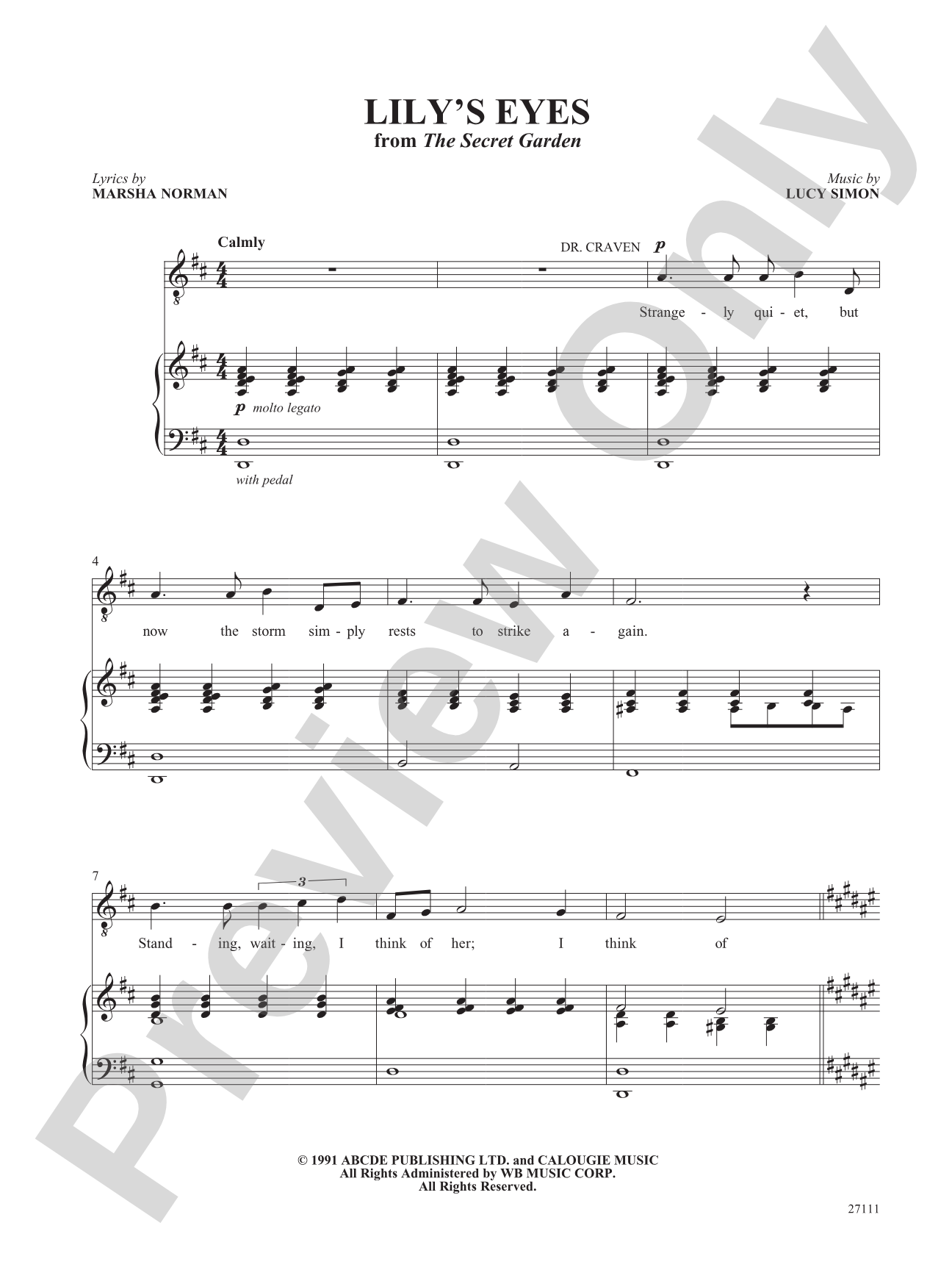
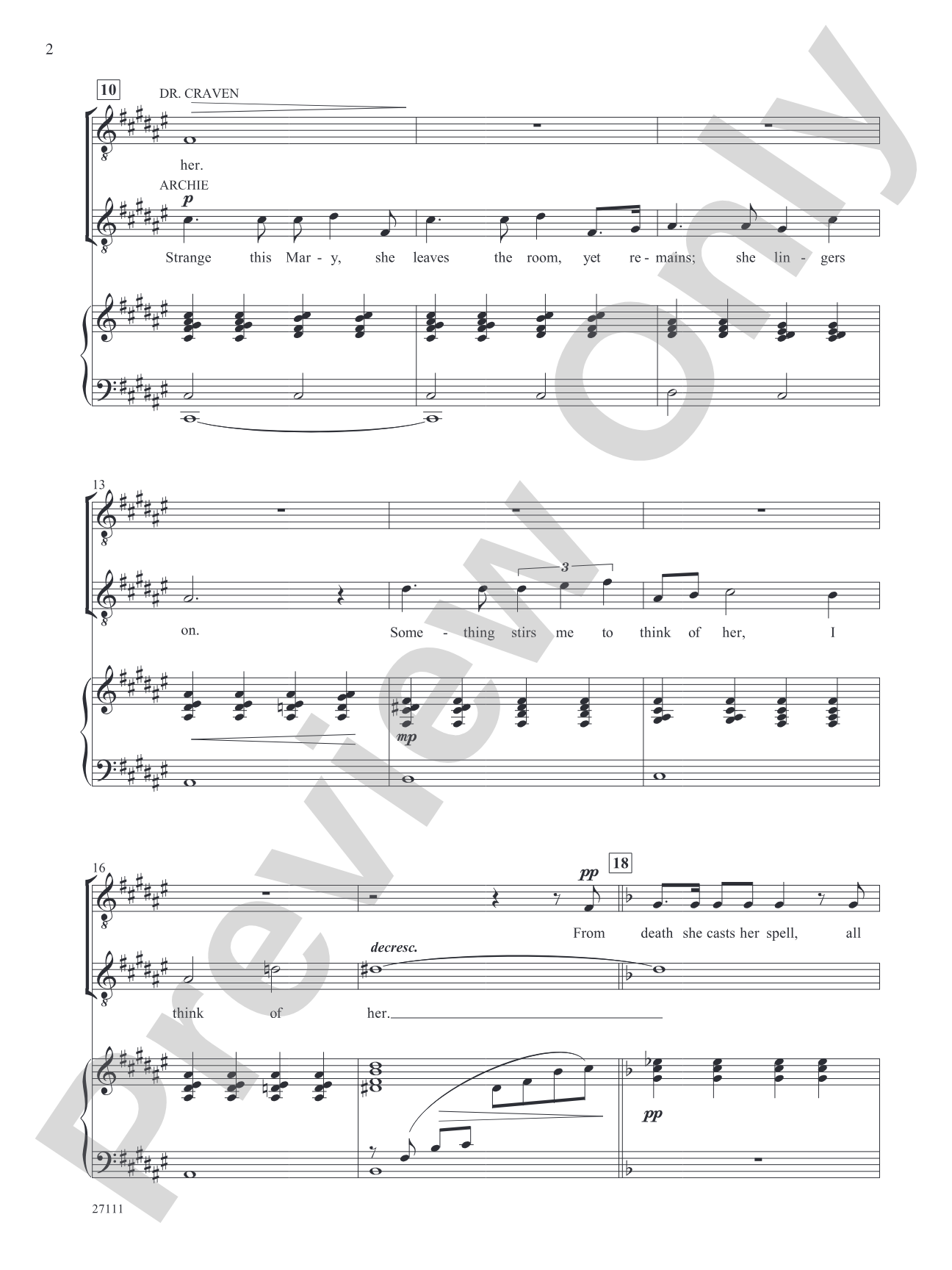

Lily's Eyes (From "the Secret Garden"): Piano/Vocal/Chords
10 Musical Theatre Duets
Compiled and ed. Andy Beck and Brian Fisher
Item: 00-PS-0010466
$5.99
One moment…
Related Items
If Momma Was Married (From "Gypsy"): Piano/Vocal/Chords |
$5.99
|
View | |
They Were You (From "the Fantasticks"): Piano/Vocal/Chords |
$4.99
|
View | |
Love Song (From "Pippin"): Piano/Vocal/Chords |
$4.99
|
View | |
Alone in the Universe (From "Seussical the Musical"): Piano/Vocal/Chords |
$9.99
|
View | |
Forever Yours (From "Once on This Island"): Piano/Vocal/Chords |
$5.99
|
View | |
Wheels of a Dream (From "Ragtime"): Piano/Vocal/Chords |
$5.99
|
View | |
Poor Little Pierette (From "the Boyfriend"): Piano/Vocal/Chords |
$5.99
|
View | |
Small Talk (From "the Pajama Game"): Piano/Vocal/Chords |
$5.99
|
View | |
Broadway for Two: Vocal Book & CD |
$26.99
|
View | |
Broadway for Two: Vocal Book |
$14.95
|
View | |
Broadway for Two: Vocal Acc. CD |
$16.99
|
View |
Description
Available for the first time in a collection, these 10 contemporary theatre duets include complete background notes about each composer, musical, song, and character featured. A valuable resource for directors planning a Broadway cabaret or review-style performance! Includes:
Any Combination: Alone in the Universe (Seussical: The Musical)
Male/Female: Forever Yours (Once on This Island) * Love Song (Pippin) * Small Talk (The Pajama Game) * They Were You (The Fantasticks) * Wheels of a Dream (Ragtime)
Male/Male: Lily's Eyes (The Secret Garden) * Pretty Women (Sweeney Todd)
Female/Female: If Momma Was Married * (Gypsy) * Poor Little Pierrette (The Boy Friend). A Federation Festivals 2020-2024 selection.


Any Combination: Alone in the Universe (Seussical: The Musical)
Male/Female: Forever Yours (Once on This Island) * Love Song (Pippin) * Small Talk (The Pajama Game) * They Were You (The Fantasticks) * Wheels of a Dream (Ragtime)
Male/Male: Lily's Eyes (The Secret Garden) * Pretty Women (Sweeney Todd)
Female/Female: If Momma Was Married * (Gypsy) * Poor Little Pierrette (The Boy Friend). A Federation Festivals 2020-2024 selection.
Lily's Eyes (From "the Secret Garden"): Piano/Vocal/Chords isn't in MakeMusic Cloud just yet...but it could be. Let us know you'd like to see it, and you'll help shape what comes next. In the meantime, start a free trial and dive into thousands of interactive titles your students can play along with today.
Request This Title
Tell us you want it.
Start Your Free Trial
Explore everything that's ready to play right now.
Sample Audio
1
Audio File
--:--
0:00
0:00
Sample Video
No sample videos found.
Additional Details
Series:
For Two Series
Publisher:
Alfred Music
Page Count:
88
SKU:
00-PS-0010466
More about this title
About the Composer: Lucy Simon
Lucy Simon composed the score for Stephen Sondheim's adaptation of Frances Hodgson Burnett's classic novel, creating music that balances intimate character moments with sweeping ensemble work. Her compositions for The Secret Garden earned her a Tony Award nomination and established her as a lyricist and composer capable of crafting emotionally nuanced theatre music that serves both story and spectacle.
Why we love this
This collection gives you access to 10 well-crafted duets from the contemporary musical theatre canon, each selected for its dramatic clarity and vocal balance. Pairing 'Lily's Eyes' with additional duets by varied vocal combinations means a single book serves multiple casting scenarios, making it practical for cabaret programming, audition preparation, and concert performance alike.
What to expect
These duets inhabit the world of contemporary musical theatre where emotional authenticity meets theatrical storytelling. 'Lily's Eyes' carries the bittersweet quality of characters recognizing feelings they cannot fully express, set against lush harmonic support that deepens the sense of longing and connection.
Who it's for
Music directors staging Broadway cabarets, concert reviews, or festival performances will find this collection invaluable for its breadth of casting options and built-in character context. Solo pianists and voice teachers can also use individual duets for recital programming or as teaching material for students developing comfort with contemporary musical theatre repertoire.
How to get the most out of it
- Establish the emotional weight of the relationship in the opening phrases; 'Lily's Eyes' requires singers to communicate longing and vulnerability from the first note.
- Attend closely to the piano accompaniment's rhythmic precision, particularly in passages where it establishes harmonic foundation without doubling the vocal line.
- Balance your vocal blend by listening for moments where both singers occupy similar ranges; adjust dynamic intensity rather than volume to maintain clarity and intimacy.
How to use it
Include 'Lily's Eyes' in a concert pairing it with other male duets from this collection for a cohesive programming block, or mix duets from different categories throughout your cabaret to showcase the variety of contemporary musical theatre. The 88-page format makes it easy to select multiple numbers from the book without requiring separate purchases.
Skills your students will build
- Sustaining legit vocal tone while maintaining character in contemporary musical theatre idiom
- Balancing harmonic awareness with melodic independence in two-part writing
- Interpreting lyric subtext and emotional specificity within a theatrical context
- Collaborating on blend and balance in close harmonic voicings