

There Is Sweet Music Here: SATB Choral Octavo
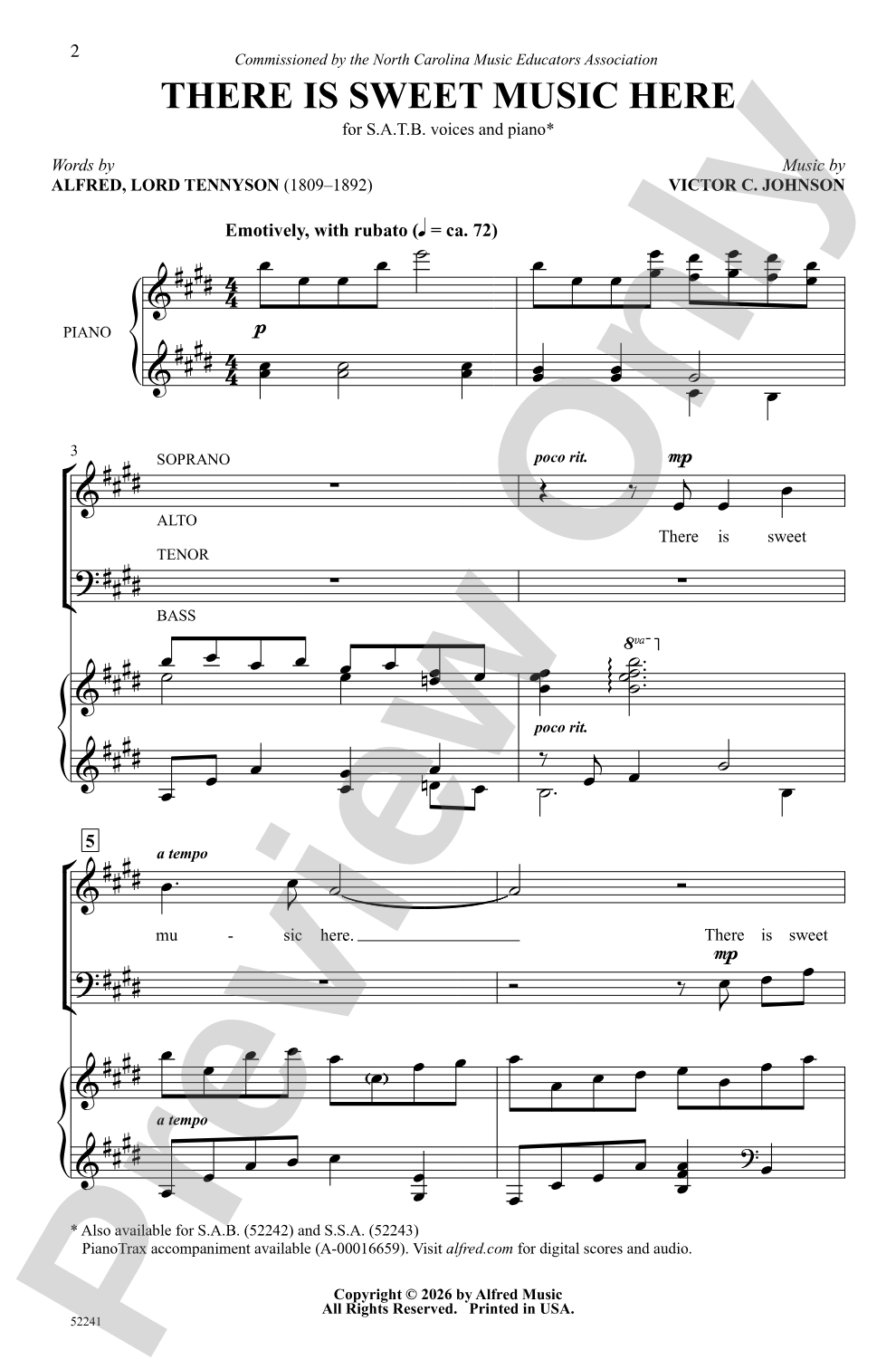
Words by Alfred, Lord Tennyson, music by Victor C. Johnson
Item: 00-PO-0007841
$2.50
Minimum order quantity: 20 copies
Pickup currently not available
Description
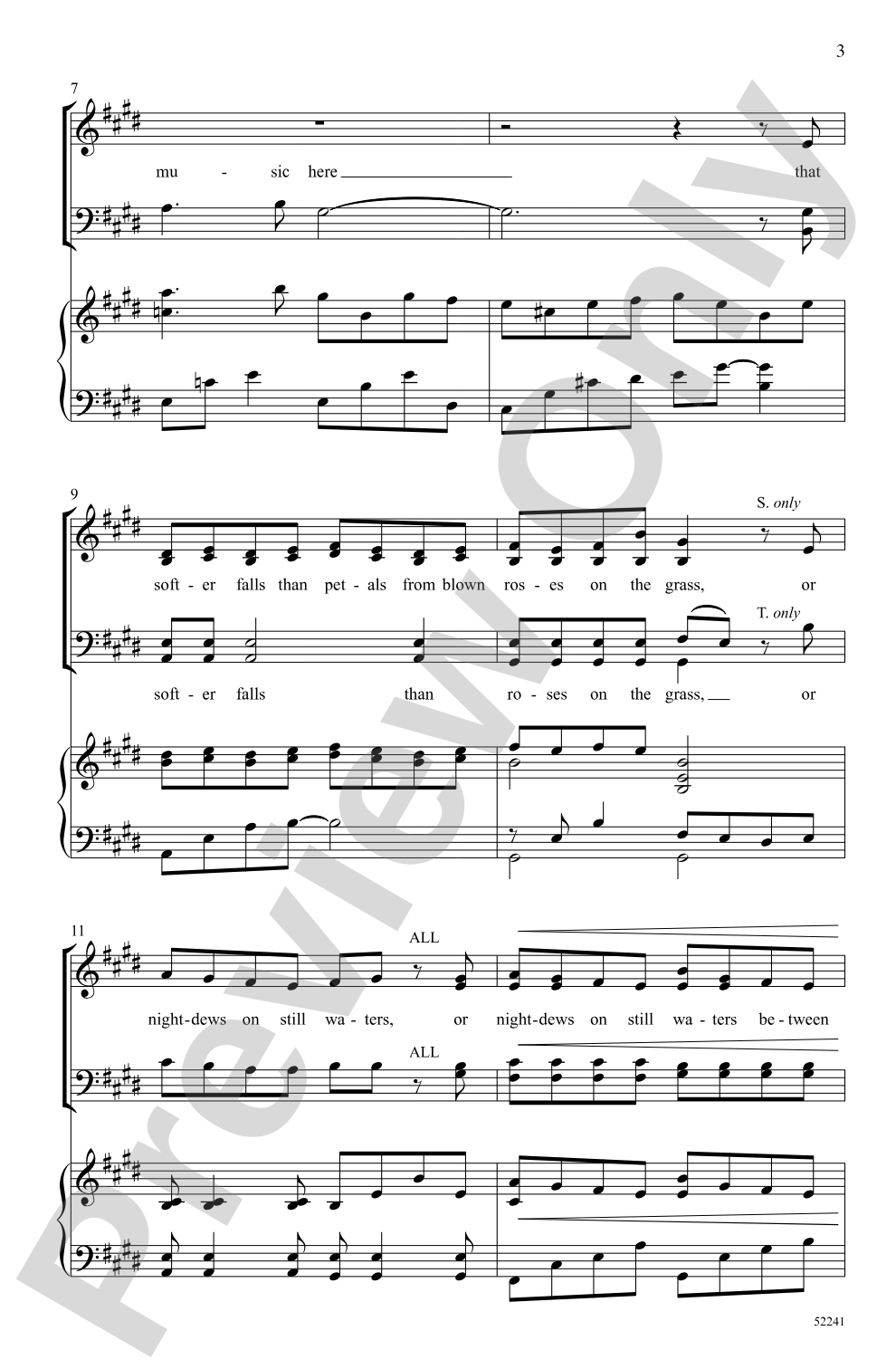
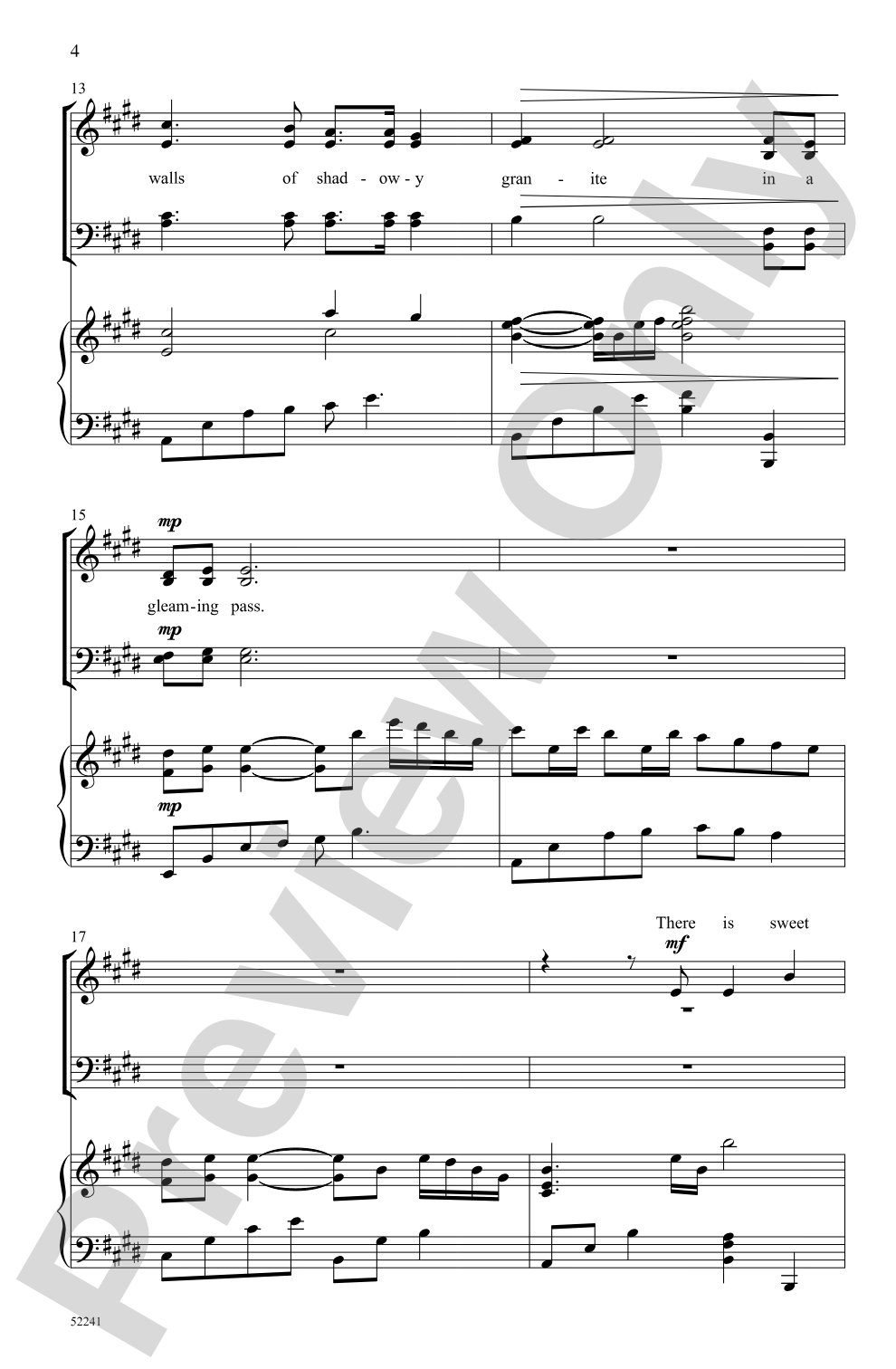
Victor Johnson lends his artistic voice to this beloved Alfred, Lord Tennyson text. A mellifluous melody, warm harmonies, and sensitive syllabic stress bring the alluring poetry to life. An elegant piano accompaniment offers decorative embellishments while providing consistent support for mixed or treble ensembles. Enjoy conducting the nuanced rubato and expressive dynamics.


Discover MakeMusic Cloud: thousands of interactive titles your students can play along with today.
Sample Audio
1
Audio File
--:--
0:00
0:00
Sample Video
Additional Details
Series:
Alfred Choral Designs
Publisher:
Alfred Music
Page Count:
12
SKU:
00-PO-0007841
More about this title
About the Composer: Victor C. Johnson

Victor C. Johnson brings deep experience in choral education to his compositional work. Based in Dallas, he served as choral director at Fort Worth Academy of Fine Arts from 2000 to 2018, where he built programs across multiple ensembles including the Academy Singers, Academy Men's Choir, and the Singing Girls of Texas. He currently holds the position of School Choral Editor for Sing!, the educational publishing division of Choristers Guild, and was appointed conductor of the Dallas Symphony Children's Chorus Mixed Ensemble in 2022.
Johnson's catalog spans over 500 published works across choral compositions, vocal solo collections, and keyboard pieces. His professional involvement includes memberships in the American Choral Directors Association, Texas Music Educators Association, National Association for Music Education, and ASCAP. His writing consistently reflects an understanding of what works in rehearsal and performance.
Why we love this
Johnson's setting respects Tennyson's language while letting the poetry breathe naturally. The mellifluous melody sits comfortably for singers, and the warm harmonic language creates an inviting emotional landscape without excessive chromatic complexity. This is the kind of piece that sounds richer than it is to prepare, rewarding both careful rehearsal and natural musical instinct.
What to expect
Serene and contemplative. The piece unfolds like a moment of quiet reflection, with warm harmonies that feel both familiar and slightly luminous. There's an elegance to it that doesn't announce itself loudly; instead, it invites listeners into an intimate musical and poetic space.
Who it's for
Directors of mixed or treble choirs seeking repertoire that honors literary excellence while remaining accessible to intermediate singers. This works equally well for concert programming and festival performance, and the recorded accompaniment option serves ensembles that benefit from rhythmic support during preparation.
How to get the most out of it
- Shape the melodic line through thoughtful phrasing rather than aggressive dynamic swells; the text itself carries much of the expression.
- Allow flexibility in tempo during the lyrical passages; Johnson has built space for rubato into the musical architecture.
- Balance the piano accompaniment so that its decorative figures enhance rather than compete with the choral sound.
- Attend to the syllabic stress markings in the score; they unlock natural speech rhythms that make the poetry feel conversational rather than formal.
How to use it
This pairs naturally with other art song settings or literary-based choral work on a concert focused on poetry and song. It also functions beautifully as a bridge between more energetic repertoire, offering singers and listeners a moment of repose. The moderate length and expressive demands make it suitable for both concert and festival contexts.
Skills your students will build
- Interpreting textual meaning through musical expression and dynamic nuance
- Performing rubato and flexible phrasing while maintaining ensemble cohesion
- Singing syllabic text with natural speech rhythms and clear word stress
- Balancing blend and tuning across warm harmonic progressions