
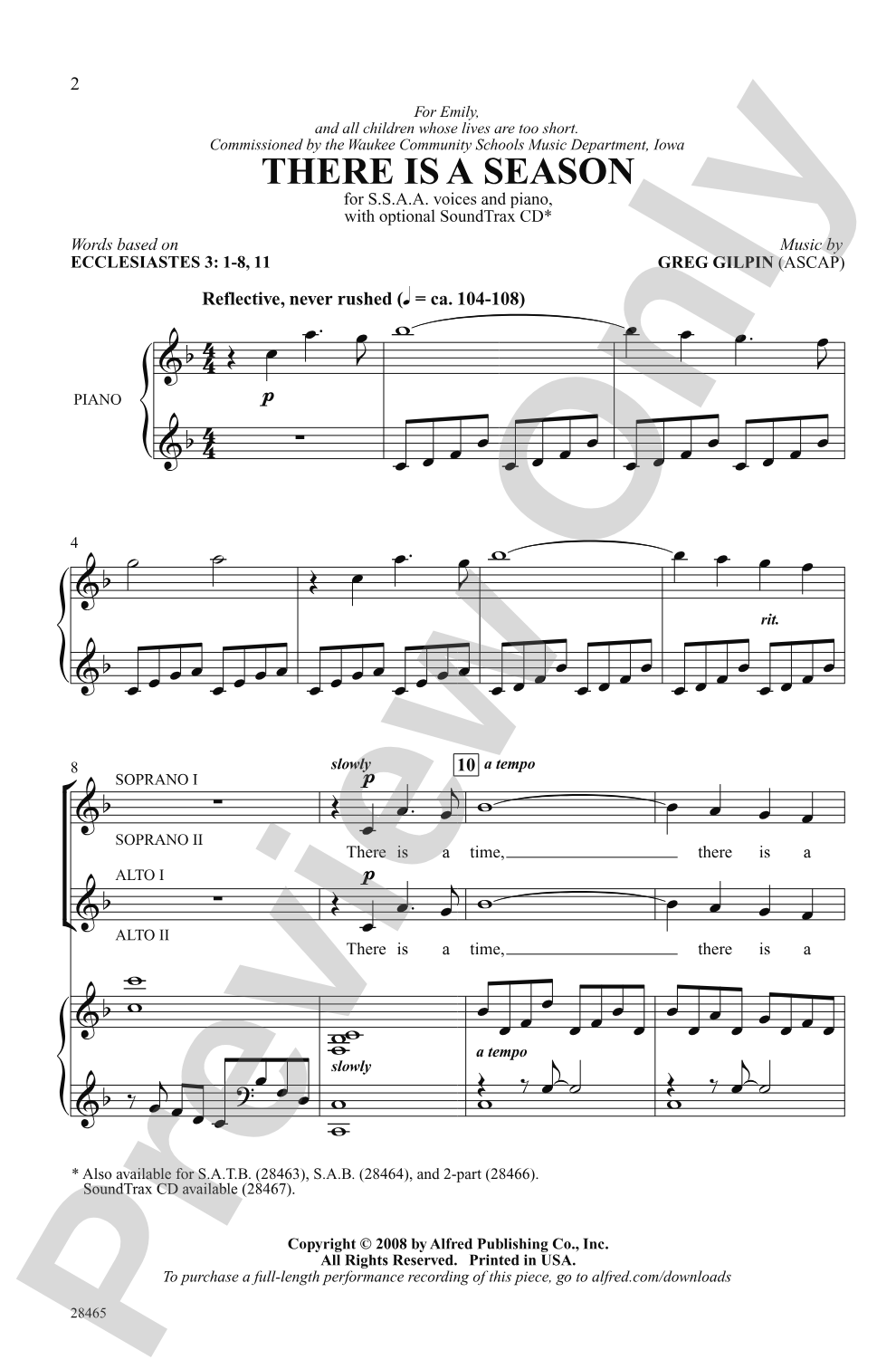
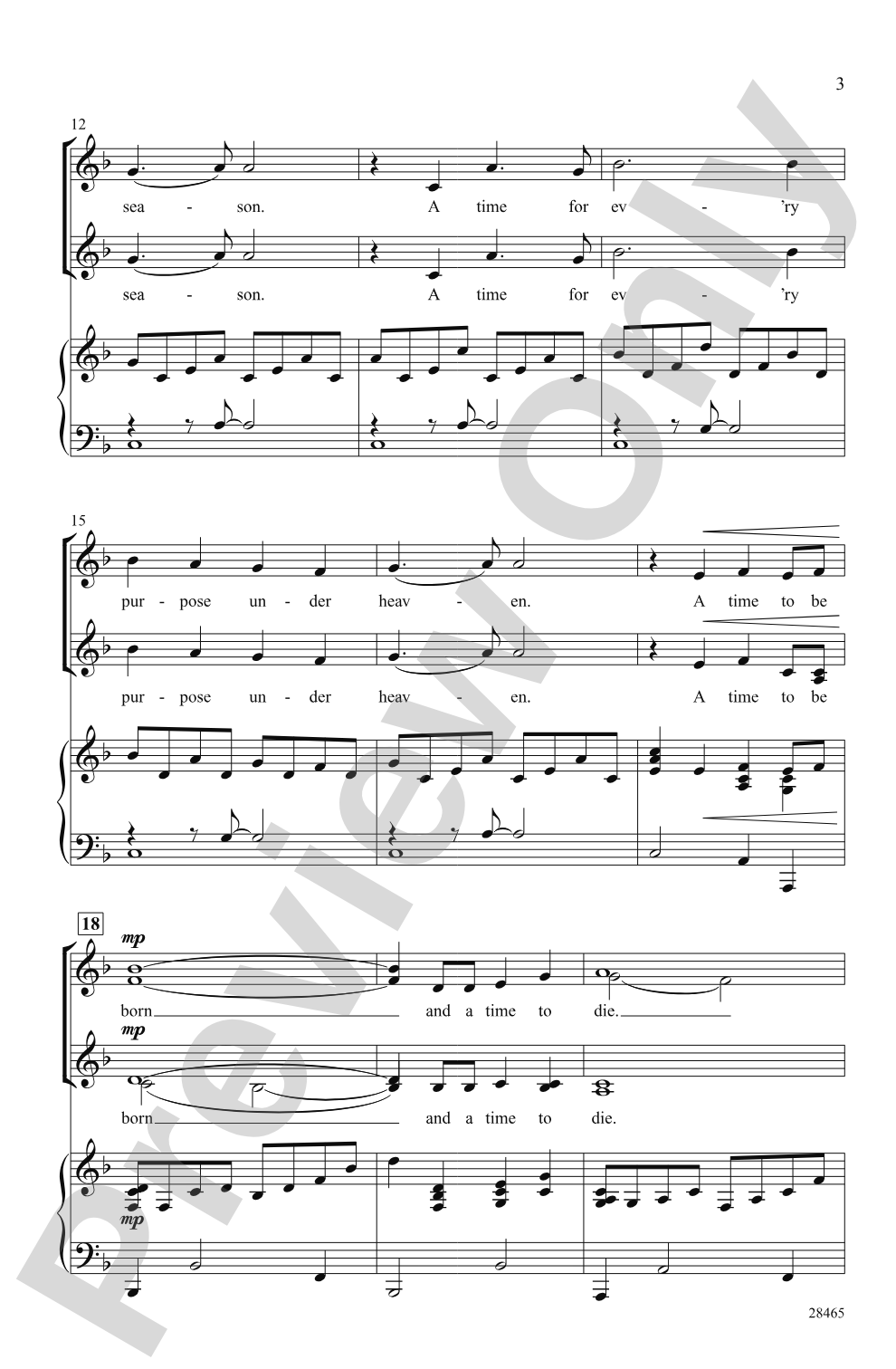

There Is a Season: SSAA Choral Octavo
Words based on Ecclesiastes 3:1-8, 11, music by Greg Gilpin
Item: 00-PO-0000450
$2.25
Minimum order quantity: 20 copies
Pickup currently not available
Related Items
There Is a Season: SoundTrax Digital Audio Download |
$24.95
|
View | |
There Is a Season: SATB Choral Octavo |
$1.75
|
View | |
There Is a Season: SAB Choral Octavo |
$1.75
|
View | |
There Is a Season: 2-Part Choral Octavo |
$1.75
|
View | |
There Is a Season: SATB Choral Octavo |
$1.75
|
View | |
There Is a Season: SAB Choral Octavo |
$1.75
|
View | |
There Is a Season: SSAA Choral Octavo |
$2.25
|
View | |
There Is a Season: 2-Part Choral Octavo |
$1.75
|
View | |
There Is a Season: Choral Octavo SoundTrax CD |
$24.95
|
View |
Description
This stunning setting of an emotional biblical text helps us understand that "there is a time . . . a season . . . for every purpose under heaven." The soaring melody dramatically ebbs and flows throughout, eventually fading at the thoughtful end. A terrific choice for concerts and adjudications, an appropriate choice for life's trying moments.


There Is a Season: SSAA Choral Octavo isn't in MakeMusic Cloud just yet...but it could be. Let us know you'd like to see it, and you'll help shape what comes next. In the meantime, start a free trial and dive into thousands of interactive titles your students can play along with today.
Request This Title
Tell us you want it.
Start Your Free Trial
Explore everything that's ready to play right now.
Sample Audio
1
Audio File
--:--
0:00
0:00
Sample Video
No sample videos found.
Additional Details
Series:
Alfred Archive Edition: Alfred Choral Designs
Publisher:
Alfred Music
Page Count:
8
SKU:
00-PO-0000450
More about this title
About the Composer: Greg Gilpin

Greg Gilpin brings decades of experience as both a conductor and composer to his choral writing. He has led performances at major concert halls including Carnegie Hall, Lincoln Center, the Sydney Opera House, and Royal Festival Hall, earning recognition as an ASCAP award-winning composer and arranger. As Director of Educational Choral Publications for Shawnee Press, Gilpin shapes the landscape of accessible choral repertoire for singers at all levels.
Beyond the music world, Gilpin has expanded his professional practice as a certified financial coach and organizer, appearing on network television and the documentary series "Hoarders." In 2021, he composed the score for the award-winning short film "Rosie's Rescue" and collaborated with opera singer Angela Brown on a new arrangement of "What Child is This?" premiered by the Indianapolis Symphonic Choir. He holds membership in ACDA, NAfME, SAG-AFTRA, and maintains Life Loyal status in Phi Mu Alpha Sinfonia.
Why we love this
Gilpin's setting transforms the familiar biblical text into a piece that works equally well in a concert program and a memorial service or graduation ceremony. The emotional arc of the music—with its soaring passages and thoughtful fade—gives singers a chance to explore dynamic storytelling while offering audiences a moment of genuine reflection.
What to expect
The music unfolds like a meditation on time and change, with a melody that rises and falls as if mimicking the natural rhythms of life. There is both grandeur and intimacy in the writing, creating space for reflection without becoming sentimental. By the end, the gentle fade leaves listeners with quiet acceptance rather than resolution.
Who it's for
Directors preparing music for graduation ceremonies, memorial services, or concert programs will find this piece resonates with singers and audiences alike. Treble choirs seeking sacred literature with both technical interest and emotional depth will connect with the dramatic shape and accessible voicing.
How to get the most out of it
- Shape the soaring melody with intention; let the dynamic ebbs and flows guide your phrase endings rather than fighting against them.
- Balance the four voices carefully in the dense passages; the text's wisdom deserves clarity even when all parts are active.
- Approach the fade at the end with patience and control; this vulnerable moment needs commitment from all singers to land with impact.
- If using recorded accompaniment, rehearse with it early so singers can find their independence within the accompaniment's texture.
How to use it
This octavo works beautifully as a centerpiece in a concert exploring themes of transition or acceptance, or as a standalone piece for graduation and seasonal services. Its eight pages make it manageable for singers while maintaining the emotional weight directors seek for meaningful program moments.
Skills your students will build
- Dynamic control and phrase shaping in sustained melodic passages
- Balance and blend in four-part SSAA voicing
- Text expression in sacred music with emotional depth
- Ensemble control during gradual tempo and dynamic transitions
- Independence within accompaniment textures