

The Virgin Mary Had a Baby Boy: SAB Choral Octavo
West Indies Carol / arr. Victor C. Johnson
Item: 00-PO-0007109
$2.05
Minimum order quantity: 20 copies
Pickup currently not available
Related Items
The Virgin Mary Had a Baby Boy: PianoTrax Digital Audio Download |
$9.99
|
View | |
The Virgin Mary Had a Baby Boy: SATB Choral Octavo |
$2.05
|
View | |
The Virgin Mary Had a Baby Boy: 2-Part Choral Octavo |
$2.05
|
View | |
The Virgin Mary Had a Baby Boy: SATB Choral Octavo |
$2.05
|
View | |
The Virgin Mary Had a Baby Boy: SAB Choral Octavo |
$2.05
|
View | |
The Virgin Mary Had a Baby Boy: 2-Part Choral Octavo |
$2.05
|
View |
Description
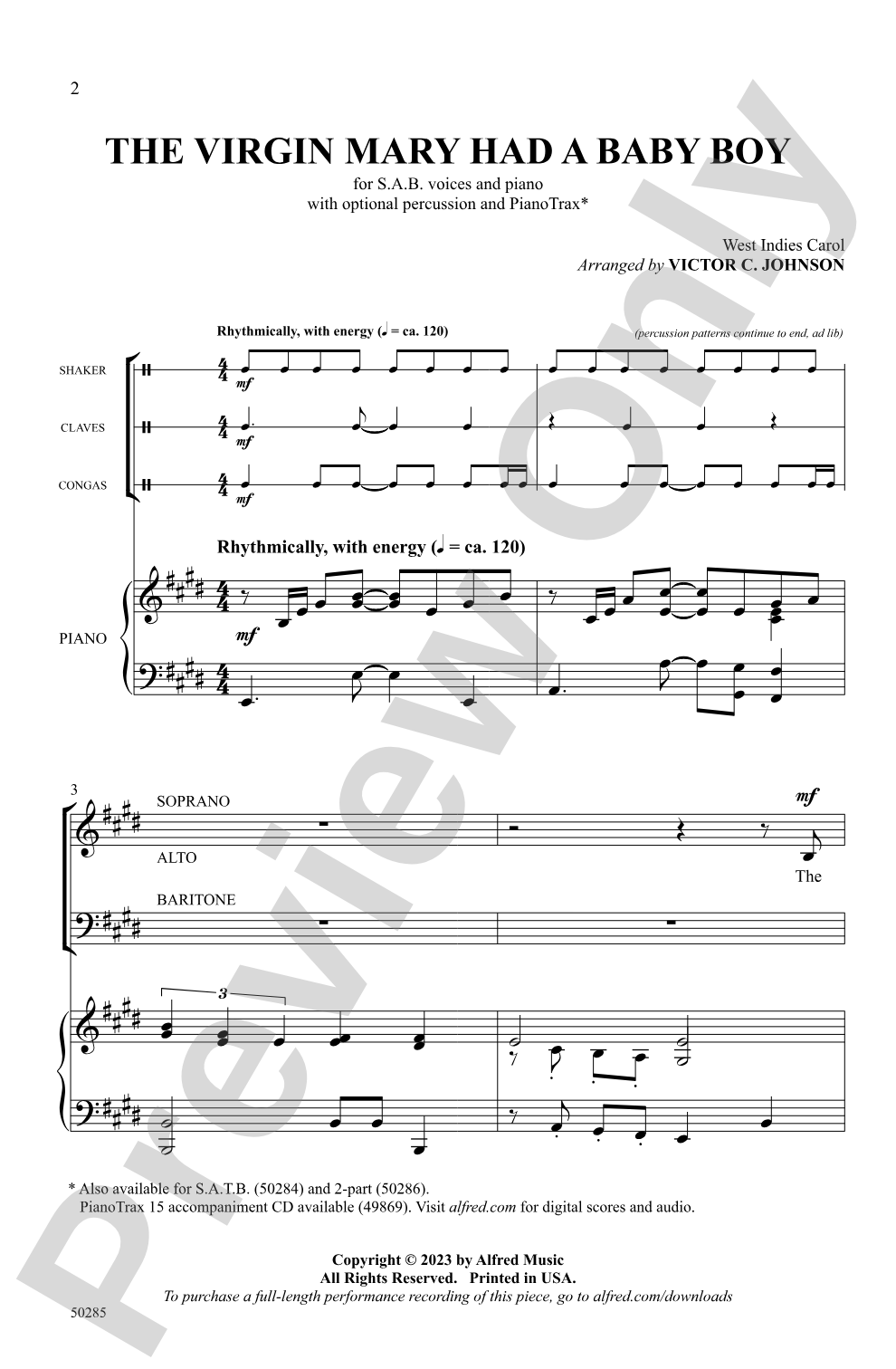
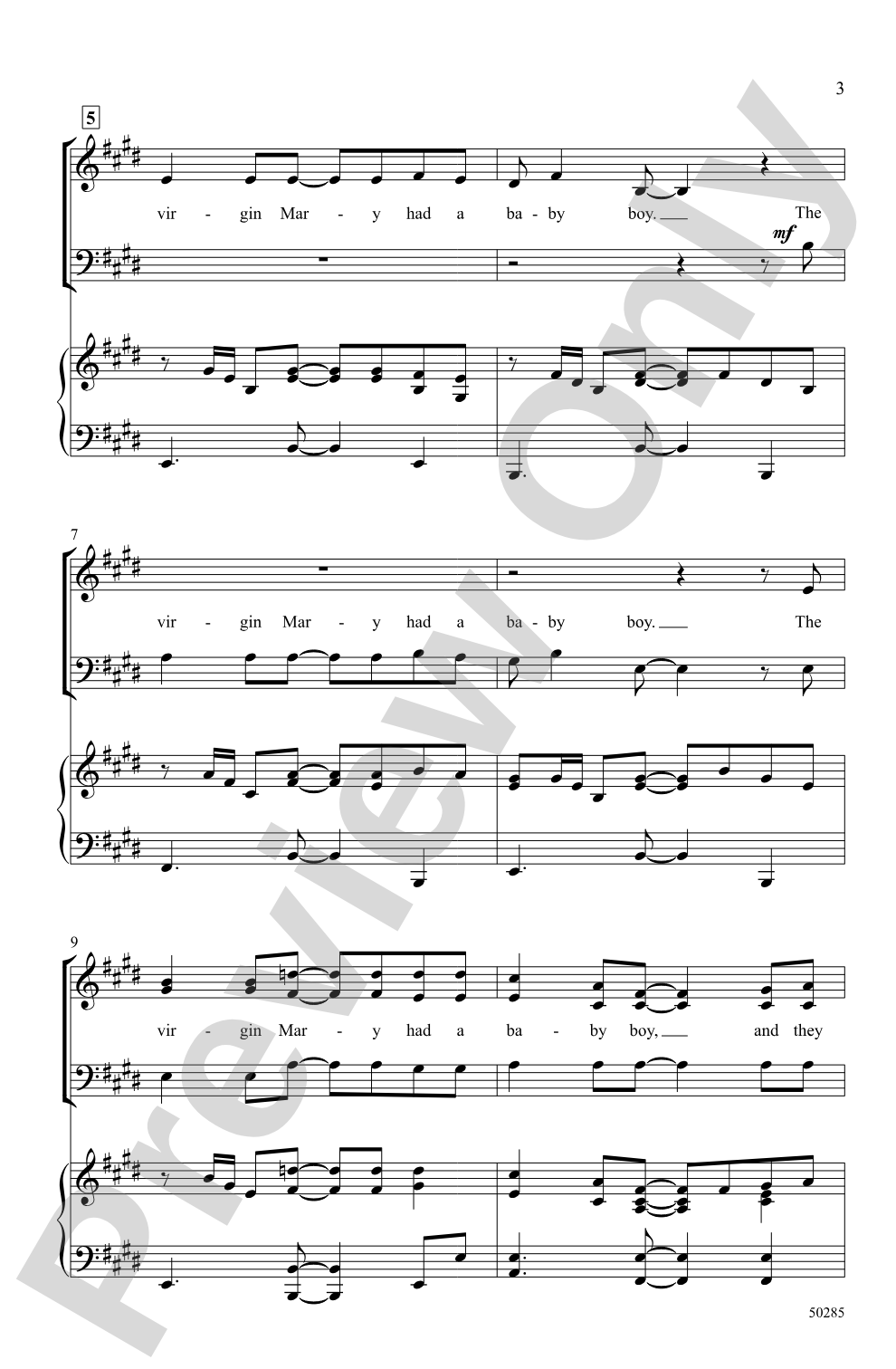
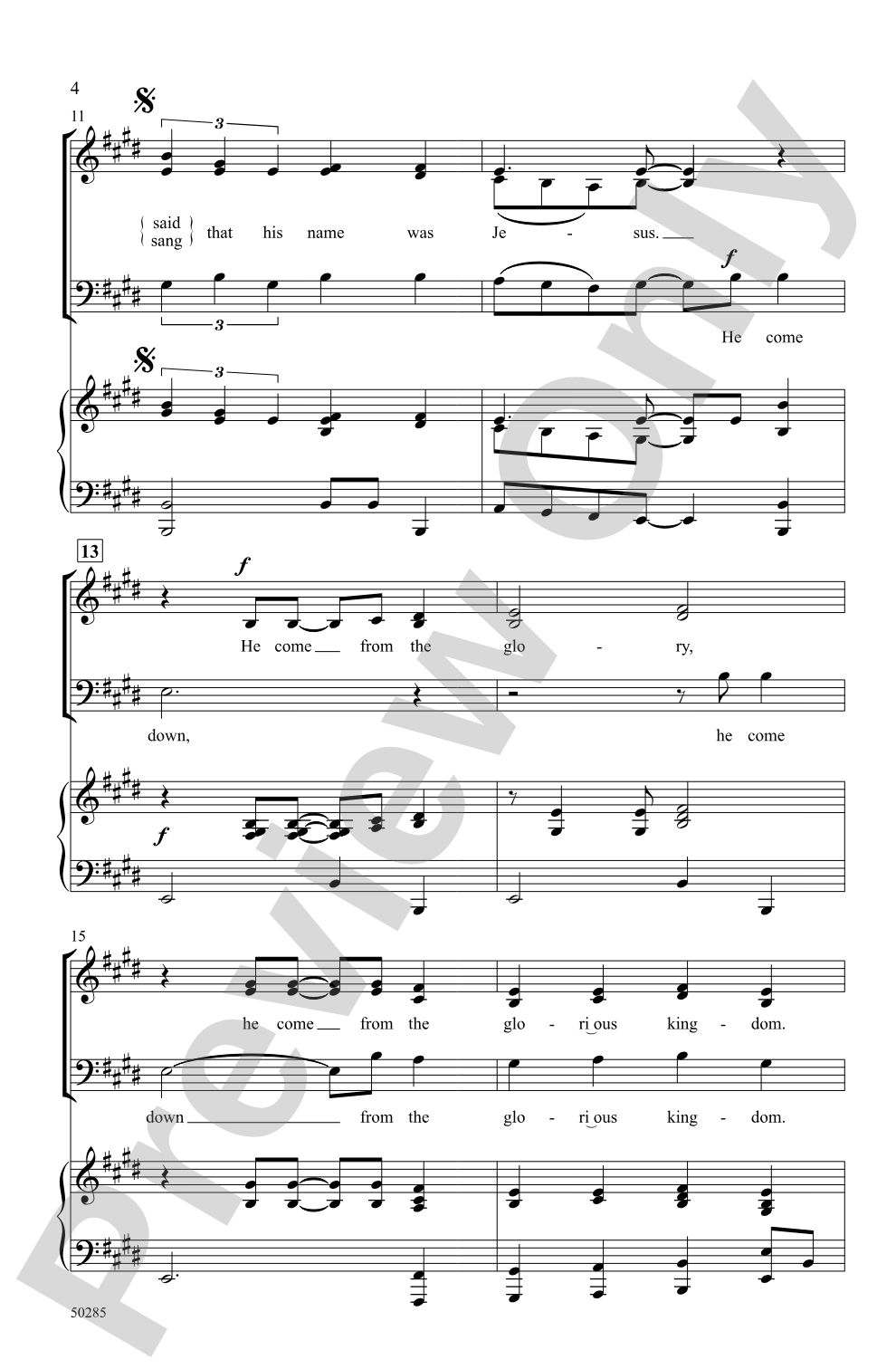
Victor C. Johnson pens a fresh, vibrant arrangement of this favorite West Indies carol. Whether sung in school or church, your lowest voices have a chance to shine, joyfully calling "he come down" to anchor many buoyant refrains. Perform with shaker, claves, and congas to enhance the rhythmic flavor of this bright Caribbean song.


The Virgin Mary Had a Baby Boy: SAB Choral Octavo isn't in MakeMusic Cloud just yet...but it could be. Let us know you'd like to see it, and you'll help shape what comes next. In the meantime, start a free trial and dive into thousands of interactive titles your students can play along with today.
Request This Title
Tell us you want it.
Start Your Free Trial
Explore everything that's ready to play right now.
Sample Audio
1
Audio File
--:--
0:00
0:00
Sample Video
Additional Details
Series:
Alfred Choral Designs
Publisher:
Alfred Music
Page Count:
12
SKU:
00-PO-0007109
More about this title
About the Arranger: Victor C Johnson

Victor C Johnson, based in Dallas, Texas, serves as School Choral Editor for Sing!, the educational imprint of Choristers Guild. With more than 500 published works spanning choral octavos, vocal solos, and keyboard collections, he has shaped choral education across multiple levels and contexts.
From 2000 through 2018, Johnson directed choral ensembles at Fort Worth Academy of Fine Arts, where he led the Academy Singers and Academy Men's Choir while serving as Artistic Director for the Singing Girls of Texas and Children's Choir of Texas. Since 2022, he has conducted the Dallas Symphony Children's Chorus Mixed Ensemble, the resident youth choir for the Dallas Symphony Orchestra. His involvement in ACDA, AGO, TMEA, NAfME, and Phi Mu Alpha Sinfonia reflects his deep commitment to advancing choral artistry in schools and communities.
Why we love this
Johnson's arrangement gives lower voices genuine melodic material instead relegating them to harmonic filler, which means your alto and tenor singers remain engaged throughout. The rhythmic framework invites optional percussion (shaker, claves, congas) without requiring it, so you can add Caribbean texture gradually as your singers gain confidence with the melodic line.
What to expect
Warm, buoyant, and rhythmically alive. The arrangement captures the infectious energy of a West Indies celebration while remaining accessible; singers immediately feel the joy in the melodic shape and the propulsive syncopation beneath it. The texture is bright without being thin, with each voice part contributing meaningfully to the whole.
Who it's for
Choirs with strong alto and tenor sections who want those voices to carry real weight will benefit most from this arrangement. It works equally well in school holiday concerts and church Christmas services, making it flexible for both secular and sacred performance contexts.
How to get the most out of it
- Emphasize the call-and-response character between the 'he come down' refrain and the verse melody; clear articulation in the lower voices makes the exchange sparkle.
- Layer in percussion gradually during rehearsal. Start without any accompaniment to establish the vocal line solidly, then introduce one instrument at a time to avoid muddiness.
- Use the recorded accompaniment (when available) to lock the rhythmic pocket, especially if your singers are unfamiliar with Caribbean rhythmic feels.
- Shape the phrase 'joyfully calling' with genuine joy rather than forcing brightness; let the melodic contour carry the character.
How to use it
Pair this with other culturally diverse holiday literature to reflect the global expressions of Christmas music, or position it as an energetic closer in a concert that needs a mood lift. The 12-page score and optional percussion parts also make it suitable for larger programs where you might want visual interest and movement on stage.
Skills your students will build
- Singing syncopated rhythms with precision
- Reading SAB voicing and voice independence
- Interpreting Caribbean rhythmic feels authentically
- Balancing lower voice parts so they anchor the texture
- Responding to percussion accompaniment without rushing