
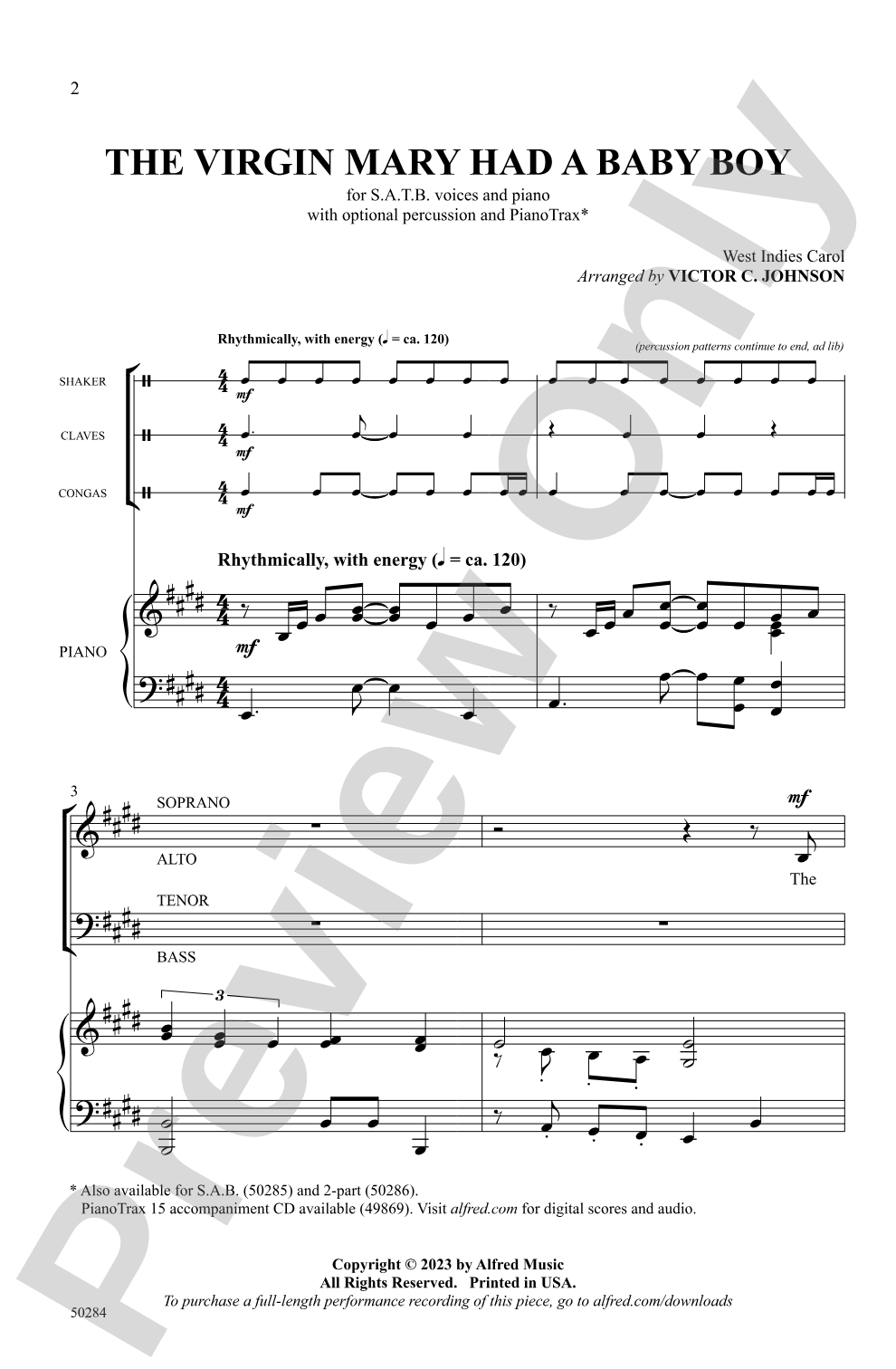

The Virgin Mary Had a Baby Boy: SATB Choral Octavo
West Indies Carol / arr. Victor C. Johnson
Item: 00-PO-0007108
$2.05
Minimum order quantity: 20 copies
Pickup currently not available
Related Items
The Virgin Mary Had a Baby Boy: PianoTrax Digital Audio Download |
$9.99
|
View | |
The Virgin Mary Had a Baby Boy: SAB Choral Octavo |
$2.05
|
View | |
The Virgin Mary Had a Baby Boy: 2-Part Choral Octavo |
$2.05
|
View | |
The Virgin Mary Had a Baby Boy: SATB Choral Octavo |
$2.05
|
View | |
The Virgin Mary Had a Baby Boy: SAB Choral Octavo |
$2.05
|
View | |
The Virgin Mary Had a Baby Boy: 2-Part Choral Octavo |
$2.05
|
View |
Description
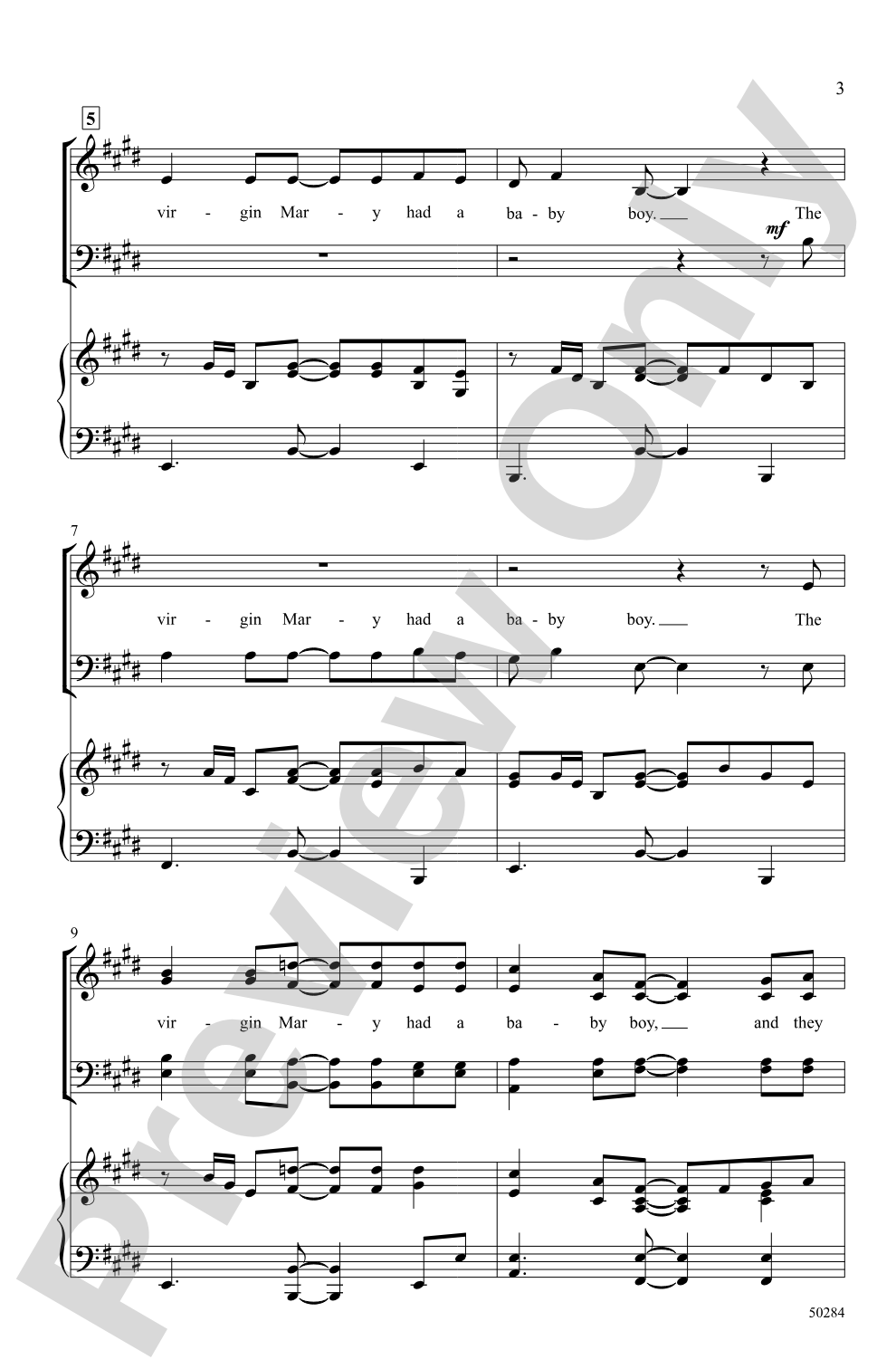
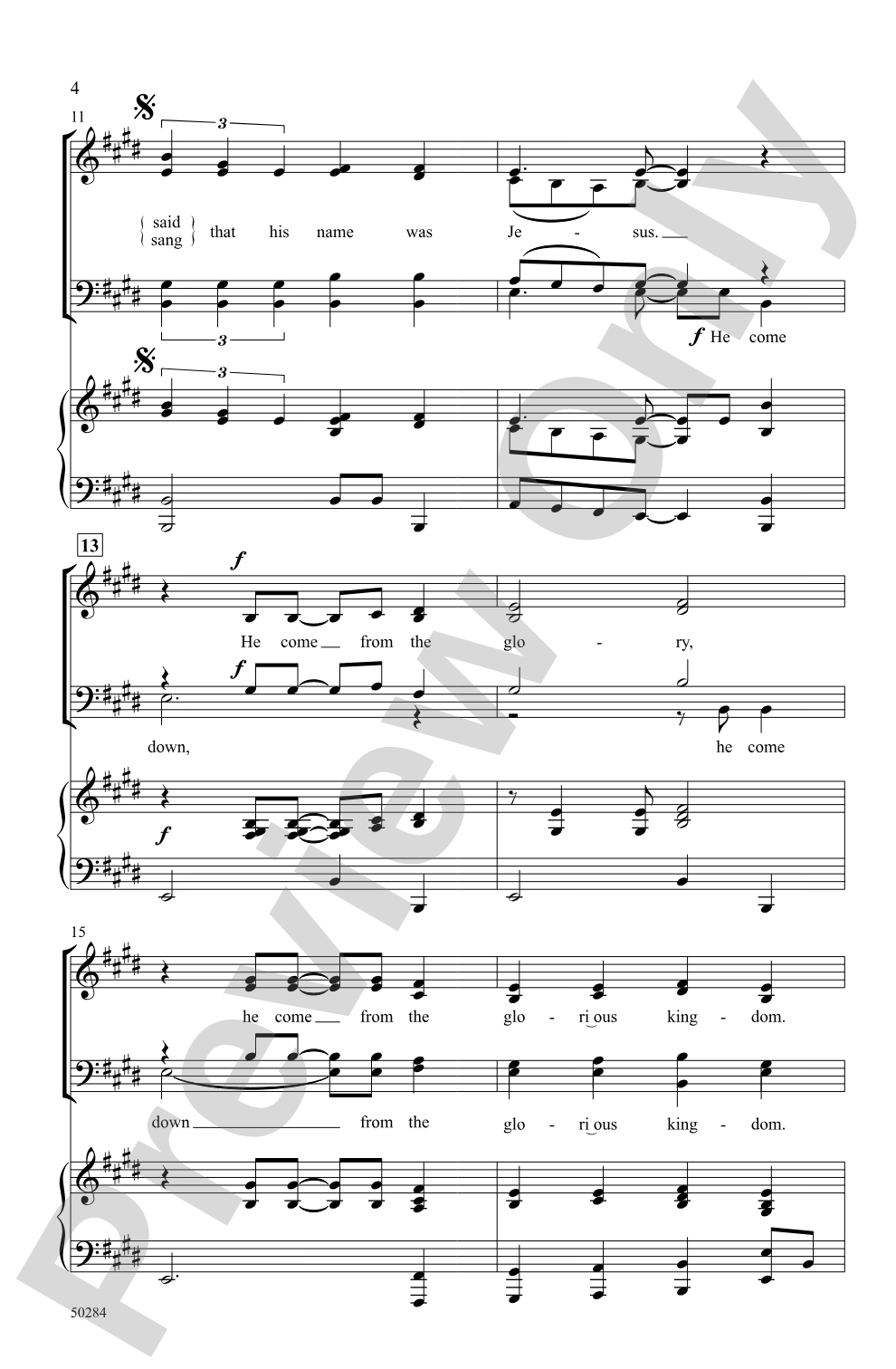
Victor C. Johnson pens a fresh, vibrant arrangement of this favorite West Indies carol. Whether sung in school or church, your lowest voices have a chance to shine, joyfully calling "he come down" to anchor many buoyant refrains. Perform with shaker, claves, and congas to enhance the rhythmic flavor of this bright Caribbean song.


The Virgin Mary Had a Baby Boy: SATB Choral Octavo isn't in MakeMusic Cloud just yet...but it could be. Let us know you'd like to see it, and you'll help shape what comes next. In the meantime, start a free trial and dive into thousands of interactive titles your students can play along with today.
Request This Title
Tell us you want it.
Start Your Free Trial
Explore everything that's ready to play right now.
Sample Audio
1
Audio File
--:--
0:00
0:00
Sample Video
Additional Details
Series:
Alfred Choral Designs
Publisher:
Alfred Music
Page Count:
12
SKU:
00-PO-0007108
More about this title
About the Arranger: Victor C Johnson

Victor C Johnson brings decades of choral direction and arranging expertise to his work as School Choral Editor for Sing!, the educational publishing division of Choristers Guild. A Dallas native, he spent 18 years (2000-2018) directing choral ensembles at Ft. Worth Academy of Fine Arts, where he led the Academy Singers and Academy Men's Choir while serving as Artistic Director for both the Singing Girls of Texas and Children's Choir of Texas. His catalog includes more than 500 published choral works, vocal solos, and keyboard collections.
Since 2022, Johnson has conducted the Dallas Symphony Children's Chorus Mixed Ensemble, a resident choir for the Dallas Symphony Orchestra serving grades 9-12. He holds active memberships in the American Choral Directors Association, American Guild of Organists, Texas Music Educators Association, National Association for Music Education, and ASCAP, reflecting his commitment to advancing choral artistry across multiple educational and professional contexts.
Why we love this
Johnson transforms this beloved carol into something that feels both timeless and immediately alive on the concert stage. The arrangement gives lower voices genuinely musical material rather than harmonic padding, and the rhythmic vitality invites natural, joyful singing that students find irresistible. Adding percussion lifts the piece into full Caribbean color without overcomplicating rehearsal demands.
What to expect
The piece radiates joy through infectious rhythm and layered vocal colors. Lower voices pulse with the heart of the song while upper voices soar above, creating a conversation that feels both grounded and celebratory.
Who it's for
This arrangement works for any SATB choir seeking a high-energy Christmas selection that celebrates multicultural repertoire. School choirs will find it accessible and engaging, while church choirs gain a carol that feels contemporary without losing its spiritual warmth.
How to get the most out of it
- Establish a steady groove in the rhythm section before rehearsing vocal entrances; let the percussion pattern anchor the song's Caribbean character from day one.
- Balance the lower voices' "he come down" refrain so they anchor rather than dominate; they support the sopranos' brightness without overshadowing it.
- Encourage singers to feel the offbeat shaker and clave patterns physically; this rhythmic independence creates the buoyancy the arrangement is built for.
- If percussion instruments are unavailable, consider using body percussion or small hand-held options to maintain the textural color without added complexity.
How to use it
Program this as an uplifting contrast to more contemplative carols in your Christmas concert; its Caribbean warmth and rhythmic drive make it an ideal closer or mid-program energy shift. It also pairs naturally with other world-music or multicultural selections, helping choirs build programming that reflects diverse holiday traditions.
Skills your students will build
- Rhythmic independence in polyrhythmic textures
- Balancing ensemble blend across four voice parts with contrasting material
- Performing with percussion accompaniment and responding to live rhythmic cues
- Interpreting folk and world music styles through arrangement choices
- Sustaining vocal energy in uptempo, rhythmically driven contexts