

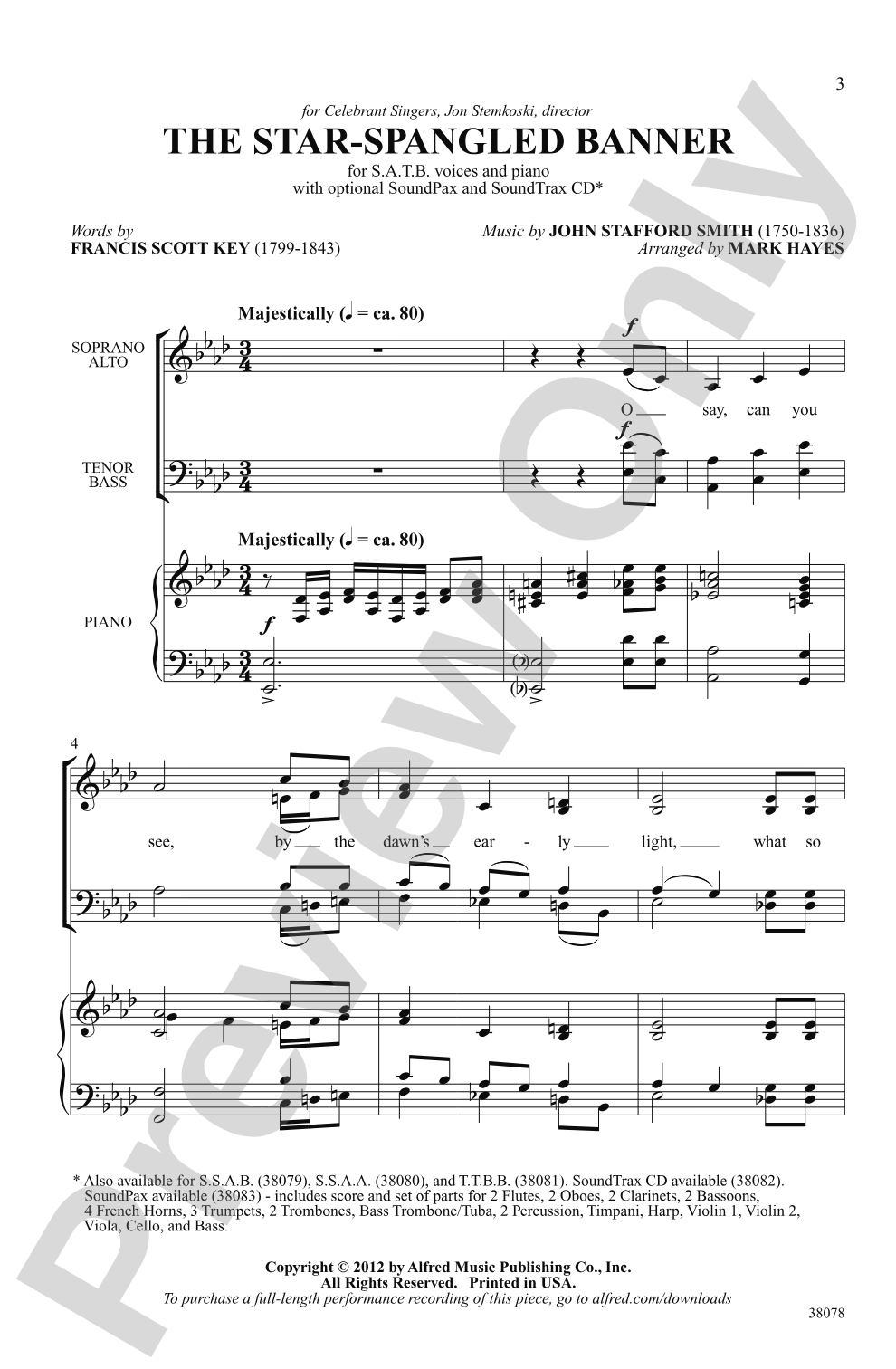

The Star-Spangled Banner: SATB Choral Octavo
Words by Francis Scott Key, music by John Stafford Smith / arr. Mark Hayes
Item: 00-PO-0001372

$2.05
Minimum order quantity: 20 copies
Pickup currently not available
Related Items
The Star-Spangled Banner: SSAB Choral Octavo |
$1.80
|
View | |
The Star-Spangled Banner: SSAA Choral Octavo |
$1.80
|
View | |
The Star-Spangled Banner: TTBB Choral Octavo |
$1.80
|
View | |
The Star-Spangled Banner: Choral SoundPax |
$50.00
|
View | |
The Star-Spangled Banner: SoundTrax Digital Audio Download |
$27.99
|
View | |
The Star-Spangled Banner: SATB Choral Octavo |
$2.40
|
View | |
The Star-Spangled Banner: SSAB Choral Octavo |
$1.80
|
View | |
The Star-Spangled Banner: TTBB Choral Octavo |
$1.80
|
View | |
The Star-Spangled Banner: Choral Octavo SoundTrax CD |
$27.99
|
View | |
The Star-Spangled Banner: Choral SoundPax |
$50.00
|
View |
Description
An exhilarating tour-de-force setting of our National Anthem. The sizable full orchestration, impressive piano accompaniment, and resounding choral parts emanate unwavering patriotism. Mark's arrangement works equally well in the concert hall, sanctuary, gym, or stadium.


Don't just read it, hear it, play along with it, and watch your students grow with it. In MakeMusic Cloud, The Star-Spangled Banner: SATB Choral Octavo comes alive with professional accompaniment, adjustable tempo, and built-in practice tools that turn solo practice into real progress.
Open in the Player
Jump straight in and assign it today.
Start Your Free Trial
Open this title and explore the full library in minutes.
Sample Audio
1
Audio File
--:--
0:00
0:00
Sample Video
No sample videos found.
Additional Details
Series:
Alfred Choral Designs
Publisher:
Alfred Music
Page Count:
8
SKU:
00-PO-0001372
More about this title
About the Composer: John Stafford Smith
John Stafford Smith (1750-1819) was an English composer and organist whose melodic gift secured him a lasting place in American musical tradition. Though he composed numerous works for stage and church, his melody for "To Anacreon in Heaven" became the tune we know as "The Star-Spangled Banner" when Francis Scott Key set his poem to it in 1814.
Smith's ability to craft singable, memorable lines made his compositions valuable in both concert and liturgical settings. His work continues to define how generations of musicians encounter the national anthem.
Why we love this
Mark Hayes's arrangement captures the grandeur this anthem demands while remaining genuinely accessible to community and school choirs. The orchestration supports without overwhelming, and Hayes's harmonic choices bring freshness to a melody every singer knows, making rehearsal engaging rather than routine.
What to expect
Hayes's setting channels genuine patriotic energy without slipping into sentiment. The full orchestral texture and expansive harmonic language create a sense of occasion and weight, while the melodic clarity ensures every singer feels the pride of carrying this historic tune.
Who it's for
Choirs seeking a patriotic opener or closer that combines technical challenge with emotional resonance, from high school honors ensembles to community and semi-professional groups. This works for formal concerts, holiday programs, and ceremonial occasions where the anthem demands full musical treatment rather than a simple performance.
How to get the most out of it
- Balance the opening verses carefully so soloists or small sections can establish the tune before the full choir enters with confidence and power.
- Use the recorded accompaniment during early rehearsals to lock the parts independently, then transition to full orchestration so singers aren't waiting passively.
- Shape the text dramatically; patriotic fervor requires forward momentum and clear diction, especially through the famous high passages.
- Coordinate any staging or movement with your accompanist well before performance so tempos and cutoffs stay locked.
How to use it
Open your summer concert or Fourth of July program with this to establish ceremony and capture attention immediately. It also serves as a powerful closer when you want to send an audience out moved and unified, or anchor a patriotic program alongside other American choral works.
Skills your students will build
- Sustaining long phrases with proper breath management and line control
- Singing elevated tessituras with accuracy and confidence
- Balancing solo or small-section exposure with full ensemble blend
- Interpreting text with historical awareness and emotional clarity
- Responding to orchestral accompaniment and managing tempo shifts