The Skies Can't Keep Their Secret Cover Image

The Skies Can't Keep Their Secret: 2-Part Choral Octavo

$2.20 USD
Sale price  $2.20 USD Regular price 
Skip to product information
The Skies Can't Keep Their Secret Cover Image

The Skies Can't Keep Their Secret: 2-Part Choral Octavo

Words based on the poem by Emily Dickinson, music and additional words by Mary Donnelly and George L. O. Strid

Item: 00-51172

Need it now?

Buy Digital Version
$2.20
Shipped

One moment…

Description
Based on words by Emily Dickinson, this charming springtime piece finds delight in nature's mysteries. A flowing piano accompaniment supports two treble voice parts---just right for emerging harmony singers. Invite a flute player to add the delicate obbligato.

The Skies Can't Keep Their Secret: 2-Part Choral Octavo isn't in MakeMusic Cloud just yet...but it could be. Let us know you'd like to see it, and you'll help shape what comes next. In the meantime, start a free trial and dive into thousands of interactive titles your students can play along with today.

Sample Pages

Sample Audio
0:00
0:00
Sample Video
Additional Details
Series: Alfred Choral Designs
Publisher: Alfred Music
Page Count: 8
UPC: 038081582092
SKU: 00-51172

More about this title

About the Composer: Mary Donnelly
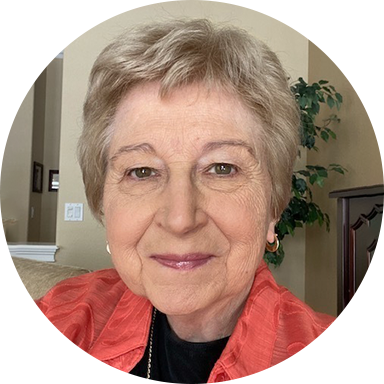
Mary Donnelly

Mary Donnelly grew up in Reno, Nevada, where she earned a Bachelor of Arts degree from the University of Nevada, Reno with majors in English and French. While still an undergraduate, she organized two children's choruses and discovered her passion for music education, leading her to pursue certification and a Master's Degree in Education from Lesley College in Cambridge, Massachusetts. Her graduate studies centered on integrating the arts across the curriculum, an approach that shaped her thirty-year career teaching general music and choir in Washoe County schools.

In 1985, Donnelly began collaborating with George L. O. Strid when they co-taught a sixth grade general music class. Their principal challenged them to compose a musical for Reading Week, sparking a partnership that has produced over two hundred songs and twenty-five musicals. A member of ACDA, NEA, and ASCAP, Donnelly has since retired to Reno, where she continues her work as a published composer.

Why we love this

This piece captures exactly what emerging harmony singers need: a text that matters (Dickinson's keen observation of nature), accessible two-part writing that sits beautifully for treble voices, and a piano accompaniment that supports without overwhelming. The optional flute obbligato gives you flexibility to feature an instrumentalist or keep the focus purely vocal, making it work in multiple performance contexts.

What to expect

Gentle and curious, like standing outside on a mild spring day and noticing small things. The flowing piano accompaniment creates motion while the two voice parts weave naturally together, letting Dickinson's playful observation about nature's secrets become a shared discovery.

Who it's for

This octavo suits middle school and early high school treble choirs, community youth choruses, and any ensemble of emerging harmony singers ready to work with two-part writing. Directors seeking spring or concert repertoire that balances accessibility with genuine musical substance will find it particularly valuable.

How to get the most out of it

  • Balance the two voice parts carefully during rehearsal; mark dynamics and use sectional work to ensure neither part dominates the flowing melodic line.
  • If adding the flute obbligato, rehearse the parts independently first, then layer them gradually so singers can hear how the instrumental line complements rather than competes with their voices.
  • Shape the phrases with the text in mind; Dickinson's language invites sensitive word stress and natural breathing that will make the poetry come alive.
  • Use the recorded accompaniment as a rehearsal tool to build independence in both voice parts, especially during the harmonic sections.

How to use it

Program this as part of a spring concert that celebrates nature and poetry, or pair it with other Dickinson-inspired pieces for a thematic set. Its eight pages and manageable difficulty make it an excellent choice for festival or contest entries where you want literature-based work that doesn't demand advanced technical skills.

Skills your students will build

  • Singing in two-part harmony with independent voice leading
  • Interpreting literary text through musical expression
  • Reading and performing with flowing accompaniment
  • Coordinating ensemble singing with optional instrumental obbligato

You May Also Like