
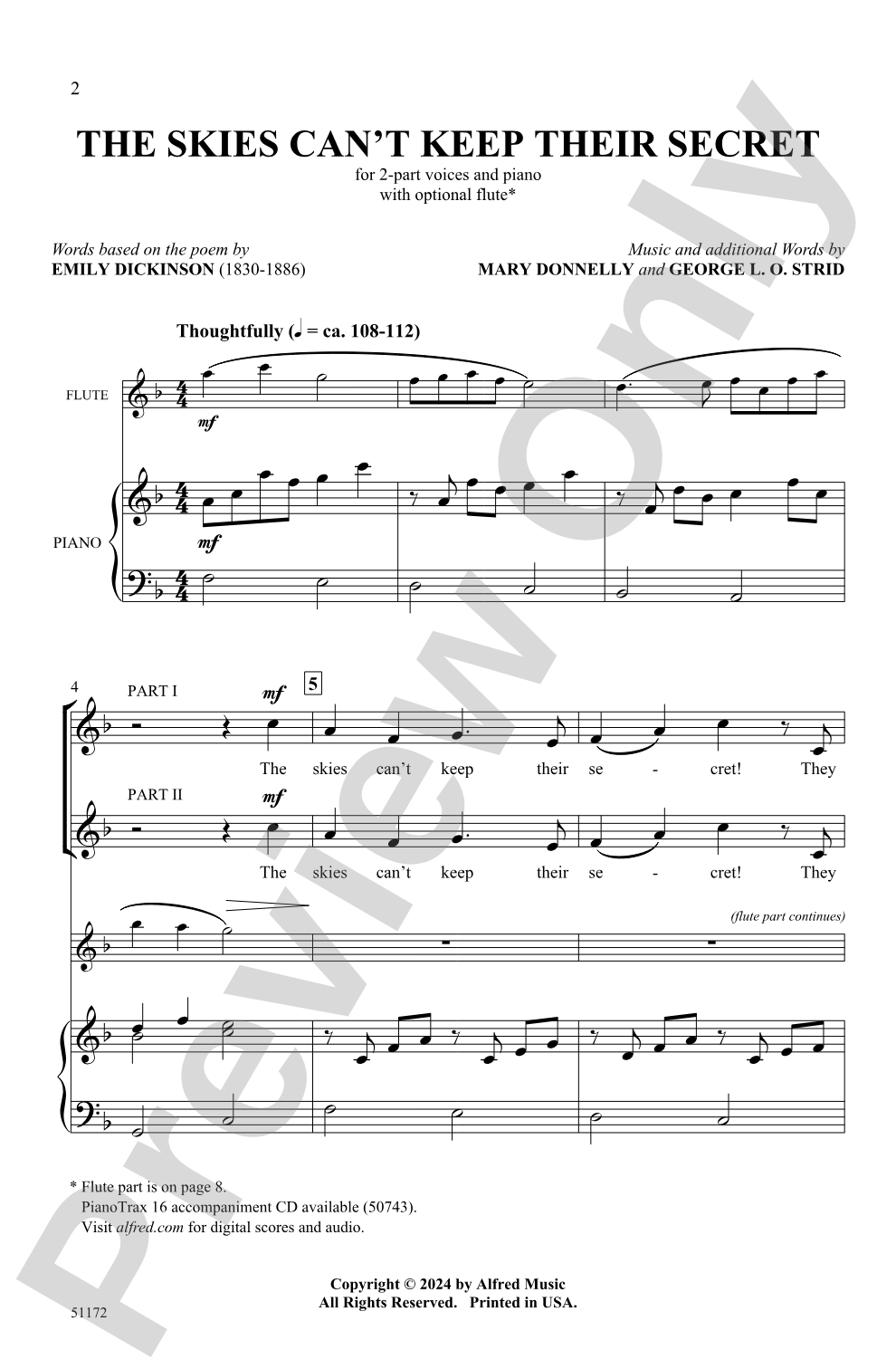
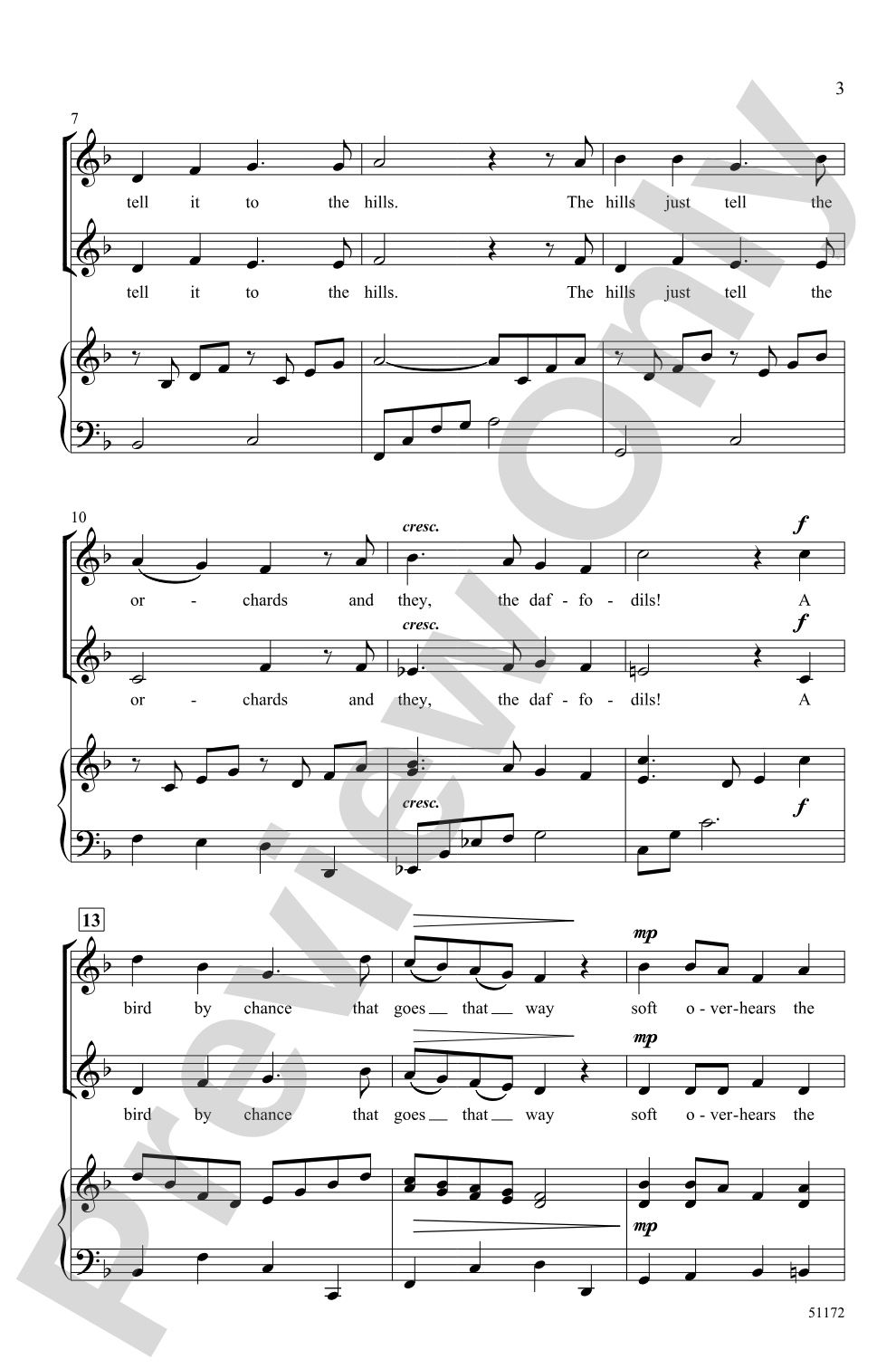

The Skies Can't Keep Their Secret: 2-Part Choral Octavo
Words based on the poem by Emily Dickinson, music and additional words by Mary Donnelly and George L. O. Strid
Item: 00-PO-0007283
$2.20
Minimum order quantity: 20 copies
Pickup currently not available
Related Items
The Skies Can't Keep Their Secret: 2-Part Choral Octavo |
$2.20
|
View |
Description
Based on words by Emily Dickinson, this charming springtime piece finds delight in nature's mysteries. A flowing piano accompaniment supports two treble voice parts---just right for emerging harmony singers. Invite a flute player to add the delicate obbligato.


The Skies Can't Keep Their Secret: 2-Part Choral Octavo isn't in MakeMusic Cloud just yet...but it could be. Let us know you'd like to see it, and you'll help shape what comes next. In the meantime, start a free trial and dive into thousands of interactive titles your students can play along with today.
Request This Title
Tell us you want it.
Start Your Free Trial
Explore everything that's ready to play right now.
Sample Audio
1
Audio File
--:--
0:00
0:00
Sample Video
Additional Details
Series:
Alfred Choral Designs
Publisher:
Alfred Music
Page Count:
8
SKU:
00-PO-0007283
More about this title
About the Composer: Mary Donnelly
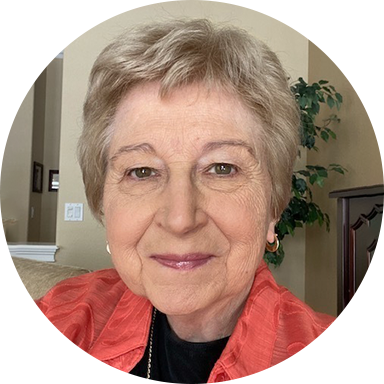
Mary Donnelly grew up in Reno, Nevada, and initially pursued English and French at the University of Nevada, Reno. While still an undergraduate, she co-founded two children's choruses and discovered her passion for music education, prompting her to return to school for teacher certification. She earned a Master's Degree in Education from Lesley College in Cambridge, Massachusetts, where she studied arts integration across the curriculum.
Donnelly spent thirty years teaching general music and choir in the Washoe County School District, retiring as an active music educator. In 1985, she began collaborating with George L. O. Strid during a sixth-grade team-teaching assignment; their first project, a musical titled The Million Dollar Mystery, launched a prolific partnership that has produced over two hundred songs and twenty-five musicals. She remains active in ACDA, NEA, and ASCAP.
Why we love this
Donnelly and Strid craft music that honors literary text without overshadowing it; Emily Dickinson's words remain central while the melody supports their natural rhythms and imagery. The flowing piano accompaniment sits in a comfortable register for emerging singers, and the optional flute obbligato provides an elegant layer that directors can include or omit based on ensemble resources and readiness. This is the kind of accessible springtime piece that singers actually enjoy returning to.
What to expect
The piece radiates the quiet wonder of spring unfolding. Donnelly's melody dances lightly above the flowing piano accompaniment, capturing Dickinson's delight in nature's small mysteries with charm rather than sentimentality. There is freshness here, both in musical language and in the collaborative relationship between voices.
Who it's for
This octavo serves choirs of young singers building two-part harmony skills, from middle school through early high school treble ensembles. It works equally well in school choral programs, community youth choirs, and music camps where singers are ready for gentle harmonic challenge without complex vocal writing.
How to get the most out of it
- Shape the melodic phrases around Dickinson's punctuation and syntax rather than the bar lines; let the poetry guide phrasing length and breath placement.
- Balance the two treble parts so neither overwhelms the text; both lines deserve clarity and projection, especially where they move in parallel motion.
- If using the optional flute obbligato, rehearse it separately first so singers hear its role as a decorative complement, then blend it gradually during combined rehearsals.
- Use the recorded accompaniment during early learning to lock the harmonic framework, then transition to live piano to encourage singers' independence and responsiveness.
How to use it
Program this as a centerpiece for a spring concert alongside other nature-themed repertoire, or use it to open a program that explores poetry and music together. Its eight pages make it manageable for festival preparation while offering enough musical substance to showcase developing artistry.
Skills your students will build
- Singing in two-part harmony with independence and blend
- Phrase shaping guided by poetic text and punctuation
- Coordinating vocal and instrumental lines
- Sustained legato singing over flowing accompaniment
- Lyrical articulation appropriate to literary text