
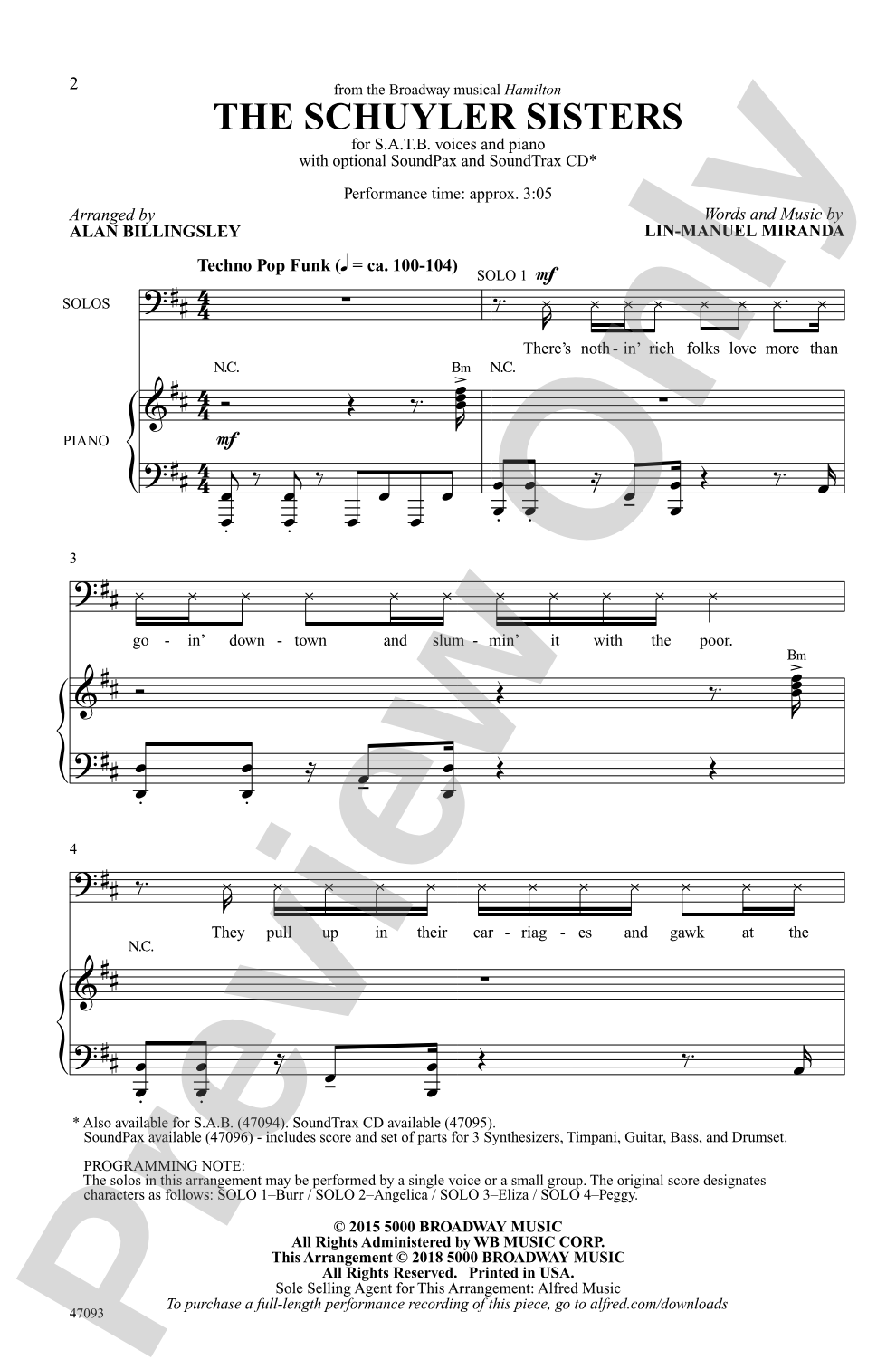
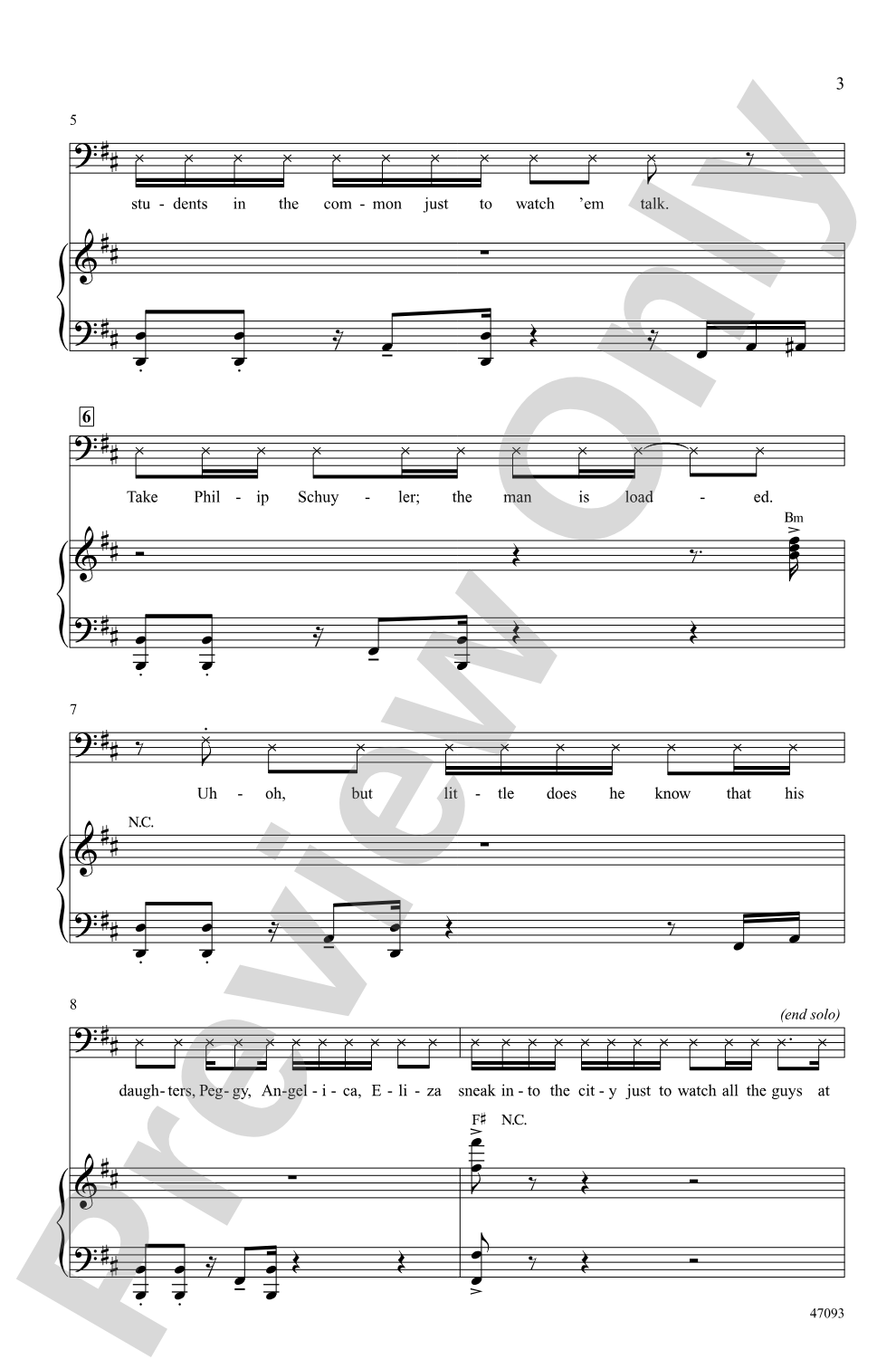
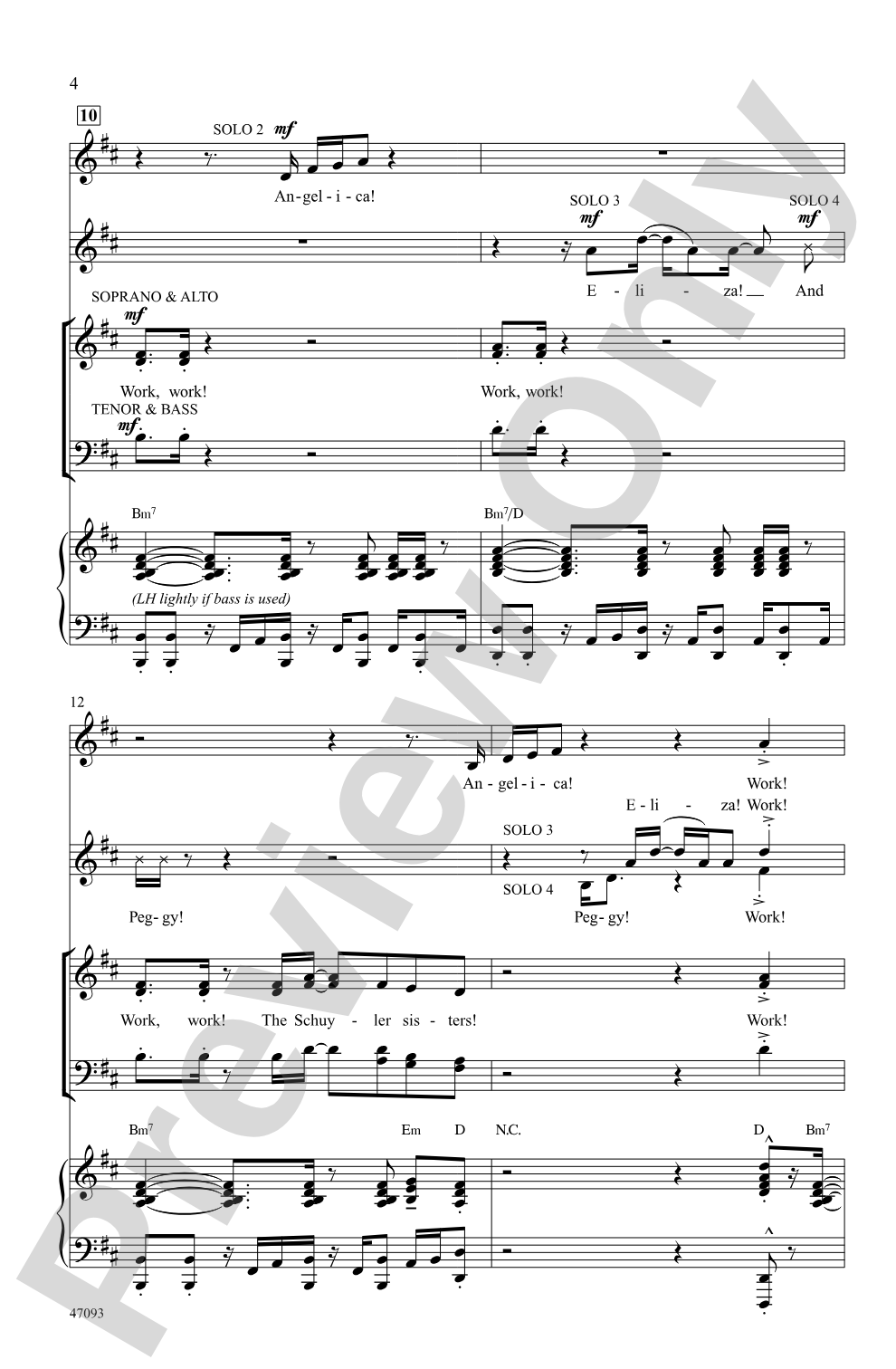
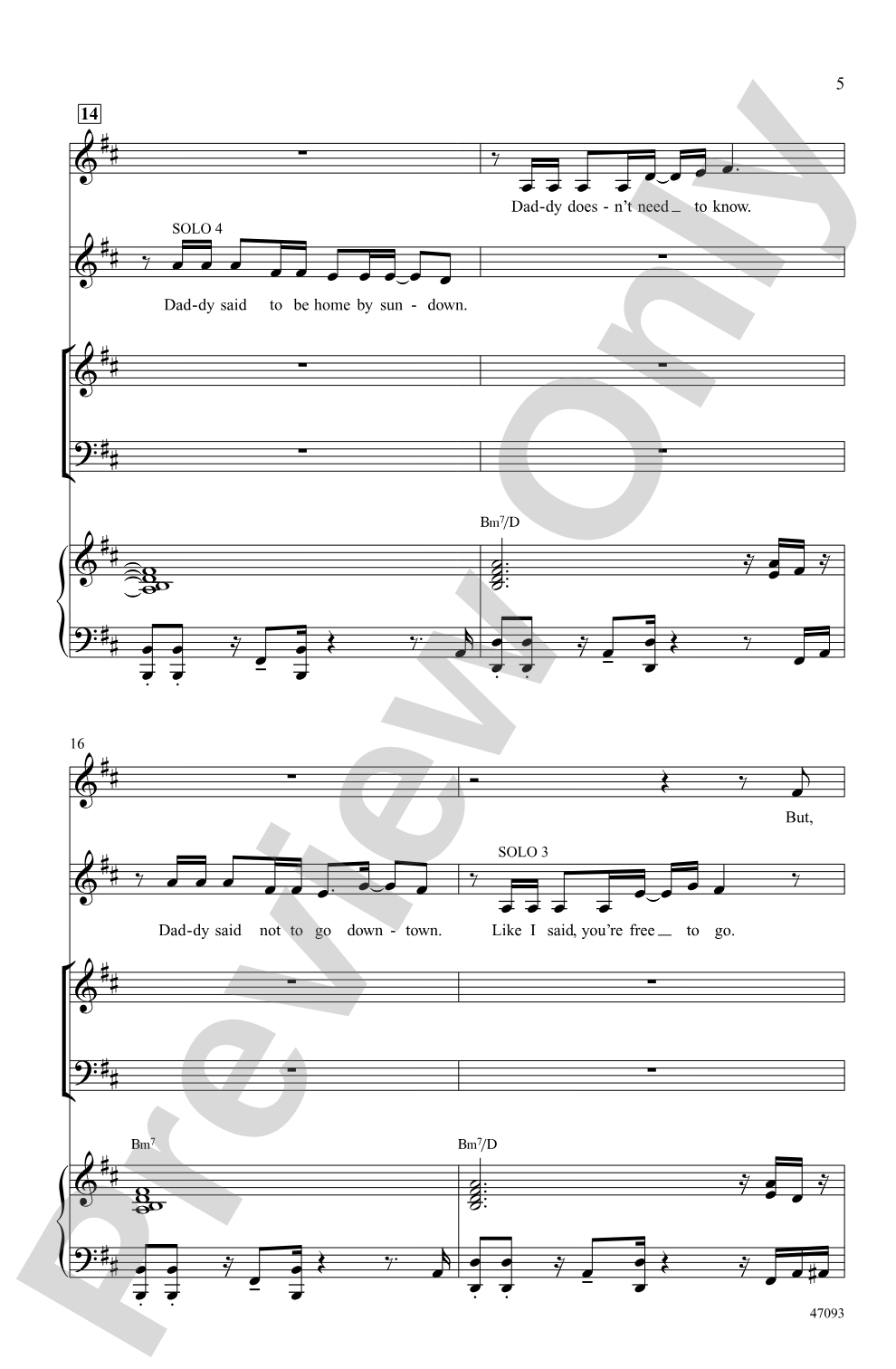

The Schuyler Sisters: SATB Choral Octavo
From the Broadway musical Hamilton
Words and music by Lin-Manuel Miranda / arr. Alan Billingsley
Item: 00-PO-0005868

$2.35
Minimum order quantity: 20 copies
One moment…
Related Items
The Schuyler Sisters: SAB Choral Octavo |
$2.35
|
View | |
The Schuyler Sisters: Choral SoundPax |
$30.00
|
View | |
The Schuyler Sisters: SATB Choral Octavo |
$2.35
|
View | |
The Schuyler Sisters: SAB Choral Octavo |
$2.35
|
View | |
The Schuyler Sisters: Choral Octavo SoundTrax CD |
$29.99
|
View | |
The Schuyler Sisters: Choral SoundPax |
$30.00
|
View |
Description
Lin-Manuel Miranda calls this song "a love letter to New York that lets us know who the Schuyler sisters are outside the context of Hamilton." Through an innovative combination of rap, patter singing, character-driven musical themes, and a supporting chorus, we are introduced to three outstanding women from the Revolutionary War era. Alan Billingsley's supercharged arrangement sounds just like the original Broadway score, with stylized solos (both spoken and sung) and plenty of satisfying choral sonorities and riffs. "Work!"


Don't just read it, hear it, play along with it, and watch your students grow with it. In MakeMusic Cloud, The Schuyler Sisters: SATB Choral Octavo comes alive with professional accompaniment, adjustable tempo, and built-in practice tools that turn solo practice into real progress.
Open in the Player
Jump straight in and assign it today.
Start Your Free Trial
Open this title and explore the full library in minutes.
Sample Audio
1
Audio File
--:--
0:00
0:00
Sample Video
Additional Details
Series:
Alfred Pop Choral Series
Publisher:
Alfred Music
Page Count:
20
SKU:
00-PO-0005868
More about this title
About the Composer: Lin-Manuel Miranda
Lin-Manuel Miranda is a composer, lyricist, and performer whose work has fundamentally reshaped contemporary musical theatre. His score for Hamilton (2015) earned the Pulitzer Prize for Drama and established him as a major voice in American music, blending hip-hop, R&B, and traditional show music with storytelling rooted in historical and cultural depth. Beyond Hamilton, Miranda has composed for film, television, and stage, consistently demonstrating his ability to make complex narratives accessible and emotionally resonant across diverse audiences.
Miranda's music prioritizes character and narrative clarity; every song serves the story. His compositions often feature intricate rhyme schemes, layered vocal arrangements, and genre-blending that challenges performers to master multiple musical languages simultaneously. For choirs and students, his work offers a rare opportunity to engage with contemporary composition that honors both theatrical tradition and modern musical idioms.
Why we love this
Alan Billingsley's arrangement captures the infectious energy and rhythmic complexity of the Broadway original while remaining fully singable across four voices. The combination of rap, rhythmic patter, and ensemble counterpoint keeps singers engaged in the character work while building genuine choral technique. Programming this piece signals to your singers that contemporary theatre music belongs in the concert hall.
What to expect
Sharp, witty, and propulsive. The arrangement crackles with the confidence and wit of three young women claiming their place in history. You'll hear layers of voices creating a living, breathing soundscape that feels both precise and playful, with moments of pure choral joy breaking through the rhythmic complexity.
Who it's for
This arrangement works for advanced high school choirs, college ensembles, and community choirs with confident singers who can handle rhythmic independence and character work. The piece demands secure sight-readers and performers comfortable with contemporary musical theatre idioms, including rap and rhythmic spoken text. Soloists need both vocal control and theatrical presence.
How to get the most out of it
- Treat the rhythmic patter sections like text delivery in a play. Clarity of text comes before perfect pitch matching; trust that precision rhythm will create the musicality you want.
- Study the original Broadway recording alongside the sheet music. The Schuyler Sisters' distinct voices and attitudes shape how each section should sound; encourage soloists to find their character voice before worrying about blending with the chorus.
- Balance the stylized solos (both spoken and sung) against the choral sections. When full ensemble riffs enter, they should sit under the solo lines as responsive commentary, not compete for attention.
- Lock the rhythm section and percussion early. The groove is the foundation for everything else; if the underlying pulse is secure, soloists and riffing voices will find their place naturally.
How to use it
This piece thrives as a concert centerpiece or closer, especially in a program exploring contemporary musical theatre or diverse American voices. It pairs well alongside other pop choral arrangements from the Alfred series or as a standalone statement about the relevance of musical theatre to choral art. Consider programming it in the spring when singers are confident enough to take risks with character and style.
Skills your students will build
- Rhythmic independence in ensemble contexts (singing against spoken text and rapped passages)
- Character-driven interpretation in a contemporary music theatre idiom
- Reading and performing syncopated rhythms and mixed meters
- Balancing solo voices with responsive choral commentary
- Articulation and text clarity in rapid patter passages
- Blending multiple musical styles (rap, patter, traditional harmony) within a single piece