
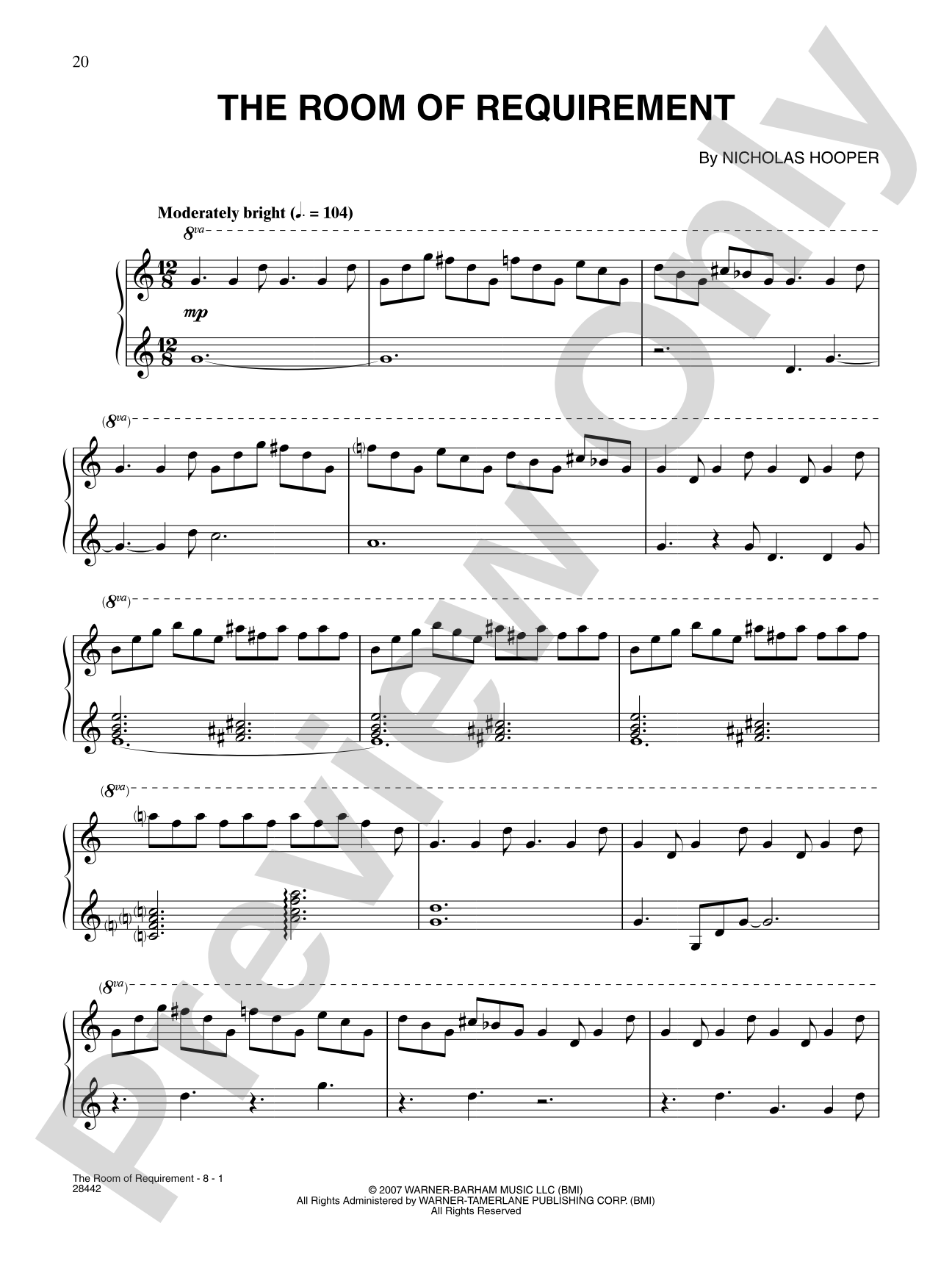
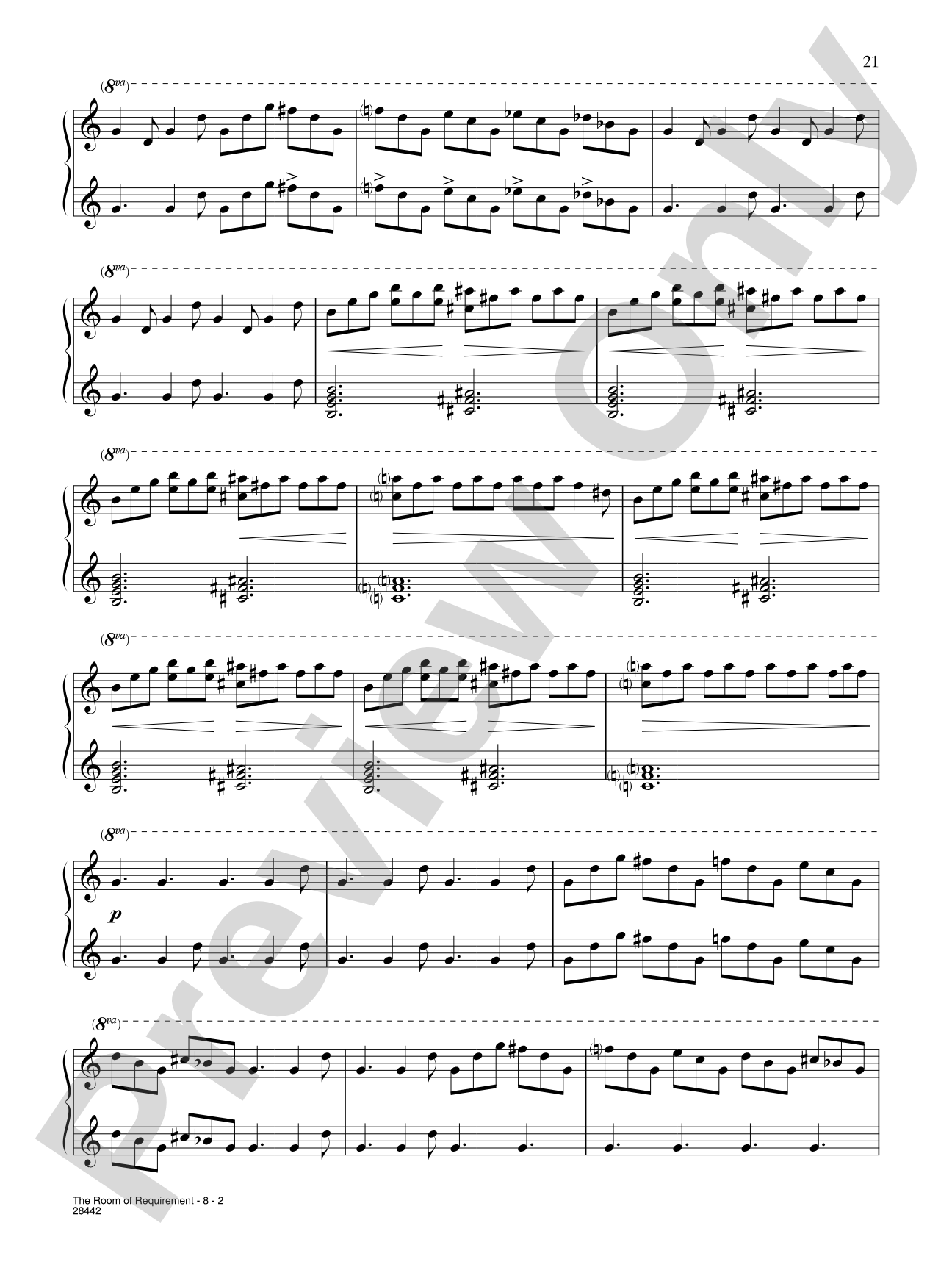

The Room of Requirement (From "Harry Potter and the Order of the Phoenix"): Piano
Music by Nicholas Hooper with bonus selection by John Williams
Level: Late Intermediate
Item: 00-PSP-000512
$5.99
Pickup currently not available
Related Items
Dumbledore's Army (From "Harry Potter and the Order of the Phoenix"): Piano |
$4.99
|
View | |
Fireworks (From "Harry Potter and the Order of the Phoenix"): Piano |
$4.99
|
View | |
Flight of the Order of the Phoenix (From "Harry Potter and the Order of the Phoenix"): Piano |
$4.99
|
View | |
Loved Ones and Leaving (From "Harry Potter and the Order of the Phoenix"): Piano |
$4.99
|
View | |
Professor Umbridge (From "Harry Potter and the Order of the Phoenix"): Piano |
$4.99
|
View | |
The Ministry of Magic (From "Harry Potter and the Order of the Phoenix"): Piano |
$4.99
|
View | |
Harry Potter and the Order of the Phoenix™, Selections from: Piano Book |
$14.95
|
View |
Description
Watching the characters from J.K. Rowling's Harry Potter and the Order of the Phoenix™ come alive is made only more delightful by the extraordinary soundtrack that enhances Harry, Hermione, Ron's adventures.
Alfred presents this selection of music from the soundtrack to the major motion picture arranged for advanced solo piano. Titles are Dumbledore's Army * Fireworks * Flight of the Order of the Phoenix * Loved Ones & Leaving * The Ministry of Magic * Professor Umbridge * The Room of Requirement * (Bonus Selection) Hedwig's Theme.


Alfred presents this selection of music from the soundtrack to the major motion picture arranged for advanced solo piano. Titles are Dumbledore's Army * Fireworks * Flight of the Order of the Phoenix * Loved Ones & Leaving * The Ministry of Magic * Professor Umbridge * The Room of Requirement * (Bonus Selection) Hedwig's Theme.
The Room of Requirement (From "Harry Potter and the Order of the Phoenix"): Piano isn't in MakeMusic Cloud just yet...but it could be. Let us know you'd like to see it, and you'll help shape what comes next. In the meantime, start a free trial and dive into thousands of interactive titles your students can play along with today.
Request This Title
Tell us you want it.
Start Your Free Trial
Explore everything that's ready to play right now.
Sample Audio
No sample audio found.
Sample Video
No sample videos found.
Additional Details
Publisher:
Alfred Music
Page Count:
40
SKU:
00-PSP-000512
More about this title
About the Composer: Nicholas Hooper
Nicholas Hooper composed the scores for Harry Potter and the Order of the Phoenix and Harry Potter and the Half-Blood Prince, bringing a darker, more intricate orchestral voice to the later films in the series. His work for these soundtracks demonstrates sophisticated harmonic language and thematic development, qualities that translate powerfully to the piano transcriptions educators and advanced students encounter in this collection.
Why we love this
These eight selections capture some of the most dramatically rich moments from Order of the Phoenix, and arranging them for advanced solo piano preserves the emotional weight of the film while requiring genuine musical maturity from the performer. The collection balances intimate character moments with grand orchestral set pieces, giving pianists the chance to work with varied textures and moods without leaving the keyboard.
What to expect
Hooper's writing for these moments pulses with dramatic intention. Themes shift between introspective, almost baroque-influenced counterpoint and sweeping romantic gestures; harmonic language moves fluidly from major-key brightness to chromatic darkness. The piano transcriptions preserve that emotional arc while requiring the performer to sing multiple lines simultaneously and navigate sudden shifts in texture and density.
Who it's for
Advanced pianists seeking repertoire that sits between classical standards and contemporary film music will find eight satisfying pieces that demand solid technique, harmonic understanding, and interpretive maturity. This collection appeals to students preparing for recitals, competitions, or performance portfolios who want music that connects with modern audiences while maintaining musical substance.
How to get the most out of it
- Layer the harmonic complexity gradually during first run-throughs; these pieces often contain jazz-influenced chords and shifting tonalities that benefit from slow study before committing to tempo.
- Pay attention to dynamic contrast between passages. The film scores rely on orchestral swell and diminishment, which piano technique must articulate through pedal management and voice leading rather than instrumental timbre.
- Study the original film soundtrack simultaneously if possible. Hearing how Hooper's orchestration works informs phrasing choices and helps distinguish between thematic material and accompaniment figuration.
How to use it
These pieces work beautifully on recitals that blend classical and contemporary repertoire, especially for pianists who want to program film music with artistic credibility. Consider programming one or two selections alongside classical sonata movements or other character pieces to create a cohesive program that speaks to a broad audience without compromising musical standards.
Skills your students will build
- Voice leading across multiple staff systems and hand positions
- Pedal technique for harmonic blend and sustain without muddiness
- Sight-reading of complex chromatic harmony and jazz-influenced chord progressions
- Tempo flexibility and rubato within film music's narrative pacing
- Thematic recognition and phrasing coherence across sectional form