
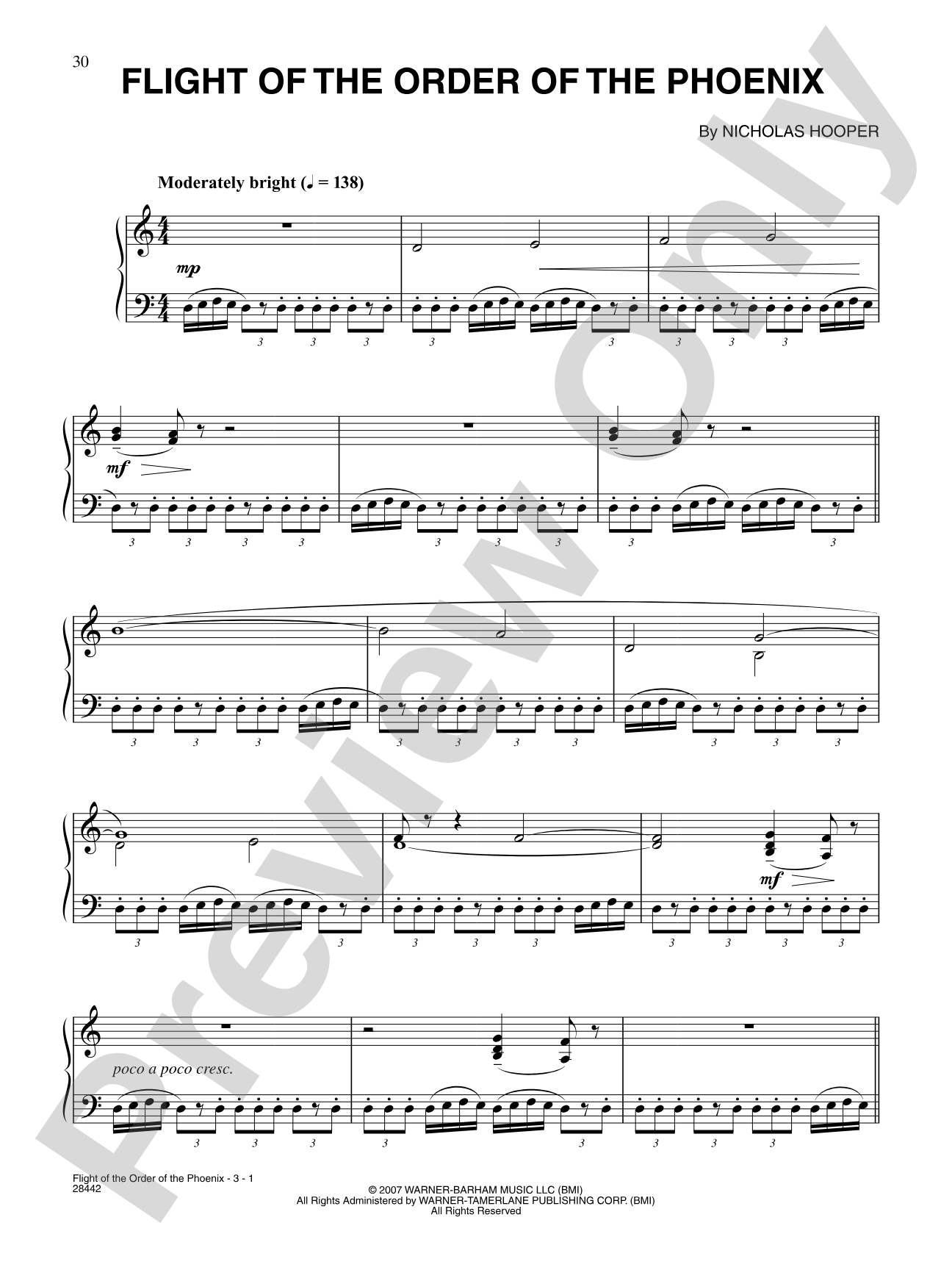

Flight of the Order of the Phoenix (From "Harry Potter and the Order of the Phoenix"): Piano
Music by Nicholas Hooper with bonus selection by John Williams
Level: Late Intermediate
Item: 00-PSP-000415
$4.99
Pickup currently not available
Related Items
Dumbledore's Army (From "Harry Potter and the Order of the Phoenix"): Piano |
$4.99
|
View | |
Fireworks (From "Harry Potter and the Order of the Phoenix"): Piano |
$4.99
|
View | |
Loved Ones and Leaving (From "Harry Potter and the Order of the Phoenix"): Piano |
$4.99
|
View | |
Professor Umbridge (From "Harry Potter and the Order of the Phoenix"): Piano |
$4.99
|
View | |
The Ministry of Magic (From "Harry Potter and the Order of the Phoenix"): Piano |
$4.99
|
View | |
The Room of Requirement (From "Harry Potter and the Order of the Phoenix"): Piano |
$5.99
|
View | |
Harry Potter and the Order of the Phoenix™, Selections from: Piano Book |
$14.95
|
View |
Description
Watching the characters from J.K. Rowling's Harry Potter and the Order of the Phoenix™ come alive is made only more delightful by the extraordinary soundtrack that enhances Harry, Hermione, Ron's adventures.
Alfred presents this selection of music from the soundtrack to the major motion picture arranged for advanced solo piano. Titles are Dumbledore's Army * Fireworks * Flight of the Order of the Phoenix * Loved Ones & Leaving * The Ministry of Magic * Professor Umbridge * The Room of Requirement * (Bonus Selection) Hedwig's Theme.


Alfred presents this selection of music from the soundtrack to the major motion picture arranged for advanced solo piano. Titles are Dumbledore's Army * Fireworks * Flight of the Order of the Phoenix * Loved Ones & Leaving * The Ministry of Magic * Professor Umbridge * The Room of Requirement * (Bonus Selection) Hedwig's Theme.
Flight of the Order of the Phoenix (From "Harry Potter and the Order of the Phoenix"): Piano isn't in MakeMusic Cloud just yet...but it could be. Let us know you'd like to see it, and you'll help shape what comes next. In the meantime, start a free trial and dive into thousands of interactive titles your students can play along with today.
Request This Title
Tell us you want it.
Start Your Free Trial
Explore everything that's ready to play right now.
Sample Audio
No sample audio found.
Sample Video
No sample videos found.
Additional Details
Publisher:
Alfred Music
Page Count:
40
SKU:
00-PSP-000415
More about this title
About the Composer: Nicholas Hooper
Nicholas Hooper composed the scores for Harry Potter and the Order of the Phoenix and Harry Potter and the Half-Blood Prince, bringing a darker, more sophisticated orchestral palette to the series as the narrative deepened. His work on these films demonstrates a mastery of leitmotif, character development through music, and the ability to balance intimate character moments with large-scale magical spectacle. Hooper's film scores have established him as a composer capable of writing music that serves both the immediate emotional beats of a scene and the broader thematic architecture of a multi-film narrative.
Why we love this
These arrangements capture the emotional weight and cinematic drama of Hooper's original orchestrations without diluting them for the piano. The collection spans a rich emotional range—from the ominous threat of Professor Umbridge to the camaraderie of Dumbledore's Army—giving advanced pianists substantive, character-driven repertoire that feels like real music, not simplified film tie-ins.
What to expect
By turns ominous and intimate, grand and introspective. The music carries the shadow of political corruption and teenage resistance, but also moments of genuine warmth and wonder. Each piece is lush with harmonic color and orchestral texture translated onto the keyboard.
Who it's for
Advanced pianists seeking contemporary film music with real compositional substance and emotional depth. This collection works well for serious students preparing recital programs that draw from film, as well as pianists who want to explore music that bridges classical technique with modern cinematic storytelling.
How to get the most out of it
- Pay close attention to dynamic contrast and the pedal markings; Hooper's orchestrations rely heavily on texture shifts, and your sustain pedal work will determine whether passages sound murky or luminous.
- Treat the left-hand accompaniment patterns as orchestral foundations rather than mere support; keep them rhythmically precise and subtly voiced so they support rather than overpower the melody.
- Approach the larger dramatic moments by building intensity through consistent tempo and careful voicing rather than rushing; these pieces reward patience and control.
How to use it
Include selections from this collection in student recitals as a bridge between classical and contemporary repertoire, or program them on a faculty or community concert to showcase film music written with genuine compositional ambition. The emotional variety across the eight pieces allows you to select single selections that fit specific concert themes.
Skills your students will build
- Reading and executing complex dynamic gradations and sustained pedal control
- Interpreting leitmotif and emotional subtext through voicing and balance
- Managing varied harmonic language and contemporary chord progressions
- Building intensity and drama through rubato and phrasing rather than tempo manipulation