
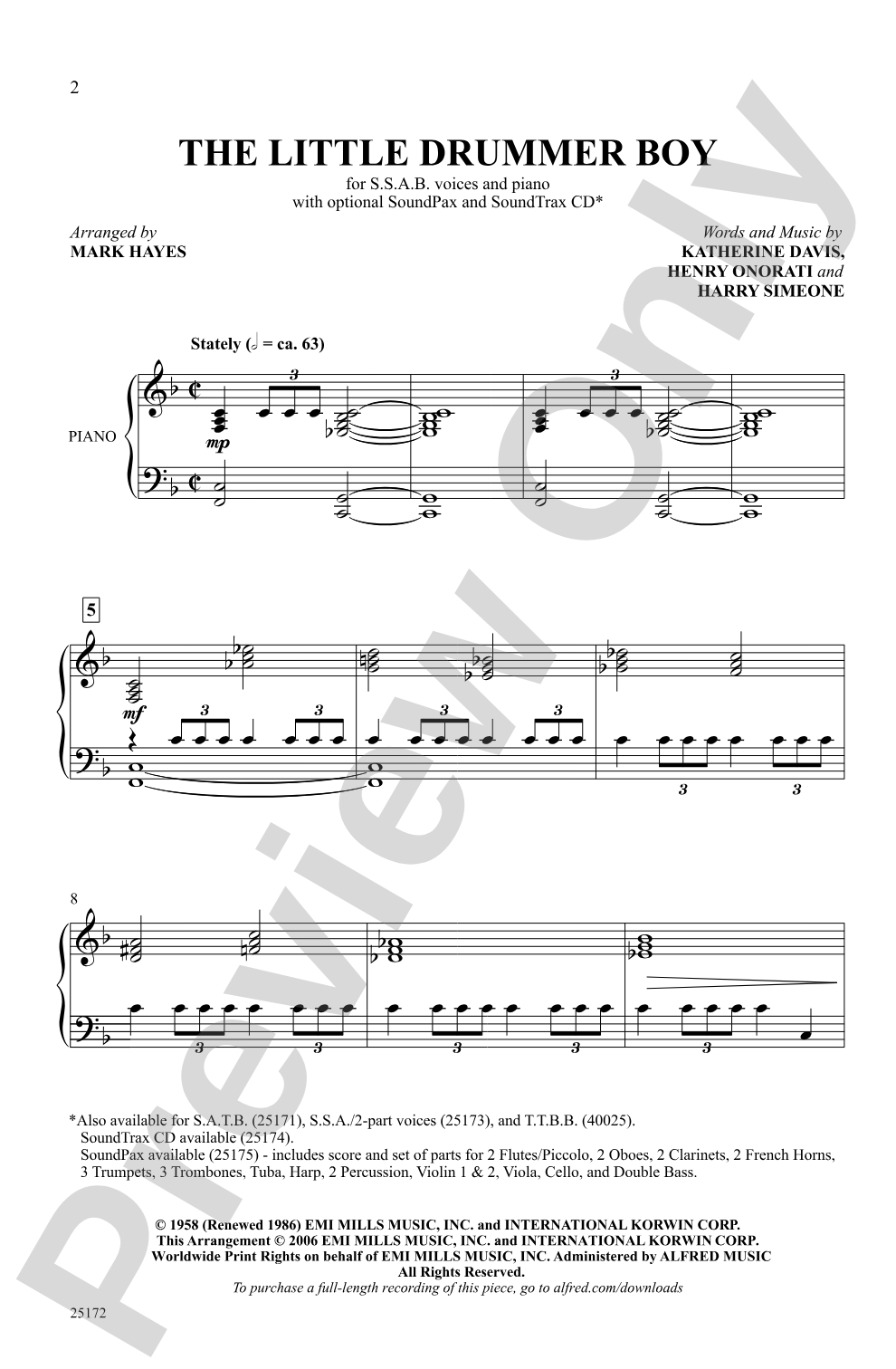

The Little Drummer Boy: SSAB Choral Octavo
Words and music by Katherine K. Davis, Henry Onorati, and Harry Simeone / arr. Mark Hayes
Item: 00-PO-0006559
$2.95
Minimum order quantity: 20 copies
Pickup currently not available
Related Items
The Little Drummer Boy: SATB Choral Octavo |
$2.25
|
View | |
The Little Drummer Boy: SSA / 2-Part Choral Octavo |
$2.95
|
View | |
The Little Drummer Boy: TTBB Choral Octavo |
$2.00
|
View | |
The Little Drummer Boy: SoundTrax Digital Audio Download |
$27.99
|
View | |
The Little Drummer Boy: SATB Choral Octavo |
$2.25
|
View | |
The Little Drummer Boy: SSA / 2-Part Choral Octavo |
$2.95
|
View | |
The Little Drummer Boy: TTBB Choral Octavo |
$2.00
|
View | |
The Little Drummer Boy: Choral Octavo SoundTrax CD |
$27.99
|
View | |
The Little Drummer Boy: Choral SoundPax |
$50.00
|
View |
Description
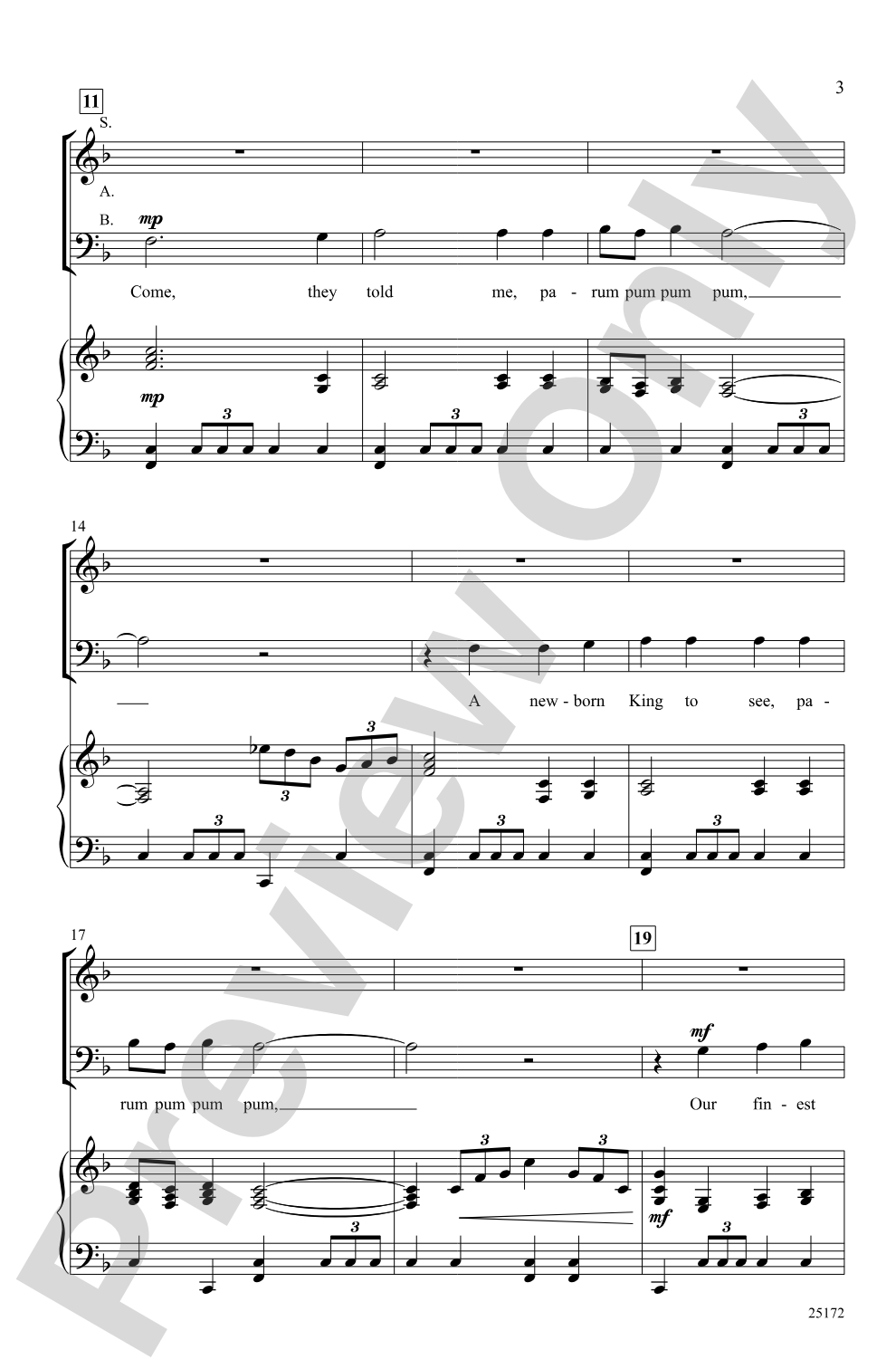
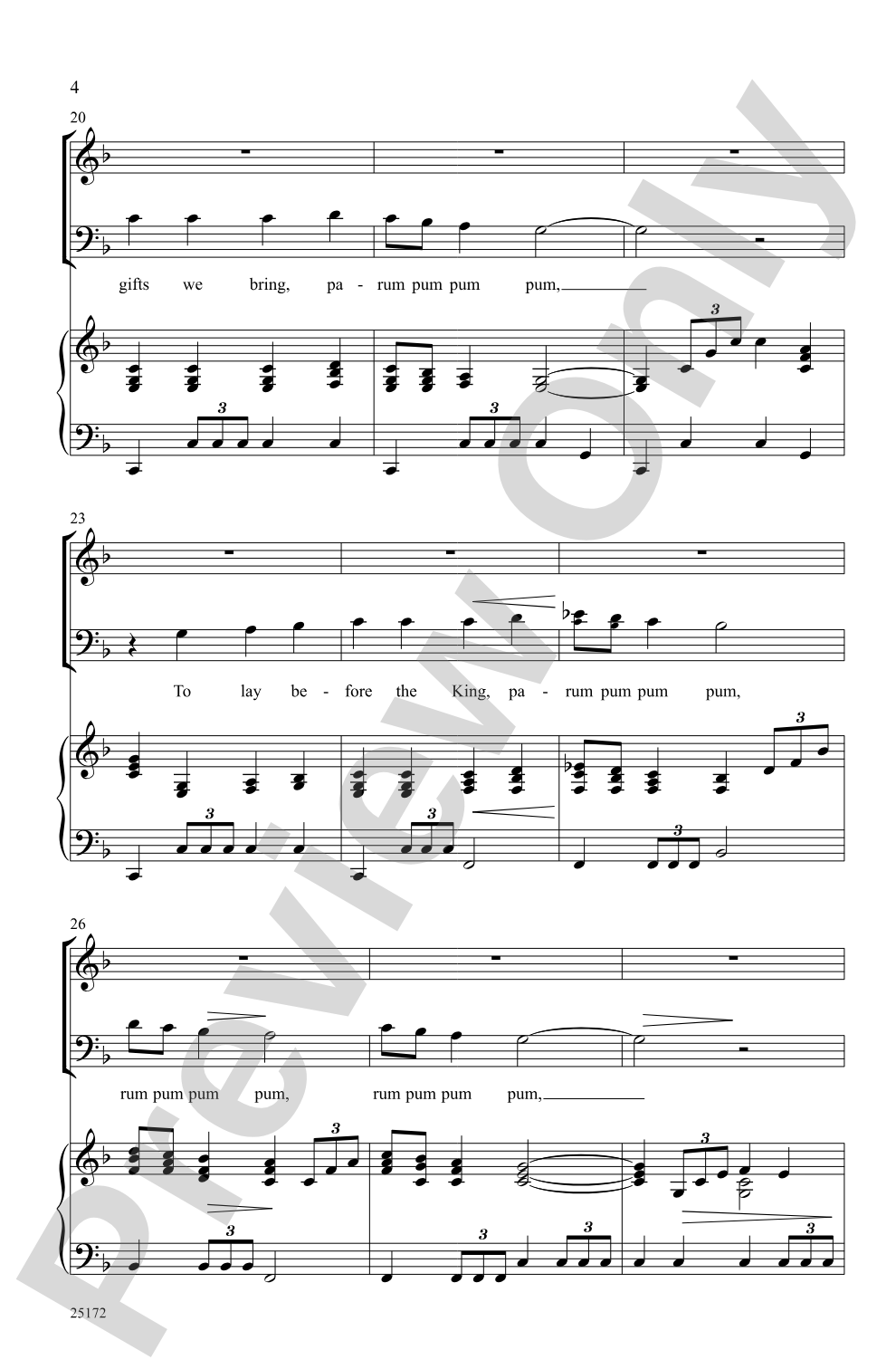
One of the most popular and most performed Christmas songs has been treated with great care by Mark Hayes. This arrangement respects the simplicity of this beloved holiday number, yet still makes it soar. It's a must for any holiday performance, from elementary choirs through adult.


The Little Drummer Boy: SSAB Choral Octavo isn't in MakeMusic Cloud just yet...but it could be. Let us know you'd like to see it, and you'll help shape what comes next. In the meantime, start a free trial and dive into thousands of interactive titles your students can play along with today.
Request This Title
Tell us you want it.
Start Your Free Trial
Explore everything that's ready to play right now.
Sample Audio
1
Audio File
--:--
0:00
0:00
Sample Video
No sample videos found.
Additional Details
Series:
Alfred Pop Choral Series
Publisher:
Alfred Music
Page Count:
16
SKU:
00-PO-0006559
More about this title
About the Composer: Katherine K. Davis
Katherine K. Davis composed "The Little Drummer Boy" in 1941, creating what would become one of the most enduring Christmas songs in the American popular canon. Her work has touched generations of listeners across religious and secular contexts, and her gift for melody remains instantly recognizable decades after its composition.
Why we love this
Mark Hayes has managed the rare feat of honoring this song's essential simplicity while giving it genuine choral architecture. The arrangement lives in that perfect middle ground where elementary choirs can succeed without feeling patronized, and mature ensembles find something musically substantial to sink their teeth into. The SSAB voicing keeps it accessible while still offering textural interest.
What to expect
The arrangement unfolds with quiet reverence, building from intimate verses into fuller textures that feel earned rather than artificial. There's a timeless quality to the harmonic language that honors the song's heritage while remaining fresh for contemporary singers. The piece carries both devotional weight and genuine warmth.
Who it's for
This arrangement works for choirs spanning wide age and experience ranges, from upper elementary through adult ensembles. Directors seeking a Christmas piece that combines audience recognition with genuine musicianship will find exactly what they need here. It's equally at home in school winter concerts, community performances, and church holiday services.
How to get the most out of it
- Maintain a steady, almost processional tempo that lets the melody breathe rather than rushing the phrases; the song's power comes from its restraint.
- Balance the accompaniment parts carefully so they support rather than overshadow the primary line; use the recorded accompaniment to find the right dynamic relationships.
- Shape the dynamics across the entire form to build toward the climax without losing the piece's quiet dignity in earlier verses.
- Pay attention to blend between the three parts in the SSAB setting, particularly where the voicing creates harmonic depth beneath the melody.
How to use it
Position this as an anchor piece in a Christmas concert's second half, where it can provide a moment of sincerity among more energetic holiday selections. It pairs particularly well with other Mark Hayes arrangements or with contrasting secular holiday music that benefits from its emotional grounding. The piece works year-round in a liturgical setting and becomes a centerpiece for December programming in most school and church contexts.
Skills your students will build
- Sustaining long phrases with consistent breath support and tone quality
- Blending three independent vocal lines while maintaining individual part clarity
- Shaping dynamics across a complete arc from verse to climax
- Following a recorded accompaniment while maintaining ensemble independence
- Balancing melody with harmonic support parts