
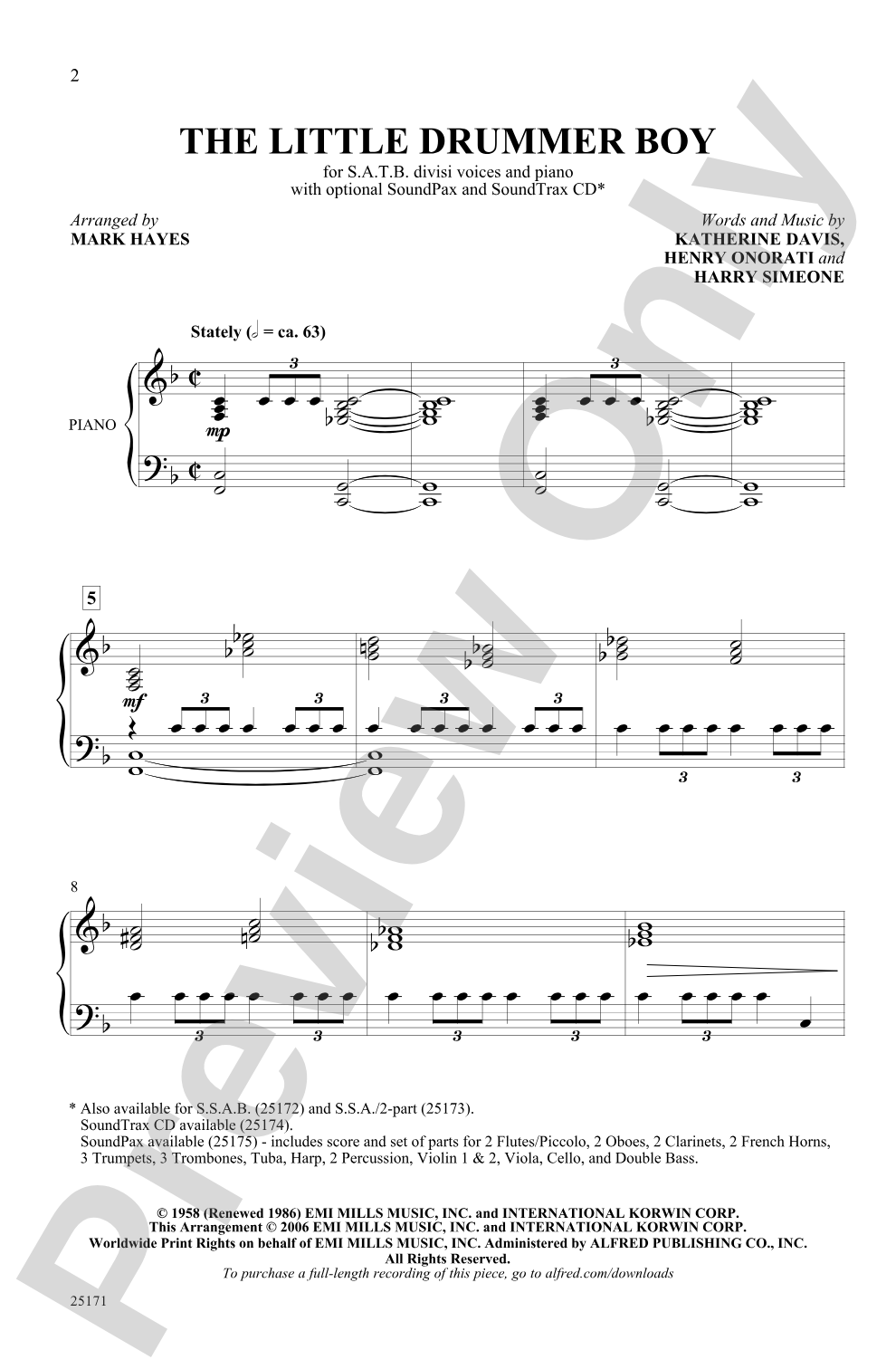
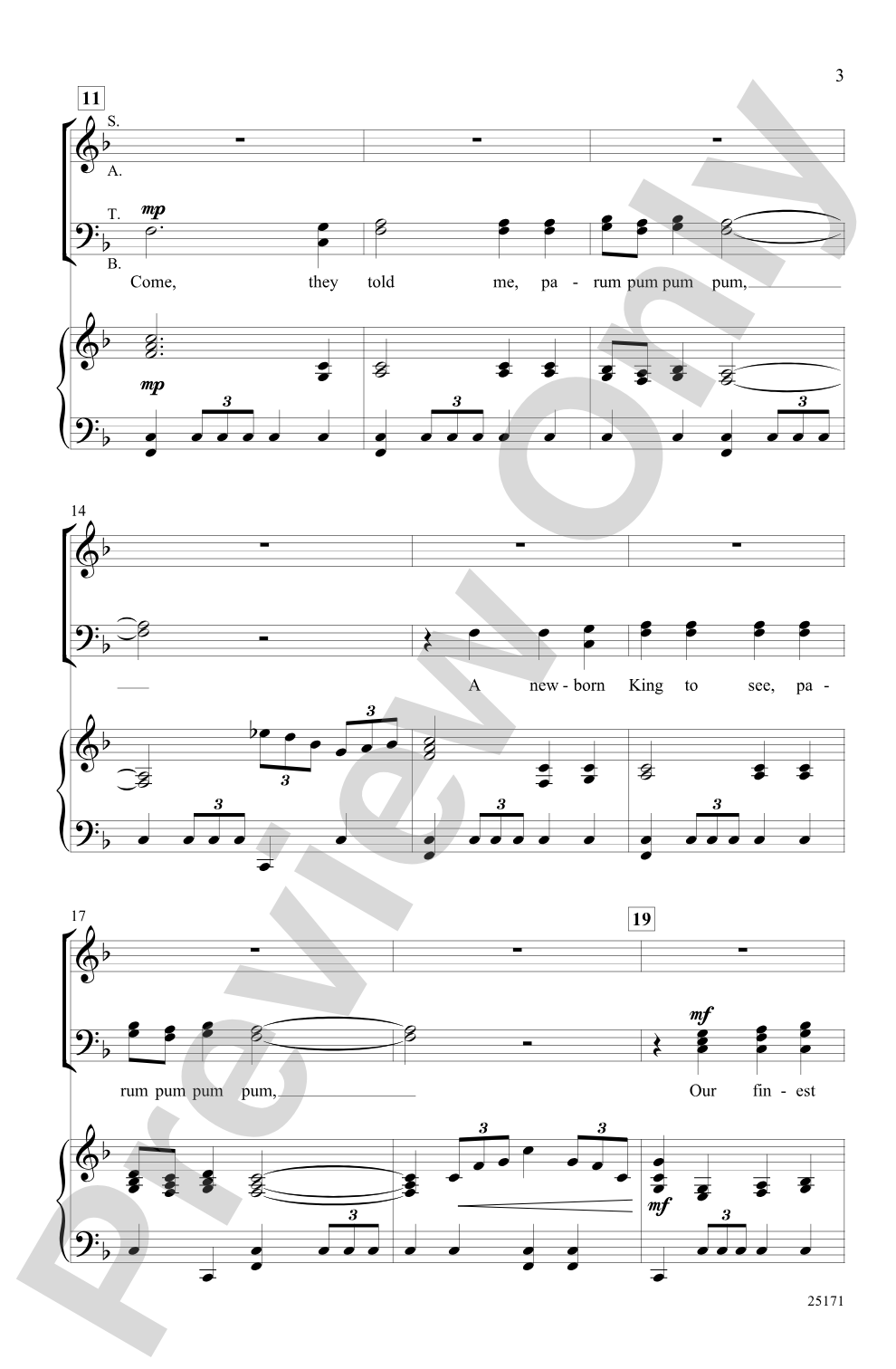
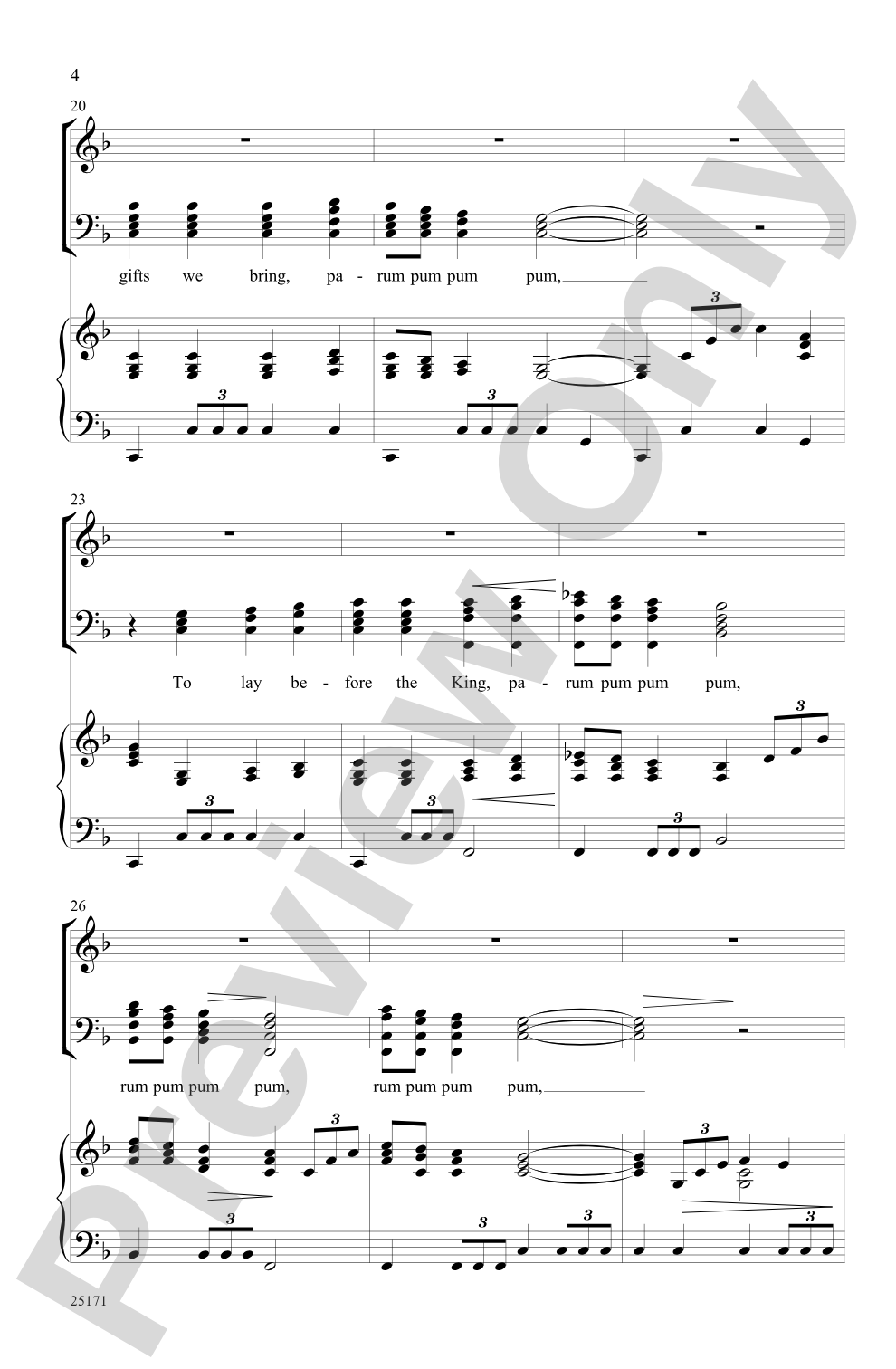

The Little Drummer Boy: SATB Choral Octavo
Words and music by Katherine K. Davis, Henry Onorati, and Harry Simeone / arr. Mark Hayes
Item: 00-PO-0002245
$2.25
Minimum order quantity: 20 copies
Pickup currently not available
Related Items
The Little Drummer Boy: SSAB Choral Octavo |
$2.95
|
View | |
The Little Drummer Boy: SSA / 2-Part Choral Octavo |
$2.95
|
View | |
The Little Drummer Boy: TTBB Choral Octavo |
$2.00
|
View | |
The Little Drummer Boy: SoundTrax Digital Audio Download |
$27.99
|
View | |
The Little Drummer Boy: SATB Choral Octavo |
$2.25
|
View | |
The Little Drummer Boy: SSA / 2-Part Choral Octavo |
$2.95
|
View | |
The Little Drummer Boy: TTBB Choral Octavo |
$2.00
|
View | |
The Little Drummer Boy: Choral Octavo SoundTrax CD |
$27.99
|
View | |
The Little Drummer Boy: Choral SoundPax |
$50.00
|
View |
Description
One of the most popular and most performed Christmas songs has been treated with great care by Mark Hayes. This arrangement respects the simplicity of this beloved holiday number, yet still makes it soar. It's a must for any holiday performance, from elementary choirs through adult.


The Little Drummer Boy: SATB Choral Octavo isn't in MakeMusic Cloud just yet...but it could be. Let us know you'd like to see it, and you'll help shape what comes next. In the meantime, start a free trial and dive into thousands of interactive titles your students can play along with today.
Request This Title
Tell us you want it.
Start Your Free Trial
Explore everything that's ready to play right now.
Sample Audio
1
Audio File
--:--
0:00
0:00
Sample Video
Additional Details
Series:
Alfred Pop Choral Series
Publisher:
Alfred Music
Page Count:
16
SKU:
00-PO-0002245
More about this title
About the Composer: Katherine K. Davis
Katherine K. Davis (1892-1980) composed "The Little Drummer Boy" with lyricists Henry Onorati and Harry Simeone in 1941. The song became a standard of American Christmas repertoire, recorded by artists across multiple genres and performed in countless holiday concerts and films. Davis's gift for melody and her understanding of how music could reach broad audiences shaped this carol into one of the most enduring winter celebrations in popular music.
As a composer, Davis worked across sacred and popular idioms, always prioritizing accessibility without sacrificing musicality. Her ability to create songs that sounded simple yet felt complete made her work invaluable to music educators seeking repertoire that engaged singers and audiences alike.
Why we love this
Mark Hayes's treatment honors the carol's modest origins while giving it genuine harmonic depth and voice leading that rewards singers without overwhelming them. His arrangement walks the line between familiarity and freshness, which means audiences hear something they love while your choir discovers real musicality in every measure. For directors programming holiday concerts across age groups, this octavo delivers that rare combination of immediate accessibility and artistic substance.
What to expect
The arrangement opens with quiet reverence and grows into a full, confident sound without ever losing the intimacy at its heart. Hayes's harmonies have a warm, almost golden quality that makes each verse feel like coming home to something cherished. The piece radiates hope and simplicity in equal measure, reminding singers and listeners why this carol has endured for more than eighty years.
Who it's for
This arrangement serves choirs at every level, from elementary and middle school ensembles making their first foray into SATB literature to experienced adult choirs seeking a holiday standard that connects with audiences. Directors in church music programs, school concert series, and community choruses will find this piece both singable and substantially rewarding for their singers.
How to get the most out of it
- Let the melody sit naturally in the soprano and alto lines rather than forcing dramatic expression onto the opening verse; the song's power comes from its restraint and the warmth of simple truth.
- Balance the tenor and bass lines carefully during the harmonic passages, especially where Hayes adds depth to what listeners expect as a straightforward tune.
- Use the recorded accompaniment to establish tempo and phrasing consistently across rehearsals, then gradually move the choir toward independence in performance.
- Shape the dynamic arc across all four verses so each repetition feels purposeful rather than static; small, deliberate changes in volume and articulation prevent the familiar melody from feeling worn.
How to use it
Position this as a centerpiece in your holiday concert programming, either as a standalone feature or as part of a longer seasonal medley that contrasts it with more contemporary or complex carols. It works equally well as a closing number that leaves audiences with a song they'll humming for days, or as an opening gesture that sets a tone of warmth and authenticity for the rest of your concert.
Skills your students will build
- SATB voice part independence and balance
- Sustaining melodic line through changes in harmony
- Shaping phrasing in familiar, repetitive material
- Intonation in close harmonies
- Dynamic control and expression without oversinging