

The Last Rose of Summer: SSA Choral Octavo
Arr. Greg Gilpin
Item: 00-PO-0003965
$2.25
Minimum order quantity: 20 copies
Pickup currently not available
Description
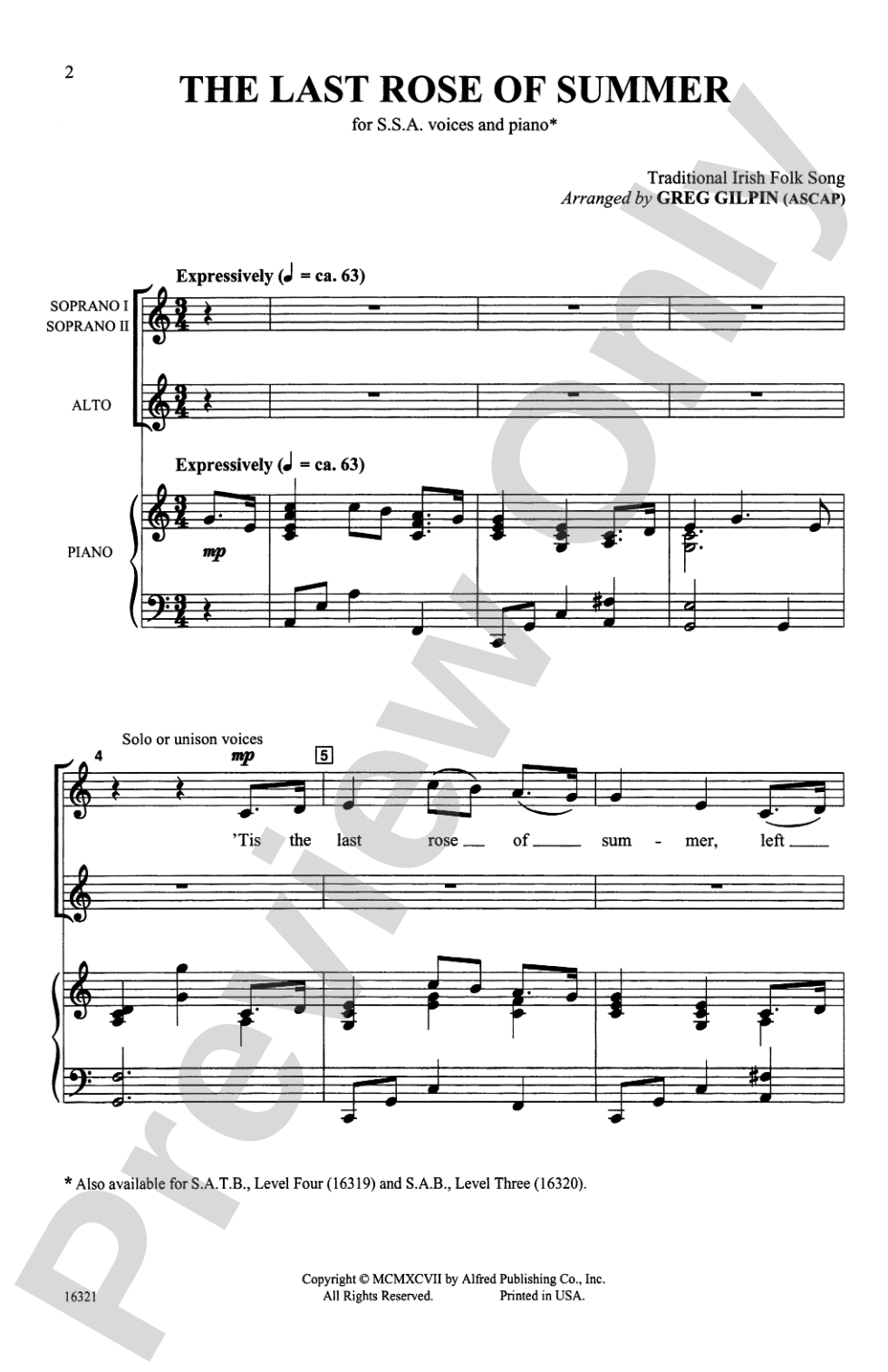
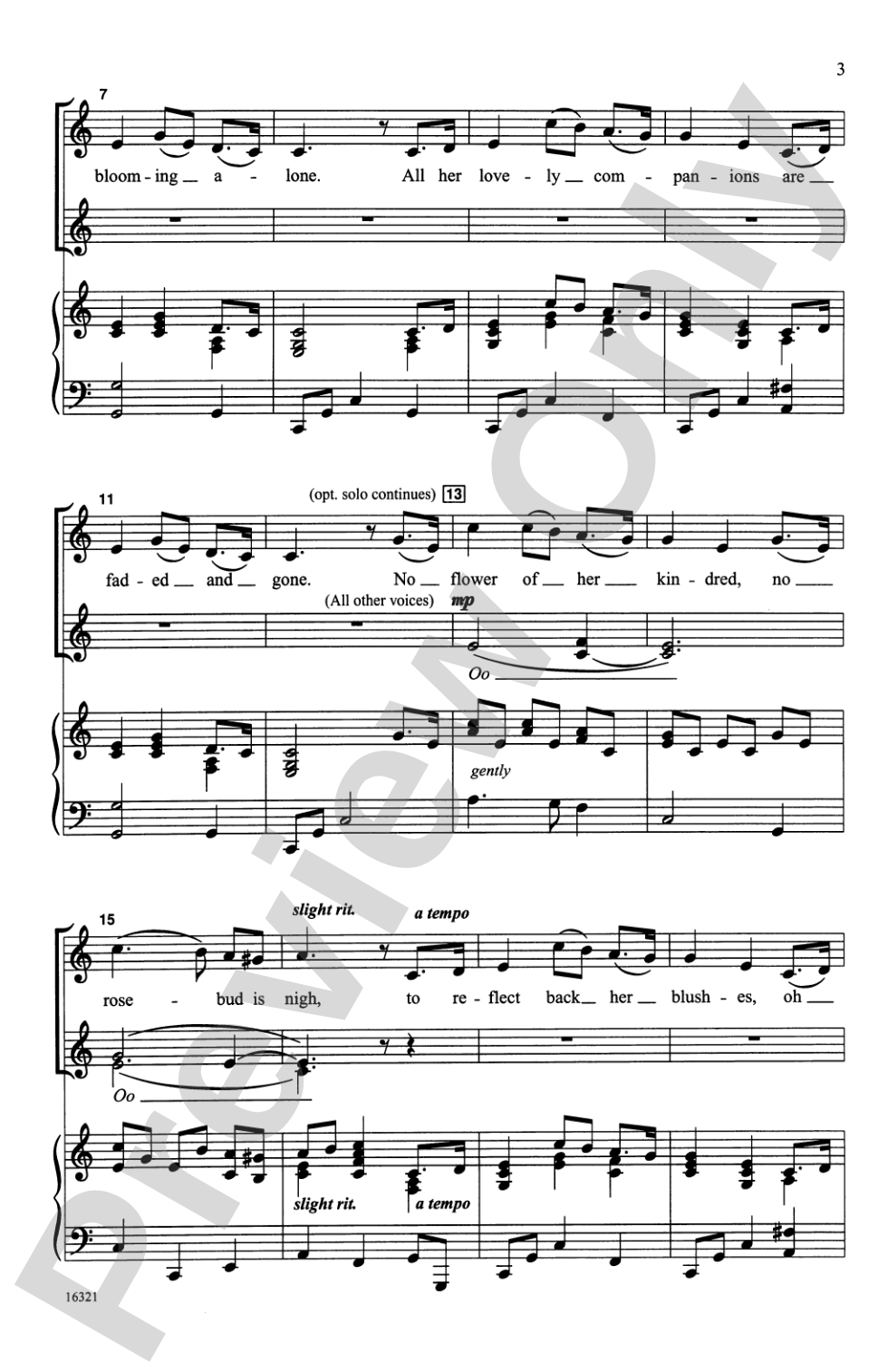
A tender and graceful arrangement by Greg Gilpin of a captivating Irish ballad. This simple, yet deceptively subtle arrangement includes quite a bit of unison and 2-part writing, saving the mixed part writing for powerful effect. The piano accompaniment is a classic and adds much to this arrangement's appeal.


The Last Rose of Summer: SSA Choral Octavo isn't in MakeMusic Cloud just yet...but it could be. Let us know you'd like to see it, and you'll help shape what comes next. In the meantime, start a free trial and dive into thousands of interactive titles your students can play along with today.
Request This Title
Tell us you want it.
Start Your Free Trial
Explore everything that's ready to play right now.
Sample Audio
No sample audio found.
Sample Video
No sample videos found.
Additional Details
Series:
Alfred Archive Edition: Alfred Choral Designs
Publisher:
Alfred Music
Page Count:
8
SKU:
00-PO-0003965
More about this title
About the Arranger: Greg Gilpin

Greg Gilpin combines a prolific career as a choral composer and arranger with conducting experience at prestigious venues including Carnegie Hall, Lincoln Center, and the Sydney Opera House. His work has earned ASCAP recognition, and he currently directs educational choral publications for Shawnee Press while maintaining an active presence in the recording industry.
Beyond the concert hall, Gilpin has expanded his professional reach as a certified financial coach and organizing consultant, work that has brought him television appearances on network affiliates and the popular series "Hoarders." In 2021, he composed the award-winning score for the short film "Rosie's Rescue" and collaborated with soprano Angela Brown on a new arrangement of "What Child is This?" premiered with the Indianapolis Symphonic Choir. He holds membership in ACDA, NAfME, SAG-AFTRA, and is a Life Loyal Member of Phi Mu Alpha Sinfonia.
Why we love this
Gilpin's pacing here is what makes this arrangement sing. He resists the temptation to voice every phrase in full harmony; instead, stretches of unison and two-part writing build anticipation for the moments when the full SSA texture arrives. The result is an arrangement that feels intimate and unhurried, never overselling this beloved Irish melody. The piano part doesn't simply accompany—it shapes the emotional arc throughout.
What to expect
The melody unfolds with quiet dignity, familiar yet fresh through Gilpin's careful orchestration of texture. There's a gentle melancholy here, the kind that invites audiences into an intimate emotional space rather than demanding their attention. The arrangement honors the ballad's reflective character while allowing moments of quiet warmth to emerge.
Who it's for
This octavo works beautifully for concert choirs and festival ensembles with developing singers who benefit from thoughtful voicing that builds technique without overwhelming complexity. Directors seeking repertoire that combines accessibility with emotional substance will find this arrangement rewards both rehearsal investment and performance.
How to get the most out of it
- Shape the unison and two-part sections with care. These passages aren't filler; they create the textural contrast that makes the fuller voicings resonate. Keep the tone consistent across all parts during these moments.
- Find the arc of the piece through the piano line. Gilpin's accompaniment is integral to the arrangement, not decorative. Your singers should hear it as a collaborative voice rather than mere support.
- Balance warmth with clarity in the mixed voicing sections. The SSA texture can blur if middle voices don't maintain independence from the soprano line above them.
- Allow space for the Irish character to breathe. This melody carries emotional weight without needing pushed dynamics or rushed tempos. Let the tender qualities emerge naturally.
How to use it
This piece anchors a concert devoted to folk traditions, or place it as a reflective moment between more energetic selections. Its concert and festival designation makes it appropriate for competitive and non-competitive performances alike. The modest eight-page length and accessible voicing also recommend it for spring or fall programs where you need quality repertoire that won't consume excessive rehearsal time.
Skills your students will build
- Maintaining textural independence between unison, two-part, and three-part writing
- Phrasing across longer melodic lines with consistent tone quality
- Listening to and balancing within the SSA voicing while maintaining soprano leadership
- Interpreting folk melody with stylistic authenticity and emotional restraint