

The Last Rose of Summer: SAB Choral Octavo
Arr. Greg Gilpin
Item: 00-PO-0003964
$2.25
Minimum order quantity: 20 copies
Pickup currently not available
Description
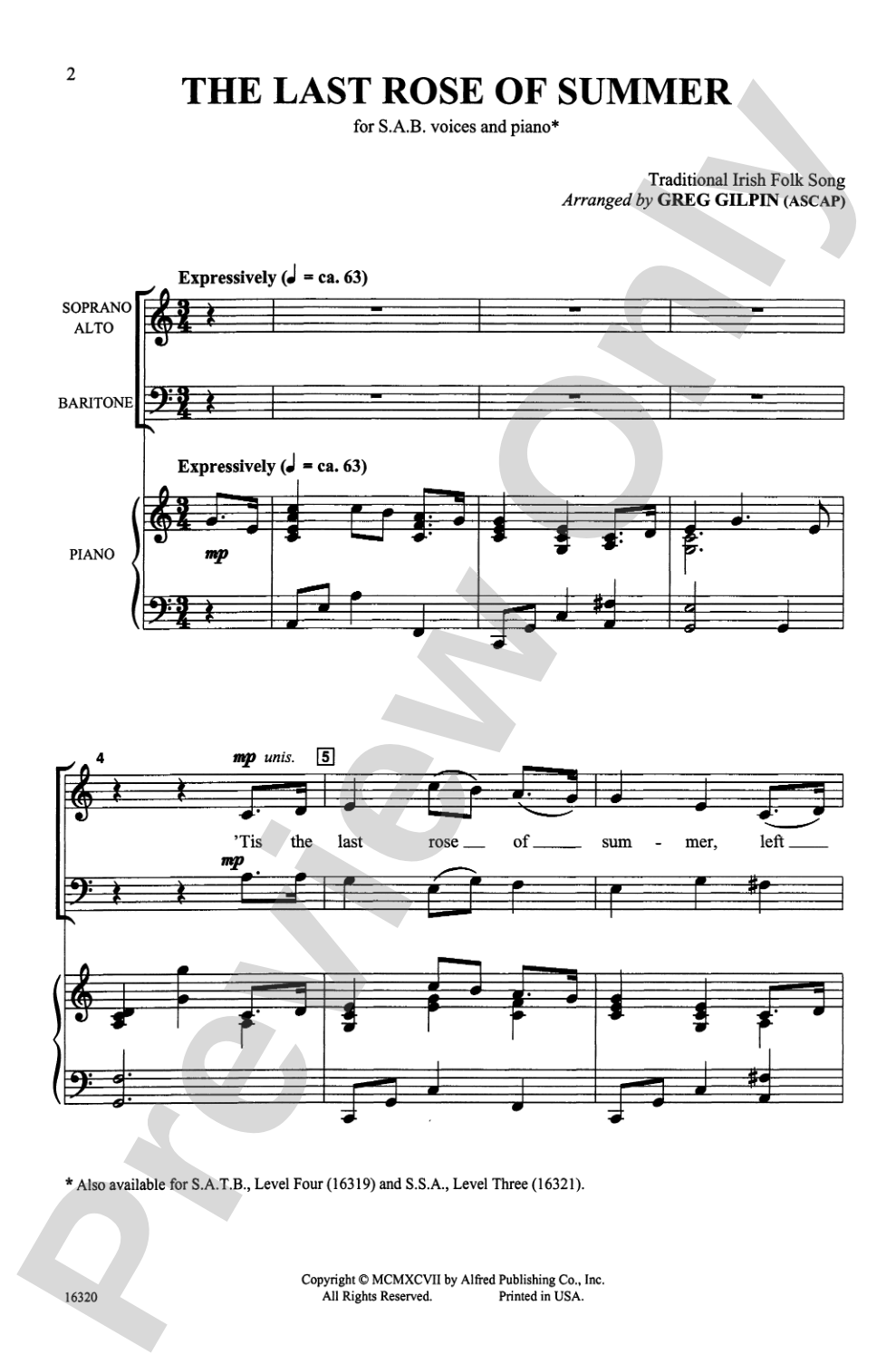
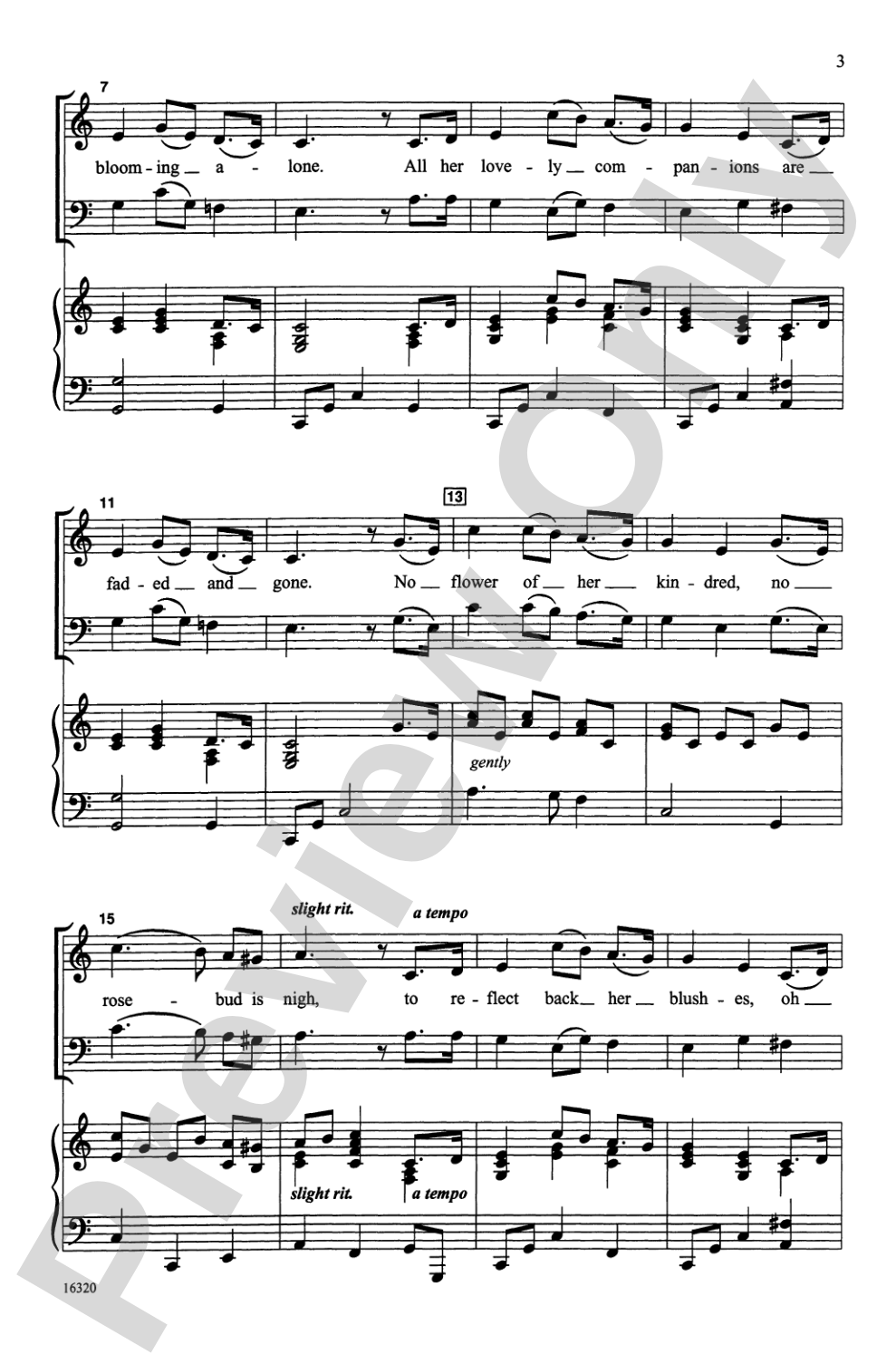
A tender and graceful arrangement by Greg Gilpin of a captivating Irish ballad. This simple, yet deceptively subtle arrangement includes quite a bit of unison and 2-part writing, saving the mixed part writing for powerful effect. The piano accompaniment is a classic and adds much to this arrangement's appeal.


The Last Rose of Summer: SAB Choral Octavo isn't in MakeMusic Cloud just yet...but it could be. Let us know you'd like to see it, and you'll help shape what comes next. In the meantime, start a free trial and dive into thousands of interactive titles your students can play along with today.
Request This Title
Tell us you want it.
Start Your Free Trial
Explore everything that's ready to play right now.
Sample Audio
No sample audio found.
Sample Video
No sample videos found.
Additional Details
Series:
Alfred Archive Edition: Alfred Choral Designs
Publisher:
Alfred Music
Page Count:
8
SKU:
00-PO-0003964
More about this title
About the Arranger: Greg Gilpin

Greg Gilpin is an ASCAP award-winning choral composer and arranger whose work has been performed at prestigious venues across three continents, including Carnegie Hall, Lincoln Center, and the Sydney Opera House. He serves as Director of Educational Choral Publications for Shawnee Press and brings decades of experience as a choral conductor and recording industry musician to his arrangements.
Beyond the concert hall, Gilpin has expanded his creative reach into film scoring and television, earning Best Score recognition for the short film "Rosie's Rescue" and appearing on network broadcasts. A Life Loyal Member of Phi Mu Alpha Sinfonia and active member of ACDA and NAfME, he continues to compose, conduct, and mentor within the choral music community.
Why we love this
Gilpin's arrangement respects the melody's inherent beauty while building structural drama through his selective use of mixed voicing. The unison and two-part sections give singers room to breathe and connect emotionally with the text, and the calculated shift to three-part writing becomes genuinely affecting rather than routine. For contest or festival programming, this balance of accessibility and musical substance makes it a piece that both challenges and satisfies.
What to expect
Tender and reflective, with the quality of a folk song that has been cherished across generations. The arrangement unfolds with grace, allowing the melody to speak plainly before gradually deepening its harmonic environment, creating moments of quiet power without sacrificing the ballad's essential gentleness.
Who it's for
Choirs with solid musicianship and secure intonation who are ready for literature that rewards careful interpretation. The SAB voicing makes it accessible to developing ensembles, while the arrangement's subtle architecture appeals to more advanced groups seeking contest or festival repertoire with genuine emotional depth.
How to get the most out of it
- Shape the unison passages with legit emotional weight; these moments carry the emotional core of the arrangement, so resist the urge to simply move through them.
- Let the piano accompaniment breathe and support rather than dominate; Gilpin's classic piano writing enhances the voices rather than competing for attention.
- Attend carefully to the transitions into and out of the mixed-voice sections; these shifts need to feel inevitable, not jarring.
How to use it
This arrangement works beautifully as a slower second selection in a mixed program, offering a tonal and textural contrast to more energetic pieces. Its length and straightforward appeal make it ideal for festival competitions, and its literary merit positions it equally well on concert programs featuring international or folk-influenced literature.
Skills your students will build
- Legit singing in unison with intonation control
- Blending and balance in two-part and three-part mixed writing
- Interpretive phrasing of folk melody with text expression
- Listening to harmonic shifts and responding with dynamic adjustment
- Understanding arrangement technique through selective use of voicing for emotional effect