
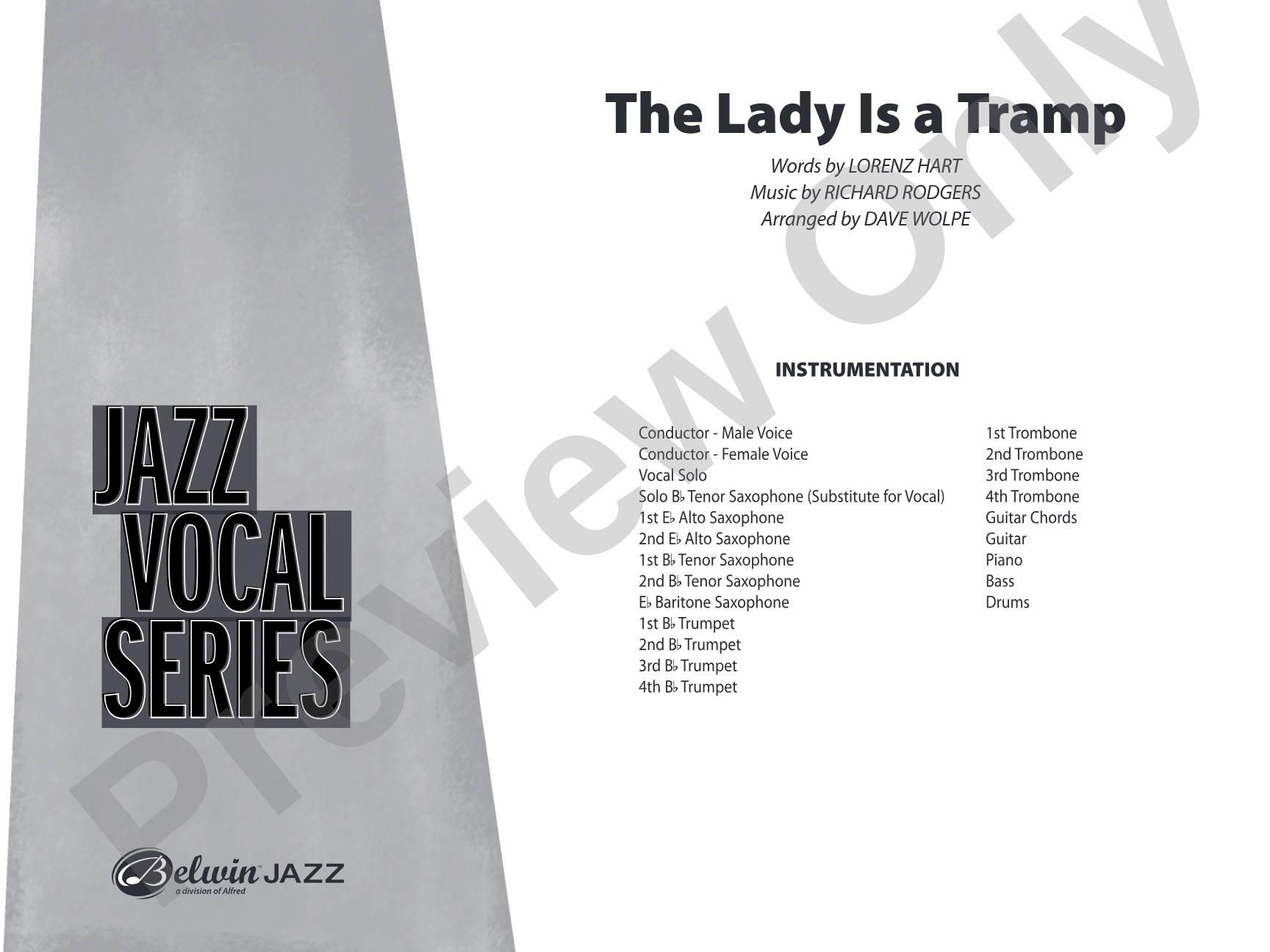

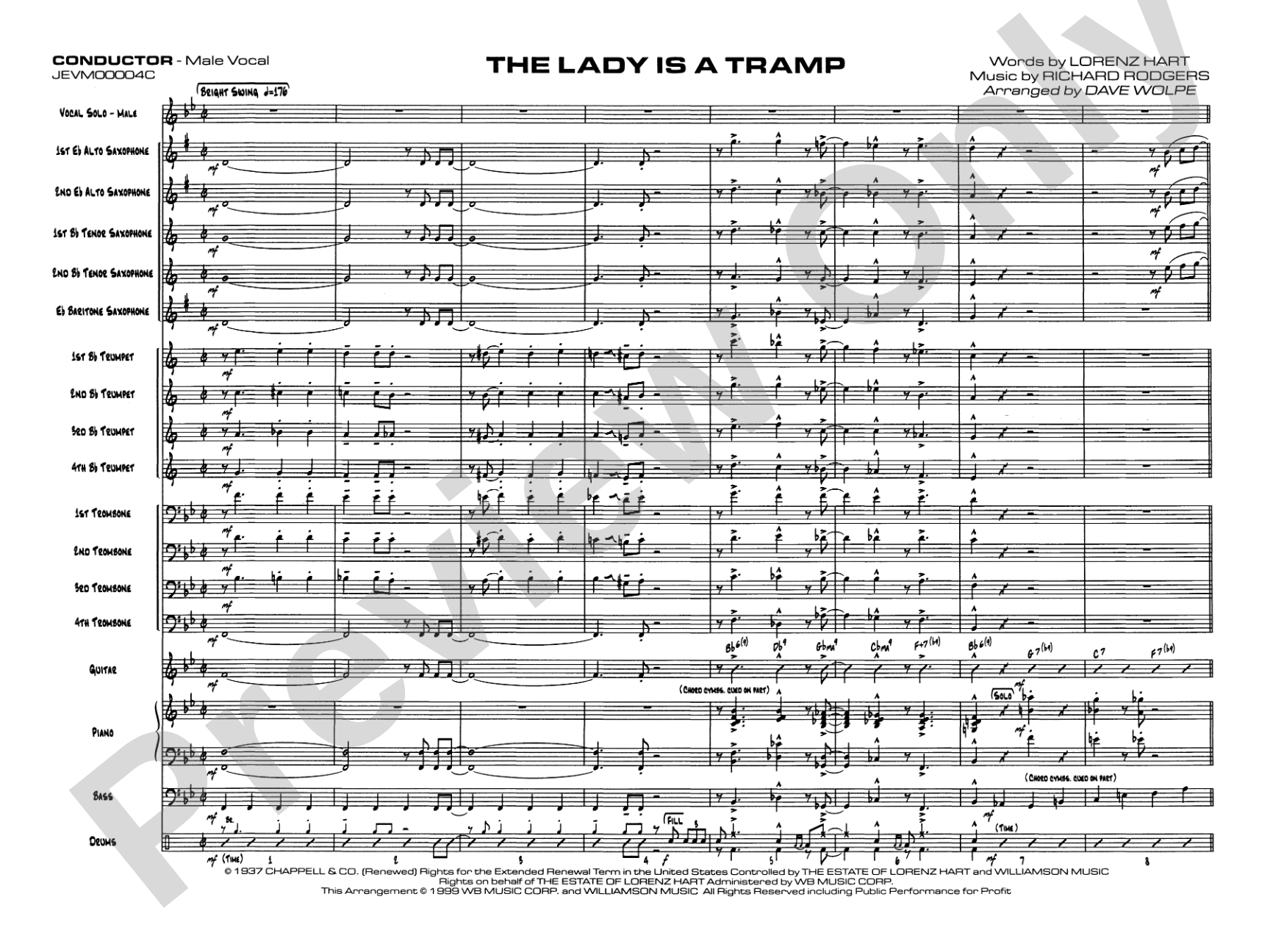
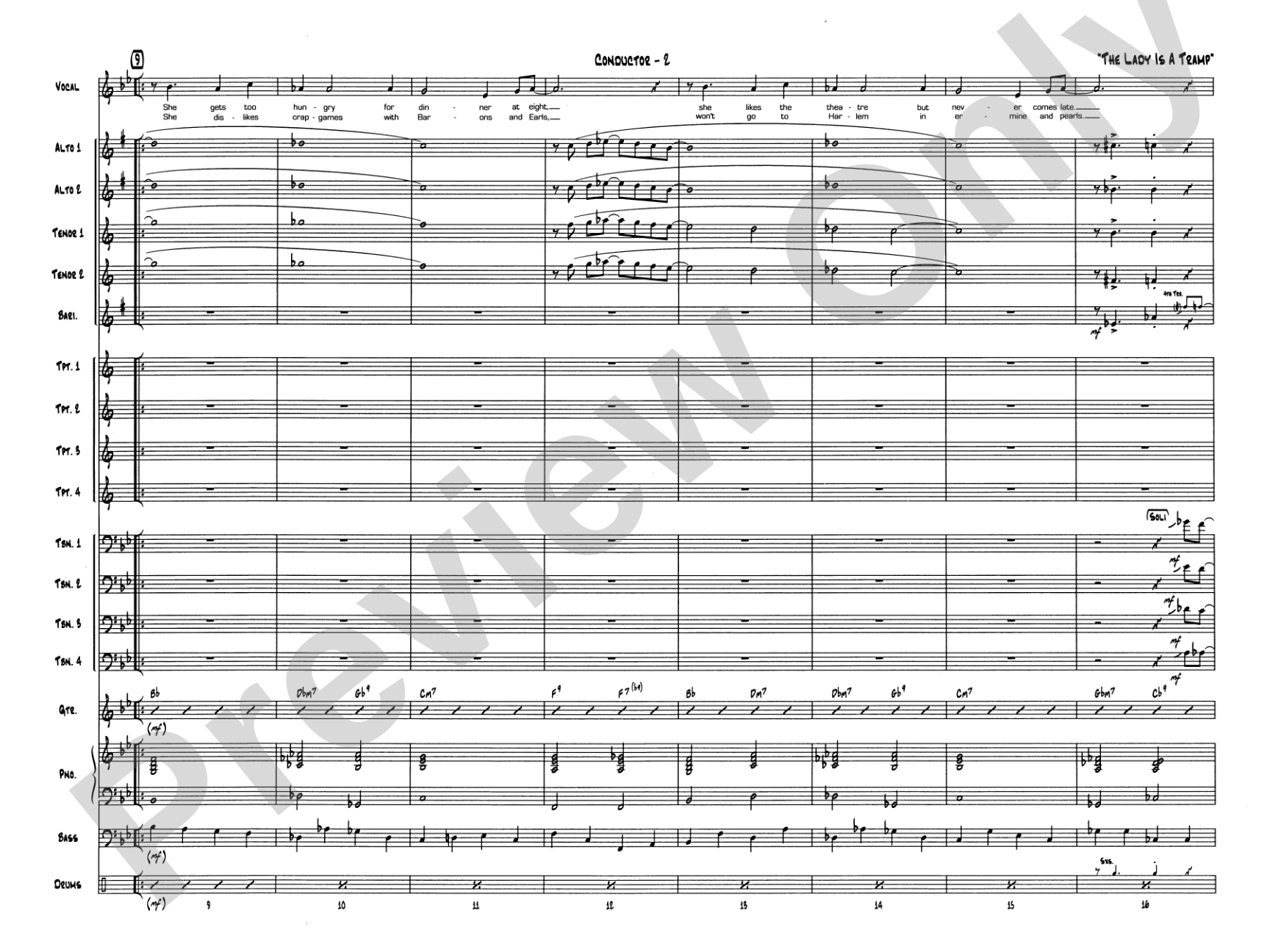
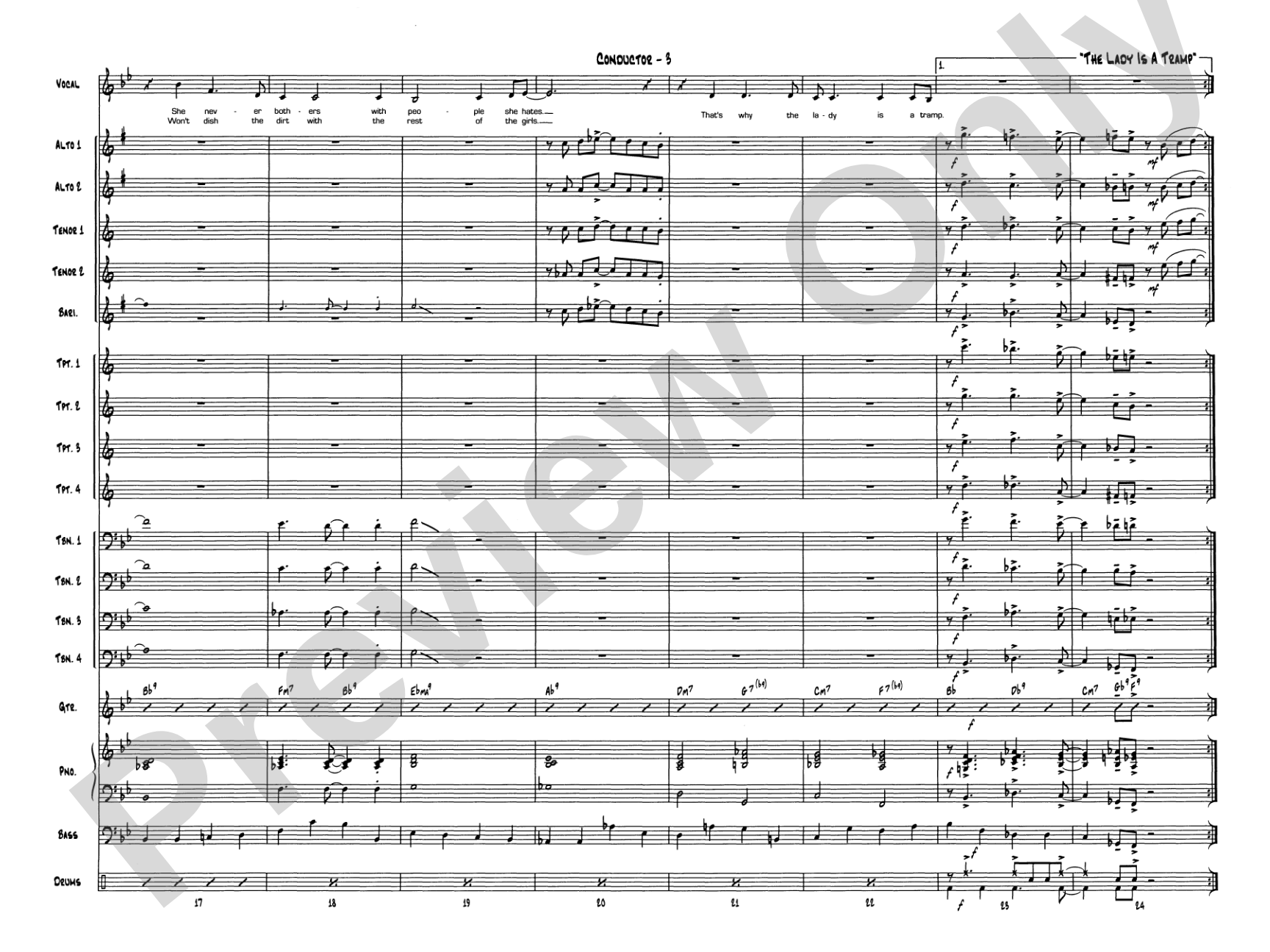
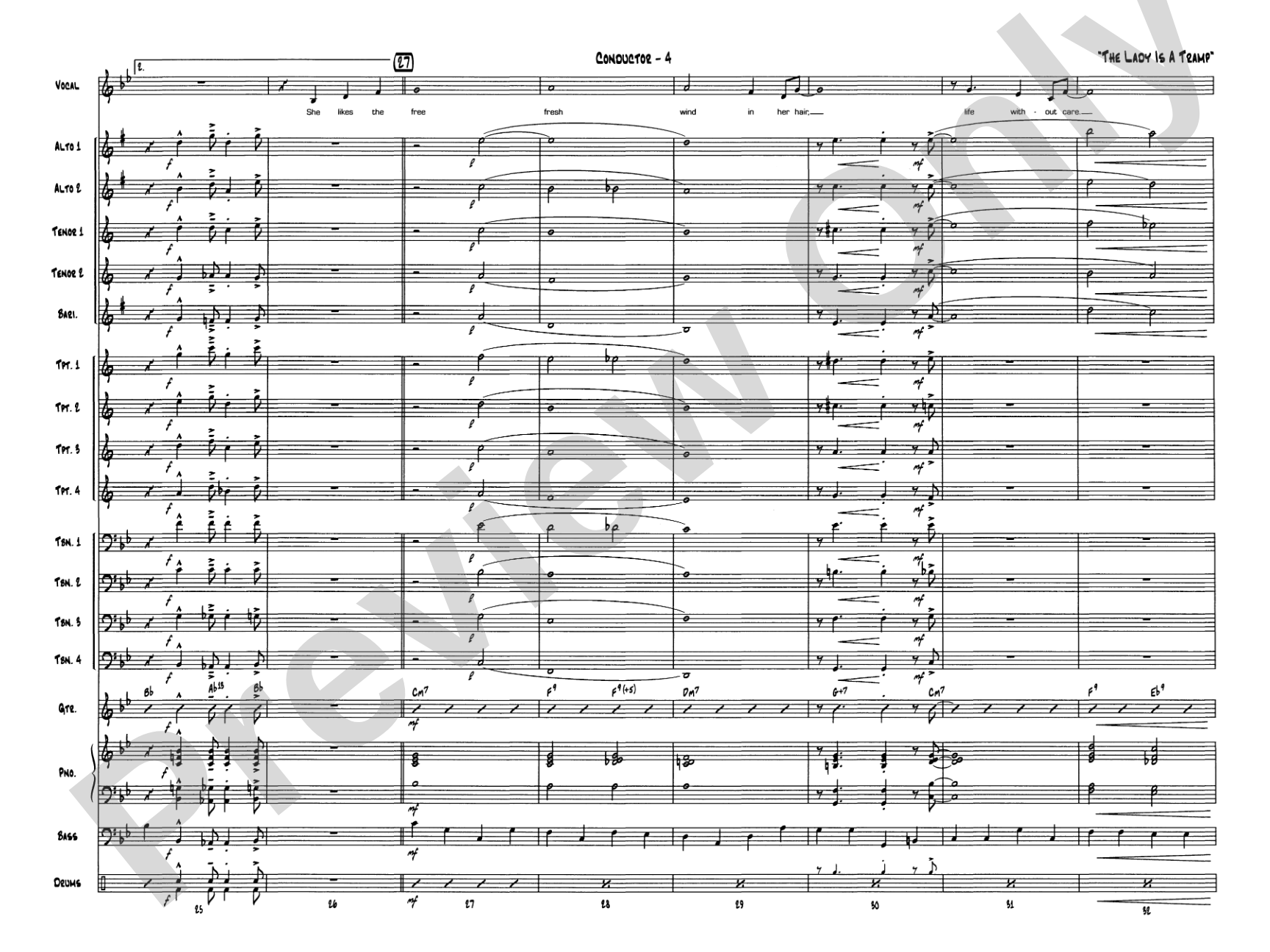
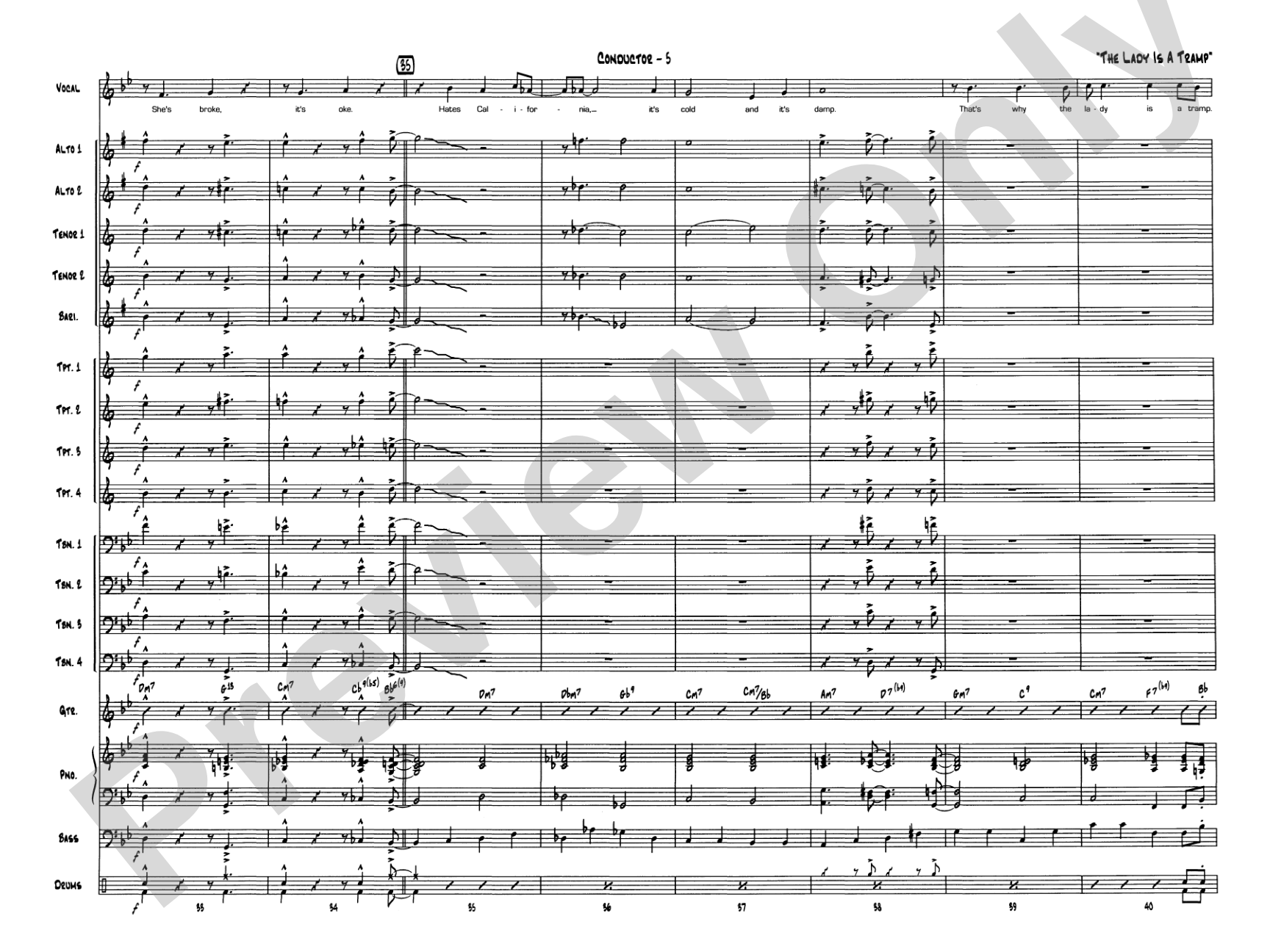
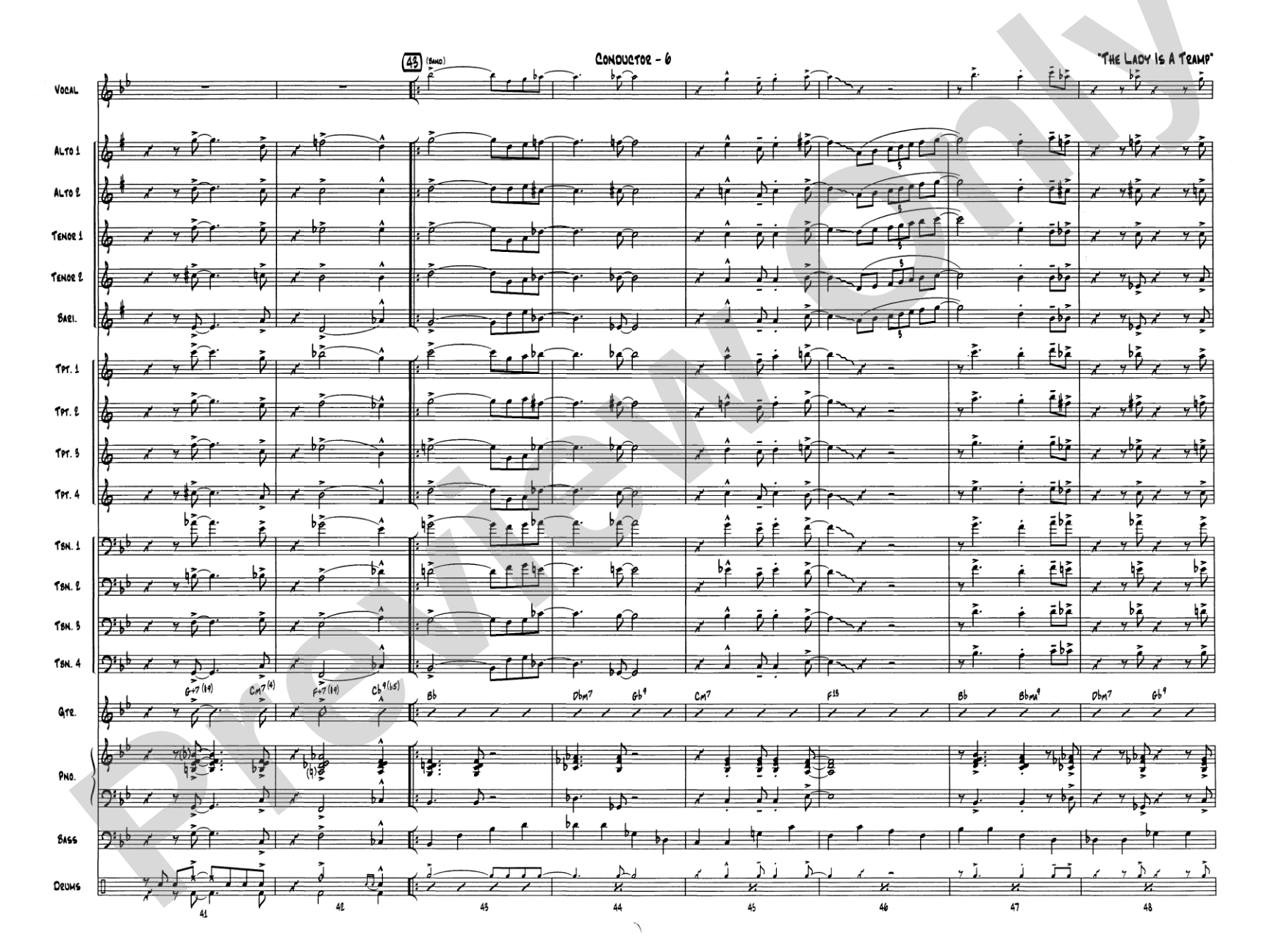
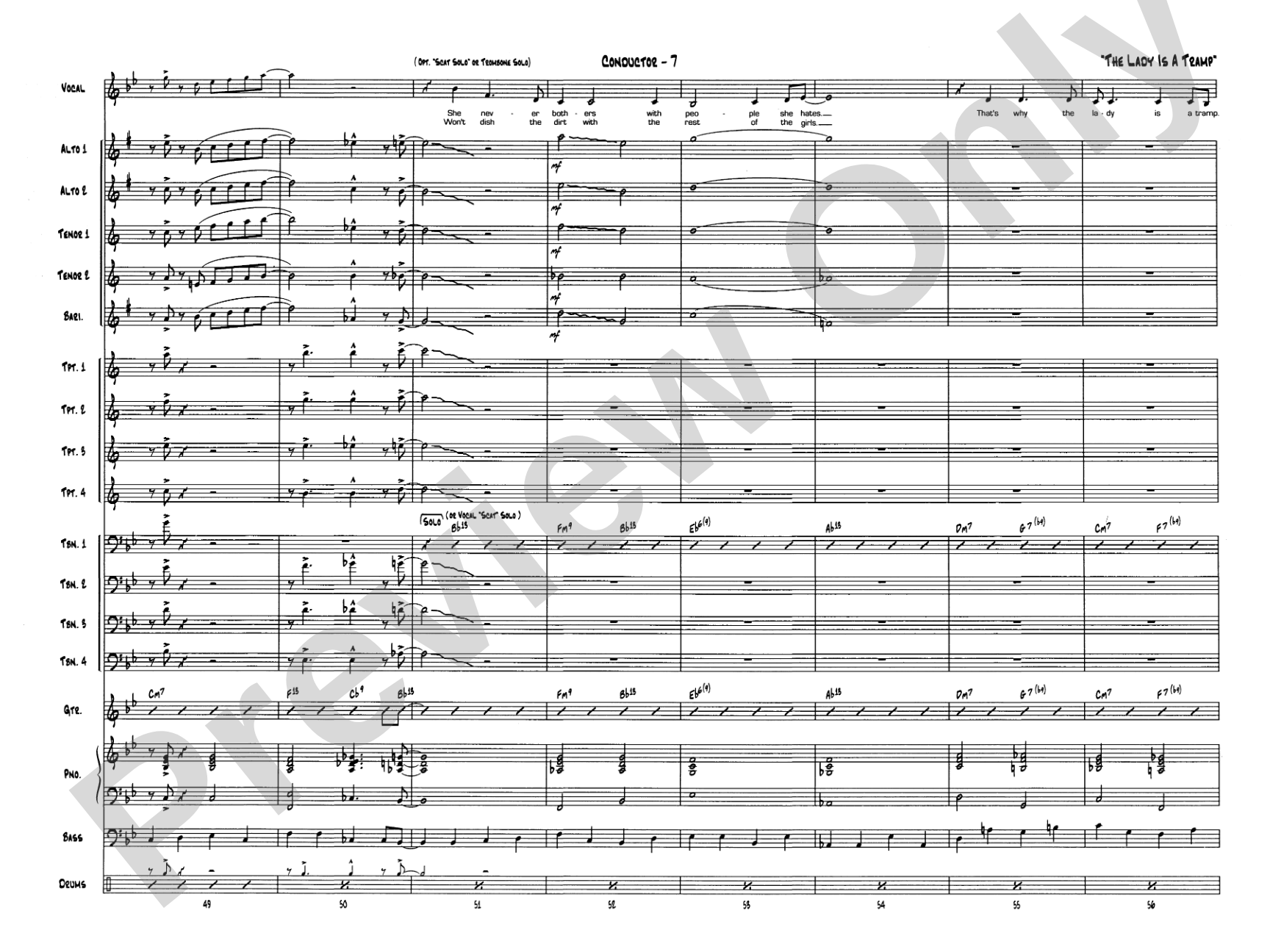
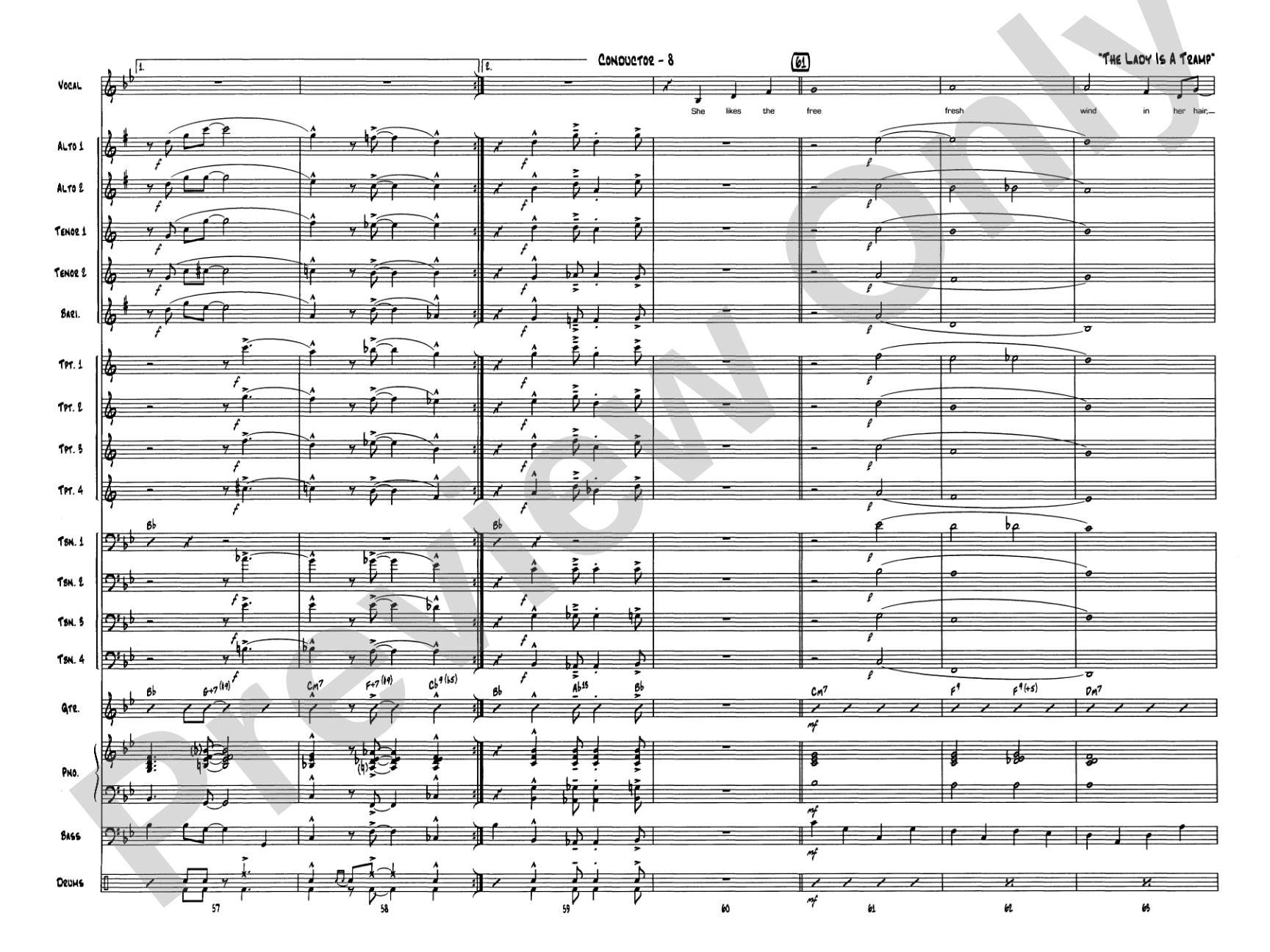
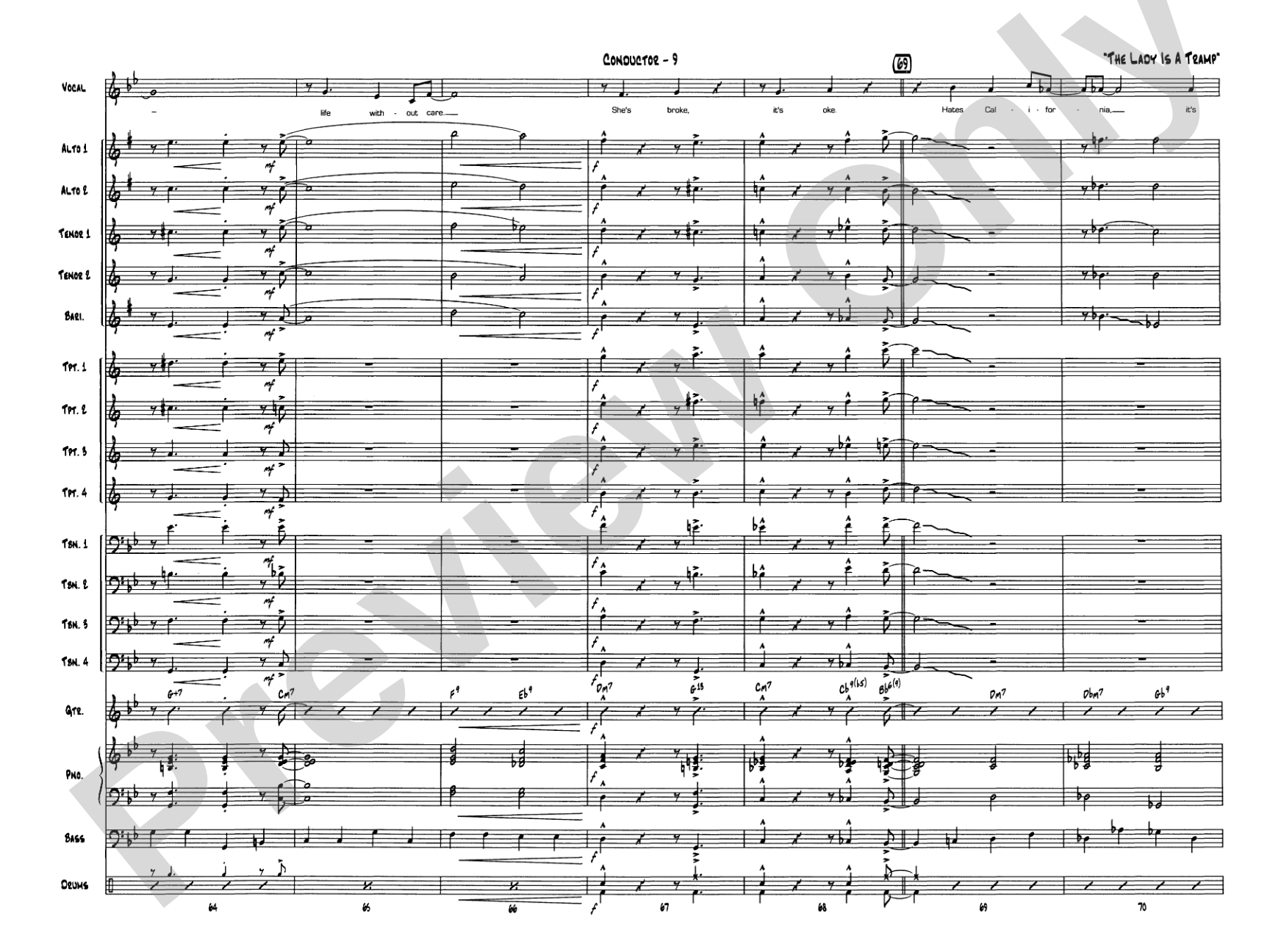
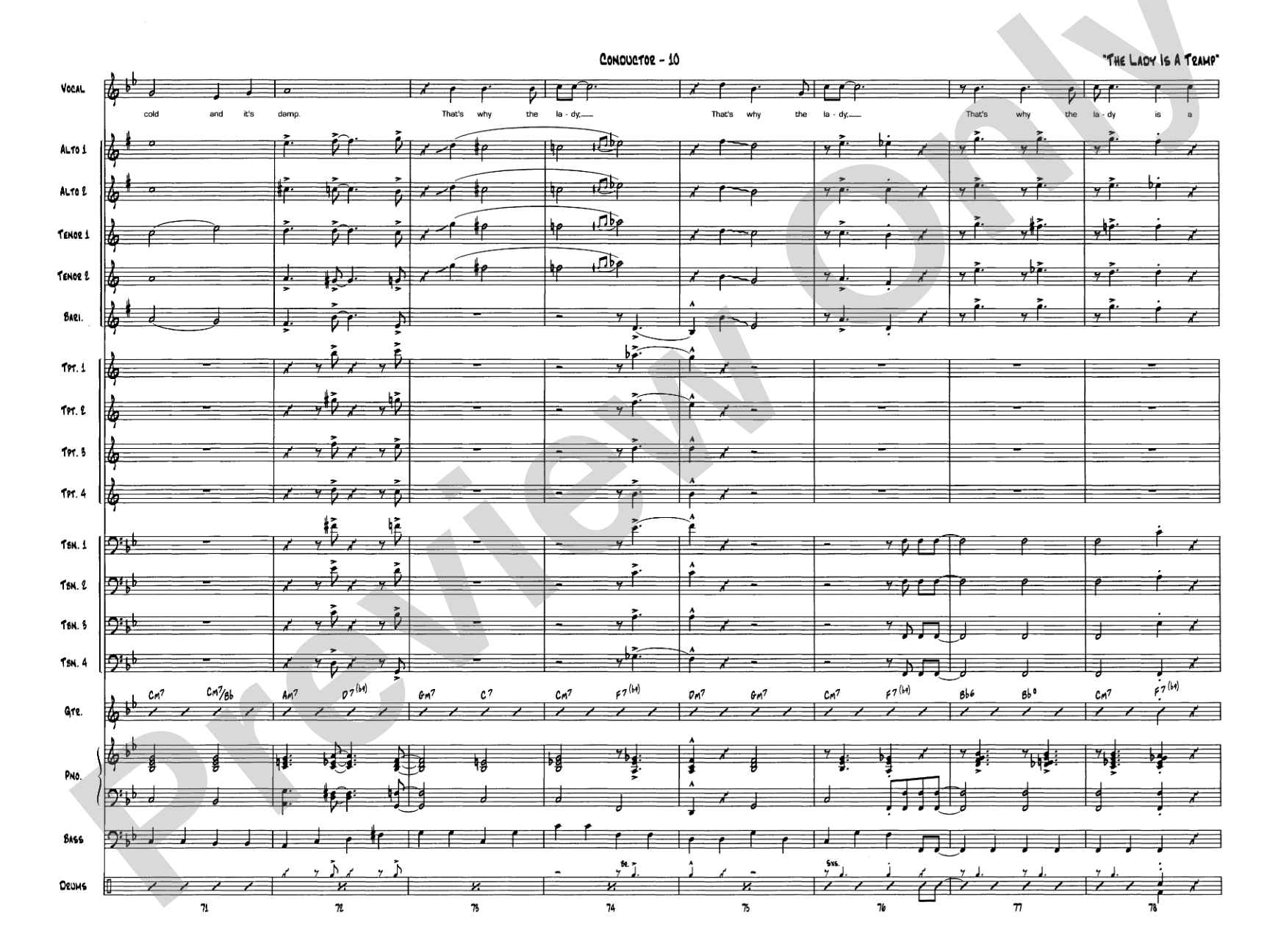
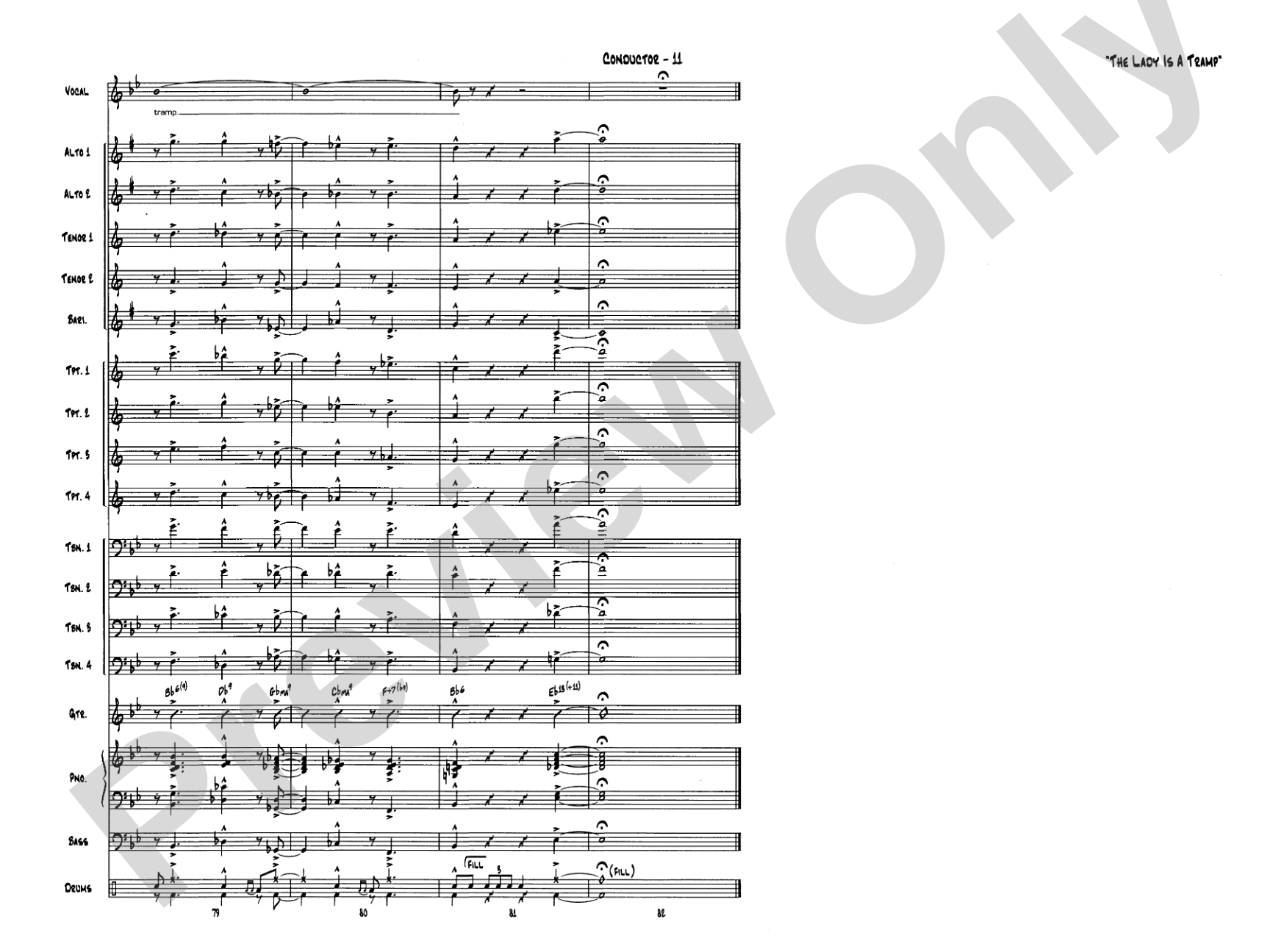




The Lady Is a Tramp: Vocal Solo with Jazz Ensemble Conductor Score & Parts
Vocal Feature
Arr. Dave Wolpe
Grade: 3 (Medium)
Item: 00-PK-0004986
$62.00
One moment…
Description
Another outstanding jazz vocal with jazz ensemble! This chart is totally flexible---it's written in two keys! The higher key usually works for your male vocalist and the lower key for your female vocalist; if not, just switch. It's that easy! In addition to the vocal solo, this swinging Rogers and Hart song has a trombone jazz solo (or optional scat vocal solo) and written written ensemble horn lines for the vocalist, both great opportunities to integrate your vocalist with the ensemble. Dave Wolpe thinks of everything, and he writes some of the best charts in the music business. Very effective! (Female key (low): G below middle C to third line B, treble clef---Male key (high): B-flat below middle C to fourth line D, treble clef)


The Lady Is a Tramp: Vocal Solo with Jazz Ensemble Conductor Score & Parts isn't in MakeMusic Cloud just yet...but it could be. Let us know you'd like to see it, and you'll help shape what comes next. In the meantime, start a free trial and dive into thousands of interactive titles your students can play along with today.
Request This Title
Tell us you want it.
Start Your Free Trial
Explore everything that's ready to play right now.
Sample Audio
1
Audio File
--:--
0:00
0:00
Sample Video
No sample videos found.
Additional Details
Series:
Jazz Vocal Series
Publisher:
Alfred Music
Page Count:
82
SKU:
00-PK-0004986
More about this title
About the Arranger: Dave Wolpe
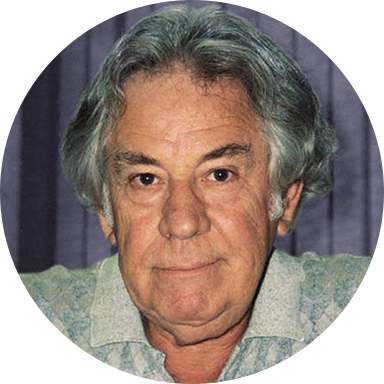
Dave Wolpe began his career in orchestral arranging in 1965 and has since become one of the most prolific voices in big band and jazz ensemble writing. His work with the Glenn Miller Orchestra spans dozens of arrangements, and he served as co-arranger on the platinum-selling In the Christmas Mood. Beyond those flagship projects, Wolpe has contributed significantly to the libraries of Ray Anthony, Lawrence Welk, and Les Brown, earning a reputation for charts that balance accessibility with musicianship.
Why we love this
Wolpe's arrangement solves one of the most common programming headaches: finding flexible vocal features that work equally well for different voice types. The built-in dual-key format (plus the optional trombone jazz solo or scat vocal solo) gives you real integration between vocalist and ensemble rather than a rhythm section backing track. Every element serves both the vocalist and the band's musical development.
What to expect
The Lady Is a Tramp swings with the ease of a classic cocktail lounge, sophisticated and warm. The vocal line dances over smooth ensemble support, and when the trombone solo cuts through, the energy shifts from intimate to playful. It's the kind of tune that makes an audience settle in and listen.
Who it's for
This arrangement works for any jazz ensemble with a strong vocalist on staff. High school jazz programs that program vocals alongside instrumentalists, college jazz combos looking to expand beyond small-group standards, and community big bands with a featured singer will all find the dual-key flexibility and integrated horn writing invaluable.
How to get the most out of it
- Decide your key assignment early and let the vocalist settle into it during sectional rehearsals. The flexibility is your asset, not a last-minute scramble.
- Balance the vocal line against the ensemble horn figures. These aren't meant to overpower the soloist; they're meant to frame and support the melody.
- If you choose the trombone solo over the scat option, rehearse that section separately with the rhythm section so the trombonist locks in the groove before full ensemble run-throughs.
- Use the conductor score to mark phrasing cues for the vocalist and the band. Wolpe's writing is conversational, and clarity here makes the whole chart swing.
How to use it
Program this as a palate cleanser between harder-swinging instrumental features or book it as the centerpiece of a concert set where you want to highlight both your vocalist and your ensemble's ability to support a soloist. It also pairs well in a full concert alongside other Rogers and Hart standards.
Skills your students will build
- Balancing solo vocal line with ensemble horn figures
- Jazz phrasing and swing articulation
- Flexible transposition between major and minor key centers (G and B-flat)
- Ensemble interplay and responsive accompaniment in jazz contexts
- Jazz solo construction (trombone or scat vocal improvisation)