The Lady Is a Tramp Cover Image

The Lady Is a Tramp: Vocal Solo with Jazz Ensemble Conductor Score

$10.00 USD
Sale price  $10.00 USD Regular price 
Skip to product information
The Lady Is a Tramp Cover Image

The Lady Is a Tramp: Vocal Solo with Jazz Ensemble Conductor Score

Arr. Dave Wolpe

Grade: 3 (Medium)

Item: 00-JEVM00004C

$10.00
Shipped

One moment…

Description
Another outstanding jazz vocal with jazz ensemble! This chart is totally flexible---it's written in two keys! The higher key usually works for your male vocalist and the lower key for your female vocalist; if not, just switch. It's that easy! In addition to the vocal solo, this swinging Rogers and Hart song has a trombone jazz solo (or optional scat vocal solo) and written written ensemble horn lines for the vocalist, both great opportunities to integrate your vocalist with the ensemble. Dave Wolpe thinks of everything, and he writes some of the best charts in the music business. Very effective! (Female key (low): G below middle C to third line B, treble clef---Male key (high): B-flat below middle C to fourth line D, treble clef)

The Lady Is a Tramp: Vocal Solo with Jazz Ensemble Conductor Score isn't in MakeMusic Cloud just yet...but it could be. Let us know you'd like to see it, and you'll help shape what comes next. In the meantime, start a free trial and dive into thousands of interactive titles your students can play along with today.

Sample Pages

Sample Audio
No sample audio found.
Sample Video
Additional Details
Series: Jazz Vocal Series
Publisher: Alfred Music
Page Count: 28
UPC: 654979178620
SKU: 00-JEVM00004C

More about this title

About the Arranger: Dave Wolpe
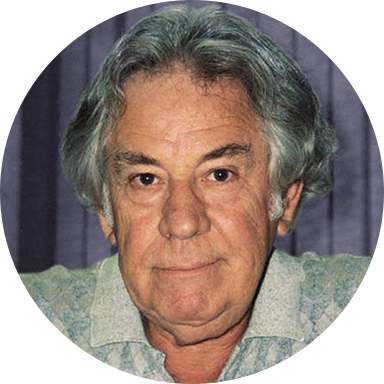
Dave Wolpe

Dave Wolpe has been writing charts since 1965, building a catalog of work that spans from studio recordings to live orchestra engagements. His arrangements have appeared with the Glenn Miller Orchestra across dozens of dates, and he served as co-arranger on the platinum-certified In the Christmas Mood CD. Throughout his career, he has contributed to major dance orchestras led by Ray Anthony, Lawrence Welk, and Les Brown, earning a reputation for practical, musician-friendly writing.

Why we love this

Wolpe's dual-key approach removes the friction from casting. You're not locked into one vocalist or forced to transpose on the fly; both versions sit naturally in the staff. Beyond that flexibility, the integration of ensemble horn lines with the vocal line and the optional trombone solo (or scat substitute) means your whole band stays engaged in a tune that could easily become a solo vehicle. It's the kind of smart arranging that makes rehearsals efficient and performances feel cohesive.

What to expect

Sophisticated and playful, the way a Rogers and Hart standard should sit. The melody swings with a knowing ease, and Wolpe's voicings give it a timeless feel, neither too modern nor retro, but like a tune that has always belonged in a good jazz room.

Who it's for

Directors with a jazz vocalist (or two, if you're splitting male and female singers across the year) and a working jazz ensemble. This is also strong material for vocal jazz competitions and festivals where you need an arrangement that showcases both soloist and band without requiring unusual instrumentation.

How to get the most out of it

  • Balance the vocal line against the ensemble horns. Those written parts are there to support the vocalist, not compete; dial them in so they frame rather than overwhelm.
  • If you choose the trombone solo over scat, give your player room to interpret. Wolpe leaves space for improvisation, so encourage phrasing that swings into the original melody.
  • Lock the rhythm section into a conversational pocket. This tune breathes; it's not about precision alone but about the ease of a great jazz standard.
  • Rehearse the key you're not using as a warm-up tool. Singers benefit from the range work, and the ensemble stays sharp.

How to use it

Pair this with your uptempo vocal feature on a spring or winter concert where you're mixing standards with contemporary work. The 28 pages give you enough material to anchor a full set or to feature prominently on a longer program without dominating it. It's also a natural fit for a jazz ensemble showcase or ballroom concert where vocals and instrumentals share the stage equally.

Skills your students will build

  • Vocal swing phrasing and call-and-response with ensemble
  • Jazz soloing in a trombone feature section
  • Reading and balancing written ensemble parts against a vocal line
  • Flexible transposition and key interpretation
  • Jazz ensemble ensemble coherence with a featured soloist

You May Also Like