
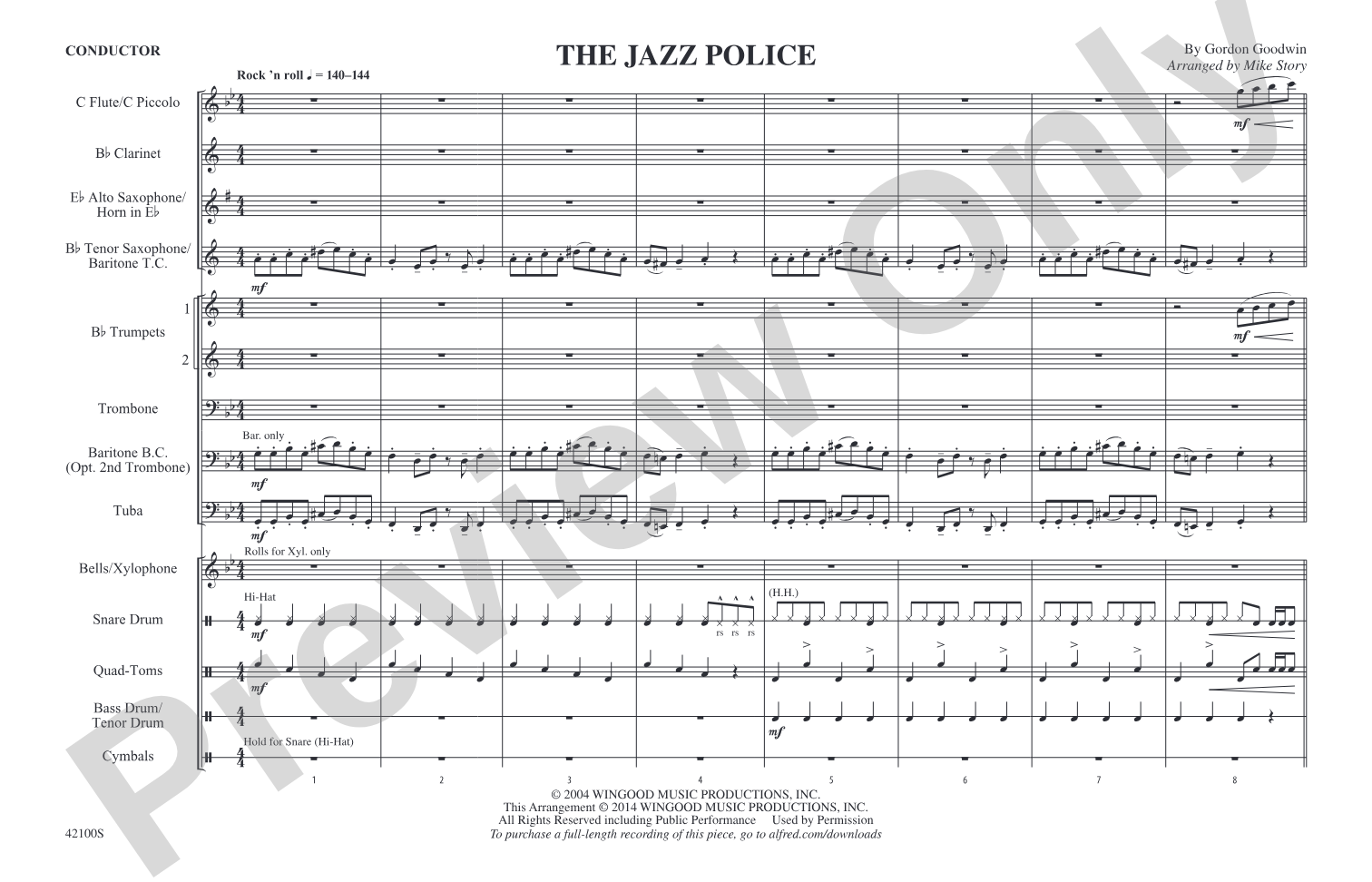
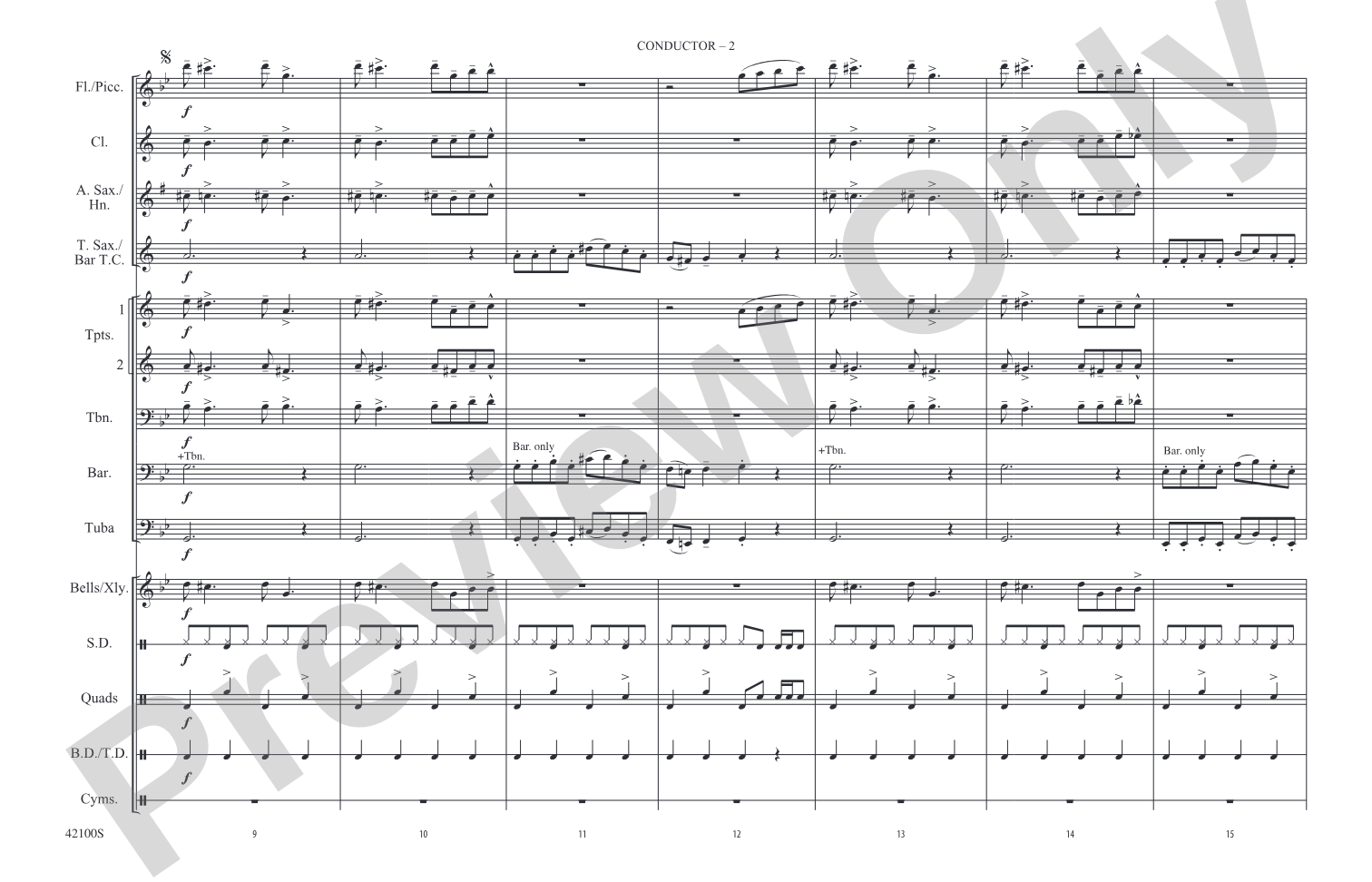
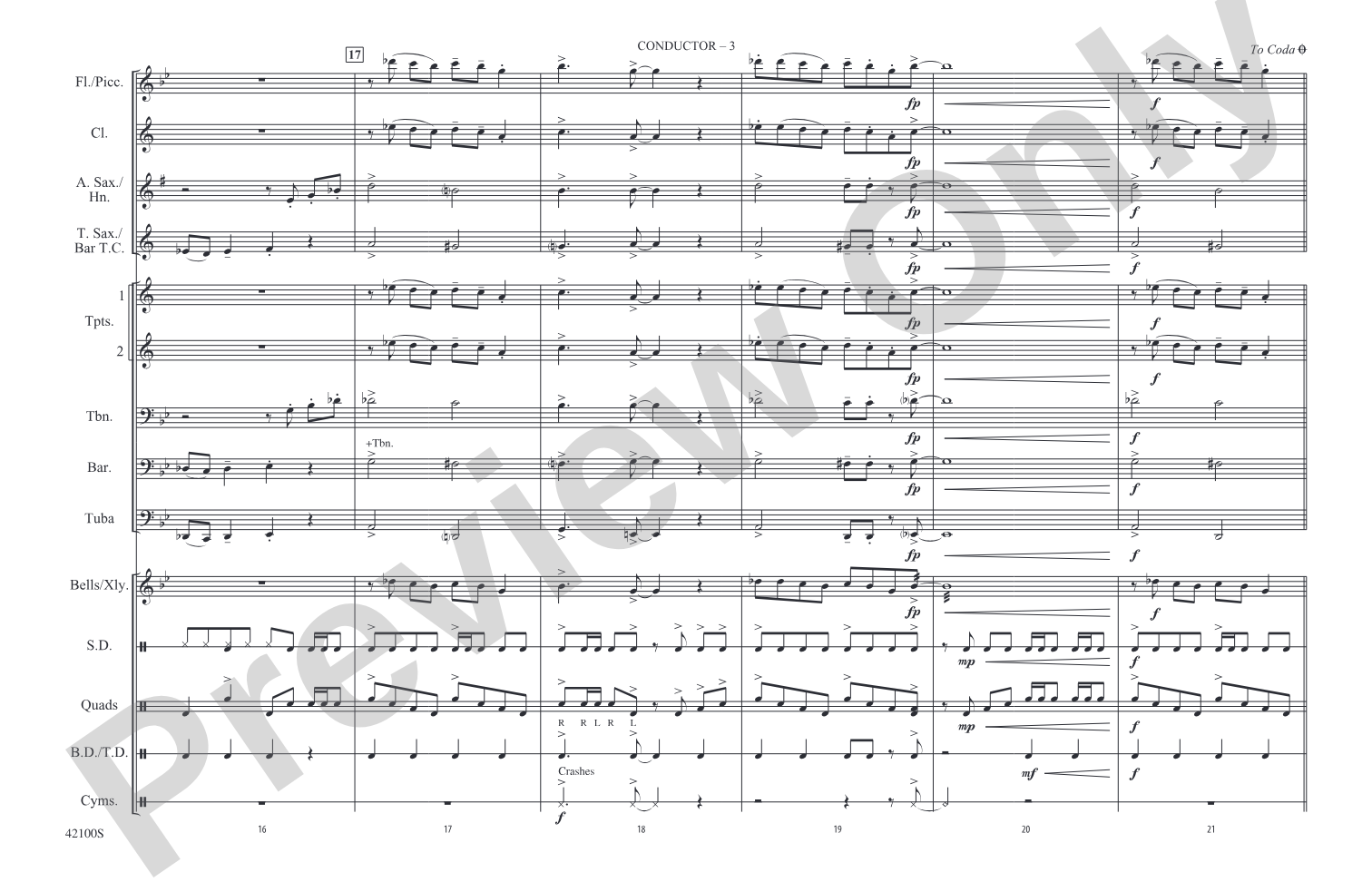
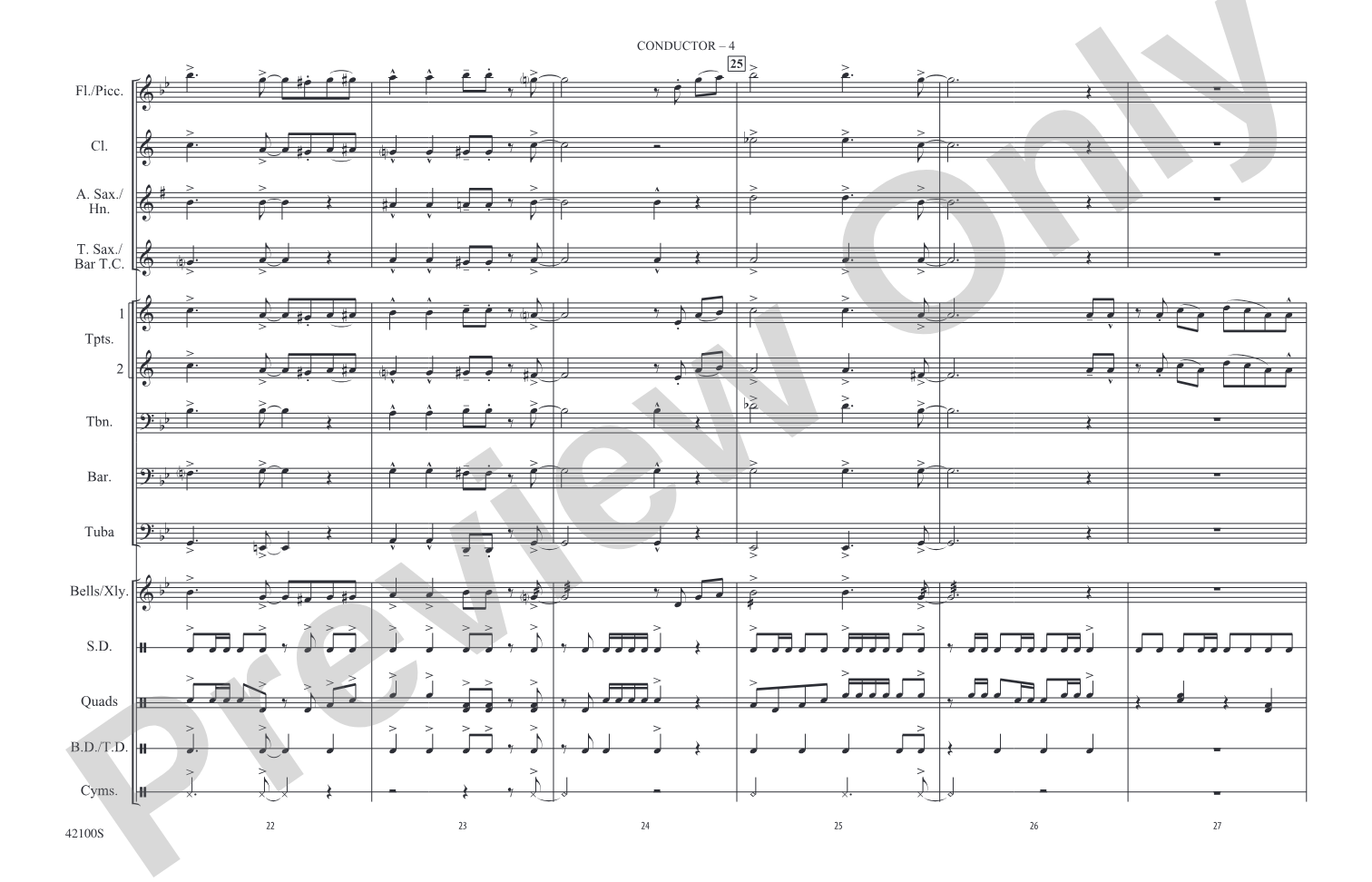
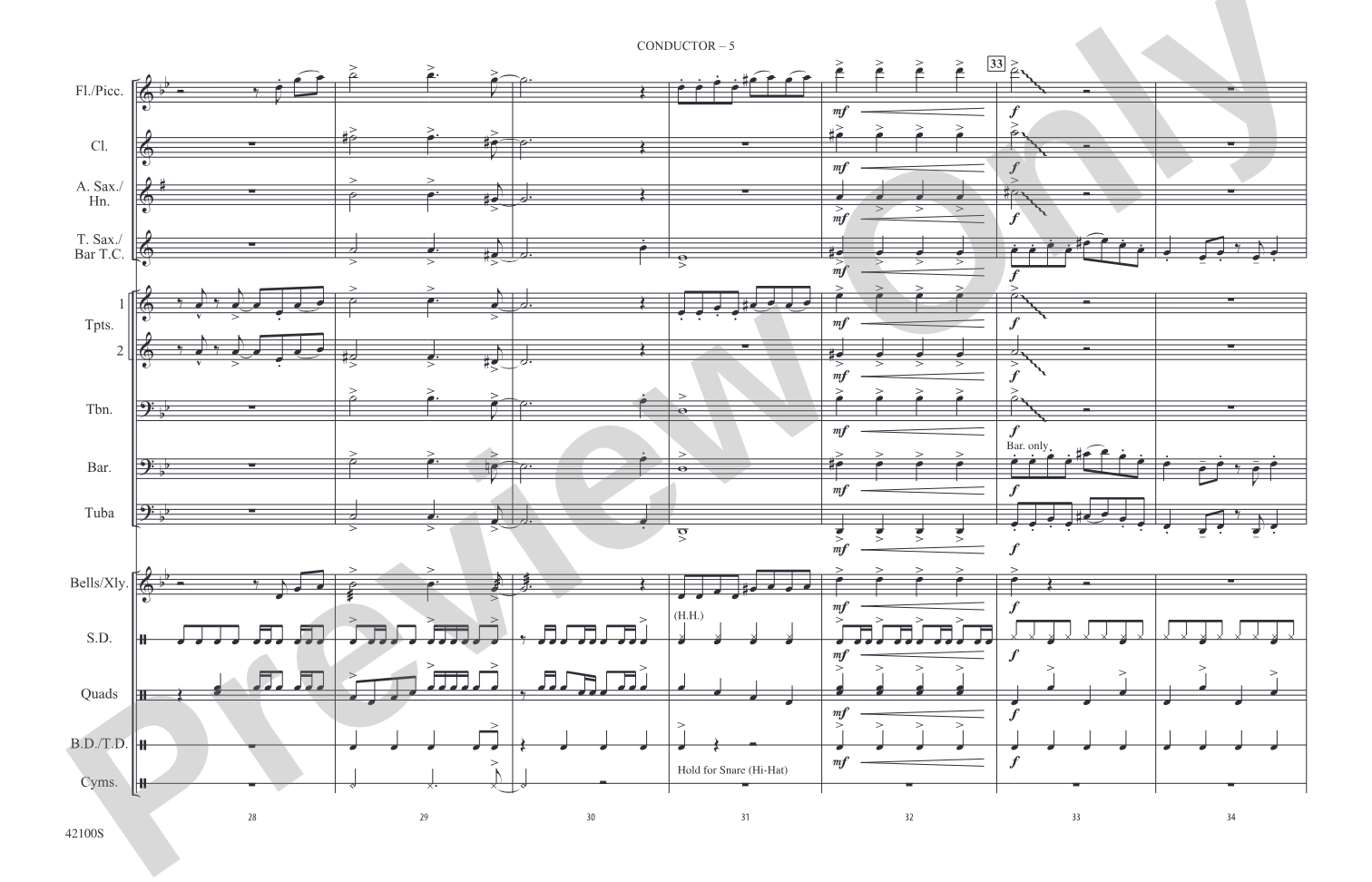
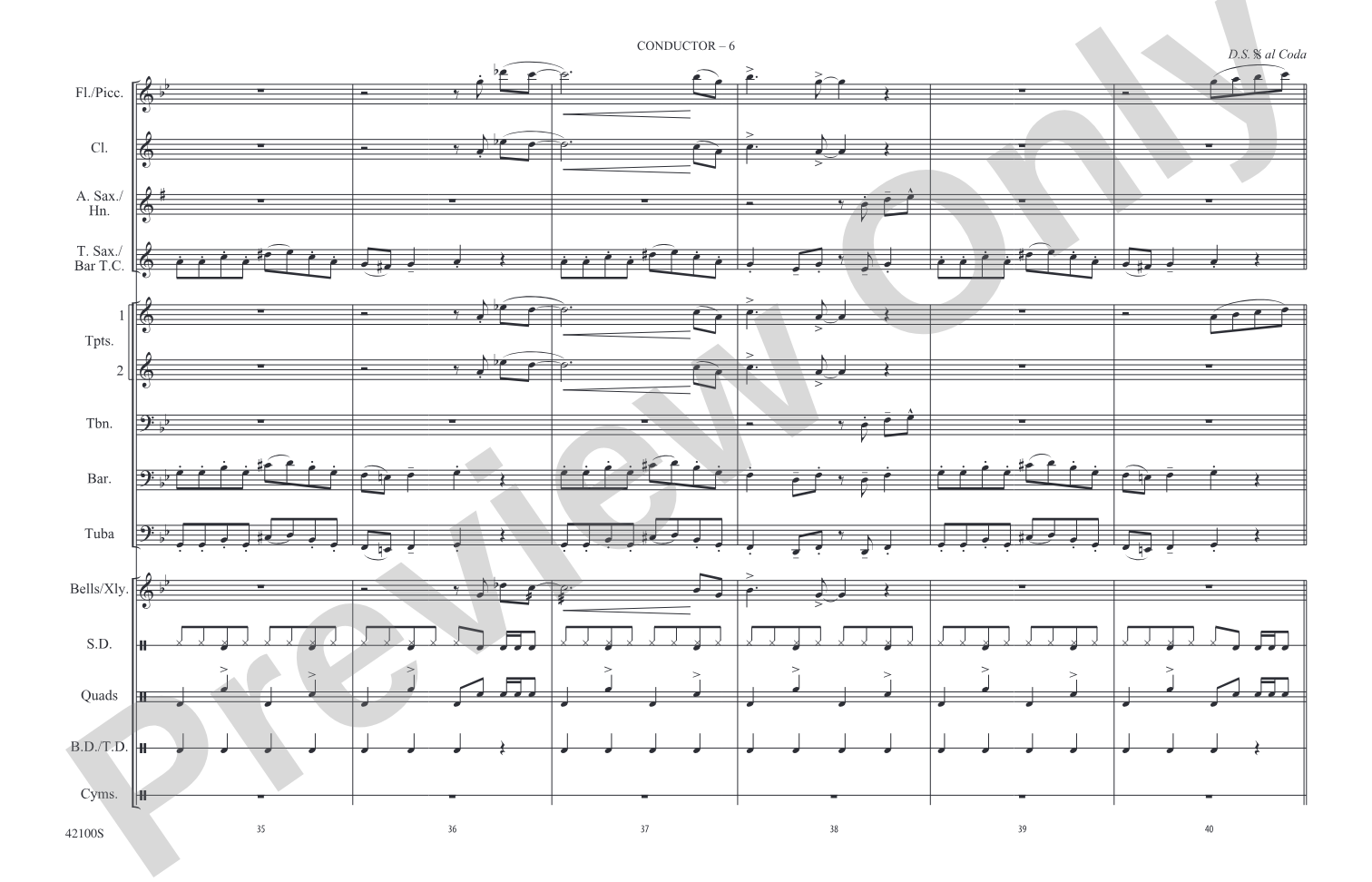
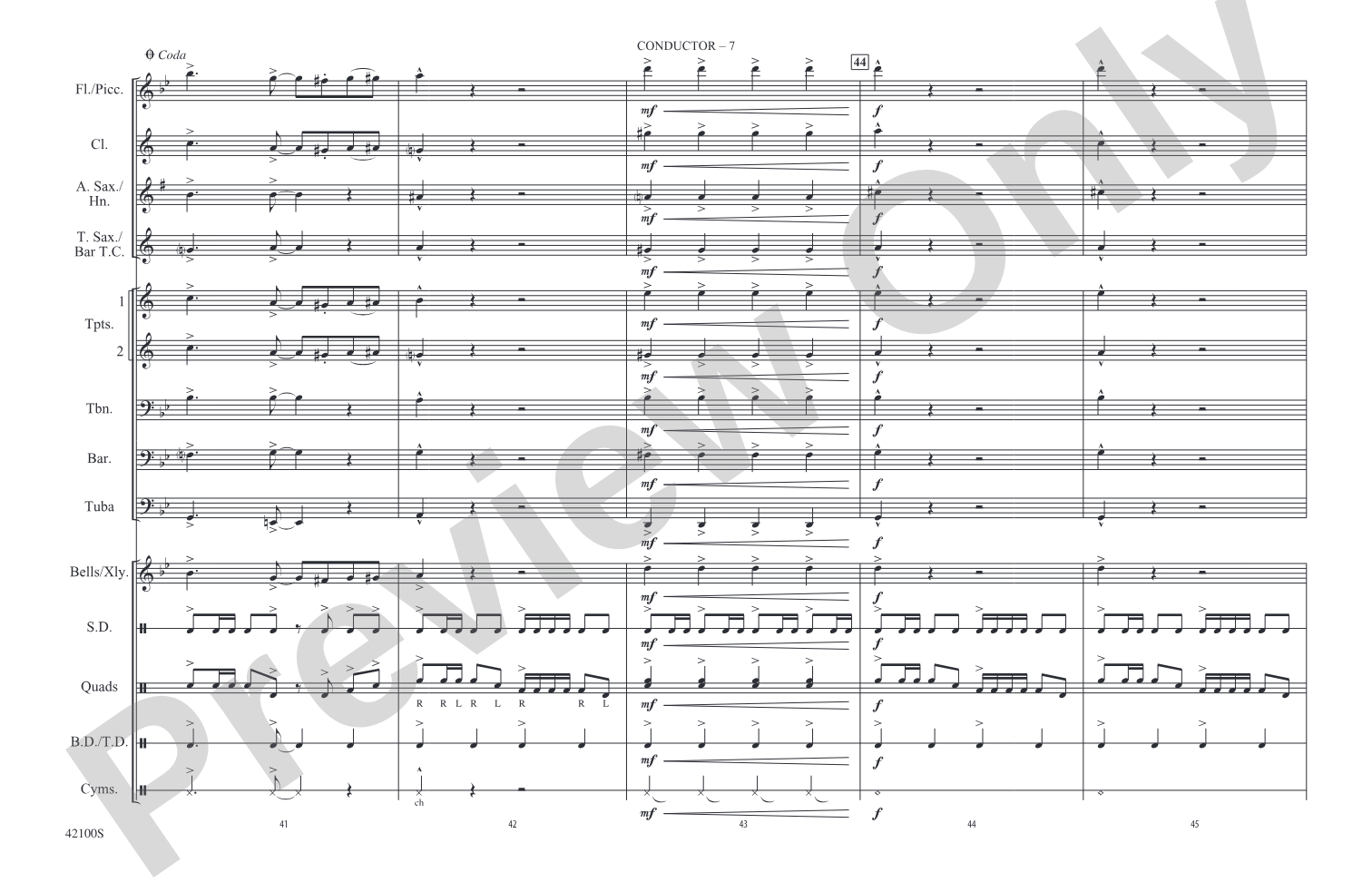
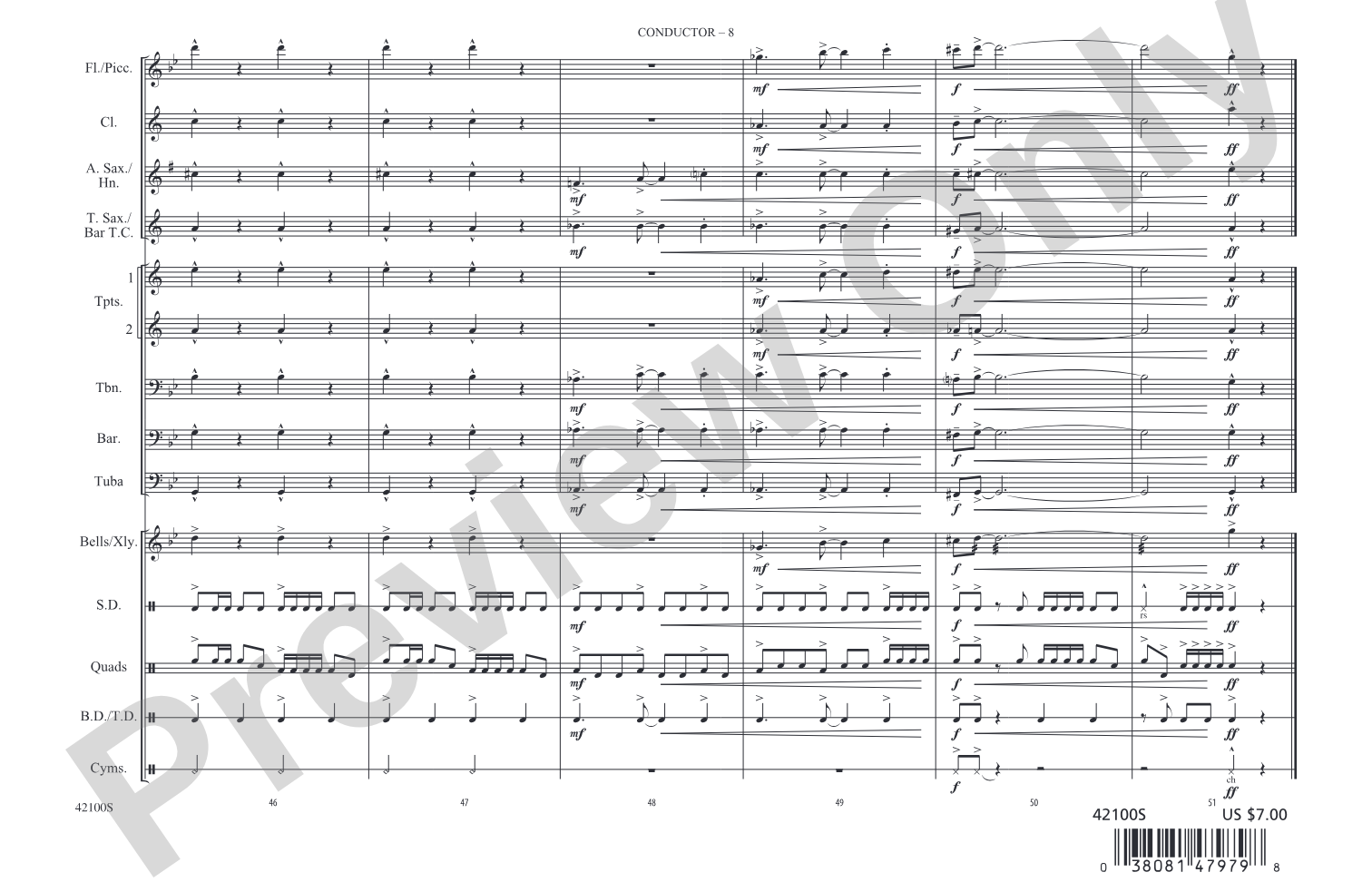

The Jazz Police: Marching Band Conductor Score & Parts
By Gordon Goodwin / arr. Mike Story
Grade: 2 (Easy)
Item: 00-PK-0006230

$50.00
Pickup currently not available
Buy Extra Parts (Digital PDF Download)
| Product | Price | Quantity |
|---|---|---|
| The Jazz Police: Score | $7.00 | |
| The Jazz Police: Flute | $3.00 | |
| The Jazz Police: 1st B-flat Clarinet | $3.00 | |
| The Jazz Police: Optional Bb Clarinet/Horn in Bb | $3.00 | |
| The Jazz Police: E-flat Alto Saxophone | $3.00 | |
| The Jazz Police: Bb Tenor Saxophone/Bartione Treble Clef | $3.00 | |
| The Jazz Police: E-flat Baritone Saxophone | $3.00 | |
| The Jazz Police: 1st B-flat Trumpet | $3.00 | |
| The Jazz Police: 2nd B-flat Trumpet | $3.00 | |
| The Jazz Police: 1st F Horn | $3.00 | |
| The Jazz Police: 1st Trombone | $3.00 | |
| The Jazz Police: Baritone B.C. | $3.00 | |
| The Jazz Police: Tuba | $3.00 | |
| The Jazz Police: Electric Bass | $3.00 | |
| The Jazz Police: B-flat Bass Saxophone | $3.00 | |
| The Jazz Police: Snare Drum | $3.00 | |
| The Jazz Police: Quad-Toms | $3.00 | |
| The Jazz Police: Tonal Bass Drum | $3.00 | |
| The Jazz Police: Cymbals | $3.00 | |
| The Jazz Police: Piano Accompaniment | $3.00 | |
| The Jazz Police: Drums | $3.00 |
Parts Added to Cart!
Description
Gordon Goodwin's Big Phat Band is one of the hottest (and coolest) jazz bands ever! Mike Story has crafted one of their most popular tunes into a version that any band can play. All of the excitement and drive from the original are present in this great chart. Check it out! (1:50)


Don't just read it, hear it, play along with it, and watch your students grow with it. In MakeMusic Cloud, The Jazz Police: Marching Band Conductor Score & Parts comes alive with professional accompaniment, adjustable tempo, and built-in practice tools that turn solo practice into real progress.
Open in the Player
Jump straight in and assign it today.
Start Your Free Trial
Open this title and explore the full library in minutes.
Sample Audio
1
Audio File
--:--
0:00
0:00
Sample Video
No sample videos found.
Additional Details
Series:
Big and Easy
Publisher:
Alfred Music
Page Count:
118
SKU:
00-PK-0006230
More about this title
About the Composer: Gordon Goodwin

Gordon Goodwin began composing at five years old, writing complete pieces rather than fragments. By thirteen, he had already completed his first big band chart, Hang Loose. His early gift for orchestration caught the attention of film and television producers, leading to scoring work on major motion pictures including Bad Boys II, Con Air, Gone in 60 Seconds, Remember the Titans, and Star Trek: Nemesis. His film and television writing has earned him three Emmy Awards and multiple Grammy nominations.
In 2000, Goodwin founded Gordon Goodwin's Big Phat Band, establishing himself as both a composer and bandleader in the contemporary jazz world. He has written for and performed alongside artists including Christina Aguilera, Quincy Jones, Ray Charles, and David Foster. His big band recordings have received Grammy nominations and critical acclaim, cementing his reputation as one of today's most versatile composers and arrangers working across jazz, film, and orchestral genres.
Why we love this
This arrangement brings genuine big band swagger to marching band level, capturing the groove and energy of the original without asking for virtuosity your ensemble doesn't yet have. Mike Story's adaptation preserves Goodwin's trademark sophistication while keeping the technical demands accessible, so your students play something that feels real and sounds contemporary. The chart is short and punchy, making it ideal for bands seeking that jazz credibility without the extended rehearsal investment.
What to expect
Sleek, confident, and undeniably cool. The tune has the polish and swagger of a professional big band but remains grounded in straightforward musicianship. There's an infectious groove that makes ensemble members feel like they're part of something current and sophisticated.
Who it's for
Bands at the Grade 2 level seeking accessible but authentic jazz repertoire. This works well for students encountering swing style and jazz articulation for the first time, as the chart models these concepts clearly without overwhelming technical demands.
How to get the most out of it
- Lock in the swing feel from the first rehearsal by establishing a clear pulse in the rhythm section; the soloists and backgrounds will follow naturally once the beat is solid.
- Pay attention to dynamic shaping within phrases rather than playing entire sections at one level; Goodwin's writing rewards subtle contrasts that make the tune breathe.
- Balance the featured solos against ensemble hits by having the accompaniment pull back slightly during solo passages; this showcases individual voices and maintains clarity.
- Use the recorded accompaniment (sold separately) to familiarize students with the groove and style before sectionals, so they hear the intended sound early and often.
How to use it
Open a jazz-focused concert or include it as a crowd-pleaser among your concert band standards. The tight 1:50 length works well as a palate-cleanser between longer classical works, or use it as the centerpiece of an early-season program before you tackle more demanding arrangements.
Skills your students will build
- Swing eighth-note articulation and phrasing
- Reading and performing jazz style conventions
- Ensemble balance in contemporary settings
- Listening to and responding to rhythmic precision in accompaniment figures
- Dynamic control within jazz contexts