
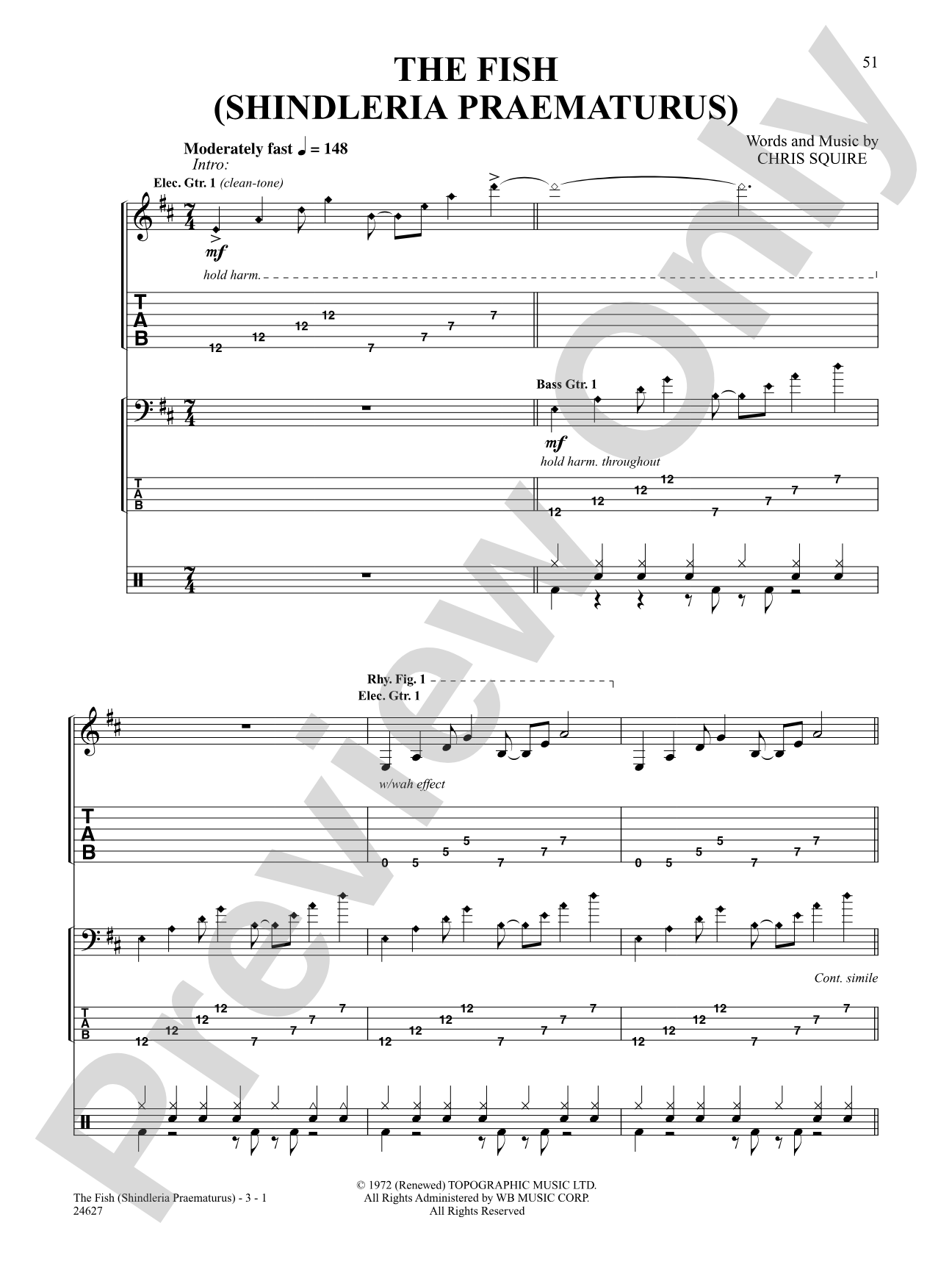

The Fish (Schindleria Praematuris): Authentic Guitar TAB
Yes
Item: 00-PSG-000007
$4.99
One moment…
Description
If you touched a guitar in the early 70s, you tried to play "Roundabout." From its opening harmonics, and Spanish-guitar influenced introduction, Steve Howe's classically influenced approach to rock resounded with a whole generation of guitarists weaned on the blues scale. Alfred Music is proud to add the classic Yes album, Fragile, to the Classic Album Edition Series. Titles are: Roundabout * Cans and Brahms * We Have Heaven * South Side of the Sky * Five Per Cent of Nothing * Long Distance Runaround * Fish (Schindleria Praematurus) * Mood for a Day * Heart of the Sunrise.


The Fish (Schindleria Praematuris): Authentic Guitar TAB isn't in MakeMusic Cloud just yet...but it could be. Let us know you'd like to see it, and you'll help shape what comes next. In the meantime, start a free trial and dive into thousands of interactive titles your students can play along with today.
Request This Title
Tell us you want it.
Start Your Free Trial
Explore everything that's ready to play right now.
Sample Audio
No sample audio found.
Sample Video
No sample videos found.
Additional Details
Series:
Alfred's Classic Album Editions
Publisher:
Alfred Music
Page Count:
80
SKU:
00-PSG-000007
More about this title
About the Artist: Yes
Yes formed in London in 1968 and became one of progressive rock's most influential bands. Fronted by Jon Anderson's soaring vocals and anchored by Chris Squire's innovative bass work, the group built a devoted following through their intricate compositions, layered arrangements, and technical virtuosity. Their 1971 album Fragile showcased guitarist Steve Howe's classical training and inventive approach to rock, establishing Yes as essential listening for musicians interested in how technical skill and compositional sophistication could elevate the genre.
The band's impact on instrumental technique in rock remains significant. Howe's fingerstyle work, Rick Wakeman's keyboard mastery, and the rhythm section's precision created a template for progressive rock that influenced generations of players. For guitarists specifically, Yes represents a bridge between blues-based rock and classical music, demonstrating how formal training and experimental thinking could coexist.
Why we love this
Steve Howe's playing on Fragile demands respect from any guitarist serious about their craft. These transcriptions capture the harmonic sophistication, fingerstyle technique, and compositional innovation that made Yes essential listening in the 1970s and still rewards careful study today. The Guitar TAB format makes these otherwise challenging passages accessible without oversimplifying the musical ideas.
What to expect
Delicate yet intricate, with passages that shift between lyrical grace and rhythmic complexity. The piece opens with restrained beauty, then unfolds into passages that require coordination and precision. There's a sense of musical storytelling here, where each section serves a compositional purpose rather than existing for its own sake.
Who it's for
Intermediate to advanced guitarists ready to tackle progressive rock's technical and harmonic demands. This is ideal for players familiar with fingerstyle technique who want to understand how Steve Howe bridged classical guitar with rock composition.
How to get the most out of it
- Study the harmonic passages in the opening sections with attention to finger placement and sustain; these classical-influenced moments establish the tone for the entire piece.
- Lock into the rhythmic foundation by tracking how the guitar interacts with the bass and drums, especially during the meter changes and syncopated sections.
- Use dynamics intentionally to separate the lyrical passages from the more driving sections; Howe's approach relies on color and contrast, not just speed.
- Break down the fingerstyle passages slowly, ensuring each finger lands clearly before increasing tempo; the clarity of individual notes matters as much as the overall momentum.
How to use it
Include individual tracks from this collection in recitals or student showcase concerts that highlight technical growth and diverse musical styles. Guitarists can use these transcriptions as long-term study pieces, working through one or two tracks per semester to develop finger independence, harmonic awareness, and ensemble listening skills.
Skills your students will build
- Fingerstyle technique and finger independence across the fretboard
- Reading and executing harmonic passages in classical guitar style
- Adapting classical musical concepts to rock ensemble contexts
- Navigating meter changes and syncopated rhythmic figures
- Balancing technical facility with expressive phrasing and dynamic control