
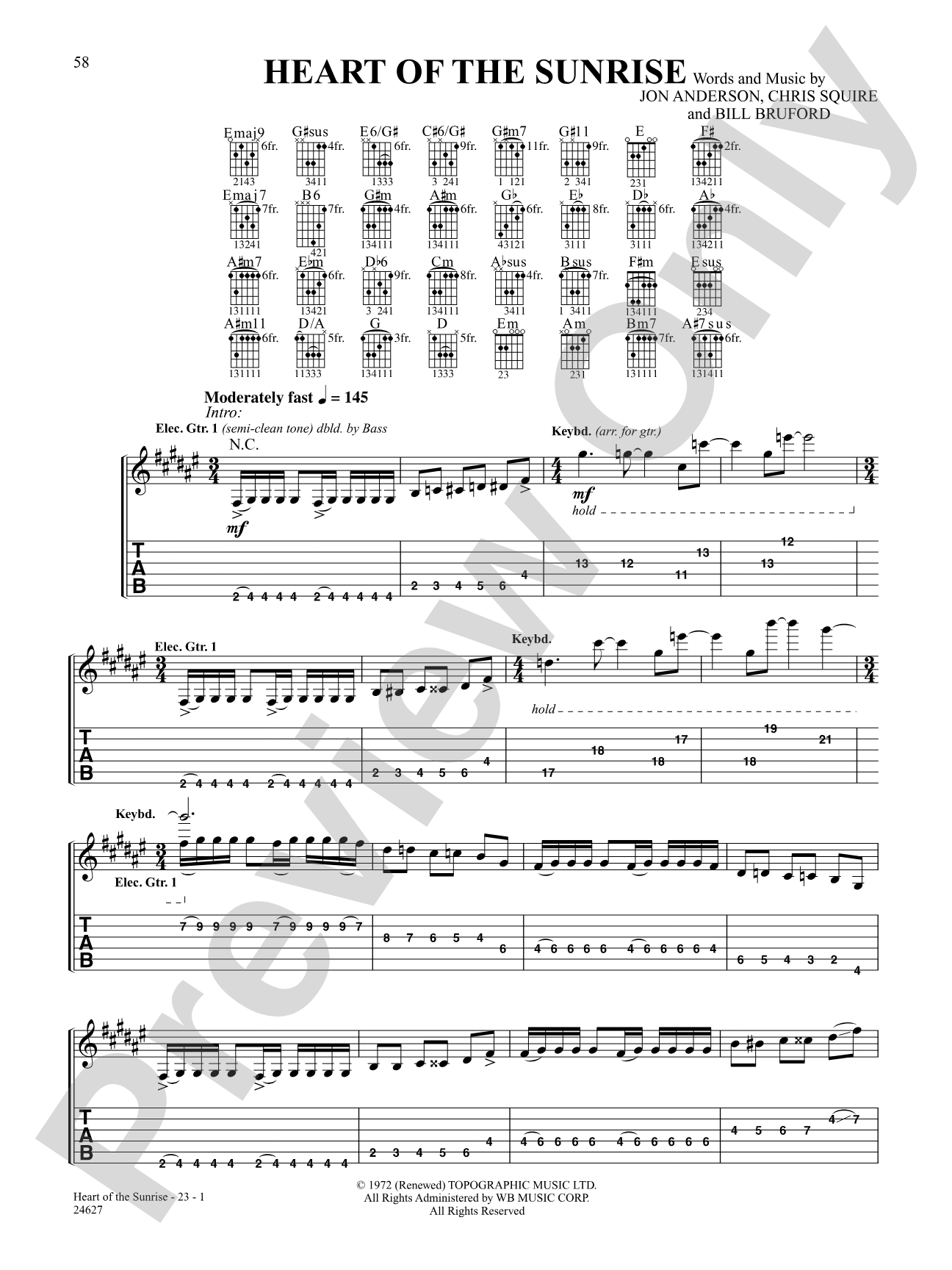
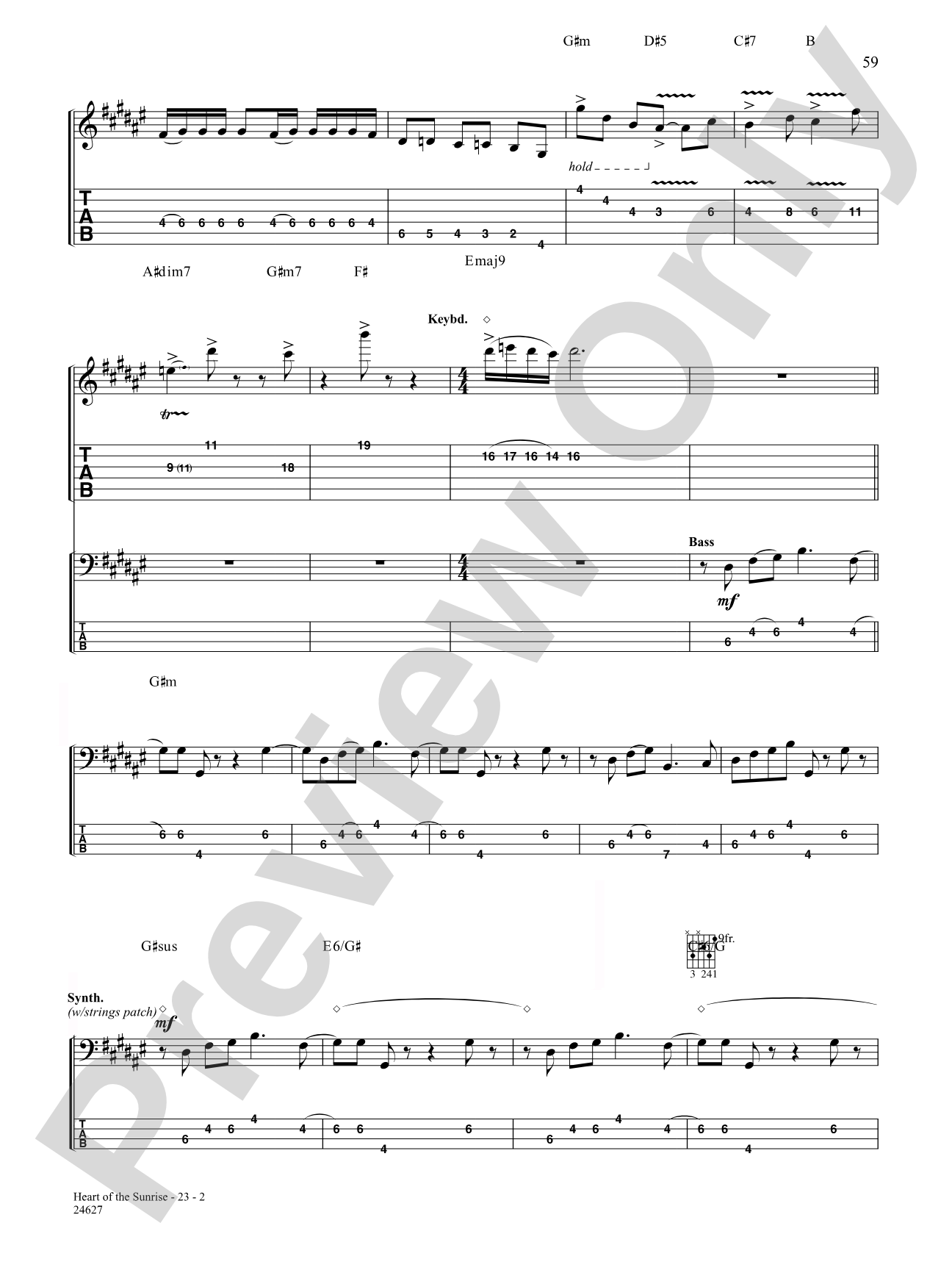
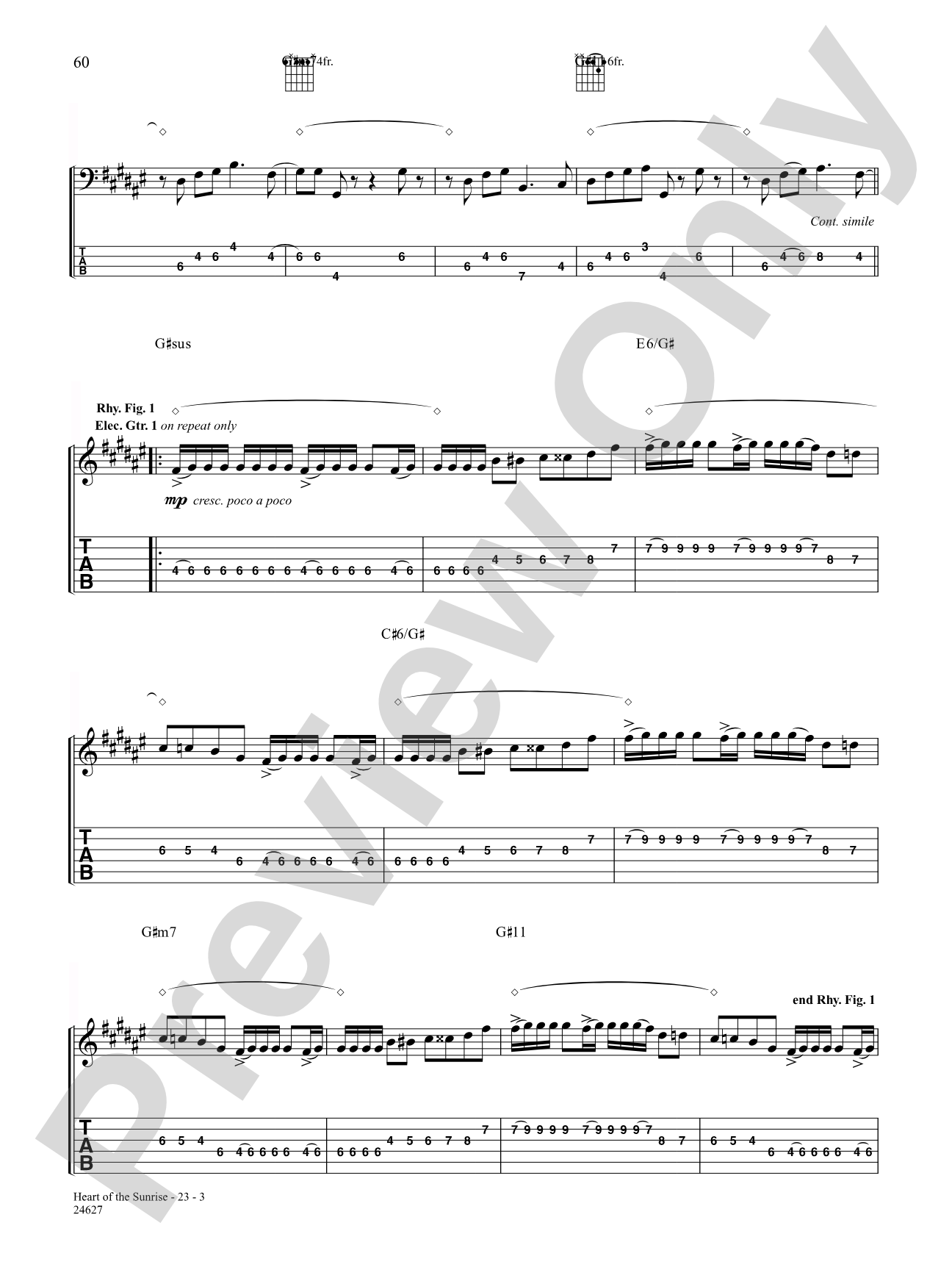
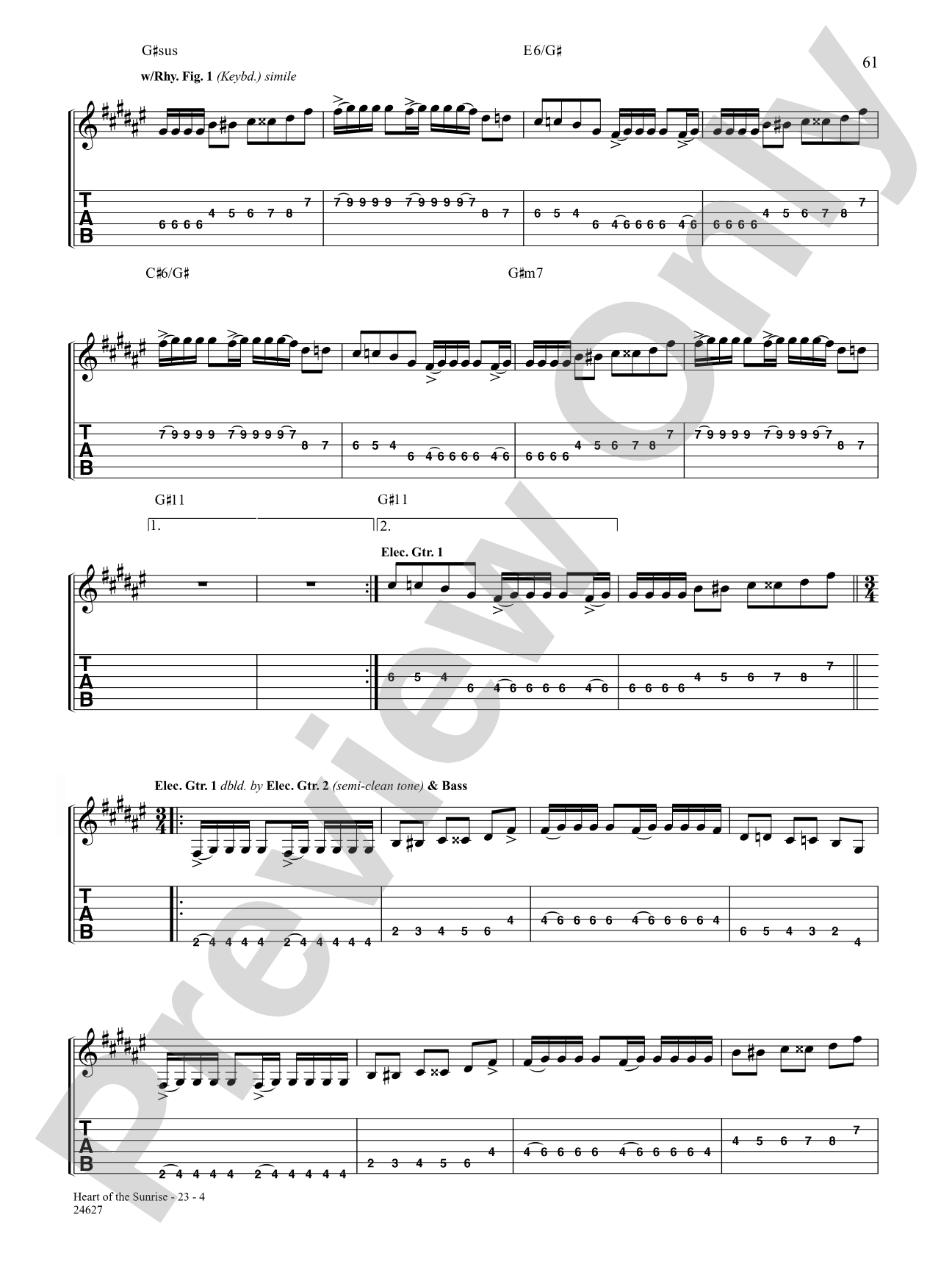
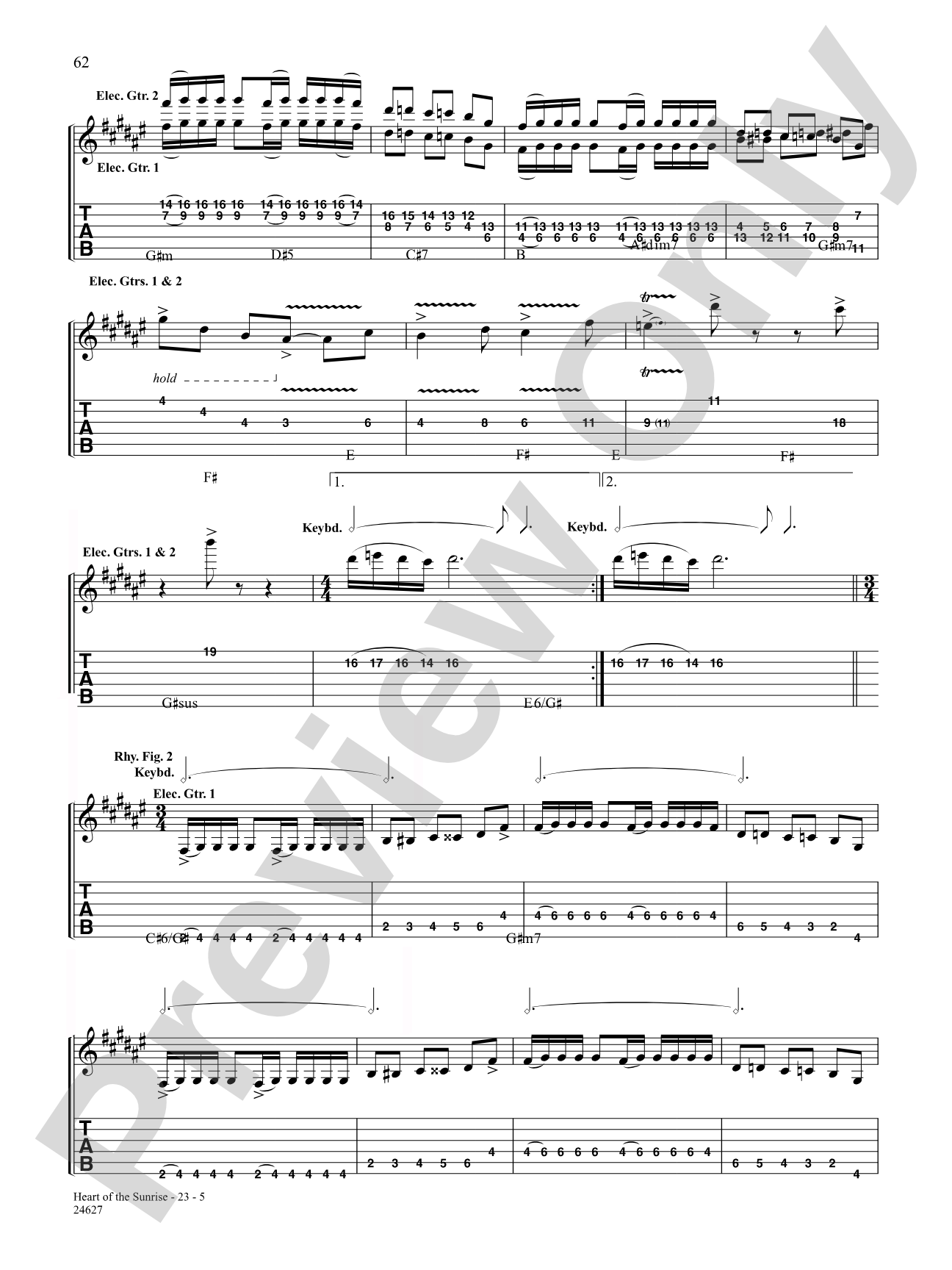

Heart Of The Sunrise: Authentic Guitar TAB
Yes
Item: 00-PSG-000009
$9.99
One moment…
Description
If you touched a guitar in the early 70s, you tried to play "Roundabout." From its opening harmonics, and Spanish-guitar influenced introduction, Steve Howe's classically influenced approach to rock resounded with a whole generation of guitarists weaned on the blues scale. Alfred Music is proud to add the classic Yes album, Fragile, to the Classic Album Edition Series. Titles are: Roundabout * Cans and Brahms * We Have Heaven * South Side of the Sky * Five Per Cent of Nothing * Long Distance Runaround * Fish (Schindleria Praematurus) * Mood for a Day * Heart of the Sunrise.


Heart Of The Sunrise: Authentic Guitar TAB isn't in MakeMusic Cloud just yet...but it could be. Let us know you'd like to see it, and you'll help shape what comes next. In the meantime, start a free trial and dive into thousands of interactive titles your students can play along with today.
Request This Title
Tell us you want it.
Start Your Free Trial
Explore everything that's ready to play right now.
Sample Audio
No sample audio found.
Sample Video
No sample videos found.
Additional Details
Series:
Alfred's Classic Album Editions
Publisher:
Alfred Music
Page Count:
80
SKU:
00-PSG-000009
More about this title
About the Artist: Yes
Yes emerged from the progressive rock movement of the early 1970s as one of rock music's most technically sophisticated bands. Fronted by Jon Anderson's ethereal vocals and anchored by the virtuosic guitar work of Steve Howe, the band created intricate, classically-informed arrangements that demanded serious musicianship from every member. Their 1971 album Fragile became a landmark release, showcasing how electric guitars could express compositional ambition on par with traditional concert music.
Why we love this
This collection captures the exact moment when rock guitar became genuinely compositional. Steve Howe's fingering choices and harmonic approach in these transcriptions reveal how a classical music foundation transformed electric rock guitar into an instrument capable of genuine architectural thinking. Your students will study not just technique, but the decision-making process of a guitarist thinking like a composer.
What to expect
Lush and architecturally complex, these pieces balance meditative moments with bursts of technical brilliance. You'll encounter shimmering harmonics that float like bells, passages of fingerstyle work that echo Spanish classical traditions, and rhythmically intricate sections that demand both precision and musicality. The overall arc is contemplative yet engaging, never settling for simple answers.
Who it's for
Guitar players with solid technique who want to understand how rock music incorporated classical composition and fingerstyle discipline. This collection rewards intermediate to advanced players who are ready to tackle multi-part voicings, harmonic subtlety, and the kind of patient, methodical learning that classical guitar demands.
How to get the most out of it
- Pay close attention to the opening harmonics in "Roundabout." Get the node points exact before worrying about speed; the shimmer matters more than velocity.
- The Spanish-guitar influenced sections demand clean fingernail technique and consistent dynamics across the fingerboard. Work these slowly in isolation before integrating them into the full passage.
- Study how Howe moves between open-position work and higher-fret classical voicings. Mark these position shifts in your tab and plan your hand movements deliberately.
- Balance the bluesy pentatonic runs against the classical phrasing elsewhere in the arrangements. These pieces ask for stylistic flexibility; resist playing everything with the same energy.
How to use it
Feature individual pieces in student recitals as stepping stones toward more demanding classical or contemporary guitar works. "Mood for a Day" works particularly well as a solo showcase piece that demonstrates classical technique in a rock context. You might also use these transcriptions as ear-training and harmonic analysis material, since the album's compositional sophistication rewards close listening.
Skills your students will build
- Fingerstyle technique across multiple voicings and positions
- Reading and executing harmonic content in tablature notation
- Balancing classical phrasing with rock sensibility
- Executing open-string harmonics and natural harmonics with consistency
- Transitioning between pentatonic and classical harmonic approaches
- Dynamic control in both melodic and accompaniment roles