
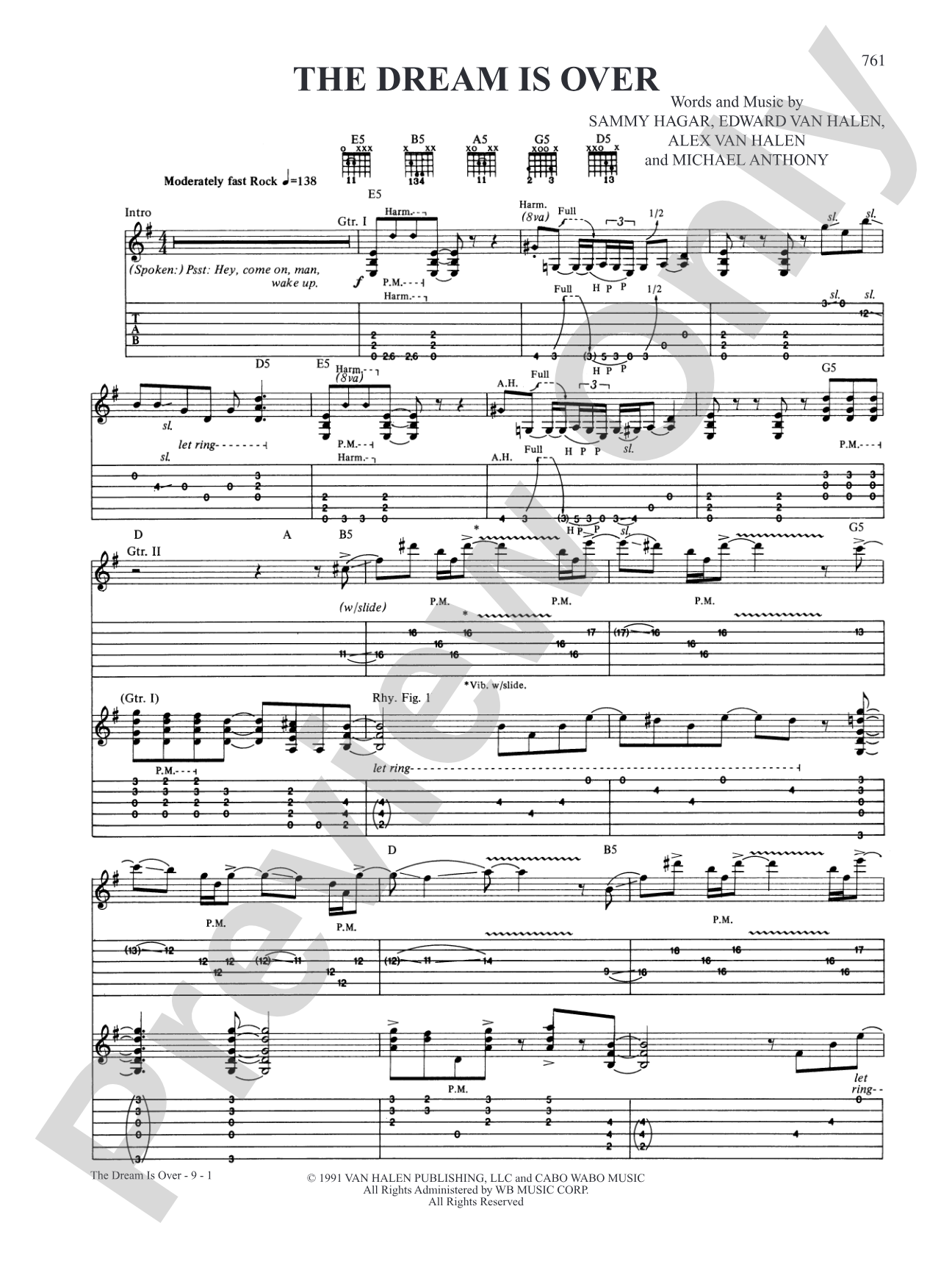
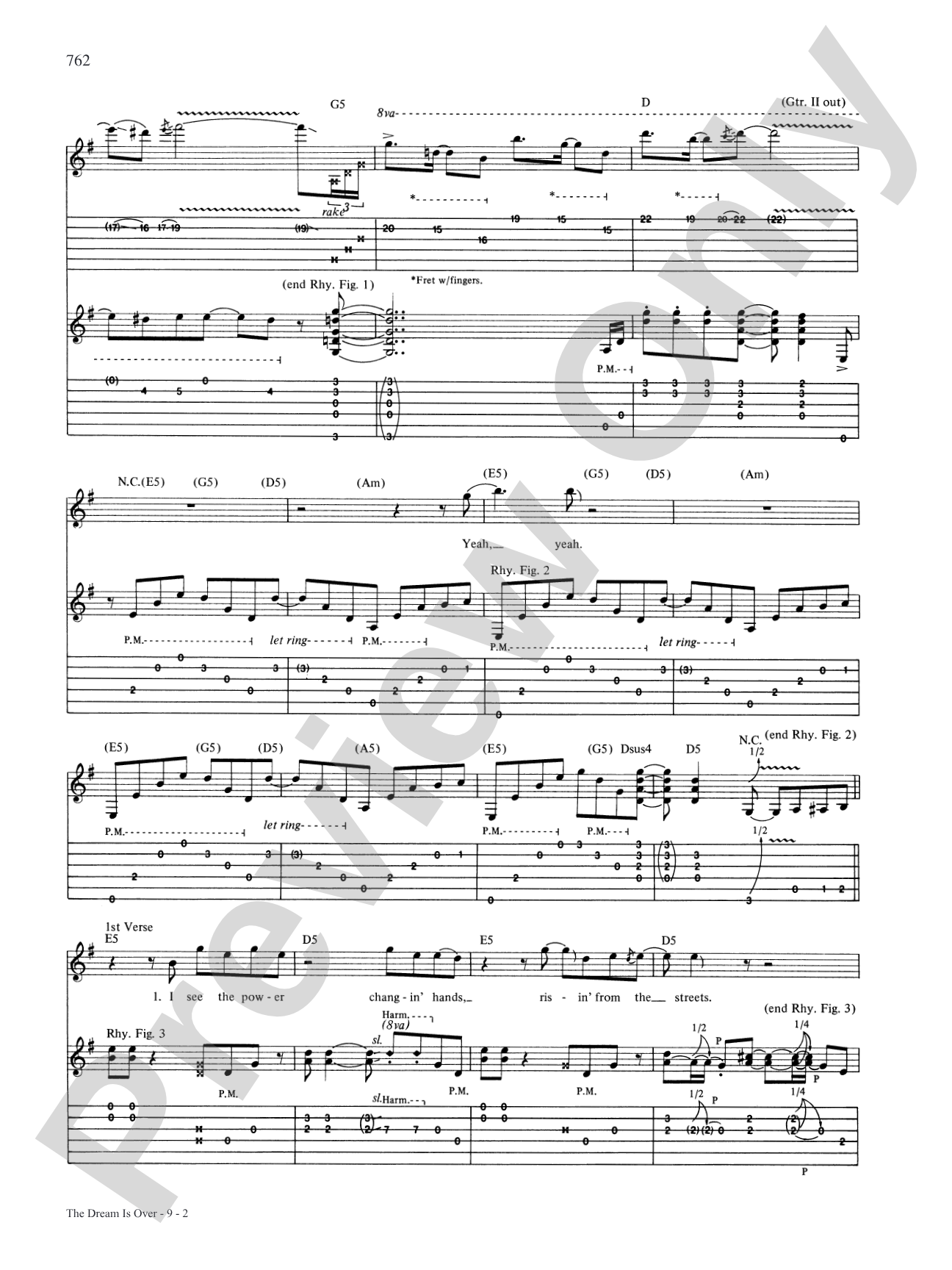

The Dream Is Over: Authentic Guitar TAB
Compete
Van Halen
Item: 00-PSG-000543
$5.99
One moment…
Related Items
Could This Be Magic: Authentic Guitar TAB |
$9.99
|
View | |
Fools: Authentic Guitar TAB |
$9.99
|
View | |
The Full Bug: Authentic Guitar TAB |
$5.99
|
View | |
Hang Em High: Authentic Guitar TAB |
$9.99
|
View | |
Hear About It Later: Authentic Guitar TAB |
$9.99
|
View | |
In A Simple Rhyme: Authentic Guitar TAB |
$9.99
|
View | |
Intruder: Authentic Guitar TAB |
$4.99
|
View | |
Loss Of Control: Authentic Guitar TAB |
$5.99
|
View | |
One Foot Out The Door: Authentic Guitar TAB |
$5.99
|
View | |
Push Comes To Shove: Authentic Guitar TAB |
$9.99
|
View | |
Romeo Delight: Authentic Guitar TAB |
$9.99
|
View | |
Secrets: Authentic Guitar TAB |
$9.99
|
View | |
Sinner's Swing: Authentic Guitar TAB |
$9.99
|
View | |
So This Is Love: Authentic Guitar TAB |
$5.99
|
View | |
Sunday Afternoon In The Park: Authentic Guitar TAB |
$4.99
|
View | |
Take Your Whiskey Home: Authentic Guitar TAB |
$5.99
|
View | |
Where Have All The Good Times Gone: Authentic Guitar TAB |
$5.99
|
View | |
Without You: Authentic Guitar TAB |
$9.99
|
View | |
One I Want: Authentic Guitar TAB |
$9.99
|
View | |
From Afar: Authentic Guitar TAB |
$9.99
|
View | |
Dirty Water Dog: Authentic Guitar TAB |
$9.99
|
View | |
Once: Authentic Guitar TAB |
$9.99
|
View | |
Josephina: Authentic Guitar TAB |
$9.99
|
View | |
Year To The Day: Authentic Guitar TAB |
$9.99
|
View | |
Ballot Or The Bullet: Authentic Guitar TAB |
$9.99
|
View | |
Big Bad Bill (Is Sweet William Now): Authentic Guitar TAB |
$5.99
|
View | |
Inside: Authentic Guitar TAB |
$5.99
|
View | |
Good Enough: Authentic Guitar TAB |
$9.99
|
View | |
5150: Authentic Guitar TAB |
$9.99
|
View | |
Get Up: Authentic Guitar TAB |
$9.99
|
View | |
A.F.U. (Naturally Wired): Authentic Guitar TAB |
$9.99
|
View | |
Source Of Infection: Authentic Guitar TAB |
$9.99
|
View | |
Sucker In A 3 Piece: Authentic Guitar TAB |
$9.99
|
View | |
Mine All Mine: Authentic Guitar TAB |
$9.99
|
View | |
Cabo Wabo: Authentic Guitar TAB |
$9.99
|
View | |
Judgement Day: Authentic Guitar TAB |
$9.99
|
View | |
Spanked: Authentic Guitar TAB |
$9.99
|
View | |
Pleasure Dome: Authentic Guitar TAB |
$9.99
|
View | |
In 'n' Out: Authentic Guitar TAB |
$9.99
|
View | |
Man On A Mission: Authentic Guitar TAB |
$9.99
|
View | |
The Seventh Seal: Authentic Guitar TAB |
$9.99
|
View | |
Don't Tell Me (What Love Can Do): Authentic Guitar TAB |
$9.99
|
View | |
Amsterdam: Authentic Guitar TAB |
$9.99
|
View | |
Big Fat Money: Authentic Guitar TAB |
$9.99
|
View | |
Aftershock: Authentic Guitar TAB |
$9.99
|
View | |
Take Me Back (Deja Vu): Authentic Guitar TAB |
$5.99
|
View |
Description
This amazing 1200-page collection features the complete guitar TAB for every single Van Halen album, including smash hit records like Van Halen, 1984, and 5150! Songs include "Runnin' with the Devil," "Ain't Talkin' 'Bout Love," "Mean Streets," "Jump," "Panama," "Hot For Teacher," "Why Can't This Be Love," "Dreams," "Best of Both Worlds," "Right Now," and many, many more! This is a must-have for every true Van Halen fan.


The Dream Is Over: Authentic Guitar TAB isn't in MakeMusic Cloud just yet...but it could be. Let us know you'd like to see it, and you'll help shape what comes next. In the meantime, start a free trial and dive into thousands of interactive titles your students can play along with today.
Request This Title
Tell us you want it.
Start Your Free Trial
Explore everything that's ready to play right now.
Sample Audio
No sample audio found.
Sample Video
No sample videos found.
Additional Details
Series:
The Ultimate Song Pages
Publisher:
Alfred Music
SKU:
00-PSG-000543
More about this title
About the Artist: Van Halen
Van Halen emerged from Pasadena, California in the late 1970s and redefined rock guitar through Eddie Van Halen's revolutionary technique and the band's explosive energy. Their self-titled debut in 1978 introduced innovations in tapping, harmonic distortion, and rhythmic precision that influenced generations of guitarists. Across four decades, Van Halen produced platinum albums and iconic rock radio staples while maintaining a reputation for technical virtuosity and unforgettable live performance.
For guitar educators and students, Van Halen's catalog represents a masterclass in electric guitar fundamentals, from rhythm section interplay to lead technique. The band's music demonstrates how solidity in groove, clear melodic writing, and fearless technical ambition can coexist in commercially successful rock music.
Why we love this
This collection captures the complete Van Halen catalog in one comprehensive resource, making it invaluable for guitarists who want to study how one of rock's most influential bands constructed their sound across three decades. The span from their proto-metal beginnings through their synthesizer-driven hits shows how technical mastery and accessibility aren't mutually exclusive. Serious students will find endless material for understanding rhythm guitar sophistication, lead phrasing, and the interplay between David Lee Roth's or Sammy Hagar's vocal lines and Eddie's instrumental ideas.
What to expect
Van Halen's music swings between pure adrenaline and surgical precision. One moment you're locked into a propulsive groove; the next, Eddie's guitar is doing something that sounds impossible but somehow feels inevitable. The band's sound is physically demanding and requires focus, but the payoff is music that connects immediately with an audience.
Who it's for
This resource serves intermediate to advanced guitarists who want to master Van Halen's catalog in depth, from those preparing for band or tribute situations to solo players building their repertoire. It's equally suited for guitar educators teaching rock history through original music and students studying how technical innovation and commercial songwriting intersect.
How to get the most out of it
- Lock the rhythm guitar parts to the kick drum and bass line first; Van Halen's grooves depend on that pocket being absolutely solid before you layer in Eddie's flourishes.
- Study the tapped sections measure by measure before attempting them at tempo; Eddie's tapping integrates smoothly with the rest of the band, so precision matters more than speed.
- Pay attention to mute techniques, especially in the rhythm parts; much of the percussive character comes from controlled dampening rather than just what's played open.
- Reference the original recordings while learning the TAB; hearing how each part sits in the mix clarifies voicing choices and helps you understand which notes ring out and which are intentionally cut short.
How to use it
Feature Van Halen material in rock ensemble or electric guitar classes to show students how rhythm and lead guitar interact at a professional level. Solo performers can use specific tracks as recital pieces or practice material for technique challenges across their skill development. Guitar history curricula benefit from having the complete band's output in one reference, allowing comparison across their creative evolution.
Skills your students will build
- Two-hand tapping techniques and integration with conventional picking
- Rhythm guitar pocket awareness and dynamic muting control
- Harmonic distortion textures and effects-based tone shaping
- Lead phrasing that balances showmanship with melodic clarity
- Synchronization between guitar parts and rhythm section in rock arrangements