
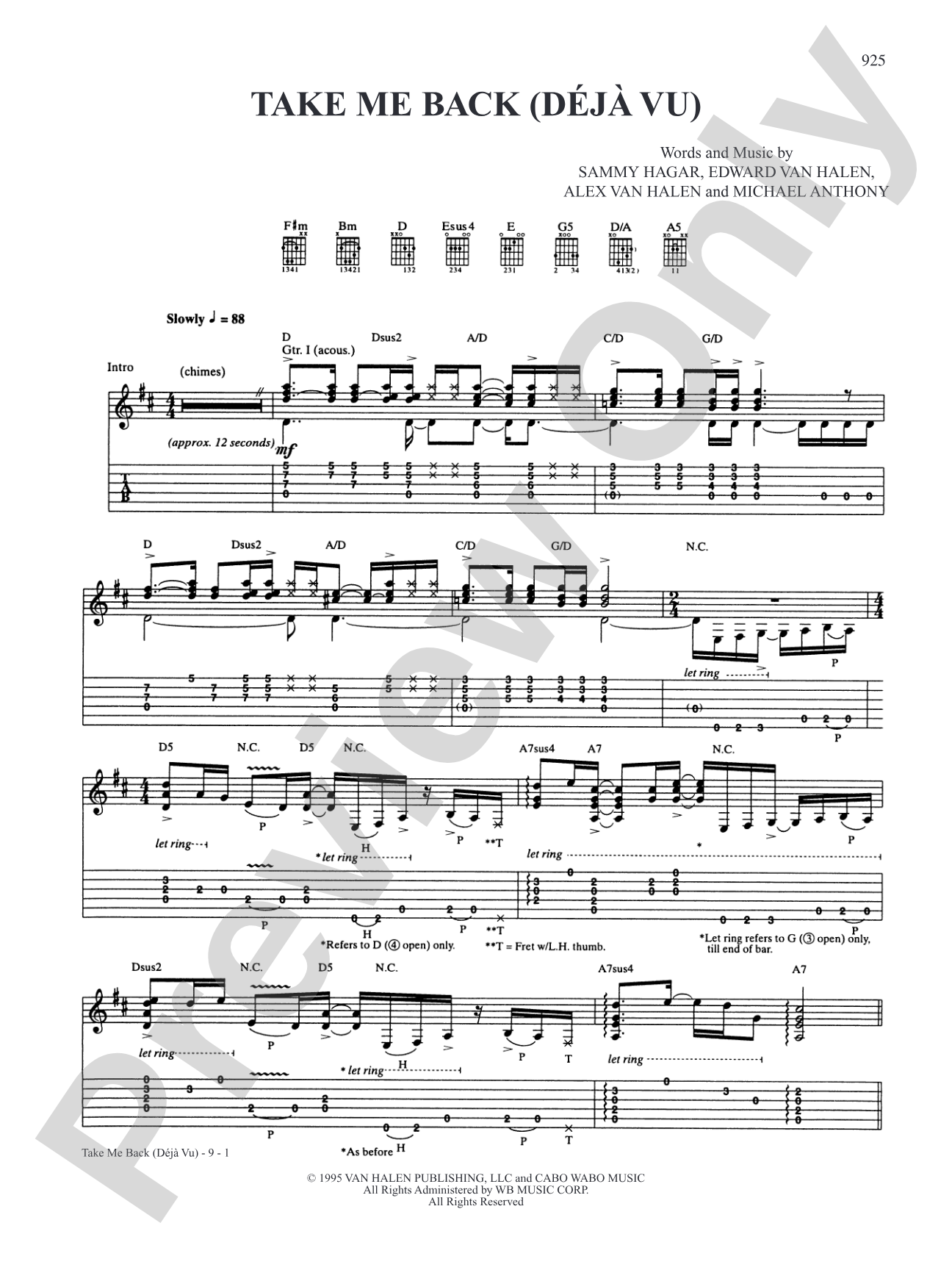
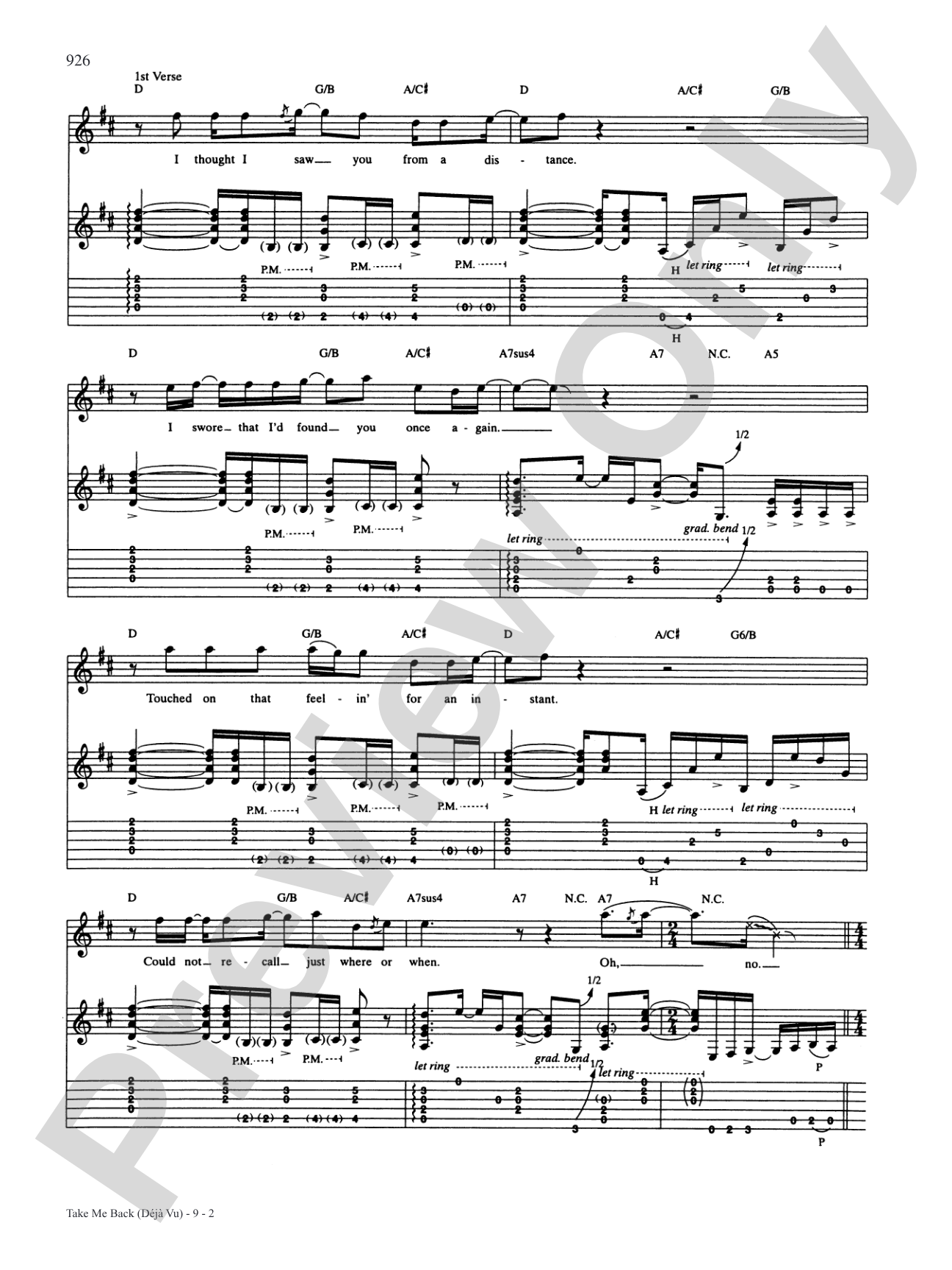

Take Me Back (Deja Vu): Authentic Guitar TAB
Compete
Van Halen
Item: 00-PSG-000555
$5.99
One moment…
Related Items
Could This Be Magic: Authentic Guitar TAB |
$9.99
|
View | |
Fools: Authentic Guitar TAB |
$9.99
|
View | |
The Full Bug: Authentic Guitar TAB |
$5.99
|
View | |
Hang Em High: Authentic Guitar TAB |
$9.99
|
View | |
Hear About It Later: Authentic Guitar TAB |
$9.99
|
View | |
In A Simple Rhyme: Authentic Guitar TAB |
$9.99
|
View | |
Intruder: Authentic Guitar TAB |
$4.99
|
View | |
Loss Of Control: Authentic Guitar TAB |
$5.99
|
View | |
One Foot Out The Door: Authentic Guitar TAB |
$5.99
|
View | |
Push Comes To Shove: Authentic Guitar TAB |
$9.99
|
View | |
Romeo Delight: Authentic Guitar TAB |
$9.99
|
View | |
Secrets: Authentic Guitar TAB |
$9.99
|
View | |
Sinner's Swing: Authentic Guitar TAB |
$9.99
|
View | |
So This Is Love: Authentic Guitar TAB |
$5.99
|
View | |
Sunday Afternoon In The Park: Authentic Guitar TAB |
$4.99
|
View | |
Take Your Whiskey Home: Authentic Guitar TAB |
$5.99
|
View | |
Where Have All The Good Times Gone: Authentic Guitar TAB |
$5.99
|
View | |
Without You: Authentic Guitar TAB |
$9.99
|
View | |
One I Want: Authentic Guitar TAB |
$9.99
|
View | |
From Afar: Authentic Guitar TAB |
$9.99
|
View | |
Dirty Water Dog: Authentic Guitar TAB |
$9.99
|
View | |
Once: Authentic Guitar TAB |
$9.99
|
View | |
Josephina: Authentic Guitar TAB |
$9.99
|
View | |
Year To The Day: Authentic Guitar TAB |
$9.99
|
View | |
Ballot Or The Bullet: Authentic Guitar TAB |
$9.99
|
View | |
Big Bad Bill (Is Sweet William Now): Authentic Guitar TAB |
$5.99
|
View | |
Inside: Authentic Guitar TAB |
$5.99
|
View | |
Good Enough: Authentic Guitar TAB |
$9.99
|
View | |
5150: Authentic Guitar TAB |
$9.99
|
View | |
Get Up: Authentic Guitar TAB |
$9.99
|
View | |
A.F.U. (Naturally Wired): Authentic Guitar TAB |
$9.99
|
View | |
Source Of Infection: Authentic Guitar TAB |
$9.99
|
View | |
Sucker In A 3 Piece: Authentic Guitar TAB |
$9.99
|
View | |
Mine All Mine: Authentic Guitar TAB |
$9.99
|
View | |
Cabo Wabo: Authentic Guitar TAB |
$9.99
|
View | |
Judgement Day: Authentic Guitar TAB |
$9.99
|
View | |
Spanked: Authentic Guitar TAB |
$9.99
|
View | |
Pleasure Dome: Authentic Guitar TAB |
$9.99
|
View | |
In 'n' Out: Authentic Guitar TAB |
$9.99
|
View | |
Man On A Mission: Authentic Guitar TAB |
$9.99
|
View | |
The Dream Is Over: Authentic Guitar TAB |
$5.99
|
View | |
The Seventh Seal: Authentic Guitar TAB |
$9.99
|
View | |
Don't Tell Me (What Love Can Do): Authentic Guitar TAB |
$9.99
|
View | |
Amsterdam: Authentic Guitar TAB |
$9.99
|
View | |
Big Fat Money: Authentic Guitar TAB |
$9.99
|
View | |
Aftershock: Authentic Guitar TAB |
$9.99
|
View |
Description
This amazing 1200-page collection features the complete guitar TAB for every single Van Halen album, including smash hit records like Van Halen, 1984, and 5150! Songs include "Runnin' with the Devil," "Ain't Talkin' 'Bout Love," "Mean Streets," "Jump," "Panama," "Hot For Teacher," "Why Can't This Be Love," "Dreams," "Best of Both Worlds," "Right Now," and many, many more! This is a must-have for every true Van Halen fan.


Take Me Back (Deja Vu): Authentic Guitar TAB isn't in MakeMusic Cloud just yet...but it could be. Let us know you'd like to see it, and you'll help shape what comes next. In the meantime, start a free trial and dive into thousands of interactive titles your students can play along with today.
Request This Title
Tell us you want it.
Start Your Free Trial
Explore everything that's ready to play right now.
Sample Audio
No sample audio found.
Sample Video
No sample videos found.
Additional Details
Series:
The Ultimate Song Pages
Publisher:
Alfred Music
SKU:
00-PSG-000555
More about this title
About the Artist: Van Halen
Van Halen revolutionized rock guitar in the late 1970s with Eddie Van Halen's innovative tapping technique and high-energy performance style. The band's catalog spans four decades of stadium rock, from their self-titled 1978 debut through their 2012 final studio album, establishing them as one of the most influential and commercially successful acts in rock history.
Their music demands technical precision, rhythmic confidence, and the ability to execute both intricate lead passages and driving rhythm work. For guitarists serious about understanding modern rock technique, Van Halen's output represents essential study material.
Why we love this
This collection captures the complete fingerboard vocabulary of one of rock's most technically demanding and rewarding catalogs. Rather than sampling hit singles, you get the full arc of Van Halen's evolution, from their raw early material through their synthesizer-era experiments, letting serious players understand how Eddie Van Halen's approach deepened and transformed across multiple decades.
What to expect
Explosive energy paired with precision. These songs feel urgent and driven, built on pulsing rhythms and guitar lines that cut through the mix with aggressive clarity. Whether it's the grinding simplicity of "Panama" or the architectural complexity of "Eruption," each piece carries the confidence of a band that knew exactly how to command a stage.
Who it's for
This resource serves advanced rock guitarists preparing for performances or deep study of Van Halen's catalog, as well as students who want to understand the technical and compositional decisions that shaped modern rock guitar. Players already comfortable with bar chords, power chords, and basic lead technique will find the most value in the complete scope this collection provides.
How to get the most out of it
- Study the tapped passages slowly first; Eddie's speed came from clean, consistent finger placement rather than raw velocity. Lock the motion at half tempo before pushing the tempo up.
- Pay close attention to muting technique throughout rhythm sections. Van Halen's signature sound relies on percussive, controlled dampening that defines the groove as much as the pitch.
- Use the tempo markings as reference points, not targets. Locking with a metronome at conservative tempos will build muscle memory far faster than chasing the recorded versions.
- Approach the distortion and effects as integral to the fingering and phrasing, not as decoration. The tone choices inform which strings to emphasize and when to shift your right-hand attack.
How to use it
Create a masterclass unit in rock technique, working through songs from different eras to show how guitar vocabulary evolved. You might also use this as reference material for electric guitar recitals, allowing advanced students to select era-appropriate pieces that align with their technical development.
Skills your students will build
- Two-handed tapping and legato techniques
- Muted rhythm sections and percussive picking
- Distortion tone control and dynamic expression through effects
- Reading complex syncopation and synth-rock time signatures
- Fingerboard navigation across extended passages and position shifts