
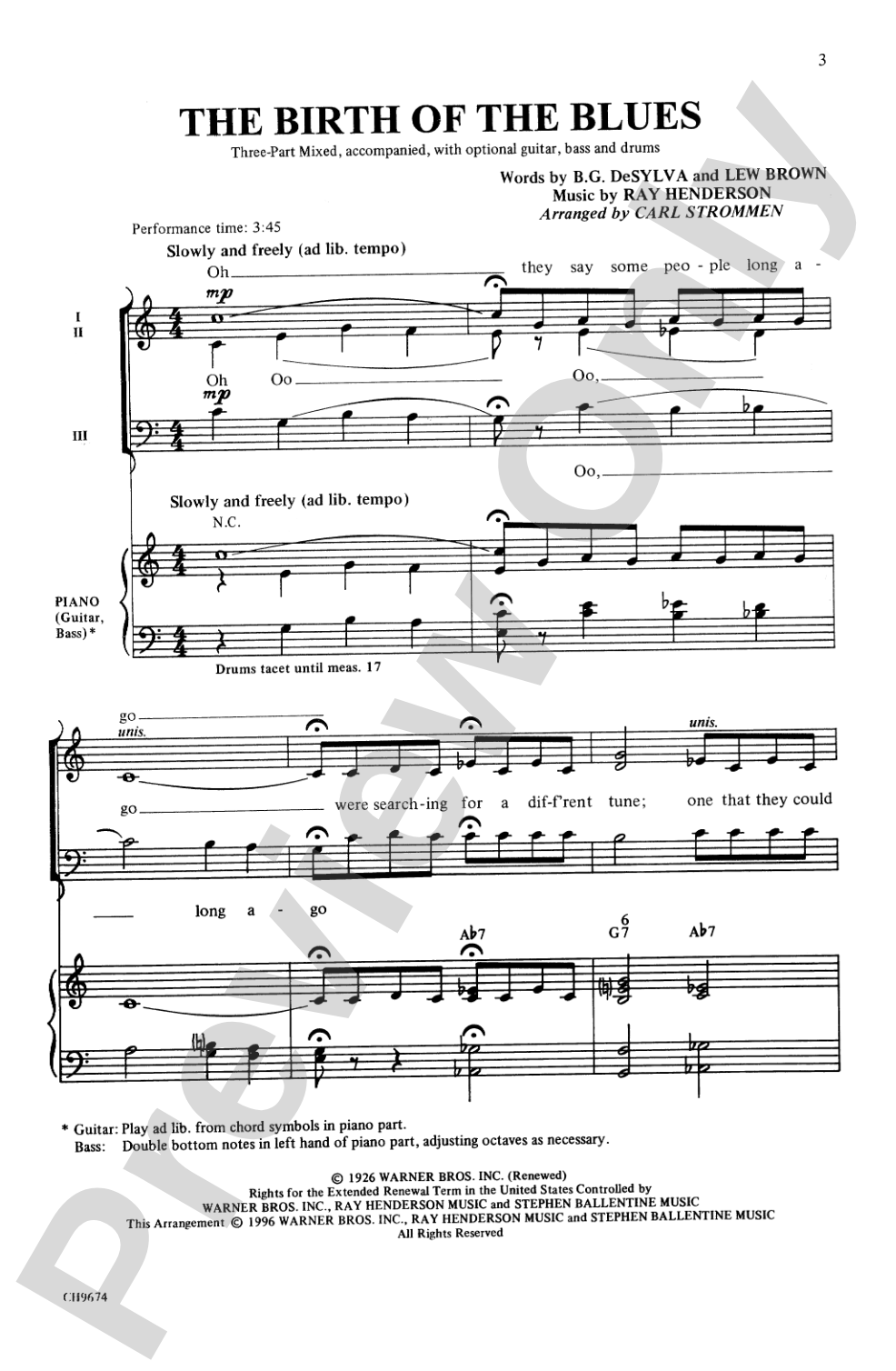
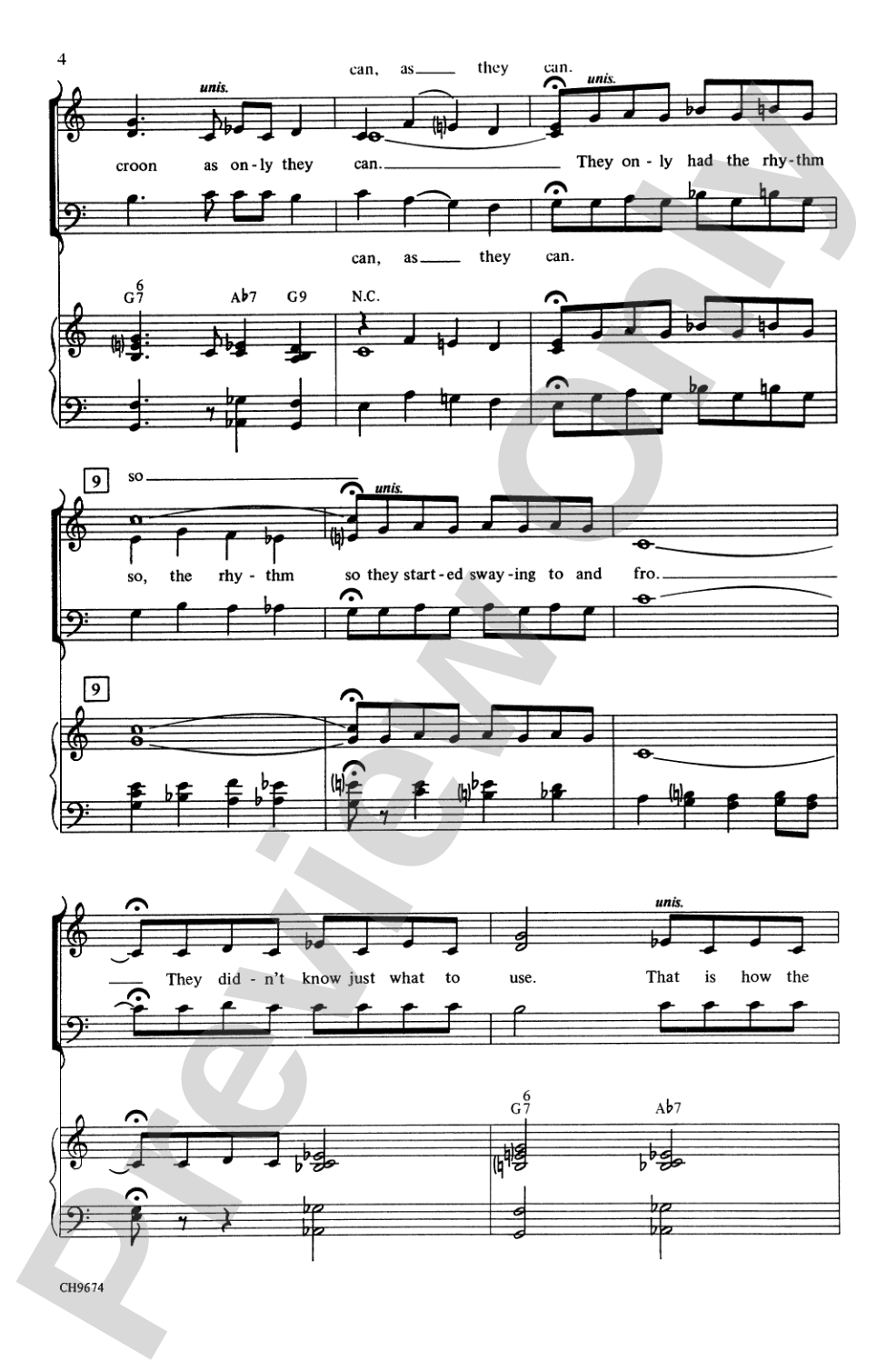

The Birth of the Blues: 3-Part Mixed Choral Octavo
Arr. Carl Strommen
Level: Moderate
Item: 00-PO-0004712
$2.25
Minimum order quantity: 20 copies
One moment…
Related Items
The Birth of the Blues: SATB Choral Octavo |
$2.25
|
View | |
The Birth of the Blues: 2-Part Choral Octavo |
$2.25
|
View | |
The Birth of the Blues: SATB Choral Octavo |
$2.25
|
View | |
The Birth of the Blues: 3-Part Mixed Choral Octavo |
$2.25
|
View | |
The Birth of the Blues: Choral Octavo SoundTrax CD |
$22.95
|
View |
Description
This Broadway hit of 1926, from the great songwriting team of DeSylva, Brown and Henderson, has also been featured in numerous Hollywood motion pictures. Carl's creative arrangement captures all the jazzy nuances to maintain the original feel that has helped to make this tune a blockbuster among Broadway standards. Programming possibilities abound!


The Birth of the Blues: 3-Part Mixed Choral Octavo isn't in MakeMusic Cloud just yet...but it could be. Let us know you'd like to see it, and you'll help shape what comes next. In the meantime, start a free trial and dive into thousands of interactive titles your students can play along with today.
Request This Title
Tell us you want it.
Start Your Free Trial
Explore everything that's ready to play right now.
Sample Audio
No sample audio found.
Sample Video
No sample videos found.
Additional Details
Series:
Alfred Archive Edition: Alfred Pop Choral Series
Publisher:
Alfred Music
Page Count:
12
SKU:
00-PO-0004712
More about this title
About the Arranger: Carl Strommen

Carl Strommen's arrangements and compositions appear regularly in concert halls, on television, and in film, establishing him as one of the most frequently performed writer-arrangers across multiple genres. His work spans band, orchestra, jazz ensemble, and choral music, earning him consistent recognition through the annual ASCAP Standard Writers Award and ongoing demand as a clinician and commission composer.
A City College of New York graduate, Strommen maintains ties to the academic world as an adjunct professor of orchestration and composition at C.W. Post Campus of Long Island University in Brookville, New York. He divides his time between Long Island and extended family visits to Colorado, where he continues developing the prolific and versatile catalog that has made his music a staple in music education and professional performance.
Why we love this
Strommen's arrangement preserves the swagger and sophistication of this 1926 standard while making it accessible to mixed choirs at the Grade 3 level. The jazz voicings and stylistic details honor the song's Broadway pedigree without overwhelming singers who are building their blend and rhythmic confidence.
What to expect
The piece radiates the confident ease of a song that has earned its place in American musical culture. Jazzy syncopations weave through SAB lines while maintaining the singability that made "The Birth of the Blues" endure; singers feel the vintage cool of 1926 without getting lost in unfamiliar harmonies.
Who it's for
Directors seeking a substantial secular selection that connects choral singers to musical theater heritage and introduces jazz phrasing and harmony without requiring advanced vocal technique. This arrangement works particularly well for mixed choirs in Grades 3-5 who are ready to tackle style and sophistication beyond conventional pop arrangements.
How to get the most out of it
- Balance the syncopated rhythms against the straight eighth notes in competing voice parts; practice separately before combining to lock the swing feel.
- Use the recorded accompaniment to internalize the song's original tempo and jazz articulation, then gradually reduce dependence on it during rehearsal.
- Shape phrase endings with a slight ritardando to echo the bluesy, conversational quality of the melody; avoid clipping notes short.
- Mark chord changes and jazz alterations (seventh chords, suspended harmonies) in pencil; singers often find these transitions clearer when they can see the harmonic movement visually.
How to use it
Feature this on a concert exploring American musical theater standards or as a contrasting piece in a program built around different decades of choral pop arrangements. It also pairs naturally with other classic Broadway selections, offering audiences a taste of the theatrical sophistication that defines mid-century songwriting.
Skills your students will build
- Jazz phrasing and articulation in a choral context
- Reading SAB voicing with chromatic and seventh chord alterations
- Rhythmic independence across voice parts (syncopation and straight eighths simultaneously)
- Stylistic interpretation and historical context awareness
- Blend and balance in jazz harmonies